Fast UK delivery
Muzzle
Four Flags Quick Pug Muzzle — Flat-Faced Breeds
- Sizes
- S · L
- Material
- Hook-And-Loop Closure For Quick Fitting
From £15.99
Free UK delivery over £39 · Tracked & fast · Happy pets, happy homes
Find a vet near youDogs
Better walks, every day.
Collars, leads, harnesses and muzzles.
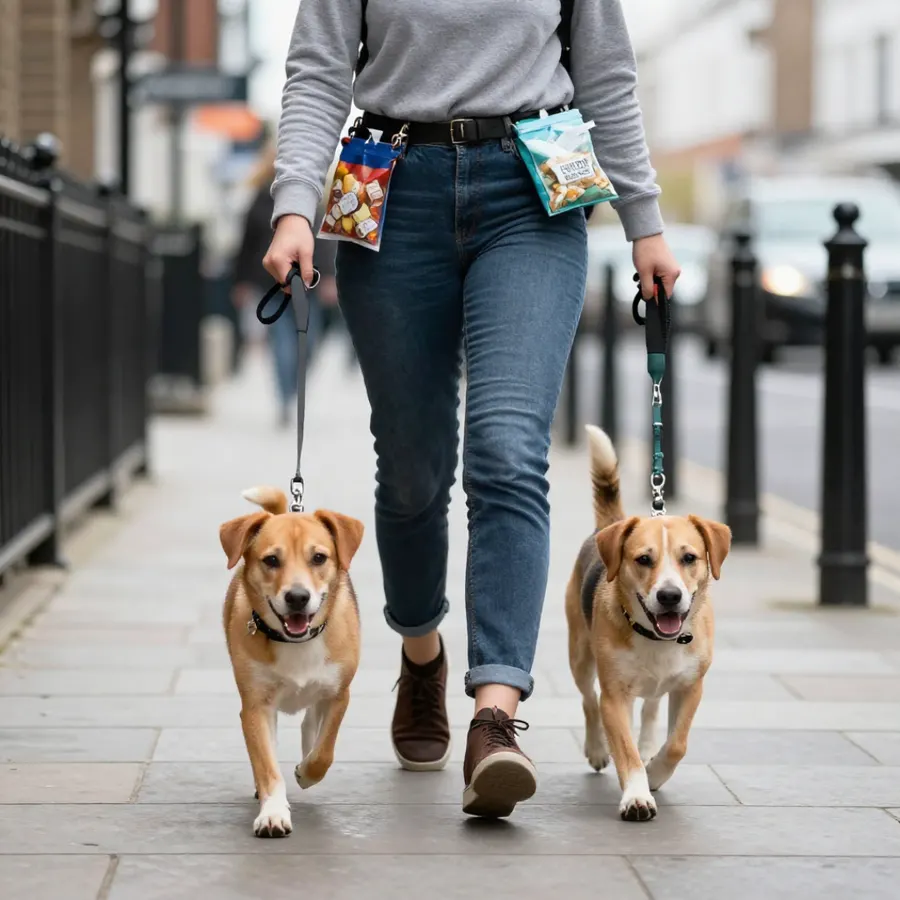 Out the door and ready for anything.
Find their favourites
Choose a section to narrow the range.
Fast UK deliveryMuzzle
From £15.99


Collar
£12.99


Collar
From £9.99


 Fast UK delivery
 Fast UK delivery

 Fast UK delivery

From £20.99
 Fast UK delivery

 Fast UK delivery
Muzzle
From £13.99
 Fast UK delivery
 Fast UK delivery

From £37.99
Find their favourites
Everything for dogs, one department at a time.
A little guidance
Start with the part of the range that matches what your dog needs, then compare the available products and filters above.
Comfortable, adjustable collars for everyday wear and ID tags, in a range of sizes and styles. A collar is the easiest place to keep your dog's ID, and is legally required in public in the UK. Measure your dog's neck girth and leave room for two fingers.
A collar is for identification first and walking second. UK law requires a dog in a public place to wear a collar with the owner’s name and address on it — a phone number is sensible but is not what the law asks for — and that applies whether or not the dog is microchipped, because the chip and the tag do different jobs.
Size on neck circumference, not on breed, and check the two-finger rule again: two fingers flat between collar and neck. Puppies outgrow a collar every few weeks, so buy adjustable and check the fit weekly rather than monthly. Nylon and biothane are the practical everyday materials — biothane in particular shrugs off mud and does not hold smell — while leather softens beautifully but wants keeping out of constant wet.
Everyday, training and hands-free leads in a range of lengths and widths. Choose a shorter lead for close control in busy places, a standard 1.2–1.5 m lead for daily walks, or a long line for recall practice — and a wider, stronger lead for bigger or stronger dogs.
Length decides what a lead is for. About 1.2m is a town lead, close enough to keep your dog out of the road; 1.8m gives a bit of sniffing room; a long line of 5m or more is training equipment for recall in open space and should be attached to a harness, never a collar — a dog hitting the end of five metres of line on their neck can be hurt badly.
Retractable leads suit calm dogs in open places and very little else. The thin cord gives poor control near traffic, is hard to grab in an emergency and can cause friction burns, and the constant light tension teaches a dog that pulling is how you get further. If you use one, lock it short around roads and other dogs.
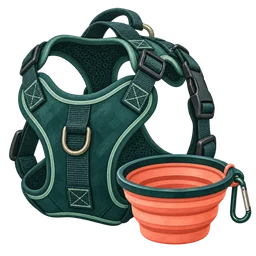
No-pull, padded and adjustable harnesses for dogs of every size — from tiny puppies to strong pullers. A harness spreads pressure across the chest instead of the throat, so it is kinder for pullers, flat-faced breeds and dogs with delicate necks. Measure your dog's chest girth and check the size guide on each product before you buy.
Measure the widest part of the chest, just behind the front legs, and buy to that number rather than to your dog’s weight — two 12kg dogs can be four inches apart in girth. Most sizes overlap, so if you fall between two, size up and take in the straps: a harness that is too big can be backed out of, and an escaped dog is the one risk worth designing out.
Fit is checked with two fingers. You should be able to slide two flat under every strap, and no strap should sit in the armpit, which is where chafing starts on long walks. Front-clip harnesses turn a puller towards you and are the useful ones for loose-lead work; back-clip is more comfortable for a dog who already walks nicely, and easier for small breeds. Padded chest plates matter more the harder your dog pulls.
A muzzle is used for short periods to keep everyone safe and calm during something specific: a vet visit, grooming, a busy public place, or while a dog is muzzle-trained for legal reasons. A well-fitted basket muzzle lets a dog pant and drink normally, which matters more than most owners expect when choosing one.
A basket muzzle, such as a Baskerville basket muzzle, is built from a rigid frame with gaps around the mouth, which lets a dog pant, drink water and even take small treats through it. This makes it the better choice for anything longer than a few minutes, including travel or a longer vet appointment.
A soft mesh or fabric muzzle, like a short-snout mesh dog muzzle, is more compact and less obvious, but it holds the mouth closed and stops panting properly, so it is only suitable for very brief use, such as a quick nail trim, rather than anything extended.
A muzzle that is too tight stops a dog panting even in a basket style, while one that is too loose can be worked off or shifted out of position. Measuring around the snout and checking the manufacturer's sizing rather than guessing gives a far better result than picking a size based on breed alone.
It is worth trying the muzzle on at home before you actually need it, adjusting the straps until it sits securely without pressing anywhere, rather than fitting it for the first time in a stressful situation.
Snug but not tight — you should be able to slide two fingers comfortably between the collar and your dog's neck. Measure the neck girth and check the product's size range before ordering.
In the UK, a dog in a public place must wear a collar with the owner's name and address on it (or an attached tag). Microchipping is also a legal requirement.
For everyday pavement walks a 1.2–1.5 m lead suits most dogs. Go shorter for close control near traffic, or longer (3 m and over) for recall training in open spaces.
A wider, padded lead is more comfortable to hold for a strong puller, and pairs best with a no-pull harness rather than a collar. A fixed-length lead gives more control for training than a retractable one.
Measure around the widest part of your dog's chest, just behind the front legs, then match it to the product's size chart. If your dog is between sizes, size up. The size guide on each product page shows you exactly how.
For walking, many owners prefer a harness because it spreads pressure across the chest rather than the throat — better for pullers, flat-faced breeds and dogs with delicate necks. Collars are still ideal for everyday ID tags.