


French Bulldog
A companion breed created in 19th-century Paris from small bulldogs brought over by English lacemakers, the French Bulldog is now one of the UK's most popular dogs. Affectionate, comical and adaptable, it thrives as a lap-sized companion in flats and family homes alike. It suits owners who are home a lot and go in clear-eyed about the breed's flat-faced health needs and heat sensitivity.

French Bulldog scorecard
Overview
The French Bulldog, affectionately known as the "Frenchie", is a compact, charming companion dog that has soared in popularity across the UK over the past decade. Easy-going, affectionate and well-suited to flat living, with modest exercise needs and a comical, attentive personality, the breed has become a fixture of city homes and young families. Its distinctive look — a small, muscular body, large erect "bat" ears and a flat, wrinkled face — is instantly recognisable.
It is impossible to write honestly about the French Bulldog, however, without being upfront about its health. This is a brachycephalic (flat-faced) breed, and that conformation is linked to a range of serious and well-documented health problems affecting breathing, the eyes, the skin and the spine, as well as a marked intolerance of heat. A typical Frenchie stands around 27–35 cm tall and weighs roughly 8–14 kg, and lives on average around 10–12 years. Prospective owners should go into ownership with their eyes open: buying from a health-conscious breeder and managing the dog carefully are essential to its welfare.
Good to know — a French Bulldog is flat-friendly and good for first-time owners. Every dog is an individual, so meet a few and chat to a good breeder or rescue before deciding.
Save the French Bulldog guide
Thinking about a French Bulldog? Pop your email in and we’ll send this guide so you can come back to it any time — handy while you compare breeds.
Popular searches for the French Bulldog
History & origins
The French Bulldog descends from the smaller bulldogs of England. During the 19th century, lace workers in Nottingham and the English Midlands kept toy and miniature bulldogs, and when many of these workers emigrated to France during the Industrial Revolution they took their little dogs with them. In France the type was further developed and crossed, and the breed gained its characteristic upright "bat" ears, becoming fashionable in Paris among shopkeepers, artists and, eventually, society — which is how the "French" Bulldog acquired its name.
The breed was recognised by the UK Kennel Club, where it is classified in the Utility Group, and standardised over the 20th century as a companion breed rather than a working dog. In recent years its popularity in Britain has grown enormously, which has unfortunately fuelled irresponsible breeding and importing. Welfare organisations and the Kennel Club have responded by strongly promoting the use of health-tested parents and breeding for moderation in the flat-faced features that cause the breed's characteristic problems.
Temperament & family fit
French Bulldogs are typically affectionate, even-tempered and sociable little dogs that form close bonds with their owners and thrive on companionship. They are playful and often clownish, enjoy being the centre of attention, and generally get on well with people, children and other animals when properly socialised. Their relatively quiet nature — they are not especially prone to excessive barking — and their adaptability to smaller homes are a big part of their appeal as urban companions.
For all their easy charm, Frenchies can be stubborn and have a wilful streak, so they benefit from patient, consistent training from an early age. They are companion dogs at heart and dislike being left alone for long periods, being prone to separation-related behaviour if isolated too much. As with all breeds, interactions between dogs and young children should always be supervised. It is worth remembering that some of the breed's appealing "snorting" and snoring is in fact a sign of compromised breathing rather than simple character, and should not be dismissed as merely cute.
- Families with children of all ages
- Committed first-time owners
- Flats or houses with daily exercise
Training & intelligence
French Bulldogs are intelligent and capable of learning well, but they can be independent and stubborn, so training calls for patience, consistency and a sense of humour. Short, positive, reward-based sessions work best — the breed responds well to food and praise and switches off quickly if training is repetitive or harsh. Early socialisation with people, other dogs and everyday situations helps produce a confident, well-mannered adult, and house-training can sometimes take a little persistence.
A crucial training and management point is that this breed must never be over-exerted, particularly in warm weather. Owners should learn to recognise the signs of breathing difficulty and overheating and to keep activity, excitement and exposure to heat within safe limits. Teaching calm behaviour, settling on cue and a reliable response to recall and "leave" all help keep a Frenchie safe and manageable. Because many Frenchies are food-motivated, treats used in training should be factored into the daily ration to avoid weight gain, which the breed tolerates particularly poorly.
- Start socialisation & handling early
- Reward-based methods only — no harsh corrections
- Keep sessions short, calm and consistent
Exercise needs
A healthy adult French Bulldog typically needs around 30 minutes (gentle, broken into shorter walks) a day (roughly 30–45 minutes), split across walks, play and a little training. A good sniffy walk, some play and a little training usually keeps them content. Puppies, seniors and dogs with health conditions need adjusted amounts — check with your vet.
Grooming & coat
Grooming a French Bulldog is undemanding in terms of the coat but important in terms of the skin and face. The short, smooth single coat needs only a weekly brush to remove loose hair and keep it healthy, and the breed is a relatively light shedder. The real attention goes to the wrinkles and folds: the facial creases (and, where present, the tail pocket) should be checked and gently cleaned and dried regularly, as trapped moisture and debris readily cause skin-fold dermatitis and infection. Routine care also includes regular nail trimming, dental cleaning, and checking the prominent eyes and the ears.
- Brush occasionally to remove loose hair
- Bathe every few weeks or as needed
- Check ears, nails and teeth weekly
Feeding a French Bulldog
Feed a French Bulldog a complete, good-quality diet appropriate to its life stage, with carefully measured portions, because this small breed gains weight easily and carries any excess badly. Obesity is especially harmful in a Frenchie: extra weight worsens breathing difficulties, places strain on the spine and joints, and further reduces heat tolerance, so keeping the dog lean is genuinely a welfare priority. Treats should be counted within the daily allowance. Some French Bulldogs are prone to flatulence and digestive sensitivity, so a consistent, well-tolerated diet is helpful, and eating too fast can be a problem in a breed that already struggles to breathe — a slow-feeder bowl can help.
A small breed
An adult French Bulldog typically weighs 8–14 kg, so a healthy French Bulldog eats a modest amount compared with other breeds. Every feeding guide on a bag is written per kilo of body weight, not per breed — start there, then adjust to the dog in front of you.
Life stage
A small breed is usually done growing at 10–12 months, which is roughly when a puppy food has finished its job. With a typical lifespan of 10–12 years, there is a long adult stretch in the middle; switch to a senior food when your vet thinks it is worth it rather than on a birthday.
This breed tends to bolt its food
A food-motivated dog will empty a bowl in under a minute given the chance. A slow feeder or a puzzle bowl turns a meal back into something that takes time, and splitting the daily ration across two or three meals helps as well.
Small mouths, crowded teeth
Smaller breeds get dental disease more often than big ones, largely because the same number of teeth are packed into a shorter jaw. Kibble size is worth checking, and a dental chew counts towards the daily 10% of calories from treats.
A shallow, wide bowl suits a flat face
A flat-faced dog cannot reach into a deep bowl without pressing its nose into the sides, which is uncomfortable and makes it gulp air. A shallow bowl, and food that does not have to be chased around it, is the easier arrangement.
How much should a French Bulldog weigh?
Adult 8–14 kgfully grown at 10–12 months
| Age | Stage | Typical weight | Of adult size |
|---|---|---|---|
| 8 weeks | Just home | 1.3–2.3 kg | 17% |
| 3 months | Young puppy | 2.2–3.8 kg | 27% |
| 6 months | Growing fast | 4.3–7.6 kg | 54% |
| 10–12 months | Fully grown | 8–14 kg | 100% |
A guide, from the same rule of thumb our puppy growth predictor uses — each age is that share of the way to maturity for a small breed. Puppies grow fastest early, so a real puppy usually sits a little above the middle rows. Weigh yours and ask your vet if the number worries you.
Complete dog foods that suit a French Bulldog
Complete foods from our range, matched to a French Bulldog's size band and what the breed typically needs. Stock levels and delivery dates are live on each product.


Pedigree Can in Jelly Puppy 6 Pack
Complete Pedigree puppy food in jelly with chicken, lamb and poultry recipes
£10.15

Forthglade Cold Pressed Natural Turkey
Cold-pressed turkey kibble for dogs from 2 months, soft enough to mix with water for young pups
£45.99

Forthglade Cold Pressed Grain Free Salmon
Cold-pressed grain-free dry food for dogs, built on fresh and dried salmon
From£16.99

Forthglade Cold Pressed Grain Free Duck
Cold-pressed grain-free duck food with fruit and botanicals, in two bag sizes
From£16.99

Forthglade Cold Pressed Grain Free Chicken
Cold-pressed grain-free chicken food with fruit and botanicals, in three bag sizes
From£16.99

Forthglade Complete Meal Lightly Baked Turkey
A lightly baked complete dry food, 50% turkey, for adult dogs of any breed
From£12.49

Forthglade Complete Meal Lightly Baked Chicken
A grain-free complete dry food for adult dogs, lightly baked and built on 50% chicken
From£12.49

Forthglade Cold Pressed Grain Free Turkey
Grain-free cold-pressed turkey kibble for dogs, gentle on sensitive stomachs
£69.69

Forthglade British Classics Chicken Family Lunch
Complete Forthglade wet dog food with 75% chicken in a 395G tray
£2.45

Harringtons Puppy Turkey & Rice
Complete turkey puppy food with 30% protein and feeding bands by adult weight
£6.49

Harringtons Just 6 Dry Dog Food Lamb
Grain-free lamb dry dog food in 2KG and 12KG sizes, with size-specific formulas
From£13.99
French Bulldog health & costs
Before bringing a French Bulldog home it pays to budget for the whole picture — food, insurance, grooming and routine vet care all add up. The figures below are typical UK estimates for a healthy adult; your real costs vary with where you live, your dog's health and the cover you choose.
Food
£250–400 / year
Complete food sized to weight & life stage
Insurance
£15–32 / month
Lifetime cover — varies by age, breed & area
Grooming
£0–60 / year
Mostly DIY at home
Routine vet care
£200–450 / year
Vaccines, flea/worm, annual check
There is no way to discuss the French Bulldog responsibly without giving its health serious weight, and the UK's largest companion-animal study, the RVC's VetCompass programme, has published detailed research showing the breed is predisposed to a long list of disorders at notably higher rates than dogs in general. The central issue is its brachycephalic (flat-faced) conformation, which underlies Brachycephalic Obstructive Airway Syndrome (BOAS) — narrowed airways that cause the characteristic snorting, snoring, noisy and laboured breathing, exercise intolerance and a dangerous susceptibility to heatstroke. Eye problems are common too, including corneal ulcers (the prominent eyes are easily injured), cherry eye and other ocular conditions.
Beyond the airway and eyes, French Bulldogs are predisposed to spinal disease — including intervertebral disc disease, linked in part to the screw or curled tail and the breed's conformation — as well as skin-fold dermatitis and other allergic skin disease, ear infections and certain dental problems. VetCompass research has found Frenchies to be at significantly increased risk compared with other dogs for many of these conditions. The most important things an owner can do are to buy only from breeders who prioritise health (favouring dogs with more open nostrils and longer muzzles, and who use available health tests), keep the dog slim, protect it rigorously from heat, and seek veterinary advice early for any breathing difficulty. Surgery to improve airways (for example, widening the nostrils or shortening the soft palate) is sometimes needed, so pet insurance is strongly advised.
Common health conditions to be aware of
- Brachycephalic Obstructive Airway Syndrome (BOAS) — narrowed airways causing snorting, noisy and laboured breathing, exercise intolerance and heatstroke risk; surgery is sometimes required.
- Heatstroke — the breed's compromised cooling means a high risk of overheating; Frenchies must never be exercised or left in warm or humid conditions.
- Corneal ulcers and eye disease — the prominent, exposed eyes are easily injured; cherry eye and other ocular problems are also common.
- Intervertebral disc disease (IVDD) and spinal problems — the breed's conformation and screw/curled tail predispose it to painful back disease.
- Skin-fold dermatitis and allergic skin disease — the facial folds trap moisture and debris, causing recurrent skin infection and irritation.
- Ear infections (otitis externa) — commonly recorded in the breed and often linked to underlying allergic skin disease.
These reflect typical, size- and coat-related risks for dogs like the French Bulldog; individual breeds carry their own predispositions. Always buy from health-tested parents and speak to your vet — this isn't a diagnosis.
Protect against surprise bills
A single emergency can run into thousands. Lifetime insurance spreads the risk.
Estimate insurance →How pet insurance works →Puppy & senior care
Bringing home a French Bulldog puppy
Puppies need controlled exercise (a rough guide is five minutes per month of age, twice a day) to protect growing joints, little-and-often meals of a complete puppy food, early socialisation, and a calm routine for toilet training and sleep. Book first vaccinations, microchipping and a vet check early.
New puppy checklist →Caring for a senior French Bulldog
As they age, watch weight, joints and teeth, switch to a senior diet if your vet advises, keep exercise gentle but regular, and consider orthopaedic bedding and ramps. Twice-yearly vet checks help catch issues early.
Orthopaedic beds & mobility →Pros & cons
The good bits
- Adaptable, affectionate and happy in a flat
- Low exercise and grooming needs
Things to consider
- Brachycephalic (flat-faced): prone to breathing, eye and spinal problems and heat intolerance
- Can be stubborn to train and should never over-exert, especially in warm weather
French Bulldog health & care guides
In-depth, vet-sensible guides written for French Bulldog owners:
Compare the French Bulldog
See how the French Bulldog measures up against similar breeds before you decide:
More breeds like the French Bulldog
Same breed group

Shih Tzu
A friendly, low-energy companion bred purely for company — perfect for flats if you keep up the grooming.

Miniature Schnauzer
A smart, spirited and low-shedding companion that adapts well to flats but likes to have its say.

Bulldog
A placid, affectionate companion that’s happy with gentle walks — but burdened by serious health issues.

Standard Poodle
One of the most intelligent breeds — elegant, low-shedding and eager to learn, with high grooming demands.
Similar temperament

Pug
A charming, comical lap dog that’s content in a flat — but a flat face brings real health considerations.
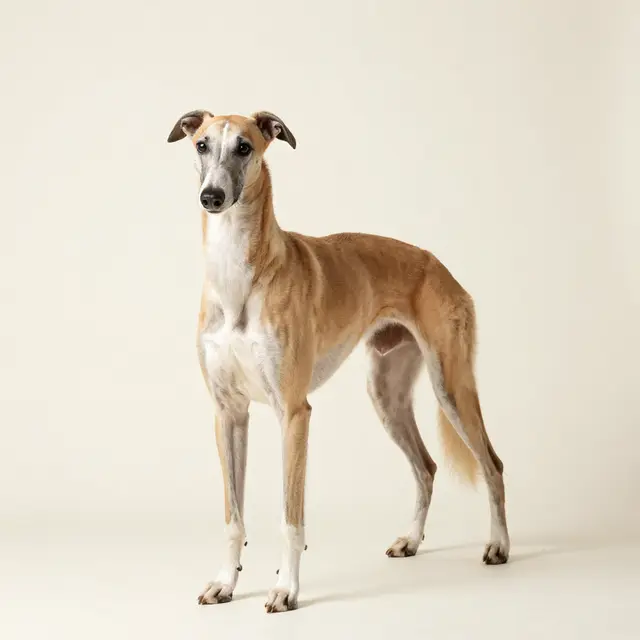
Greyhound
The ultimate couch potato — despite their racing reputation, retired greyhounds need surprisingly little exercise.

Continental Bulldog
A Swiss-developed bulldog bred to be healthier and more athletic than the English Bulldog, with a longer muzzle and freer movement. Friendly, calm and affectionate, making an easygoing companion.

Bullador
A laid-back, affectionate cross of the easygoing Bulldog and the family Labrador. Generally mellow and friendly, though some inherit the Bulldog's shorter muzzle and related breathing or heat sensitivity.
Similar size, different type

Cavalier King Charles Spaniel
A gentle, affectionate lap dog that’s wonderful with children and adapts happily to flat or house living.

Jack Russell Terrier
A small dog with a huge personality — bold, clever and bursting with energy and prey drive.

Border Terrier
A hardy, good-natured working terrier that’s friendlier with people and dogs than many of its terrier cousins.

Dachshund
A bold, characterful "sausage dog" that suits smaller homes but needs careful handling of its long back.
Is the French Bulldog your breed?
Create your pet profile and get personalised food, toy, insurance and health recommendations — tailored to your dog.
Frequently asked questions
How long do French Bulldogs live?
French Bulldogs typically live to around 9–11 years, which is shorter than the dog average. Research from the RVC's VetCompass programme links this mainly to health problems associated with the breed's flat-faced, compact body shape rather than chance. Choosing a puppy from health-screened parents with more open airways, keeping your dog lean, and protecting them from heat all genuinely help yours reach the upper end.
Can French Bulldogs swim?
As a rule, no — most French Bulldogs can't swim safely and can drown easily. Their heavy front-loaded bodies, short legs and flat faces make it very hard to keep the nose above water, and they tire fast. Always assume yours can't swim: use a fitted life jacket near deep water, never leave them unsupervised around pools or ponds, and keep water play shallow and supervised.
Do French Bulldogs shed a lot?
French Bulldogs are moderate shedders. They have a short, fine single coat that sheds year-round, with a bit more in spring and autumn — far less hair than a double-coated breed, but they do shed. A weekly brush with a rubber grooming mitt or bristle brush keeps loose hair down and the coat healthy. They are not heavy-maintenance on the coat; the skin folds need more attention than the fur.
Are French Bulldogs hypoallergenic?
No. French Bulldogs are not hypoallergenic. They shed, and they produce the dander and saliva proteins that trigger most dog allergies. No breed is truly hypoallergenic, but the Frenchie — being a shedder with notable skin and drool — is not a good choice for allergy sufferers. If allergies are a concern, spend time around the breed before committing.
Are French Bulldogs aggressive?
Generally no — French Bulldogs are known for being affectionate, sociable and people-focused companions, and aggression is not typical of the breed. They can be stubborn and occasionally possessive over food or toys, and like any dog need early socialisation and consistent, kind training. Most behaviour problems come from inconsistency or lack of socialisation rather than temperament. They're far more clown than guard dog.
When do French Bulldogs stop growing?
French Bulldogs usually reach their adult height by around 9 to 12 months, then fill out in muscle and chest width up to roughly 12–14 months. They're a small but solid breed — adults typically weigh around 9–14kg. Keep growing puppies lean and avoid over-exercising or letting them jump from heights, which protects their developing joints and spine.
How much does a French Bulldog cost?
French Bulldogs are among the more expensive breeds to buy, and the purchase price is only the start. Because of their health predispositions — breathing problems, skin and spinal issues, and frequent caesarean births in the breed — lifetime vet costs tend to be high, which is why many owners take out lifetime insurance early. Budget realistically for insurance, quality food and potential treatment, not just the puppy.
Are French Bulldogs good family dogs?
Yes — they're popular family dogs for good reason: affectionate, adaptable, good in smaller homes, and generally great with children and other pets when socialised well. The main caveats are health-related rather than temperament: they're heat-sensitive, shouldn't be over-exercised, and need supervision around water. Teach children to let a sleeping or eating Frenchie be, and you've got a wonderful, comical companion.
Do French Bulldogs have breathing problems?
Many do, to some degree. As a brachycephalic (flat-faced) breed, French Bulldogs are prone to Brachycephalic Obstructive Airway Syndrome (BOAS), where narrowed nostrils and a long soft palate make breathing harder. Snoring, snorting and struggling in heat or exercise are common signs. Severity varies a lot — surgery helps some dogs — and choosing a puppy with more open nostrils and a graded airway reduces the risk.
How much exercise does a French Bulldog need?
French Bulldogs need only moderate exercise — around 30–60 minutes a day split into shorter, gentle sessions, plus play and sniffing. Crucially, they must not be over-exercised or walked in the heat: their breathing and poor heat tolerance mean they can get into trouble fast. Walk in the cool parts of the day, keep it steady rather than strenuous, and always carry water in warm weather.
Are French Bulldogs good with children?
Good with children. As a general guide, French Bulldogs tend to be patient and tolerant. Whatever the breed, always supervise dogs and young children and teach kids to interact gently.
How much exercise does a French Bulldog need?
As a healthy adult, a typical French Bulldog needs around 30 minutes (gentle, broken into shorter walks) of exercise a day (30–45 minutes), split across walks plus play. A good sniffy walk plus some play and training usually keeps them happy. Puppies, seniors and dogs with health conditions need less — ask your vet.
Do French Bulldogs shed a lot?
Low shedding. Coat upkeep is wash-and-go — a quick brush now and then is usually enough.
Are French Bulldogs easy to train and good for first-time owners?
Good for first-time owners. French Bulldogs are generally a forgiving choice for first-time owners who put in early training and socialisation. Reward-based training and early socialisation help any dog.
Do French Bulldogs bark a lot?
Quiet. They are usually fairly easy-going about barking, though any dog will bark if bored or under-exercised.
Are French Bulldogs good with other dogs?
Sociable with other dogs. Early, positive socialisation with other dogs from a young age makes a big difference.
Do French Bulldogs suit flats or smaller homes?
Flat-friendly. A French Bulldog can adapt to flat living as long as it gets its daily exercise and company.
Sources
- The Kennel Club — French Bulldog breed information and breed standard: https://www.thekennelclub.org.uk/breed-standards/utility/french-bulldog/
- RVC VetCompass — research on French Bulldog health and breed-related disorders: https://www.rvc.ac.uk/vetcompass
- PDSA — French Bulldog breed guide and flat-faced dog health advice: https://www.pdsa.org.uk/pet-help-and-advice/looking-after-your-pet/puppies-dogs/small-dogs/french-bulldog
- Blue Cross — French Bulldogs and flat-faced (brachycephalic) dog advice: https://www.bluecross.org.uk/advice/dog
- FCI — French Bulldog (Bouledogue Français) breed standard No. 101: https://www.fci.be/en/nomenclature/FRENCH-BULLDOG-101.html
Recommended for your French Bulldog
Matched to a French Bulldog's size and their typical need for dental care, cooling for hot days, a slow feeder.

Smart Choice Cooling Ice Cream Dog Toy
A TPR cooling toy that can be filled with water and frozen, for hot-weather chewing
£3.99

Pressure-Activated Pet Cooling Mat
Press down, feel the cool — this pressure-activated mat absorbs body heat and stays up to 10°C cooler than the room, with no freezing required.
From£34.99

Ice-Silk Cooling Dog Bed with Bolster Edge
A breathable ice-silk cooling bed with a soft bolster edge and a cool-touch centre panel that helps your dog stay comfortable through warm weather. No need to freeze or refrigerate, it cools naturally on contact.
From£12.99

Ice-Silk Cooling Pad for Pets
A breathable, anti-slip ice-silk cooling mat that keeps cats and dogs comfortable on hot days, no freezing required. It rolls up neatly for travel and the cool-touch surface helps reduce overheating at home or in the car.
From£8.99

Ice-Silk Sofa Cover Pet Protector
A cool, smooth ice-silk sofa cover with a frilled, scalloped trim that shields your couch from pet hair, scratches and spills. Breathable for summer, it keeps furniture looking fresh while giving pets a soft spot to lounge.
From£11.99

Reflective Dog Cooling Vest
A lightweight cooling vest that helps keep your dog comfortable on hot-weather walks. Soak it, wring it out and fit it over the back; the breathable fabric and reflective trim aid temperature control and visibility.
From£17.99

Breathable Pet Cooling Mat
A breathable cooling mat that draws heat away to keep dogs and cats comfortable on hot days.
From£11.99

Plush Snuffle Foraging Mat
A roll-up plush snuffle mat with cute animal designs. Hide treats in the folds and let your pet sniff and forage to find them - a rewarding enrichment game that beats boredom and slows feeding.
£13.99
Suggestions based on breed traits — always check sizing and suitability for your individual dog.
Got a French Bulldog? Save them to a pet profile for tailored picks across the whole site.
Happier, healthier pets — in your inbox.
Breed care tips, seasonal advice and first access to new arrivals. No spam, unsubscribe anytime.
Every dog is an individual — temperament and needs vary. Please research thoroughly, meet dogs in person, and consider adopting from a rescue. This is general guidance, not a substitute for advice from your vet or a qualified trainer.