
Can French Bulldogs Swim? Water Safety Guide
Most French Bulldogs can't swim safely and can drown easily. Why, and how to let yours enjoy water without the risk.
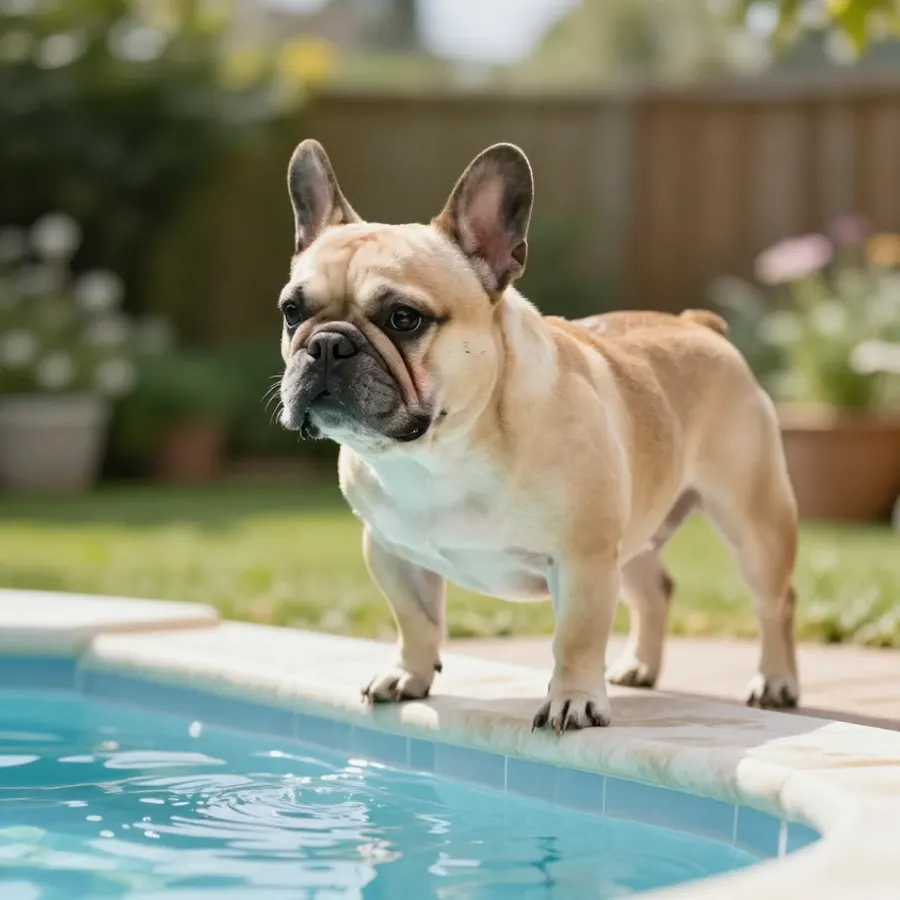
The quick answer
As a rule, no — most French Bulldogs can't swim safely and can drown easily. Their heavy front-loaded bodies, short legs and flat faces make it very hard to keep the nose above water, and they tire fast.
It's one of the most important things a French Bulldog owner can know: most French Bulldogs cannot swim safely, and they can drown surprisingly easily. It's not a quirk to test — it's a genuine safety issue. Here's why, and how to let your Frenchie enjoy water without putting them at risk.
Can French Bulldogs swim?
As a rule, no — not safely, and not unaided. A few individuals manage a clumsy paddle, but the breed is built in almost exactly the wrong way for swimming. You should always assume your French Bulldog cannot swim and manage water accordingly.
Why French Bulldogs struggle in water
Several features of the breed stack against them:
- Heavy, front-loaded body. Frenchies are dense and muscular with a large head and chest and short, stocky legs. That weight distribution tips the nose down and makes it very hard to keep the head above water.
- Short legs. They simply can't generate enough paddling power to stay afloat for long.
- Flat face (brachycephaly). To breathe while swimming, a dog needs to lift its muzzle clear of the surface. A Frenchie's flat face means the nose sits low and water is easily inhaled — and the same airway issues that cause BOAS make panicked, effortful breathing in water especially dangerous.
- Low stamina. Even a strong-willed Frenchie tires quickly, and tiredness in water is how accidents happen.
Keeping your Frenchie safe around water
You don't have to ban water — you have to manage it:
- Always use a well-fitted canine life jacket with a sturdy handle if your dog will be near open or deep water. This is non-negotiable for boats, beaches and pools.
- Never leave a French Bulldog unsupervised near water — garden ponds, swimming pools and hot tubs are particular dangers. Pools are the classic tragedy: a dog falls in, can't climb the vertical sides, and panics.
- Make pools escapable. If you have a pool, fence it or cover it, and teach your dog where the steps are — but never rely on that alone.
- Keep it shallow and calm. A paddling pool or shallow shoreline, with you right there, lets a Frenchie enjoy water safely.
- Watch for trouble. Frantic paddling, a low head, or any struggle to breathe means get them out immediately.
Can you teach a French Bulldog to enjoy water safely?
You can teach most Frenchies to be *comfortable* around water, even if they'll never be real swimmers. Go slowly and never force it: start with a shallow paddling pool they can stand up in, let them choose to step in, and reward calm exploration. Keep sessions short and positive, always stay within arm's reach, and fit the life jacket on dry land first so it feels normal before it's ever needed. The goal is relaxed paddling in water they can stand in — not lengths of the pool.
What to do if your Frenchie gets into trouble in water
If your dog struggles, get them out calmly and quickly by the life-jacket handle or under the chest, and keep their head up. Afterwards, watch closely: inhaling water can cause breathing problems that show up hours later, so any coughing, laboured breathing, lethargy or blue-tinged gums after a water incident is a reason to call your vet straight away, even if your dog seemed fine at first. With a brachycephalic breed, it's always better to be cautious.
A better way to cool a Frenchie down
Many owners reach for water because their flat-faced dog is overheating — and Frenchies genuinely do struggle in the heat. But swimming is a risky way to cool a breed this heat-sensitive. Far safer options are a cooling mat or cooling vest, shade and fresh water, walks in the cool of the morning or evening, and a paddling pool they can stand up in. Our guide to keeping your dog cool in summer covers the full kit. If your Frenchie ever shows signs of heatstroke — heavy distress, drooling, collapse — treat it as the emergency it is and contact your vet.
The bottom line
Assume your French Bulldog can't swim, use a life jacket near deep water, and never leave them unsupervised around pools or ponds. Treated with that respect, water can be a bit of summer fun rather than a hazard.
*This is general safety guidance, not a substitute for advice from your vet.*
Sources
- PDSA — dog water safety and brachycephalic breeds (pdsa.org.uk).
- Blue Cross — keeping dogs safe around water (bluecross.org.uk).
- UK Kennel Club — French Bulldog breed characteristics and brachycephalic health (thekennelclub.org.uk).
Common questions
Can French Bulldogs swim?
As a rule, no — most French Bulldogs can't swim safely and can drown easily. Their heavy front-loaded bodies, short legs and flat faces make it very hard to keep the nose above water, and they tire fast. Always assume yours can't swim: use a fitted life jacket near deep water, never leave them unsupervised around pools or ponds, and keep water play shallow and supervised.
Do French Bulldogs need a life jacket?
Yes — if your French Bulldog will be anywhere near open or deep water (boats, beaches, pools), a well-fitted canine life jacket with a grab handle is essential, not optional. Their body shape means they can't reliably keep themselves afloat, and a life jacket buys vital time if they tire or panic. Introduce it gradually on land first so they're comfortable wearing it.
Why can't French Bulldogs swim?
Their build works against them: a heavy, front-loaded body with a large head and chest, short legs that can't paddle powerfully, and a flat face that makes lifting the nose clear of the water to breathe very difficult. They also tire quickly. Combined, these mean most Frenchies sink rather than swim, which is why supervision and a life jacket matter so much.
About the author
Matt Garnett — founder, Giddy Pets
Matt started Giddy Pets to make getting pets the good stuff simpler and fairer. Everything in these guides comes from real life with pets and a lot of trial and error — it's practical guidance, not veterinary advice. If a guide gets something wrong, tell him directly.
Free tools & more guides
Read next

Are French Bulldogs Good Family Dogs?
Affectionate, comical and happy on the sofa, French Bulldogs can make lovely family companions — but their flat-faced health needs and training quirks are real. Here's an honest UK look at whether a Frenchie suits your home.
Do French Bulldogs Shed? Grooming & Coat Care
Yes, French Bulldogs shed — moderately, all year, with a bigger drop in spring and autumn. They're a low-maintenance, short-coated breed, but they're not hypoallergenic, and their skin folds need regular cleaning to stay healthy. Here's a practical UK grooming routine.

How Long Do French Bulldogs Live? Lifespan & Health
How long French Bulldogs live, the health conditions linked to their flat-faced body shape, and how to give yours the healthiest, most comfortable life.
French Bulldog Health Problems Every Owner Should Know
French Bulldogs are wonderful companions, but the breed carries some well-documented health risks linked to its flat-faced shape. Here's an honest, vet-informed look at the big ones, how to lower the odds, and why choosing a health-tested breeder matters so much.