
Chien Français Blanc et Noir
A large French pack scenthound (black-and-white) bred to hunt deer and hare in packs. Highly sociable with dogs and people, but a tireless worker driven by scent.

Chien Français Blanc et Noir scorecard
Overview
The Chien Français Blanc et Noir (French White and Black Hound) is a large French pack scenthound bred to hunt in packs, traditionally pursuing deer, hare and other game across the French countryside. As its name describes, it carries a striking white-and-black coat, and it is one of several closely related French hound breeds recognised by the Société Centrale Canine and the Fédération Cynologique Internationale (FCI). It is a large, athletic dog, typically standing around 62 to 72 cm at the shoulder and weighing roughly 30 to 35 kg, built for stamina over long days in the field.
This is first and foremost a working pack hound, exceptionally sociable with other dogs and people but driven by a powerful nose and the urge to follow a scent for miles. It carries a loud, carrying hound voice and considerable exercise needs that make it a demanding companion outside a hunting context. It is not a UK Kennel Club recognised breed and is very rare in Britain, so prospective owners should expect it to be encountered almost exclusively as a working hunting dog rather than as a household pet.
Good to know — a Chien Français Blanc et Noir needs plenty of space and better with some experience. Every dog is an individual, so meet a few and chat to a good breeder or rescue before deciding.
Save the Chien Français Blanc et Noir guide
Thinking about a Chien Français Blanc et Noir? Pop your email in and we’ll send this guide so you can come back to it any time — handy while you compare breeds.
Popular searches for the Chien Français Blanc et Noir
History & origins
The Chien Français Blanc et Noir belongs to the family of French hounds developed for pack hunting, a tradition with deep roots in France where large packs were maintained to hunt game over open country and woodland. The modern French hounds were shaped in part by crossing older native scenthound strains with imported English hound blood, producing dogs prized for their nose, voice and tireless pack-hunting ability. The black-and-white variety was standardised as a distinct breed within this group.
Its history is bound up with the practical world of pack hunting rather than the show ring or companion keeping, and it remains very much a working breed in France today. Breed-specific health information is correspondingly limited, as these dogs are bred and assessed primarily for hunting performance within established packs.
Temperament & family fit
The Chien Français Blanc et Noir is renowned for being highly sociable, thriving in the company of other dogs and generally friendly and amiable with people. As a pack hound it is bred to work cooperatively alongside many other dogs, which makes it typically excellent with other canines and good-natured with the families that keep it. Owners describe an affectionate, even-tempered dog that enjoys company and dislikes being isolated.
That sociability comes with a powerful working drive: this is a scent-obsessed hound that will follow its nose single-mindedly and is happiest when active and engaged. It carries a loud, melodious hound voice that it will use freely, and its independence on a scent can make recall challenging. It is a tireless worker rather than a relaxed lapdog, and its needs are best understood in the context of its pack-hunting heritage.
- Families with children of all ages
- Owners ready for consistent training
- Active homes with plenty of space
Training & intelligence
Training a Chien Français Blanc et Noir requires patience and realistic expectations, because this is an independent pack scenthound driven by its nose rather than a biddable companion breed. It is intelligent in its own way and responds to reward-based, consistent methods, but recall and impulse control around scent are genuinely challenging, and owners should assume that a dog in full cry on a trail may be very hard to call off. Secure containment and on-lead control in unsecured areas are therefore essential.
Early socialisation, which comes naturally to so sociable a breed, and patient work on basic manners and lead behaviour are sensible priorities. Channelling its drive into scent-based activities and plenty of structured exercise helps prevent frustration. Given its strong instincts, loud voice and exercise demands, this breed is best suited to experienced owners, ideally those involved in hunting or able to provide an equivalent outlet, rather than novices seeking an easy pet.
- Start socialisation & handling early
- Reward-based methods only — no harsh corrections
- Channel energy into training games & enrichment
Exercise needs
A healthy adult Chien Français Blanc et Noir typically needs 2 hours or more, plus a job to do a day (roughly 120–180 minutes), split across walks, play and a little training. Higher-energy dogs also need their brains tired — sniffy walks, training games and puzzle feeding go a long way. Puppies, seniors and dogs with health conditions need adjusted amounts — check with your vet.
Grooming & coat
The breed's short, smooth coat is very easy to maintain, needing only occasional brushing to remove dead hair and keep it in good condition. The coat sheds moderately but requires no specialist grooming. As a working hound with pendulous ears, routine ear checks and cleaning are important to help prevent infections, and the usual nail trimming and dental care should be maintained, making overall grooming straightforward.
- Brush occasionally to remove loose hair
- Bathe every few weeks or as needed
- Check ears, nails and teeth weekly
Feeding a Chien Français Blanc et Noir
Feed a complete, good-quality diet matched to the dog's size, age and very high activity level, divided into two meals a day. As an energetic large working hound, it needs ample nutrition to sustain its exercise, with portions adjusted to keep it fit and lean rather than overweight. As a deep-chested large dog, sensible feeding routines are wise, and many owners avoid vigorous exercise immediately around mealtimes; your vet can advise on appropriate amounts for a hard-working hound.
A large breed
An adult Chien Français Blanc et Noir typically weighs 30–35 kg, so a healthy Chien Français Blanc et Noir eats a fair amount compared with other breeds. Every feeding guide on a bag is written per kilo of body weight, not per breed — start there, then adjust to the dog in front of you.
Life stage
A large breed is usually done growing at 15–18 months, which is roughly when a puppy food has finished its job. With a typical lifespan of 10–12 years, there is a long adult stretch in the middle; switch to a senior food when your vet thinks it is worth it rather than on a birthday.
A high-energy dog eats like one
Chien Français Blanc et Noirs sit at the top end for energy, and a dog working through a couple of hours of real exercise a day burns through the feeding guide faster than a dog on a short stroll. Feed to the dog's condition, not to the middle of the range on the bag.
Joint support is worth looking for
Their size and frame put more load through the joints than a smaller dog carries, so a food with joint support on the label is worth reading for — and keeping them lean does more for their joints than any supplement.
Weight matters more than usual here
A long back or a heavy frame makes every extra kilo count twice. Weigh portions rather than eyeballing a scoop, and reduce the food rather than the walks if the waist starts to disappear.
How much should a Chien Français Blanc et Noir weigh?
Adult 30–35 kgfully grown at 15–18 months
| Age | Stage | Typical weight | Of adult size |
|---|---|---|---|
| 8 weeks | Just home | 3.4–4 kg | 11% |
| 3 months | Young puppy | 5.6–6.5 kg | 19% |
| 6 months | Growing fast | 11.1–13 kg | 37% |
| 12 months | Adolescent | 22.3–26 kg | 74% |
| 15–18 months | Fully grown | 30–35 kg | 100% |
A guide, from the same rule of thumb our puppy growth predictor uses — each age is that share of the way to maturity for a large breed. Puppies grow fastest early, so a real puppy usually sits a little above the middle rows. Weigh yours and ask your vet if the number worries you.
Complete dog foods that suit a Chien Français Blanc et Noir
Complete foods from our range, matched to a Chien Français Blanc et Noir's size band and what the breed typically needs. Stock levels and delivery dates are live on each product.


Field & Trial Skinner S Field Trial Light Senior
A lower-fat dry food for older, overweight or less active dogs, including working breeds
From£9.85

Autarky Complete Grain Free Adult Turkey
Grain-free complete dry food for adult dogs, with turkey and a marine-algae joint care package
£12.79

Autarky Grain Free Tasty White Fish & Potato Complete
Grain-free dry dog food built around white fish meal rather than poultry
£12.99

Lily's Kitchen Lily S Kitchen Dog Lovely Lamb
Complete lamb-led dry dog food offered in two practical bag sizes
From£25.15


Burns Adult Large/Giant Breed Chicken and Brown Rice
Complete large-breed dry dog food with 23% chicken and brown rice
£59.99

Burgess Greyhound and Lurcher Chicken
Complete adult dry food formulated for the specific build of greyhounds and lurchers
£35.35


Naturo Senior Rice Poultry Variety 6pk
Six 400g trays across three recipes for senior dogs, with glucosamine and chondroitin
£10.29

Naturo Senior Dog Turkey with Rice and Vegetables 7pk
Turkey at 65% in a senior wet tray, with brown rice, vegetables and added joint support
£11.99

Vitalin Adult Dog Pork with Apple
Complete dry food for adult dogs of any age, led by pork, with citrus extract for dental support
From£11.99
Chien Français Blanc et Noir health & costs
Before bringing a Chien Français Blanc et Noir home it pays to budget for the whole picture — food, insurance, grooming and routine vet care all add up. The figures below are typical UK estimates for a healthy adult; your real costs vary with where you live, your dog's health and the cover you choose.
Food
£600–850 / year
Complete food sized to weight & life stage
Insurance
£35–62 / month
Lifetime cover — varies by age, breed & area
Grooming
£0–60 / year
Mostly DIY at home
Routine vet care
£200–450 / year
Vaccines, flea/worm, annual check
As a working pack breed that is rare outside France, the Chien Français Blanc et Noir has limited breed-specific health documentation, and guidance leans on general principles for large active hounds and on sourcing dogs from responsible breeders. Like most large breeds, it can be subject to developmental joint conditions such as hip dysplasia, and where screening is available it is worth asking about the parents.
Large, deep-chested dogs can also be at risk of bloat (gastric dilatation-volvulus), a sudden, life-threatening emergency whose signs owners should learn. As a hound with long, pendulous ears, it is prone to ear infections without regular ear care, and an active working dog should be checked over routinely for injuries after time in the field. Keeping the dog lean and fit, providing sufficient exercise and maintaining routine veterinary care support its health; where firm evidence is sparse, general large-hound precautions are the safest default.
Common health conditions to be aware of
- Hip dysplasia - a hip-joint malformation that can affect larger breeds and lead to arthritis; ask about screening of the parents where available.
- Ear infections - long, pendulous hound ears are prone to infection without regular cleaning and checks.
- Gastric dilatation-volvulus (bloat) - a sudden, life-threatening stomach twist to which deep-chested dogs are prone; treat as an emergency.
- Osteoarthritis - degenerative joint disease that can develop with age, especially in hard-working or overweight dogs.
- Working injuries - an active field hound is prone to cuts, knocks and footpad damage, so routine post-exercise checks are sensible.
- Limited breed-specific data - as a rare working breed, screening histories vary, so careful breeder selection and routine vet care are especially important.
These reflect typical, size- and coat-related risks for dogs like the Chien Français Blanc et Noir; individual breeds carry their own predispositions. Always buy from health-tested parents and speak to your vet — this isn't a diagnosis.
Protect against surprise bills
A single emergency can run into thousands. Lifetime insurance spreads the risk.
Estimate insurance →How pet insurance works →Puppy & senior care
Bringing home a Chien Français Blanc et Noir puppy
Puppies need controlled exercise (a rough guide is five minutes per month of age, twice a day) to protect growing joints, little-and-often meals of a complete puppy food, early socialisation, and a calm routine for toilet training and sleep. Book first vaccinations, microchipping and a vet check early.
New puppy checklist →Caring for a senior Chien Français Blanc et Noir
As they age, watch weight, joints and teeth, switch to a senior diet if your vet advises, keep exercise gentle but regular, and consider orthopaedic bedding and ramps. Twice-yearly vet checks help catch issues early — larger breeds age sooner, so start senior care from around 6–7 years.
Orthopaedic beds & mobility →Pros & cons
The good bits
- Very sociable, thrives in a pack
- Hardy and easy to groom
Things to consider
- Demanding exercise needs, built for the field
- Strong nose and loud hound voice
Compare the Chien Français Blanc et Noir
See how the Chien Français Blanc et Noir measures up against similar breeds before you decide:
More breeds like the Chien Français Blanc et Noir
Same breed group

Beagle
A merry, pack-loving scent hound — sociable and great with kids, but ruled by its nose.

Dachshund
A bold, characterful "sausage dog" that suits smaller homes but needs careful handling of its long back.
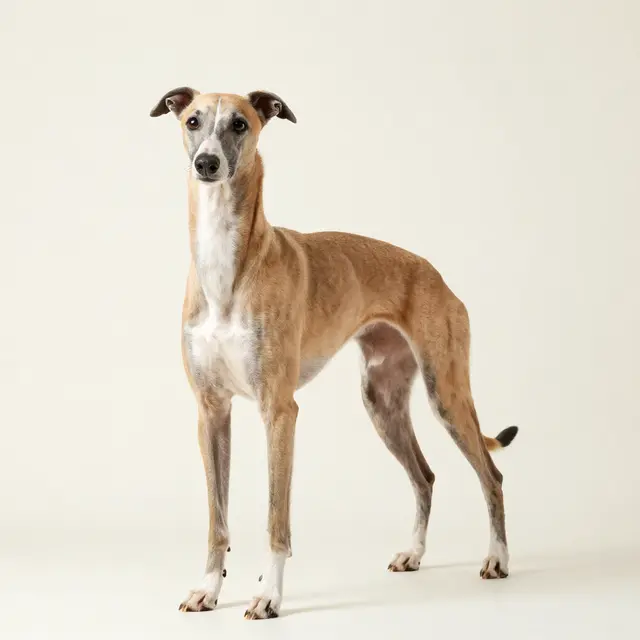
Whippet
A gentle, quiet "sofa sprinter" — happy to lounge at home between short bursts of explosive running.
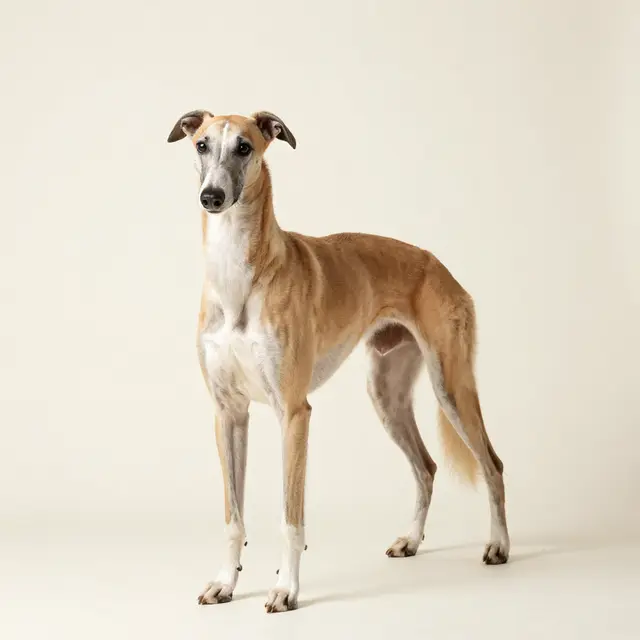
Greyhound
The ultimate couch potato — despite their racing reputation, retired greyhounds need surprisingly little exercise.
Similar temperament
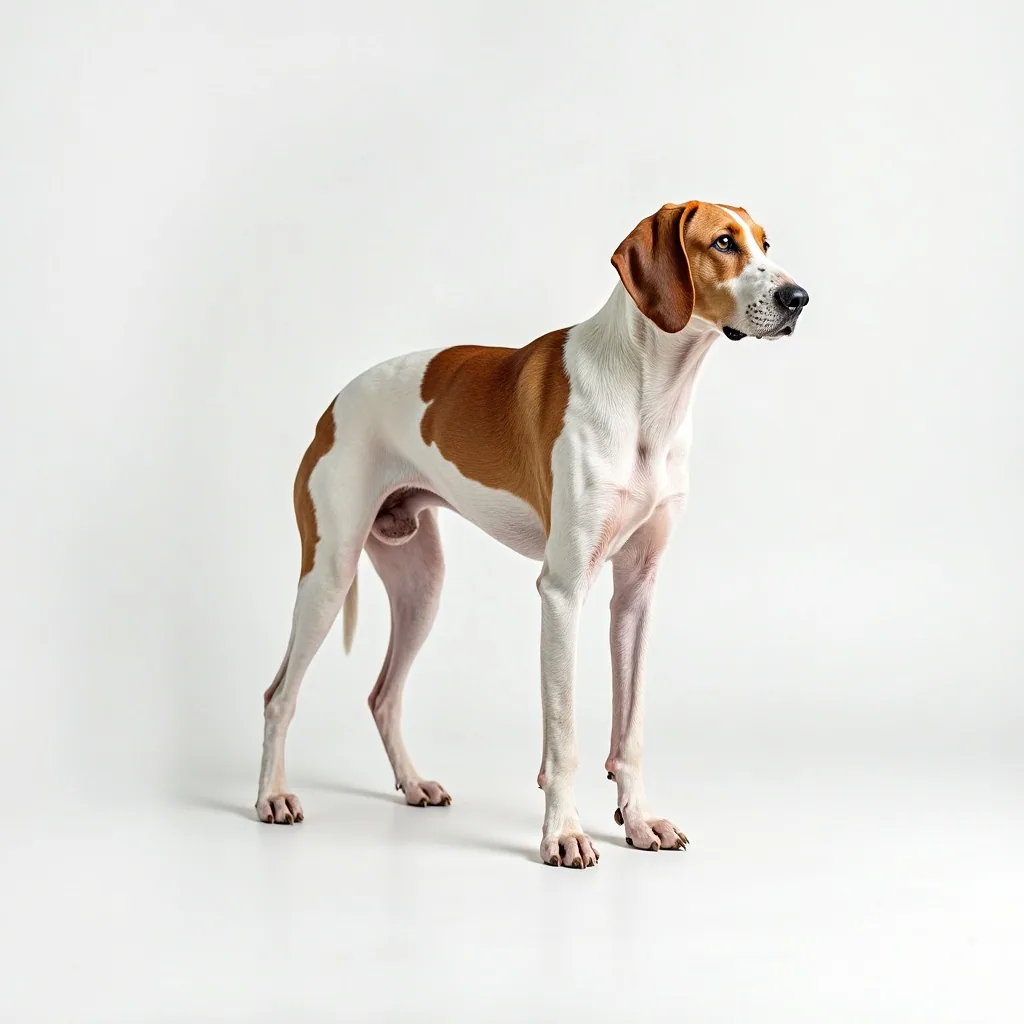
American Foxhound
A tireless pack scenthound bred for hunting fox. Sociable and gentle with people and dogs, but high-energy, vocal and easily distracted by scent.
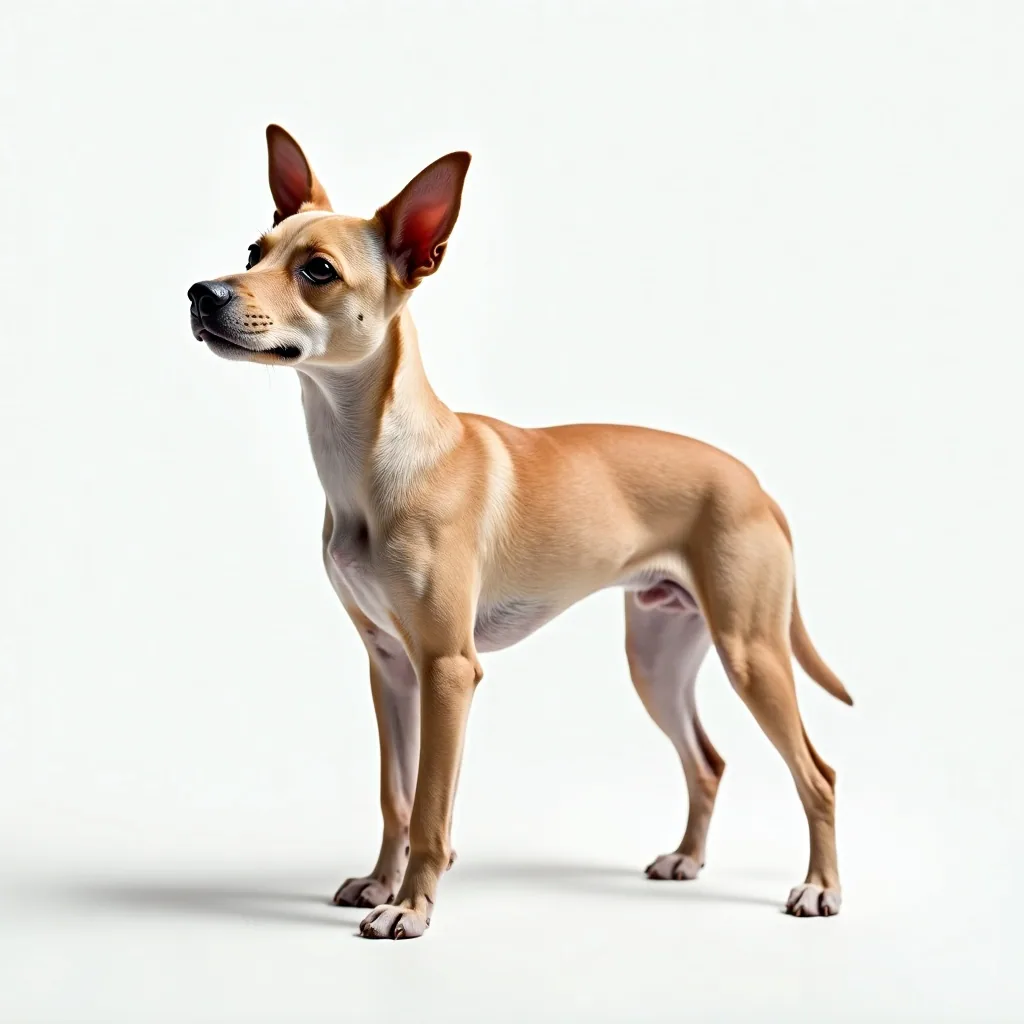
Anglo-Français de Petite Vénerie
A French pack scenthound bred for hunting small game. Highly sociable with other dogs and people, but needs hard exercise and is driven by scent.

Ariégeois
A French pack scenthound bred for hare. Sociable, gentle and good in company, but a tireless worker driven by scent and best suited to active rural homes.

Beagle-Harrier
A French pack scenthound midway between Beagle and Harrier, bred for hunting hare. Highly sociable and gentle with people and dogs, but a tireless worker driven by scent and needing serious exercise.
Similar size, different type
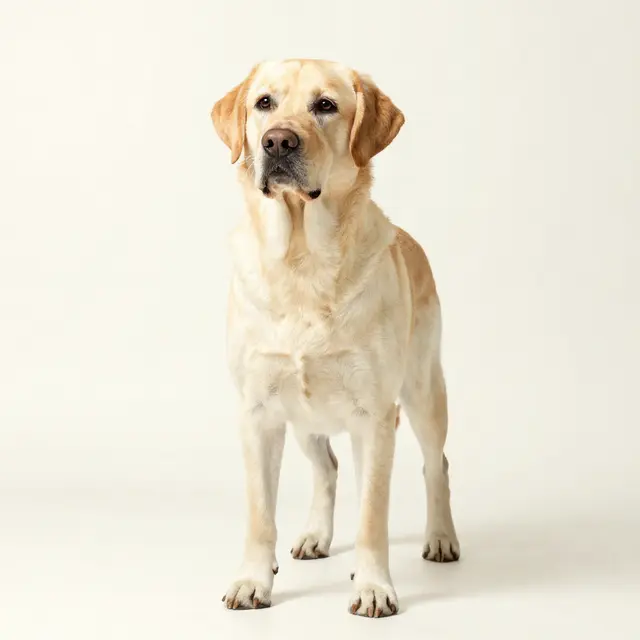
Labrador Retriever
The UK’s most popular family dog — friendly, biddable and brilliant with children, but needs proper exercise.

Golden Retriever
Gentle, eager-to-please and devoted — a classic family companion that thrives on company and exercise.
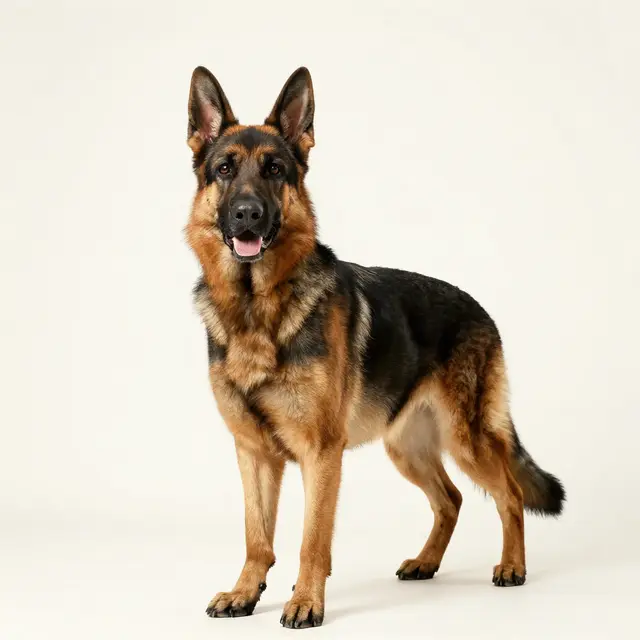
German Shepherd
A loyal, courageous and highly trainable working dog that needs experienced handling and plenty to do.
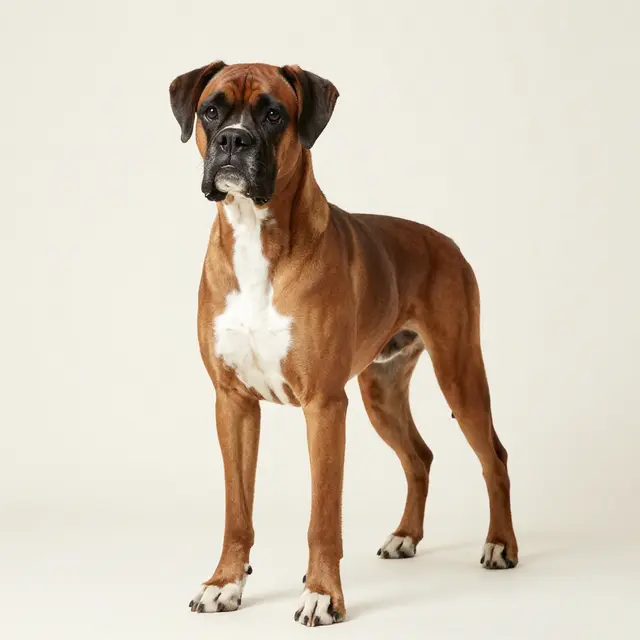
Boxer
A bouncy, playful and devoted family dog that stays puppy-like for years — and needs the exercise to match.
Is the Chien Français Blanc et Noir your breed?
Create your pet profile and get personalised food, toy, insurance and health recommendations — tailored to your dog.
Frequently asked questions
How big does a Chien Français Blanc et Noir get?
This is a large French scenthound. Adults typically stand around 62 to 72 cm at the shoulder and weigh roughly 30 to 35 kg, with an athletic, deep-chested frame built for stamina over long days in the field rather than for living as a compact house dog.
What is the average lifespan of a Chien Français Blanc et Noir?
As a large working hound, it typically lives around 10 to 12 years. As with any breed, lifespan varies with genetics, diet, exercise and routine veterinary care. Keeping the dog lean and fit and sourcing from a responsible breeder give the best chance of a long, healthy life.
What is the temperament of the Chien Français Blanc et Noir like?
It is renowned for being highly sociable, affectionate and even-tempered, thriving in the company of both dogs and people thanks to its pack-hunting heritage. That friendliness comes with a powerful scent drive, an independent streak and a loud, carrying hound voice. It dislikes being isolated and is happiest when active and engaged.
How much exercise does a Chien Français Blanc et Noir need?
A great deal. This is a very high-energy working hound built to range over long distances, so it needs extensive daily exercise and ideally a genuine working role. Because recall becomes unreliable once it catches a scent, free running should only happen in securely fenced areas. It is poorly suited to a sedentary life.
Does the Chien Français Blanc et Noir shed much, and is grooming easy?
Grooming is straightforward. The short, smooth coat needs only occasional brushing to remove dead hair and sheds moderately, with no specialist grooming required. As a drop-eared hound, its pendulous ears should be checked and cleaned regularly to help prevent infections, alongside routine nail trimming and dental care.
Is the Chien Français Blanc et Noir good with other dogs and children?
Yes, sociability is one of its defining traits. Bred to work cooperatively in packs, it is typically excellent with other dogs and good-natured with people, including families. It is not a guarding breed. Its size, energy and loud voice mean interactions with young children should always be supervised.
What health problems can affect the Chien Français Blanc et Noir?
Breed-specific data is limited as it is rare outside France, so guidance leans on general large-hound principles. Like most large breeds it can be prone to hip dysplasia, and deep-chested dogs carry a risk of bloat (a sudden emergency). Its long ears need regular care to prevent infections. Ask breeders about screening and longevity.
Is the Chien Français Blanc et Noir suitable for first-time owners?
Generally no. Its powerful scent drive, unreliable recall, loud voice and demanding exercise needs make it best suited to experienced, active owners, ideally those involved in hunting or able to provide an equivalent outlet. It needs secure fencing and on-lead control in open areas, and is poorly matched to urban or apartment life.
Are Chien Français Blanc et Noirs good with children?
Good with children. As a general guide, Chien Français Blanc et Noirs tend to be patient and tolerant. Whatever the breed, always supervise dogs and young children and teach kids to interact gently.
How much exercise does a Chien Français Blanc et Noir need?
As a healthy adult, a typical Chien Français Blanc et Noir needs 2 hours or more, plus a job to do of exercise a day (120–180 minutes), split across walks plus play. Higher-energy dogs also need mental stimulation — sniffing, training games and puzzle feeders — to stay settled. Puppies, seniors and dogs with health conditions need less — ask your vet.
Do Chien Français Blanc et Noirs shed a lot?
Moderate shedding. Coat upkeep is wash-and-go — a quick brush now and then is usually enough.
Are Chien Français Blanc et Noirs easy to train and good for first-time owners?
Better with some experience. Chien Français Blanc et Noirs are best for owners ready to commit to consistent training and plenty of activity. Reward-based training and early socialisation help any dog.
Do Chien Français Blanc et Noirs bark a lot?
Vocal / alert barker. They can be quite vocal, so early training and enough exercise and stimulation help keep barking in check.
Are Chien Français Blanc et Noirs good with other dogs?
Very sociable with other dogs. Early, positive socialisation with other dogs from a young age makes a big difference.
Do Chien Français Blanc et Noirs suit flats or smaller homes?
Needs plenty of space. A Chien Français Blanc et Noir really needs plenty of space and a lot of daily activity — not ideal for a small flat.
Sources
- Fédération Cynologique Internationale (FCI) - Chien Français Blanc et Noir breed standard and group classification: https://www.fci.be/en/nomenclature/
- The Kennel Club (UK) - breed standards and general guidance used for hound and large-breed care: https://www.thekennelclub.org.uk/breed-standards/
- PDSA - dog health, weight and large-breed care advice: https://www.pdsa.org.uk/pet-help-and-advice/looking-after-your-pet/dogs
- Blue Cross - dog care, behaviour and breed-suitability guidance: https://www.bluecross.org.uk/advice/dog
- Royal Veterinary College (RVC) VetCompass - epidemiological research on canine health, including joint disease, bloat and ear conditions: https://www.rvc.ac.uk/vetcompass
Recommended for your Chien Français Blanc et Noir
Matched to a Chien Français Blanc et Noir's size and their typical need for enrichment & mental stimulation, no-pull walking kit, a cosy bed.


Hollings Choice Cuts Pure Beef Curls
Hollings Choice Cuts Pure Beef Curls: 100g bag, with declared composition and analysis
£3.49

Reflective Two-Tone Dog Harness and Lead Set
A bright two-tone step-in dog harness with a matching lead. Adjustable straps and quick-release buckles give a snug fit, while reflective trim keeps your dog visible on darker walks.
£7.99

L-Shaped Bolster Sofa Dog Bed
A supportive L-shaped sofa bed with a raised bolster back and side for your dog to rest their head. The thick padded base cushions joints, and the soft rose-velvet cover is removable and washable for easy care.
From£44.99

Plush Snuffle Foraging Mat
A roll-up plush snuffle mat with cute animal designs. Hide treats in the folds and let your pet sniff and forage to find them - a rewarding enrichment game that beats boredom and slows feeding.
£13.99

Plush Bee Cat Harness and Lead Set
A soft plush cat harness with a 3D bee charm and a matching lead, adjustable at neck and chest, made for kittens, cats and very small dogs on gentle outings.
£7.99

Corduroy Dog Harness with Bow
A soft corduroy step-in dog harness with breathable mesh lining and gold-tone alloy buckles. The adjustable fit and pretty bow detail make walks comfortable and stylish for small and medium dogs.
From£7.99

Orthopaedic Memory Foam Dog Sofa Bed
An orthopaedic memory-foam dog bed with supportive bolster sides for head and neck resting. The egg-crate foam core cushions joints and distributes weight, ideal for older or larger dogs needing extra support.
From£39.99
Suggestions based on breed traits — always check sizing and suitability for your individual dog.
Got a Chien Français Blanc et Noir? Save them to a pet profile for tailored picks across the whole site.
Happier, healthier pets — in your inbox.
Breed care tips, seasonal advice and first access to new arrivals. No spam, unsubscribe anytime.
Every dog is an individual — temperament and needs vary. Please research thoroughly, meet dogs in person, and consider adopting from a rescue. This is general guidance, not a substitute for advice from your vet or a qualified trainer.