
Lhasapoo
A small, characterful cross of the watchful Lhasa Apso and the clever Poodle. Affectionate and bright, but can inherit the Lhasa's independent, alert streak; coat type varies between pups.

Lhasapoo scorecard
Overview
The Lhasapoo, also called the Lhasadoodle, is a small designer crossbreed produced by mating a Lhasa Apso with a Poodle (usually a Toy or Miniature Poodle). The cross aims to combine the characterful, watchful nature of the Lhasa Apso with the intelligence and lower-shedding coat of the Poodle. Most Lhasapoos are small companion dogs with wavy or curly coats in a wide variety of colours.
The Lhasapoo is not a recognised breed. Neither The Kennel Club nor the FCI registers it, there is no breed standard and no central registry, so type is not guaranteed. Because the Lhasa Apso is an independent, somewhat aloof watchdog and the Poodle a biddable, outgoing companion, individuals can vary noticeably in temperament as well as coat and size. Prospective owners should research both parent breeds and expect a characterful individual rather than a standardised dog.
Good to know — a Lhasapoo is flat-friendly and good for first-time owners. Every dog is an individual, so meet a few and chat to a good breeder or rescue before deciding.
Save the Lhasapoo guide
Thinking about a Lhasapoo? Pop your email in and we’ll send this guide so you can come back to it any time — handy while you compare breeds.
Popular searches for the Lhasapoo
History & origins
The Lhasapoo is a modern designer cross with no history of its own, part of the broad popularity of Poodle crosses that followed the Labradoodle of the late 1980s. Deliberate Lhasa Apso × Poodle litters have become more common since the 2000s, marketed as small, lower-shedding companions.
The parent breeds carry the heritage. The Lhasa Apso is an ancient Tibetan breed kept for centuries as a watchful indoor sentinel in monasteries and homes, prized for its alertness, independence and long, flowing coat; despite its small size it has a confident, somewhat aloof temperament. The Poodle, in Toy and Miniature form, descends from the German water-retrieving gundog and is among the most intelligent and trainable breeds. Crossing a self-possessed Tibetan watchdog with a clever, sociable Poodle tends to produce a small, bright dog whose character can range from outgoing to reserved — though the cross has no standardised lineage of its own.
Temperament & family fit
Lhasapoos are typically affectionate and loyal with their families while often retaining a degree of the Lhasa's independence and alertness. The Poodle influence usually adds friendliness, trainability and a desire to be involved, while the Lhasa side can bring a watchful, sometimes aloof attitude toward strangers and a tendency to alert-bark. Many Lhasapoos are devoted, engaging companions that bond closely with their households.
Temperament varies more than in some crosses because the two parents differ so much in outlook. A Lhasapoo may lean toward the sociable, eager-to-please Poodle or the more reserved, self-reliant Lhasa, or sit somewhere between. Early, positive socialisation is especially important to encourage confidence and friendliness and to temper any wariness or possessiveness, helping produce a well-rounded, sociable adult.
- Families with older, respectful children
- Committed first-time owners
- Flats or houses with daily exercise
Training & intelligence
Lhasapoos are intelligent but can inherit the Lhasa's independent, stubborn streak alongside the Poodle's biddability, so results vary with the individual. Positive, reward-based training with short, engaging sessions works best, as a self-willed small dog can simply lose interest or dig in under pressure. Consistency and patience matter, since a clever small dog quickly learns what it can get away with.
House-training can require patience, as with many small breeds, so a steady routine helps. Managing alert-barking is often worthwhile, given the Lhasa's watchdog heritage. Early socialisation with people, dogs and everyday situations is particularly valuable to counter any tendency toward wariness or guarding of resources, and to bring out a confident, friendly temperament.
- Start socialisation & handling early
- Reward-based methods only — no harsh corrections
- Keep sessions short, calm and consistent
Exercise needs
A healthy adult Lhasapoo typically needs around an hour a day (roughly 60–80 minutes), split across walks, play and a little training. A good sniffy walk, some play and a little training usually keeps them content. Puppies, seniors and dogs with health conditions need adjusted amounts — check with your vet.
Grooming & coat
The Lhasapoo's wavy-to-curly coat is prone to matting, drawing on the Lhasa's long coat and the Poodle's curls, and needs regular care — usually brushing several times a week and professional grooming every six to eight weeks. 'Low-shedding' and 'hypoallergenic' are marketing terms rather than guarantees, and no dog is truly hypoallergenic. The hair around the eyes should be kept trimmed and clean to protect the eyes, and ears checked regularly, as small dogs with hairy ear canals can be prone to infections.
- Brush several times a week
- Bathe every few weeks or as needed
- Check ears, nails and teeth weekly
Feeding a Lhasapoo
Feed a complete diet appropriate to a small dog's age and activity level, following the manufacturer's guidelines and adjusting to keep the dog lean. Small dogs gain weight easily, so portions and treats should be controlled, and small-breed kibble suits small mouths. Dental disease is common in small breeds, so feeding to support dental health and maintaining a tooth-care routine is worthwhile. Dividing the daily ration into two meals suits most small dogs and helps maintain steady energy.
A small breed
An adult Lhasapoo typically weighs 5–12 kg, so a healthy Lhasapoo eats a modest amount compared with other breeds. Every feeding guide on a bag is written per kilo of body weight, not per breed — start there, then adjust to the dog in front of you.
Life stage
A small breed is usually done growing at 10–12 months, which is roughly when a puppy food has finished its job. With a typical lifespan of 12–15 years, there is a long adult stretch in the middle; switch to a senior food when your vet thinks it is worth it rather than on a birthday.
Small mouths, crowded teeth
Smaller breeds get dental disease more often than big ones, largely because the same number of teeth are packed into a shorter jaw. Kibble size is worth checking, and a dental chew counts towards the daily 10% of calories from treats.
How much should a Lhasapoo weigh?
Adult 5–12 kgfully grown at 10–12 months
| Age | Stage | Typical weight | Of adult size |
|---|---|---|---|
| 8 weeks | Just home | 0.8–2 kg | 17% |
| 3 months | Young puppy | 1.4–3.3 kg | 27% |
| 6 months | Growing fast | 2.7–6.5 kg | 54% |
| 10–12 months | Fully grown | 5–12 kg | 100% |
A guide, from the same rule of thumb our puppy growth predictor uses — each age is that share of the way to maturity for a small breed. Puppies grow fastest early, so a real puppy usually sits a little above the middle rows. Weigh yours and ask your vet if the number worries you.
Complete dog foods that suit a Lhasapoo
Complete foods from our range, matched to a Lhasapoo's size band and what the breed typically needs. Stock levels and delivery dates are live on each product.


Pedigree Can in Jelly Puppy 6 Pack
Complete Pedigree puppy food in jelly with chicken, lamb and poultry recipes
£10.15

Forthglade Cold Pressed Natural Turkey
Cold-pressed turkey kibble for dogs from 2 months, soft enough to mix with water for young pups
£45.99

Forthglade Cold Pressed Grain Free Salmon
Cold-pressed grain-free dry food for dogs, built on fresh and dried salmon
From£16.99

Forthglade Cold Pressed Grain Free Duck
Cold-pressed grain-free duck food with fruit and botanicals, in two bag sizes
From£16.99

Forthglade Cold Pressed Grain Free Chicken
Cold-pressed grain-free chicken food with fruit and botanicals, in three bag sizes
From£16.99

Forthglade Complete Meal Lightly Baked Turkey
A lightly baked complete dry food, 50% turkey, for adult dogs of any breed
From£12.49

Forthglade Complete Meal Lightly Baked Chicken
A grain-free complete dry food for adult dogs, lightly baked and built on 50% chicken
From£12.49

Forthglade Cold Pressed Grain Free Turkey
Grain-free cold-pressed turkey kibble for dogs, gentle on sensitive stomachs
£69.69

Forthglade British Classics Chicken Family Lunch
Complete Forthglade wet dog food with 75% chicken in a 395G tray
£2.45

Harringtons Puppy Turkey & Rice
Complete turkey puppy food with 30% protein and feeding bands by adult weight
£6.49

Harringtons Just 6 Dry Dog Food Lamb
Grain-free lamb dry dog food in 2KG and 12KG sizes, with size-specific formulas
From£13.99
Lhasapoo health & costs
Before bringing a Lhasapoo home it pays to budget for the whole picture — food, insurance, grooming and routine vet care all add up. The figures below are typical UK estimates for a healthy adult; your real costs vary with where you live, your dog's health and the cover you choose.
Food
£250–400 / year
Complete food sized to weight & life stage
Insurance
£15–32 / month
Lifetime cover — varies by age, breed & area
Grooming
£400–700 / year
Regular professional grooming
Routine vet care
£200–450 / year
Vaccines, flea/worm, annual check
As a crossbreed, the Lhasapoo can inherit the health problems of both parent breeds, and crossbreeding reduces but does not remove inherited disease risk. Responsible breeders should health-test the parents, and prospective owners should ask to see the results.
From the Lhasa Apso side, concerns include hereditary kidney disease (renal dysplasia), eye conditions such as progressive retinal atrophy, dry eye (keratoconjunctivitis sicca) and cherry eye, patellar luxation and, owing to the shortened muzzle, some risk of breathing and dental crowding issues. From the Toy/Miniature Poodle side, concerns include patellar luxation, progressive retinal atrophy and other eye conditions, Legg-Calvé-Perthes disease, epilepsy and dental disease. Relevant DNA and eye tests and patella checks of the parents help reduce risk.
Common health conditions to be aware of
- Patellar luxation — slipping kneecaps common in small breeds, causing intermittent lameness and sometimes requiring surgery.
- Progressive retinal atrophy (PRA) — inherited retinal degeneration leading to blindness, recognised in both parent breeds and screened by DNA test.
- Renal dysplasia — an inherited kidney malformation recognised in the Lhasa Apso that can cause early kidney failure.
- Dry eye (keratoconjunctivitis sicca) and cherry eye — eye conditions seen in the Lhasa parent that may need ongoing treatment or minor surgery.
- Dental disease — small breeds are prone to overcrowded teeth and periodontal disease; regular tooth care helps prevent problems.
- Ear infections — wavy, hairy ears can trap moisture and wax, predisposing to recurrent otitis that needs regular checking.
These reflect typical, size- and coat-related risks for dogs like the Lhasapoo; individual breeds carry their own predispositions. Always buy from health-tested parents and speak to your vet — this isn't a diagnosis.
Protect against surprise bills
A single emergency can run into thousands. Lifetime insurance spreads the risk.
Estimate insurance →How pet insurance works →Puppy & senior care
Bringing home a Lhasapoo puppy
Puppies need controlled exercise (a rough guide is five minutes per month of age, twice a day) to protect growing joints, little-and-often meals of a complete puppy food, early socialisation, and a calm routine for toilet training and sleep. Book first vaccinations, microchipping and a vet check early.
New puppy checklist →Caring for a senior Lhasapoo
As they age, watch weight, joints and teeth, switch to a senior diet if your vet advises, keep exercise gentle but regular, and consider orthopaedic bedding and ramps. Twice-yearly vet checks help catch issues early.
Orthopaedic beds & mobility →Pros & cons
The good bits
- Affectionate, bright and apartment-friendly
- Often low-shedding wavy coat
Things to consider
- Can be independent and alert/watchful
- Coat needs regular grooming to avoid matting
Compare the Lhasapoo
See how the Lhasapoo measures up against similar breeds before you decide:
More breeds like the Lhasapoo
Same breed group
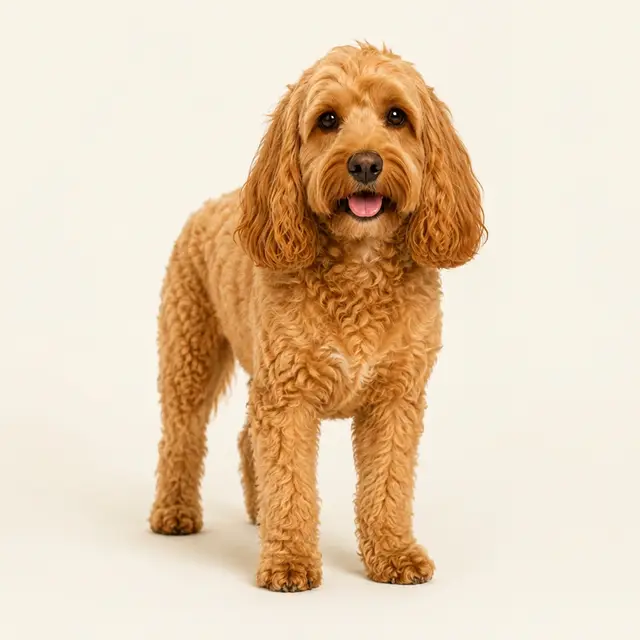
Cockapoo
A hugely popular Cocker × Poodle crossbreed — friendly, lower-shedding and great with families.
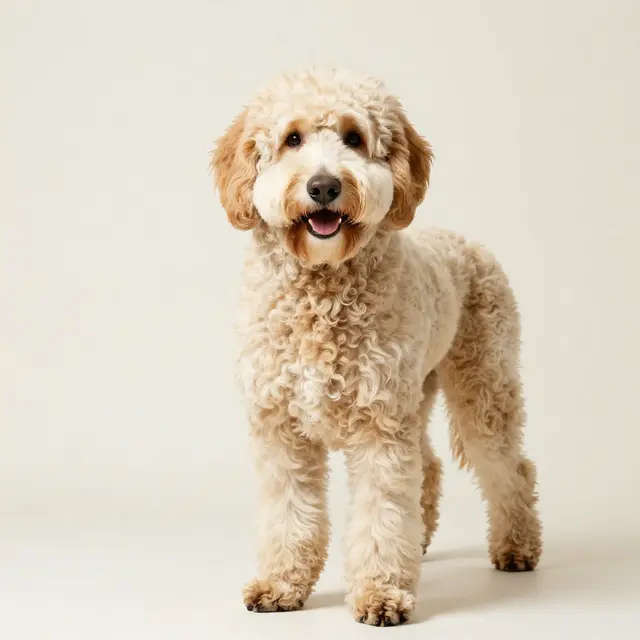
Labradoodle
A friendly Labrador × Poodle crossbreed — sociable, often lower-shedding, and a popular family choice.
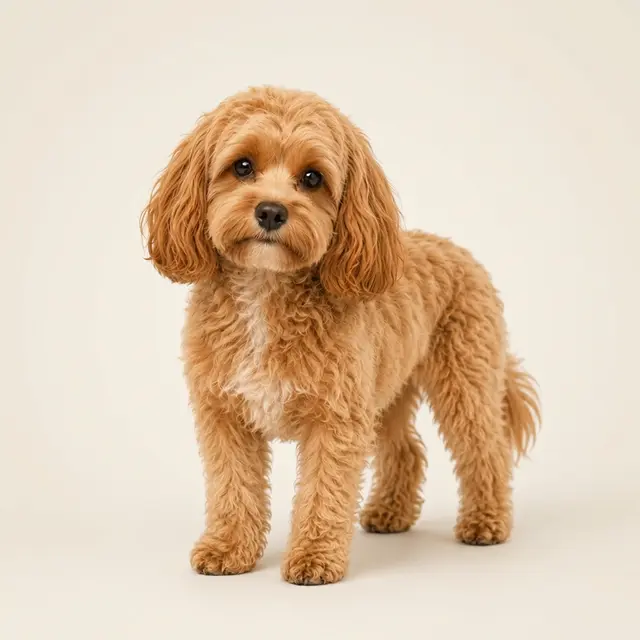
Cavapoo
One of the UK’s most popular crossbreeds (Cavalier × Poodle) — affectionate, adaptable and usually low-shedding.
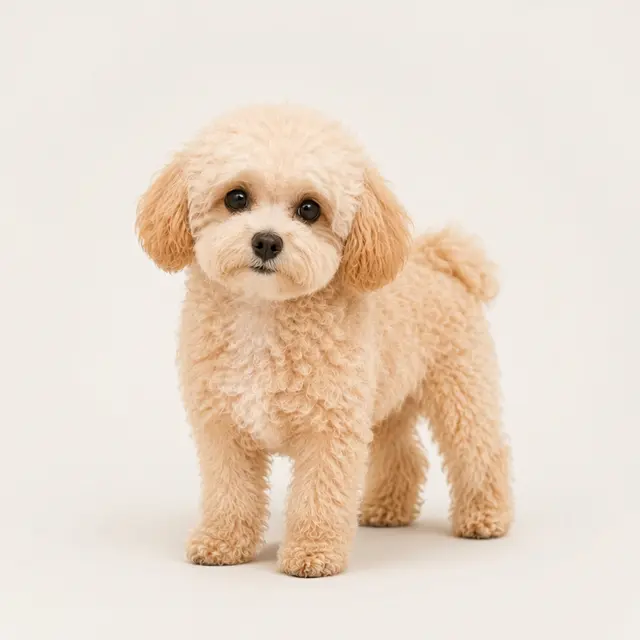
Cavapoochon
A small triple-cross (Cavalier × Bichon × Poodle) — friendly, low-shedding and well suited to family and flat life.
Similar temperament
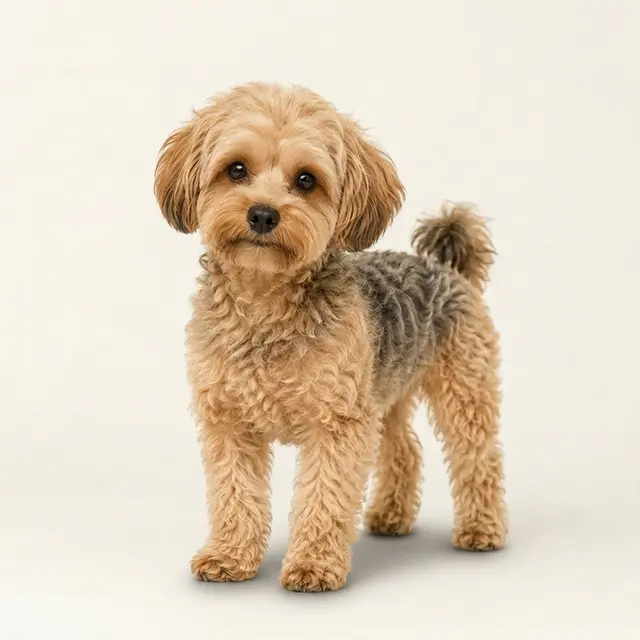
Yorkipoo
A Yorkie × Poodle cross — tiny, lively and usually low-shedding, well suited to flats and smaller homes.
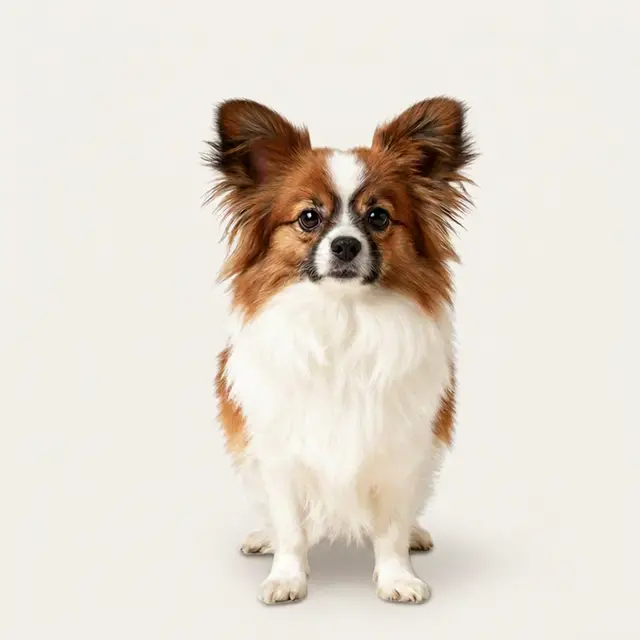
Papillon
The butterfly-eared toy — one of the smartest small breeds, surprisingly active and very trainable.
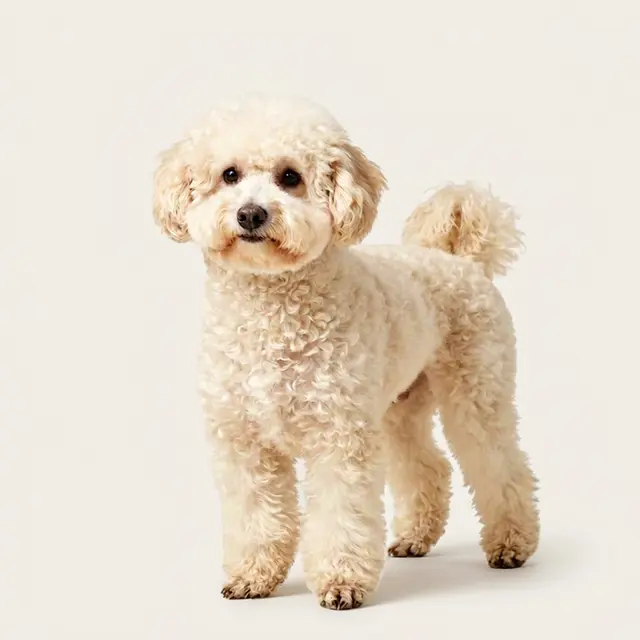
Maltipoo
A Maltese × Poodle cross — affectionate, playful and usually low-shedding, a popular lap-sized companion.
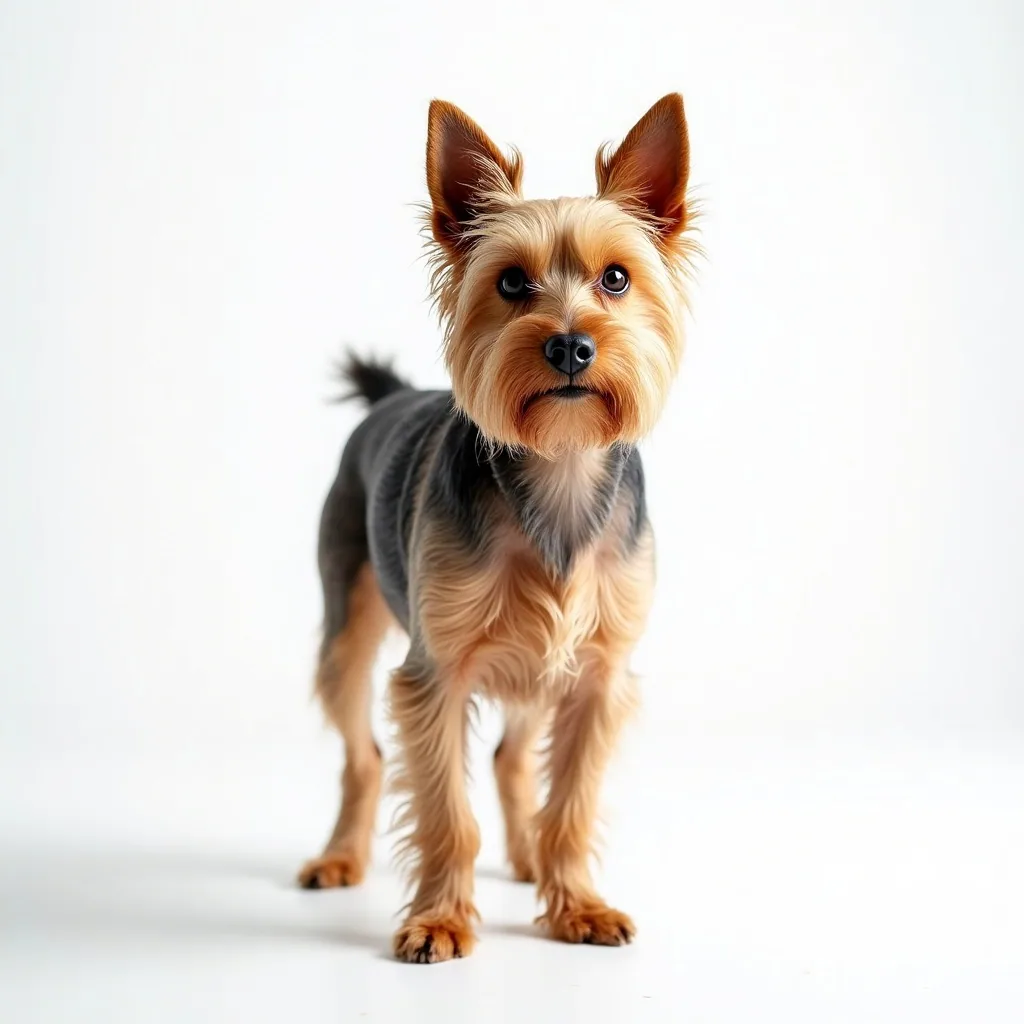
Australian Silky Terrier
A small, glossy-coated toy terrier with a bold spirit. Friendly and companionable, but keen, alert and prone to barking, with a silky coat that needs regular care.
Similar size, different type
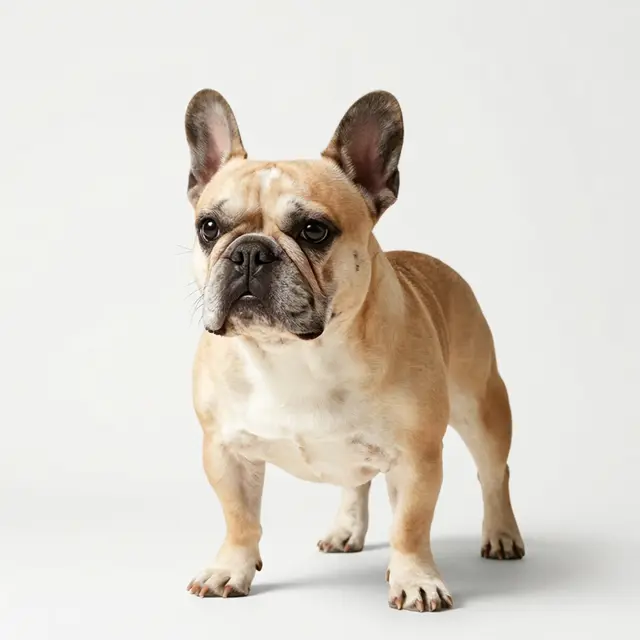
French Bulldog
A compact, easy-going companion that suits flats and modest exercise — but with serious health considerations.
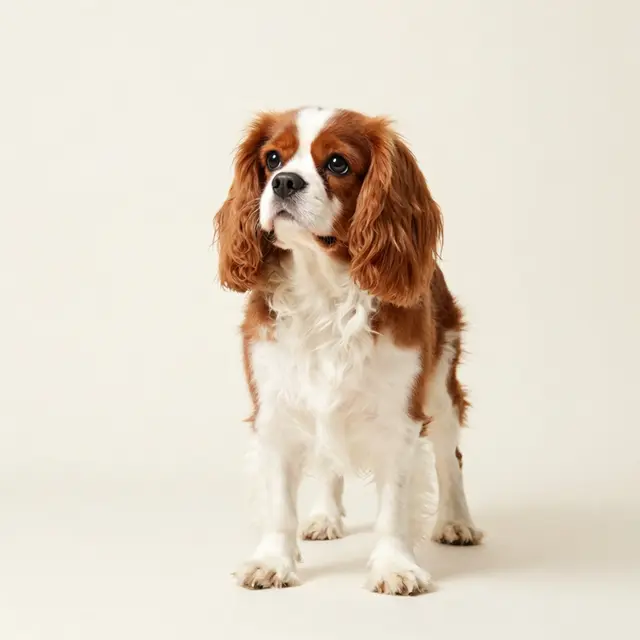
Cavalier King Charles Spaniel
A gentle, affectionate lap dog that’s wonderful with children and adapts happily to flat or house living.
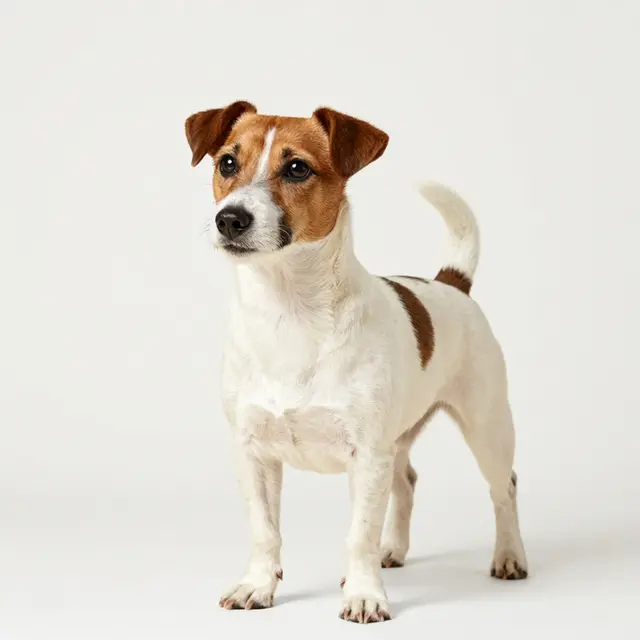
Jack Russell Terrier
A small dog with a huge personality — bold, clever and bursting with energy and prey drive.
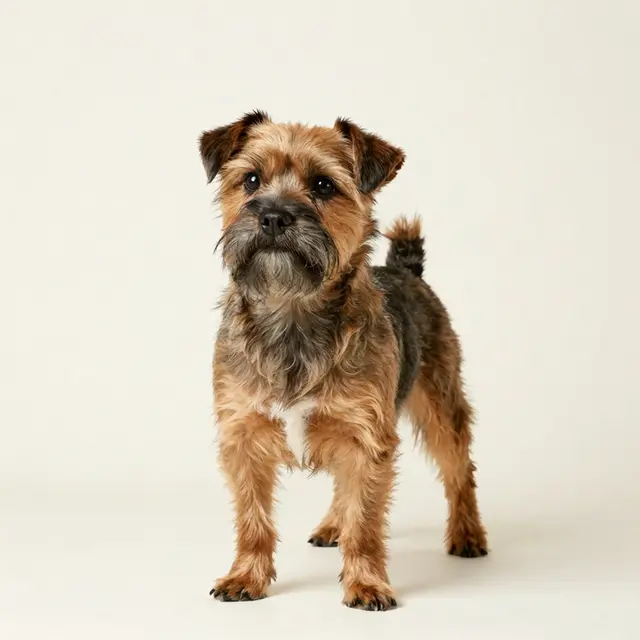
Border Terrier
A hardy, good-natured working terrier that’s friendlier with people and dogs than many of its terrier cousins.
Is the Lhasapoo your breed?
Create your pet profile and get personalised food, toy, insurance and health recommendations — tailored to your dog.
Frequently asked questions
What is a Lhasapoo?
The Lhasapoo, sometimes called the Lhasadoodle, is a small designer crossbreed produced by mating a Lhasa Apso with a Poodle, usually a Toy or Miniature. It aims to blend the watchful, characterful Lhasa with the intelligence and lower-shedding coat of the Poodle. It is not a breed recognised by The Kennel Club or FCI, so type is not guaranteed.
How big does a Lhasapoo get when fully grown?
A fully grown Lhasapoo is a small companion dog, typically standing around 23–38 cm at the shoulder and weighing roughly 5–12 kg. Because it is a crossbreed with no breed standard, size varies depending on the Poodle parent used and which genes dominate, so individuals can differ noticeably even within the same litter.
Are Lhasapoos hypoallergenic?
No dog is truly hypoallergenic, and 'hypoallergenic' and 'low-shedding' are marketing terms rather than guarantees. Lhasapoos often inherit a lower-shedding, Poodle-influenced coat, which some allergy sufferers tolerate better, but coat type is unpredictable in a crossbreed. If allergies are a concern, spend time with the individual dog before committing.
What is a Lhasapoo's temperament like?
Lhasapoos are typically affectionate and loyal with their families, often combining the Poodle's friendliness and trainability with the Lhasa's watchful, sometimes aloof streak. Temperament varies more than in some crosses because the parents differ so much. Early, positive socialisation is especially important to build confidence and temper any wariness or alert-barking.
How much grooming does a Lhasapoo need?
Quite a lot. The wavy-to-curly coat is prone to matting and usually needs brushing several times a week, plus professional grooming every six to eight weeks. Keep the hair around the eyes trimmed and clean to protect them, and check the ears regularly, as small dogs with hairy ear canals can be prone to infections.
How much exercise does a Lhasapoo need?
Lhasapoos have modest exercise needs suited to a small companion dog, typically a couple of short-to-moderate daily walks plus indoor play and games. They adapt well to flats provided they get regular activity and interaction. Mental stimulation through training and puzzle toys helps keep these clever little dogs satisfied.
What health problems can Lhasapoos have?
As a crossbreed, a Lhasapoo can inherit conditions from either parent. From the Lhasa side these include hereditary kidney disease, eye conditions such as progressive retinal atrophy, dry eye and cherry eye, and patellar luxation. From the Poodle side, concerns include patellar luxation, eye disease, Legg-Calvé-Perthes disease and epilepsy. Always ask to see the parents' health-test results.
Are Lhasapoos suitable for flats and first-time owners?
Yes, Lhasapoos adapt well to a range of homes, including flats, suiting owners who can offer regular company and gentle activity. Their watchdog heritage means some will alert-bark, which is worth managing in close quarters, and their reserved streak means good socialisation pays off if visitors and other dogs are part of daily life.
Are Lhasapoos good with children?
Fine with sensible, older children. As a general guide, Lhasapoos tend to be fine with sensible, older children. Whatever the breed, always supervise dogs and young children and teach kids to interact gently.
How much exercise does a Lhasapoo need?
As a healthy adult, a typical Lhasapoo needs around an hour of exercise a day (60–80 minutes), split across walks plus play. A good sniffy walk plus some play and training usually keeps them happy. Puppies, seniors and dogs with health conditions need less — ask your vet.
Do Lhasapoos shed a lot?
Low shedding. Coat upkeep is high upkeep — plan on frequent brushing and regular trips to a groomer.
Are Lhasapoos easy to train and good for first-time owners?
Good for first-time owners. Lhasapoos are generally a forgiving choice for first-time owners who put in early training and socialisation. Reward-based training and early socialisation help any dog.
Do Lhasapoos bark a lot?
Moderate barker. They are usually fairly easy-going about barking, though any dog will bark if bored or under-exercised.
Are Lhasapoos good with other dogs?
Generally fine with other dogs. Early, positive socialisation with other dogs from a young age makes a big difference.
Do Lhasapoos suit flats or smaller homes?
Flat-friendly. A Lhasapoo can adapt to flat living as long as it gets its daily exercise and company.
Sources
- The Kennel Club — Lhasa Apso breed information: https://www.thekennelclub.org.uk/breed-standards/
- The Kennel Club — Poodle (Toy/Miniature) breed information and health schemes: https://www.thekennelclub.org.uk/breed-standards/
- The Kennel Club — health and dog care advice, including crossbreed guidance: https://www.thekennelclub.org.uk/health-and-dog-care/
- PDSA — dog breeds and care advice: https://www.pdsa.org.uk/pet-help-and-advice/looking-after-your-pet/puppies-dogs
- Blue Cross — dog breeds and care advice: https://www.bluecross.org.uk/advice/dog
- RVC VetCompass — dog health research programme: https://www.rvc.ac.uk/vetcompass
Recommended for your Lhasapoo
Matched to a Lhasapoo's size and their typical need for regular coat care, dental care.

Wooden Pet Deshedding Grooming Brush
An ergonomic wooden grooming brush with a fine-toothed edge that loosens and lifts away dead and shedding fur. The smooth contoured handle sits comfortably in the hand for quick, gentle daily de-shedding.
£14.99

Pet Oral Spray for Dogs & Cats
A 100ml pet oral spray for dogs and cats that helps promote fresh breath and cleaner teeth. Simply spray onto teeth and gums - no brushing needed for daily oral care.
£8.99

Bugalugs Double-Sided Dematting Rake for Dogs & Cats
Two tools in one: tackle stubborn mats with the 9-tooth side, then thin and de-shed with the 17-tooth side — ideal for long or double-coated pets.
£11.99

Whimzees Stix Daily Dental Dog Chew Value Bag
Gluten-free Stix dental chews for dogs, value bag — not for dogs under 5lb or 9 months
£10.99

Kenchii Scorpion 8-Inch 24-Tooth Chunker & Blender Scissors
Performance chunker and blending scissors from Kenchii's Scorpion range — Japanese alloy stainless steel with specially designed blades for daily professional use.
£104.49

Warm Stretch Snood for Dogs, Ear and Neck Cover, S, M and L
A stretch snood that gathers long ears back against the head and out of food bowls, puddles and brambles, knitted in a soft cationic-spandex blend in purple or blue.
£10.99

Electric Pet Grooming Clipper
A quiet, rechargeable electric clipper for trimming dogs, cats, rabbits and other pets at home. Low-noise and low-vibration with an adjustable blade for tidy, stress-free grooming around the body and paws.
From£11.99

Turkey Tail Mushroom & Probiotic Powder
A bacon-flavoured turkey tail mushroom and probiotic powder you sprinkle over food. Made to support immunity, energy and gut health, with scoop guidance for every weight from small to large pets.
£13.99
Suggestions based on breed traits — always check sizing and suitability for your individual dog.
Got a Lhasapoo? Save them to a pet profile for tailored picks across the whole site.
Happier, healthier pets — in your inbox.
Breed care tips, seasonal advice and first access to new arrivals. No spam, unsubscribe anytime.
Every dog is an individual — temperament and needs vary. Please research thoroughly, meet dogs in person, and consider adopting from a rescue. This is general guidance, not a substitute for advice from your vet or a qualified trainer.