
Best Herding Ball for Dogs UK: Size & Buying Guide
The best herding ball is one your dog cannot pick up: 45cm for most collies and spaniels, 55cm for big shepherds, with a tough cover over a separate bladder. Here is how to choose the size and type, and how to start the game.
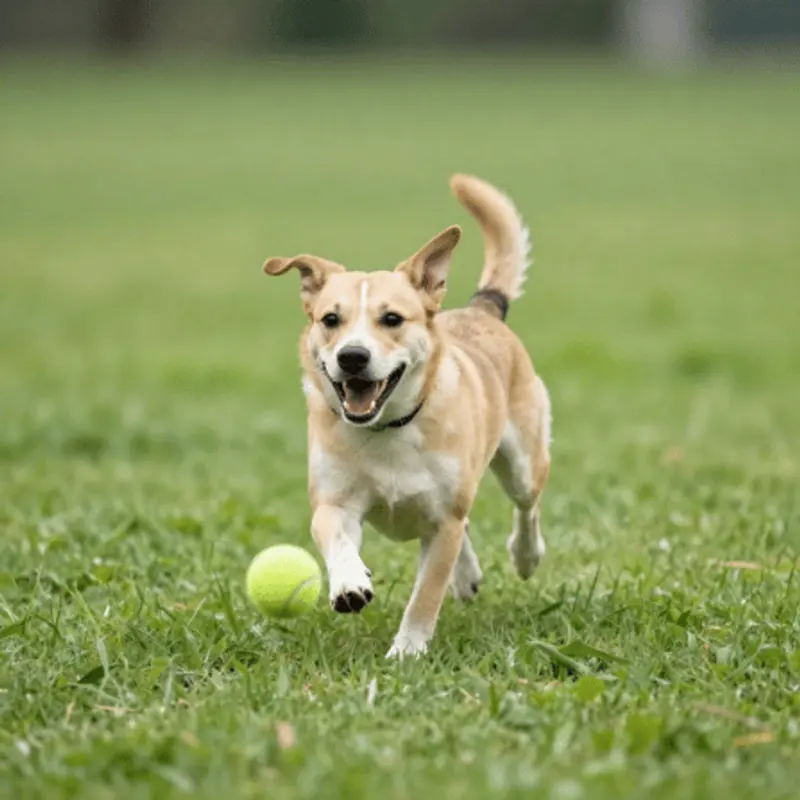
The quick answer
Choose a ball your dog cannot pick up: 25cm for small terriers, 45cm for most collies and spaniels, 55cm for big shepherds. Look for a tough cover over a separate inner bladder, pump it hard, and play on grass.
Mentioned in this guide

Herding Ball for Dogs — 45cm Tough Oxford Cover
A 45cm herding ball with a tough Oxford cover over a separate inner bladder, with a foot pump in the box.
£29.99

Herding Ball with Handles & Pump for Dogs
A herding ball in three sizes with webbing handles sewn round it, a tough outer shell over an inflatable bladder, and a pump in the box.
From£19.99

Inflatable Herding Ball for Dogs — 25, 45 & 55cm
An inflatable herding ball in two prints and three sizes, with webbing handles and a concealed zip.
From£15.99

Inflatable Herding Ball for Dogs
A large inflatable ball too big for a dog to pick up, with a bite-resistant double-layer shell that slow-deflates if punctured, for high-drive chasing and nudging.
£23.99
The best herding ball for most dogs is a 45cm inflatable ball with a tough outer cover over a separate inner bladder, pumped up hard so there is nothing to bite. Go up to 55cm for big shepherds and large crossbreeds, and down to 25cm only for small terriers. The one rule that matters: your dog must not be able to pick it up.
That rule is the whole idea. A ball a dog can carry ends the game the moment it is caught. A ball too big to grip keeps rolling away, so the dog noses it, shoulders it and drives it round the garden, which is close to the job herding breeds were bred for.
If you already know roughly what you want, the full herding balls range lists every size we sell side by side, with price and delivery time on each.
Our picks
Chosen on the tests in this guide: the right size for the dog, a cover that can take claws and teeth, and how easy it is to pump up and pack away.
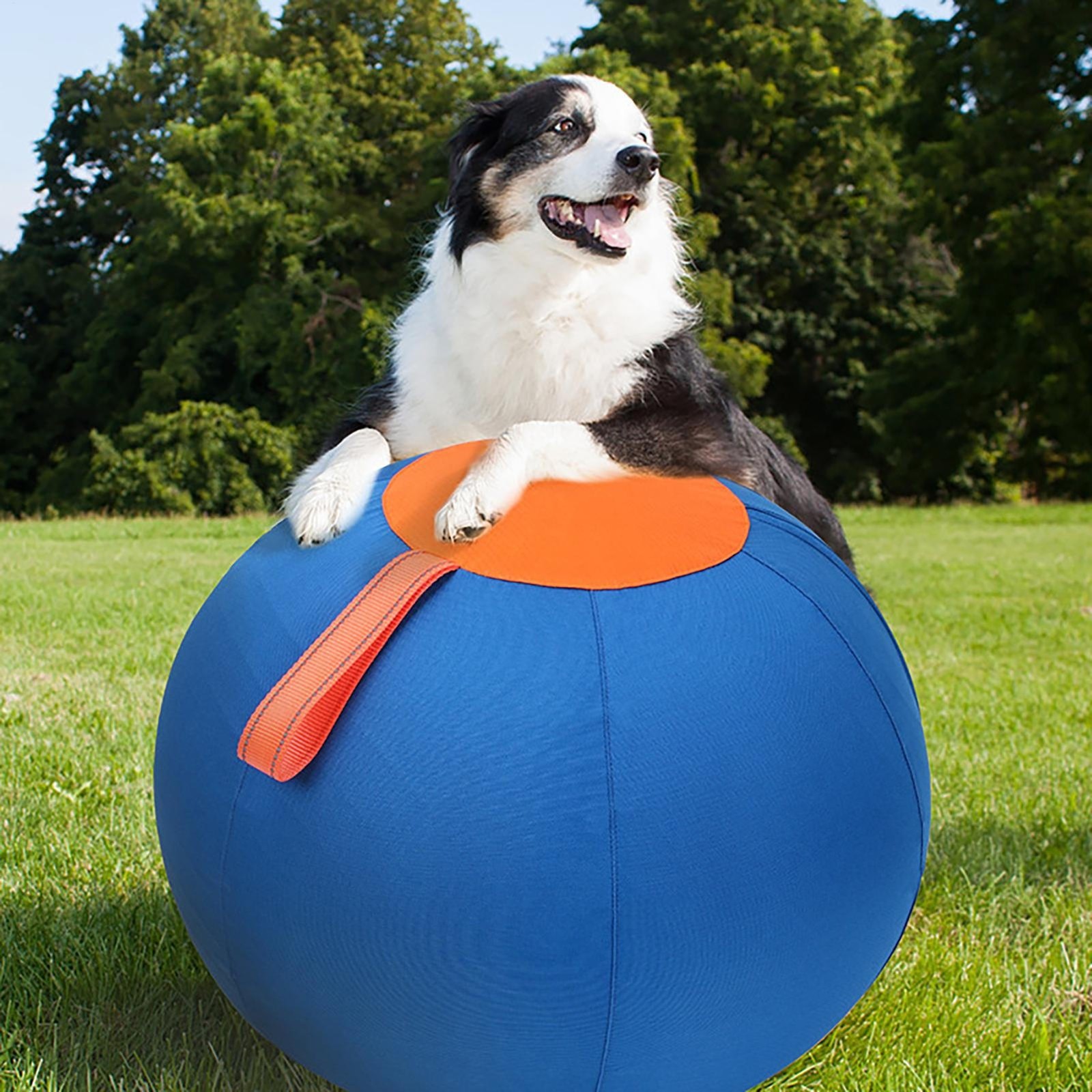
Best overall
Herding Ball for Dogs — 45cm Tough Oxford Cover
Why we picked it
A 45cm ball with an 1800D polyester Oxford cover over its own inner bladder, so the part taking the wear is not the part holding the air. A foot pump is in the box, and it is held in the UK, so it usually arrives in 2 to 3 days. The right size for most collies, spaniels and Australian Shepherds.
- In stock
- Tracked delivery: 2–3 working days
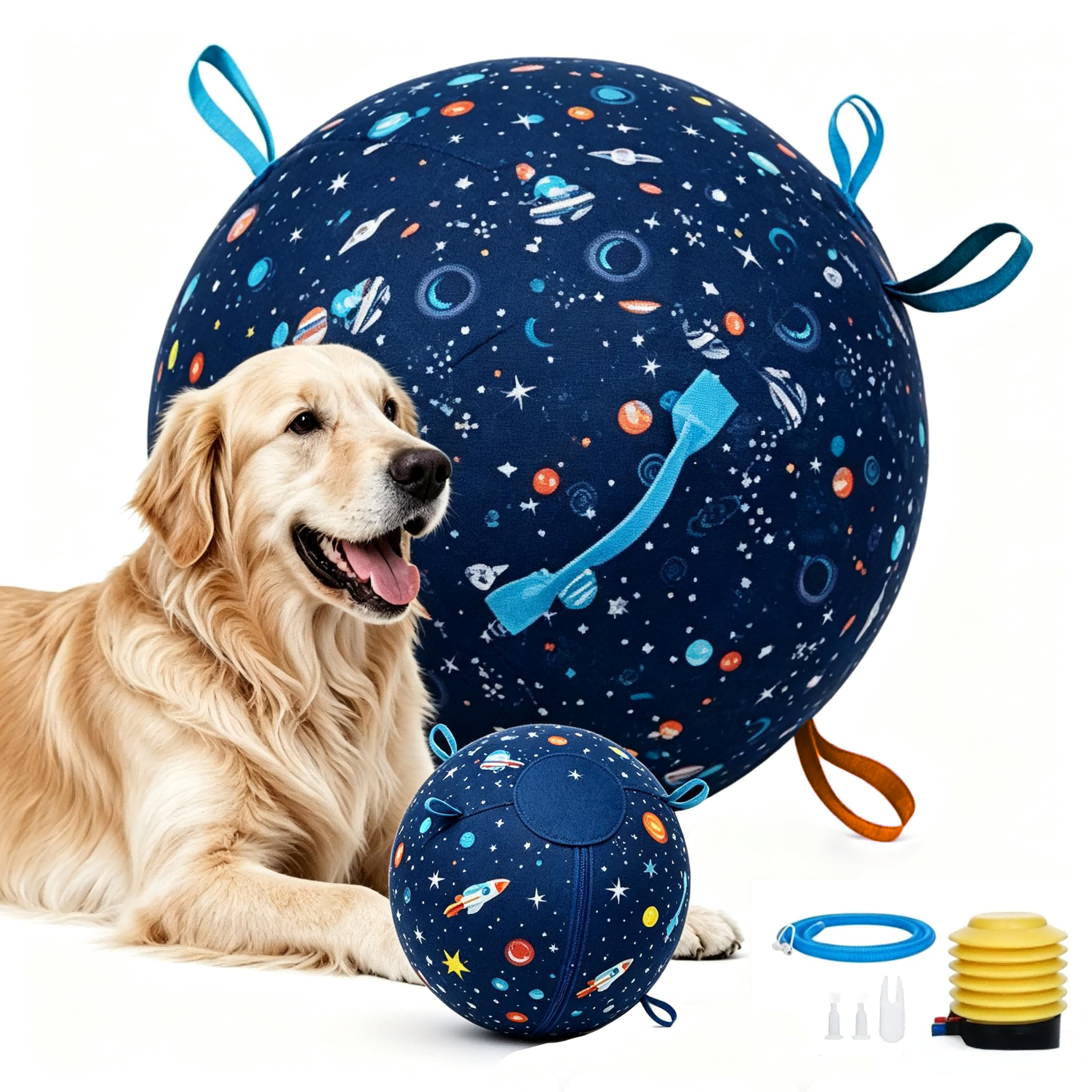
Best for big dogs
Herding Ball with Handles & Pump for Dogs
Why we picked it
Comes in 25, 45 and 55cm, and the 55cm is the one to choose for German Shepherds and large crosses. Reinforced webbing handles let you join in with lift-and-roll games, the tear-resistant shell sits over a separate bladder, and a pump is included.
- In stock
- Tracked delivery: 8–13 working days
From £19.99See price, delivery & options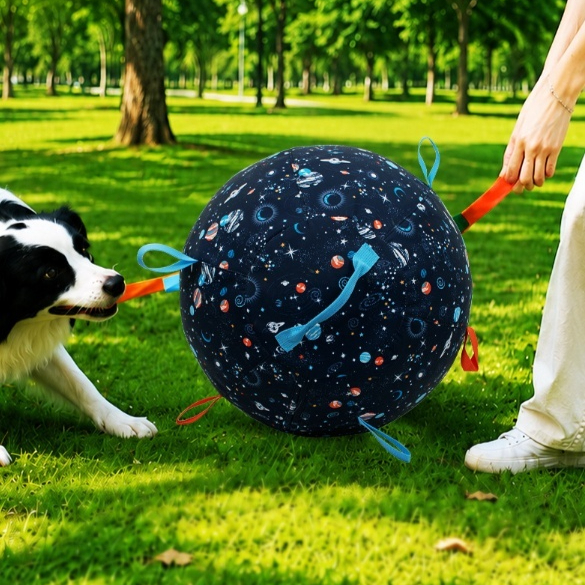
Best value
Inflatable Herding Ball for Dogs — 25, 45 & 55cm
Why we picked it
The lowest price in each of the three sizes, from the 25cm for small terriers up to the 55cm. Webbing handles and a concealed zip with no edge to chew. No pump in the box, so you will need a footpump or bike pump.
- In stock
- Tracked delivery: 8–13 working days
From £15.99See price, delivery & options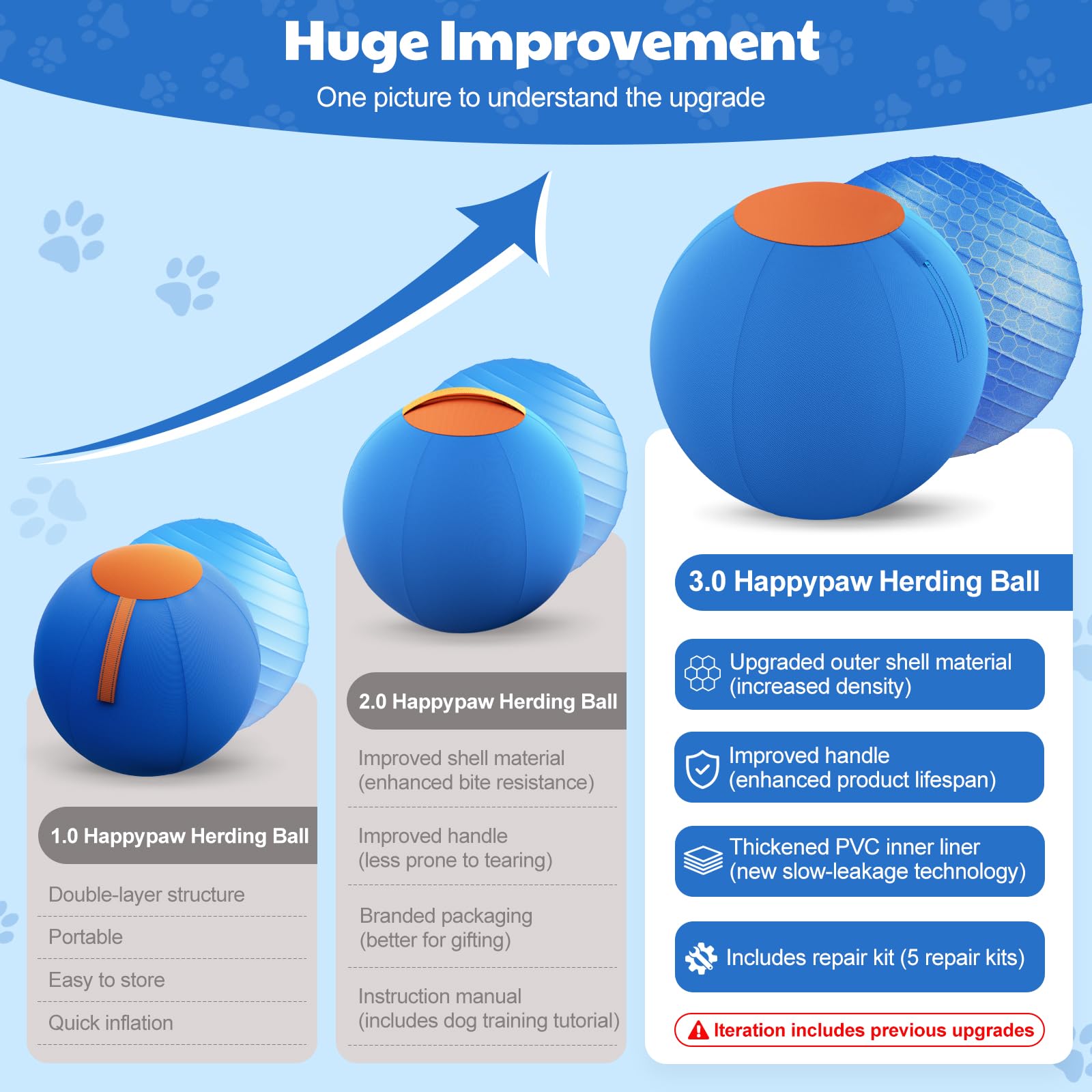
Best for mouthy dogs
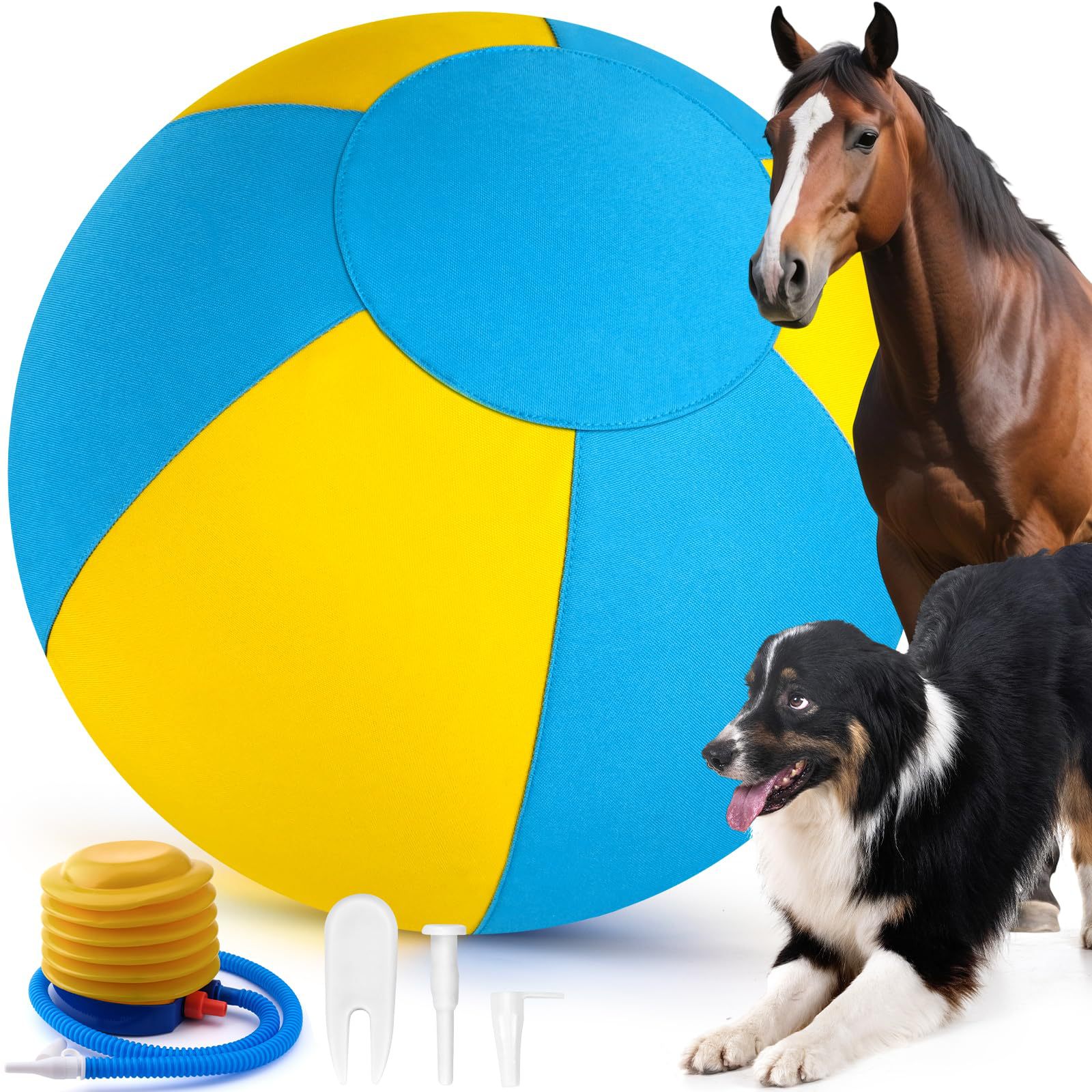
Inflatable Herding Ball for Dogs
Why we picked it
A 45cm ball with a double-layer bite-resistant shell that is designed to deflate slowly if punctured rather than burst, and a zippered cap over the valve. Choose it for a dog that tends to grab as well as push.
- In stock
- Tracked delivery: 8–13 working days
Best with a hand pump
Inflatable Herding Ball for Dogs with Pump
Why we picked it
An Oxford-cloth ball in 25, 45 and 55cm with a hand pump included, so it packs down small between sessions and goes back up quickly. Two bright colourways that are easy to spot on grass.
- In stock
- Tracked delivery: 8–13 working days
From £19.99See price, delivery & options
Why herding dogs need more than fetch
The Royal Kennel Club's pastoral group is the herding group, and its breed notes for the Border Collie describe a dog still used to work sheep and cattle today. Collies, Australian Shepherds, kelpies, heelers and German Shepherds share the same wiring: they want to move something, control it and keep it moving.
Without an outlet, that instinct finds its own targets: bicycles, joggers, the vacuum cleaner, other dogs in the park, and in some homes the children's ankles. Fetch rarely fixes it, because fetch is a retrieving game rather than a herding one. The dog catches the ball, and the job is over.
A herding ball changes the problem. The dog has to work out where the ball is going, get round it and push it back, again and again. That is mental work as much as running. The PDSA's toy advice makes the point that play gives dogs a way to express normal behaviours such as chasing, and Dogs Trust and Blue Cross both build their enrichment advice around the same idea. If you want to know how much daily activity your breed actually needs, start with how much exercise a Border Collie needs or the German Shepherd equivalent.
What size herding ball should I buy?
Size is the decision that matters most, and the most common mistake is buying too small. The PDSA's advice on dog toys is that if a dog can easily pick a toy up and carry it, there is a danger they could swallow it. A herding ball turns that into a design rule: the ball has to be too big to get a mouth round.
A sensible starting point by dog:
- 25cm for small terriers, Jack Russells and other small, busy dogs. Do not give a 25cm ball to a medium or large dog; they can get their jaws around it.
- 45cm for most collies, working cocker and springer spaniels, Australian Shepherds and similar medium dogs. This is the size most people need, and it is the size we sell most of.
- 55cm for German Shepherds, Belgian Shepherds, large collie crosses and anything with a big mouth and a heavy shoulder.
If your dog sits between two sizes, go bigger. A ball that is slightly too large is still a good game; a ball that is slightly too small becomes a chew toy, and an inflatable chew toy does not last long.
The Herding Ball with Handles & Pump and the inflatable ball in 25, 45 and 55cm both come in all three sizes, so you can match the ball to the dog rather than the other way round.
Cover, bladder and handles: what to look for
Every ball in our range is inflatable, which keeps it light enough to push and quick to pack away. What separates them is how they cope with teeth and claws.
A separate inner bladder. The best design is a tough outer cover sewn over an inner bladder that holds the air, so the part taking the wear is not the part that deflates. The 45cm Oxford-cover herding ball uses an 1800D polyester Oxford cover with a PVC coating over its own bladder, and the handles-and-pump ball has the same cover-over-bladder build.
A shell that slows a puncture. Single-shell balls are simpler. The heavy-duty inflatable herding ball has a double-layer bite-resistant shell designed to deflate slowly rather than pop, so one stray tooth does not end the session on the spot.
Handles. Webbing loops let you carry the ball, throw it, and join in with lift-and-roll or wait-and-release games instead of standing and watching. They are worth having if you want to use the ball for training rather than solo garden play.
A hidden zip or valve. Anything that sticks up from the surface is the first thing a dog will find with its teeth. Look for a concealed zip or a capped valve.
A pump in the box. Some balls include one, some do not. The Oxford-cover ball comes with a foot pump; the 25/45/55cm ball does not, so you will need a footpump or a bike pump with a needle adaptor.
How to start your dog with a herding ball
Most dogs work out a herding ball in one session, but a little structure makes it a far better game.
1. Pump it hard. The Oxford-cover ball's instructions are blunt about this and they are right: inflate until the cover is stretched smooth with no wrinkles. A soft ball gives a dog a fold to bite, and a bite point is how a cover gets torn. 2. Start on grass. Concrete, gravel and patio slabs scuff the cover far faster than a lawn or field does. 3. Roll it away from them. Movement is what switches the instinct on. Roll the ball slowly across the grass and praise any nose or shoulder contact. 4. Keep sessions short. Ten to fifteen minutes is plenty to begin with. Herding is intense work and a keen dog will not pace itself. 5. Stop the moment it turns to biting. If your dog starts gripping and chewing instead of pushing, end the game calmly and try again later with the ball pumped harder. 6. Pack it away afterwards. Like any toy, it stays special if it only comes out for the game, and it is not left outside for a dog to chew on its own.
Once your dog is pushing confidently, you can add direction: cue a left or right, ask for a wait before the release, or push the ball between two markers. That is the basis of treibball, a sport built entirely on driving large balls into a goal, and it is a good outlet for the clever, busy dogs covered in how to train a Border Collie.
Safety: what a herding ball is not
A herding ball is a pushing toy, not a chew toy, and nothing inflatable is indestructible. The PDSA advises throwing away damaged toys so a dog cannot break off pieces and swallow them, and that applies here: if the cover splits or the bladder shows through, retire the ball.
Supervise play, especially in the first few sessions, and keep the ball away from dogs who are determined chewers. If your dog would rather destroy a toy than chase it, start with something from our indestructible dog toys range and come back to herding later. For quieter days indoors, puzzle toys for clever dogs and these mental exercise ideas use the same problem-solving drive without needing a garden.
Delivery
Delivery times differ across the range, and they are shown on every product page. The 45cm Oxford-cover herding ball is held in the UK and usually arrives in 2 to 3 days. The other balls in the range take longer to reach you, typically around 8 to 13 working days, so if you are buying as a present, check the date on the product page before you order.
Whichever you choose, the herding balls collection has every size and style in one place.
Sources
Common questions
What size herding ball does my dog need?
One your dog cannot pick up or get its jaws around. As a starting point, 25cm suits small terriers, 45cm suits most collies, spaniels and Australian Shepherds, and 55cm suits German Shepherds and other large dogs. If your dog is between sizes, choose the bigger ball.
Are herding balls good for Border Collies?
Yes. Border Collies are a pastoral breed bred to move livestock, and a ball too big to pick up gives that instinct an outlet: the dog has to steer and push something that keeps moving, which works the mind as well as the legs. Keep early sessions short, because a keen collie will not pace itself.
Can a dog pop a herding ball?
Yes, nothing inflatable is indestructible. A tough cover over a separate inner bladder, pumped hard so there are no wrinkles to bite, lasts far longer than a single soft shell. Supervise play, and retire the ball if the cover splits or the bladder shows through.
Can I use a herding ball indoors?
It is really an outdoor toy. A large ball moving at speed needs space, and dogs push it hard. Grass is the best surface, as concrete and gravel wear the cover out quickly. For indoor days, puzzle toys and scent games use the same problem-solving drive in a small space.
How long should a herding ball session last?
Ten to fifteen minutes is plenty to start with. Herding is intense, focused work, and many dogs will keep going past the point where they should stop. Finish while your dog is still keen, and put the ball away until next time.
About the author
Matt Garnett — founder, Giddy Pets
Matt started Giddy Pets to make getting pets the good stuff simpler and fairer. Everything in these guides comes from real life with pets and a lot of trial and error — it's practical guidance, not veterinary advice. If a guide gets something wrong, tell him directly.
Advice & planning
Free tools & more guides
Practical calculators and trusted guides relevant to this product.
Read next
How Much Exercise Does a Border Collie Need?
Border Collies need far more than a couple of walks — real physical exertion plus mental work every day. Exactly what that looks like, and whether the breed suits you.
How to Train a Border Collie
The Border Collie is the most trainable breed there is — but that brain cuts both ways. How to channel the intelligence, handle the herding instinct, and bring out the best in your Collie.
Mental exercise for dogs: games and enrichment ideas
Why mental stimulation matters as much as physical exercise, with practical games, puzzles and enrichment ideas for dogs of every age
How to avoid puppy scams when buying a dog online
A practical UK buyer's guide to spotting puppy fraud red flags, verifying a breeder, and checking paperwork before you pay a deposit