






Best dog food for flatulence
Flatulence in dogs is usually down to diet — poorly digested ingredients fermenting in the gut, eating too fast, or a sudden food change — and switching to an easily digestible food with a simple ingredients list is often the single most effective thing an owner can do about it.
What actually causes flatulence
Gas is a normal by-product of digestion in every dog, but excessive or particularly smelly flatulence usually points to something not being digested cleanly further up the gut. Highly fermentable ingredients, a diet that is heavy on certain legumes, fillers, or a sudden change of food are the most common everyday causes.
Eating too fast, swallowing a lot of air along with the food, can also produce noticeable gas without anything being wrong with the food itself. A slow feeder tackles this cause directly, separately from anything about the recipe.
You'll find our dry dog food in the shop.
What to look for on the label
A food built around a single, easily identified protein and a shorter overall ingredients list tends to be gentler on a dog's gut than one with a long list of fillers and multiple protein sources. Look for recipes marketed as sensitive or easily digestible, which are usually formulated with this in mind.
Highly fermentable ingredients — certain beans, peas and some grains in large quantities — are worth being aware of if your dog's flatulence is a persistent problem rather than an occasional thing. This is about the balance of the recipe rather than any one ingredient being inherently bad.
How to introduce a new food
Any food change, including a switch aimed at reducing flatulence, should be introduced gradually over a week or so, mixing increasing amounts of the new food in with the old. A sudden switch is itself a common cause of gas and loose stools, which can make it hard to tell whether the new food is actually helping.
Give a new food a proper trial of a few weeks before judging it, since a dog's gut takes time to settle onto anything different. If flatulence does not improve, or gets worse, that is worth mentioning to your vet rather than trying food after food.
When it's more than diet
Persistent, severe or suddenly worse flatulence, particularly alongside diarrhoea, vomiting, weight loss or a dog who seems unwell, is worth a vet visit rather than another food change. Diet is the most common cause by far, but it is not the only one.
For most dogs, though, a straightforward switch to an easily digestible, single-protein food, introduced gradually and given a fair trial, resolves the problem without anything more involved being needed.
What we stock
Everything below is in stock with us, priced with delivery worked out, and packed and posted by hand in the UK.
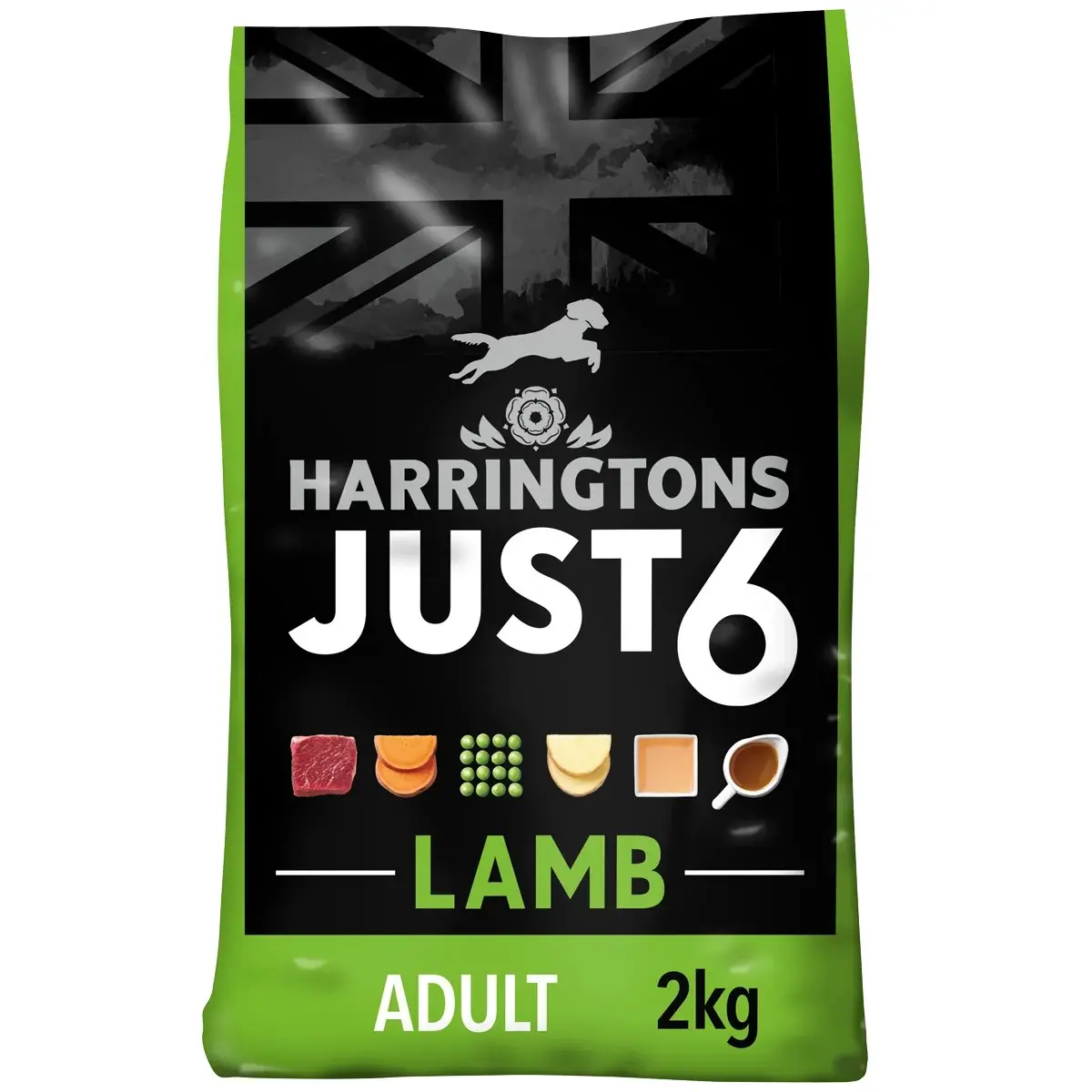
Harringtons Just 6 Dry Dog Food Lamb
Grain-free lamb dry dog food in 2KG and 12KG sizes, with size-specific formulas
From£13.99
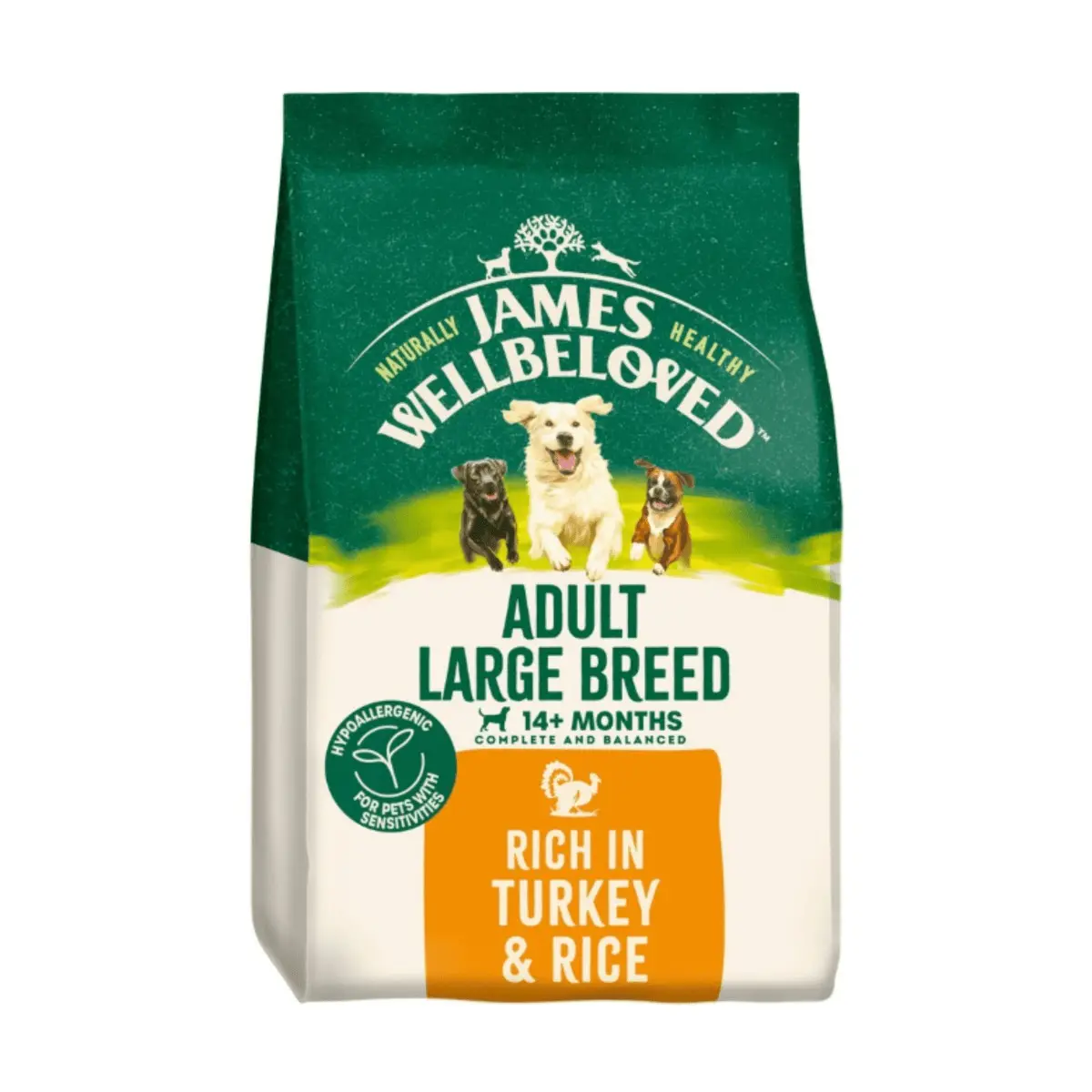
James Wellbeloved Adult Breed Dry Dog Food Turkey Rice
A hypoallergenic dry food for adult dogs, in small and large breed versions, built around single-source turkey protein
From£45.75
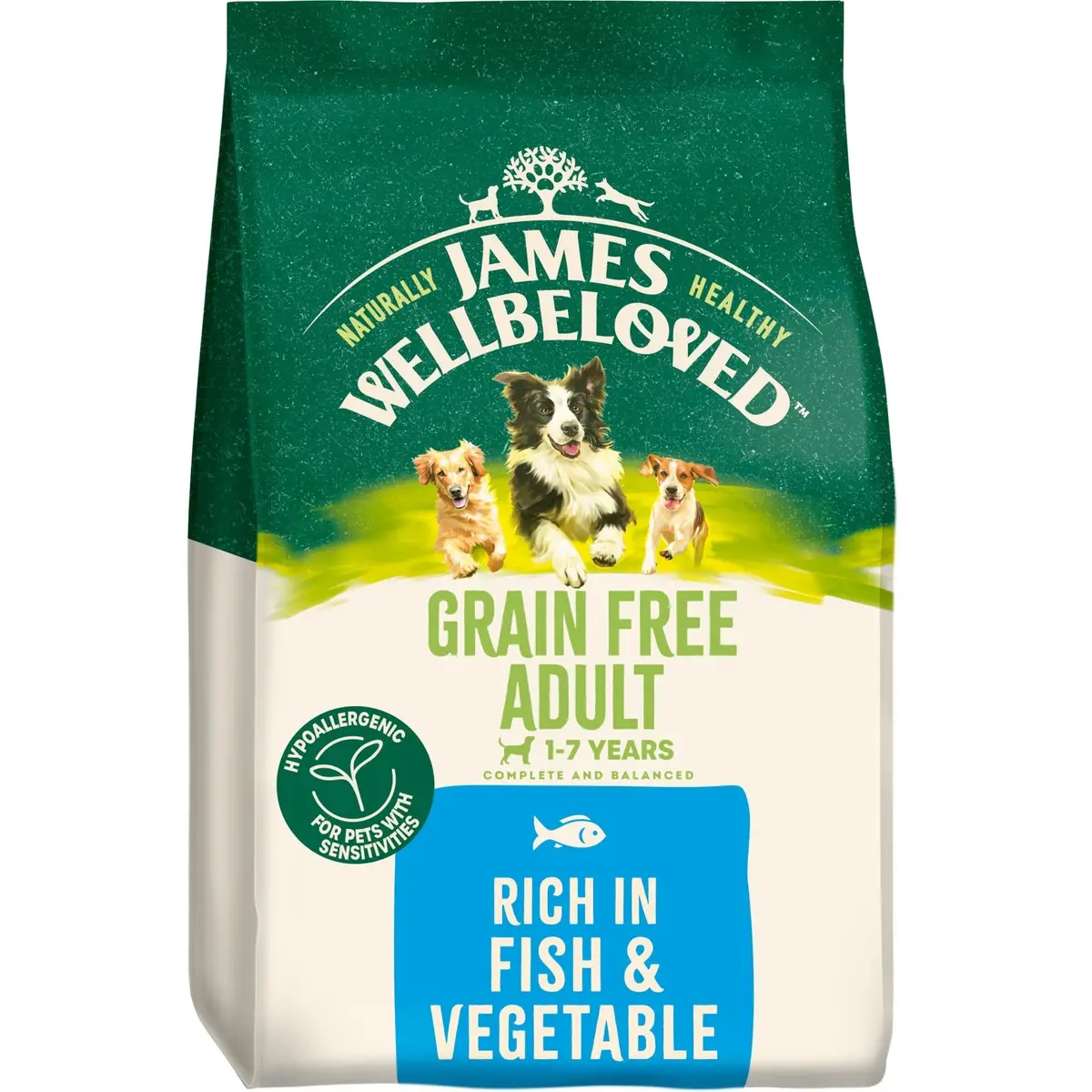
James Wellbeloved Grain Free Adult Dry Dog Food Fish Veg
Grain-free fish kibble for adult dogs, with glucosamine and chondroitin included
From£12.75
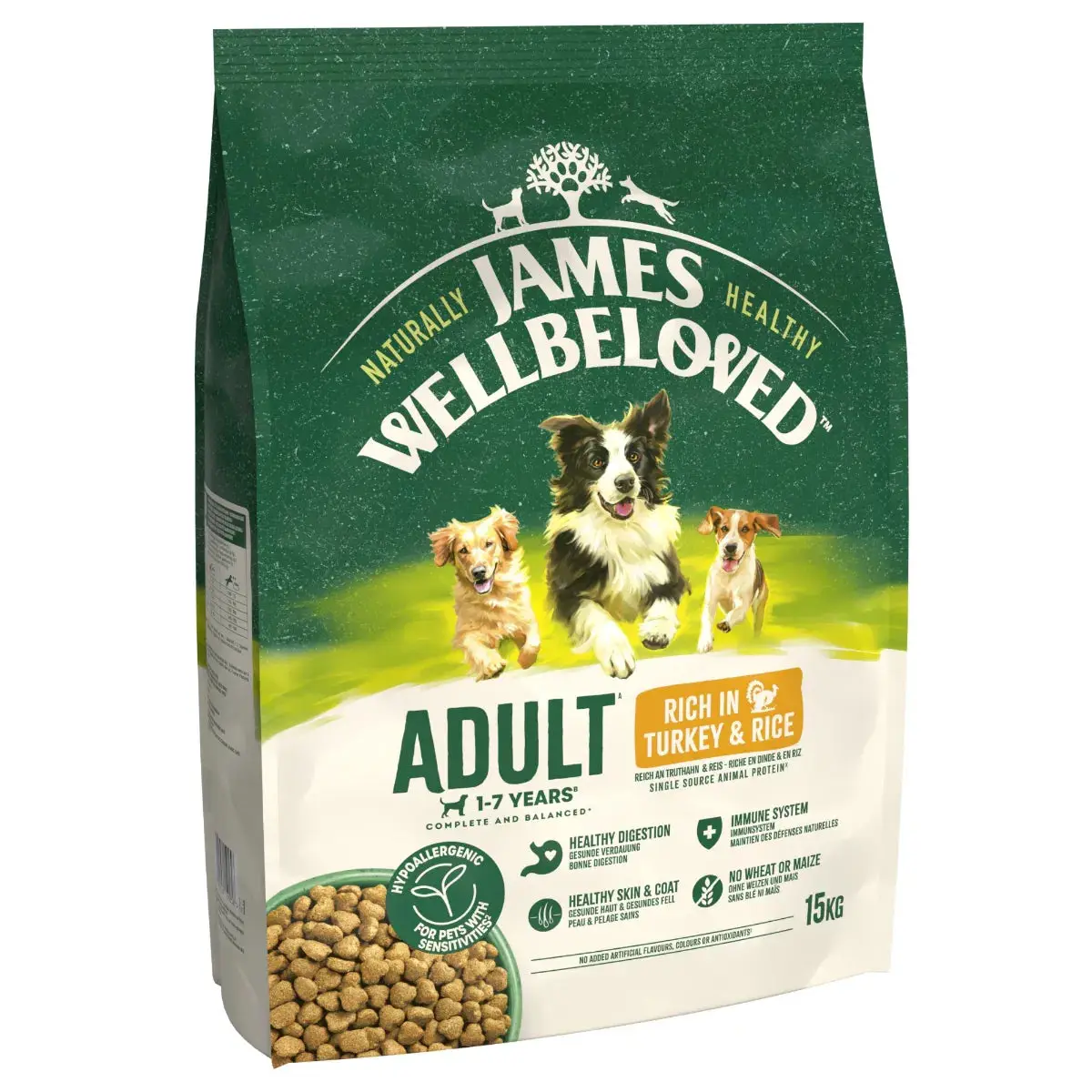
James Wellbeloved Adult Dry Dog Food Turkey Rice
A hypoallergenic dry food for adult dogs, built around a single source of turkey protein
From£41.45
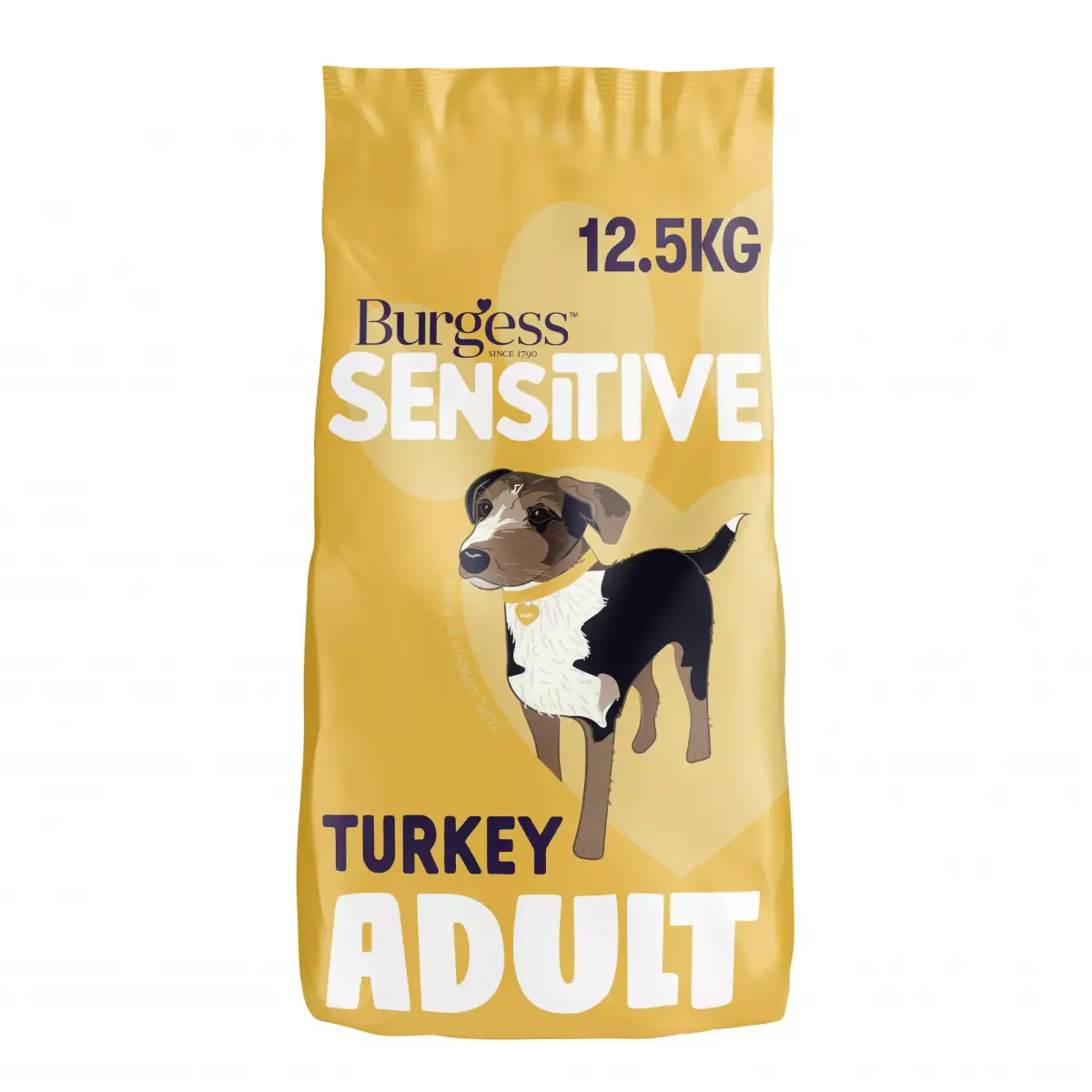
Burgess Sensitive Adult Dog Turkey
Complete turkey and rice dry food for adult dogs in a 12.5KG bag
£48.89
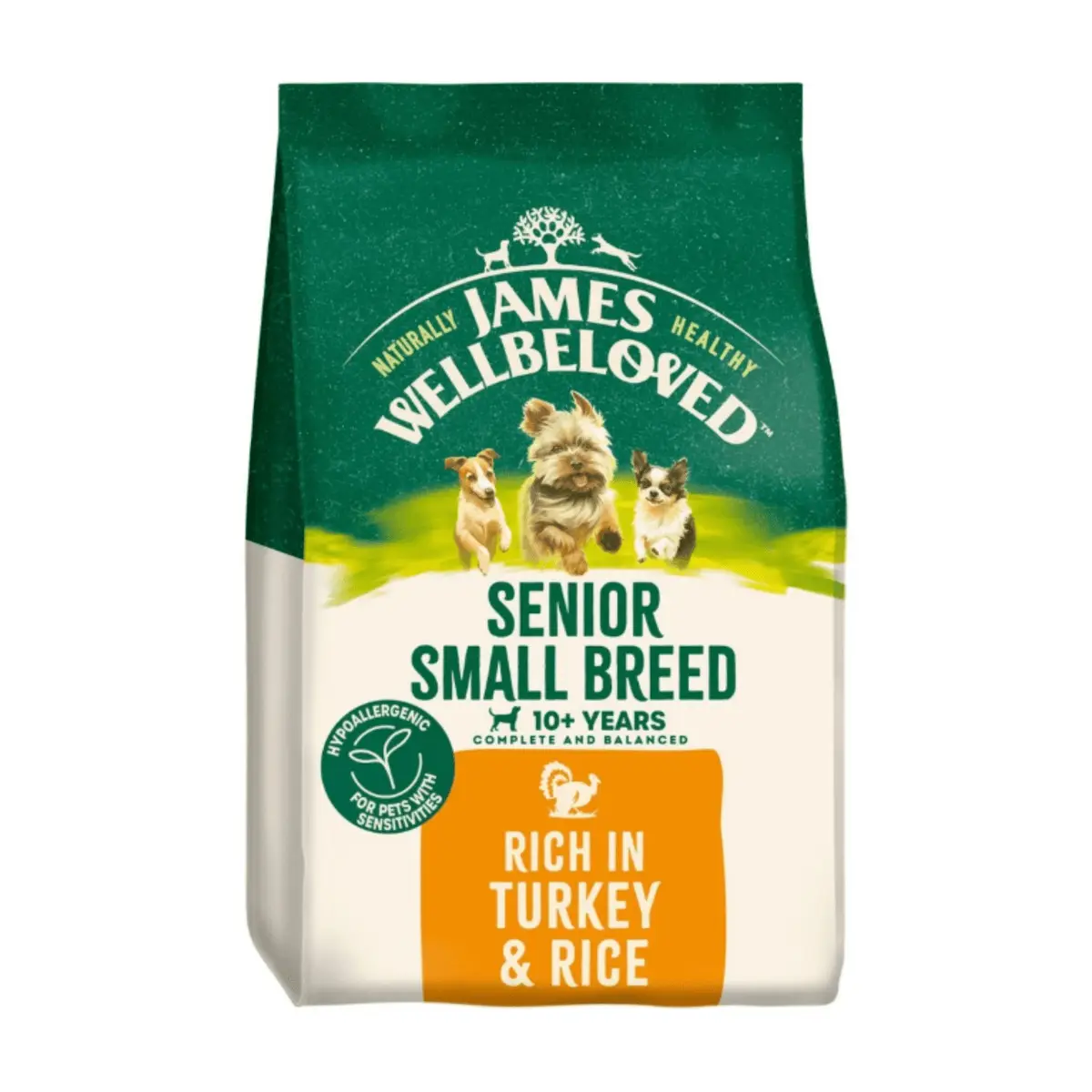
James Wellbeloved Senior Breed Dry Dog Food Turkey Rice
Turkey and rice kibble for senior small-breed dogs, sized for smaller mouths
From£11.69
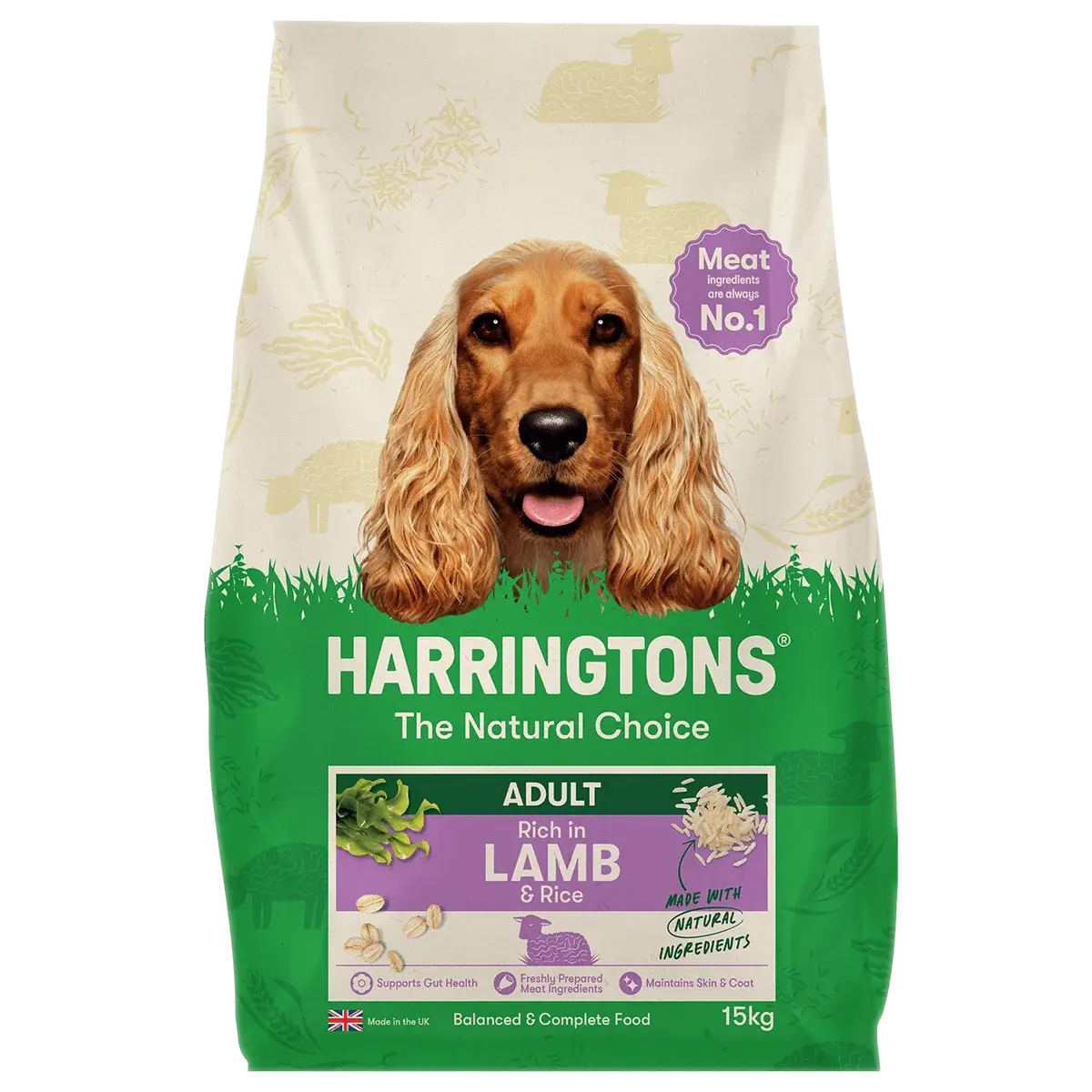
Harringtons Lamb & Rice
A 15kg complete dry dog food with lamb and freshly prepared chicken, for dogs from 8 weeks
£45.99
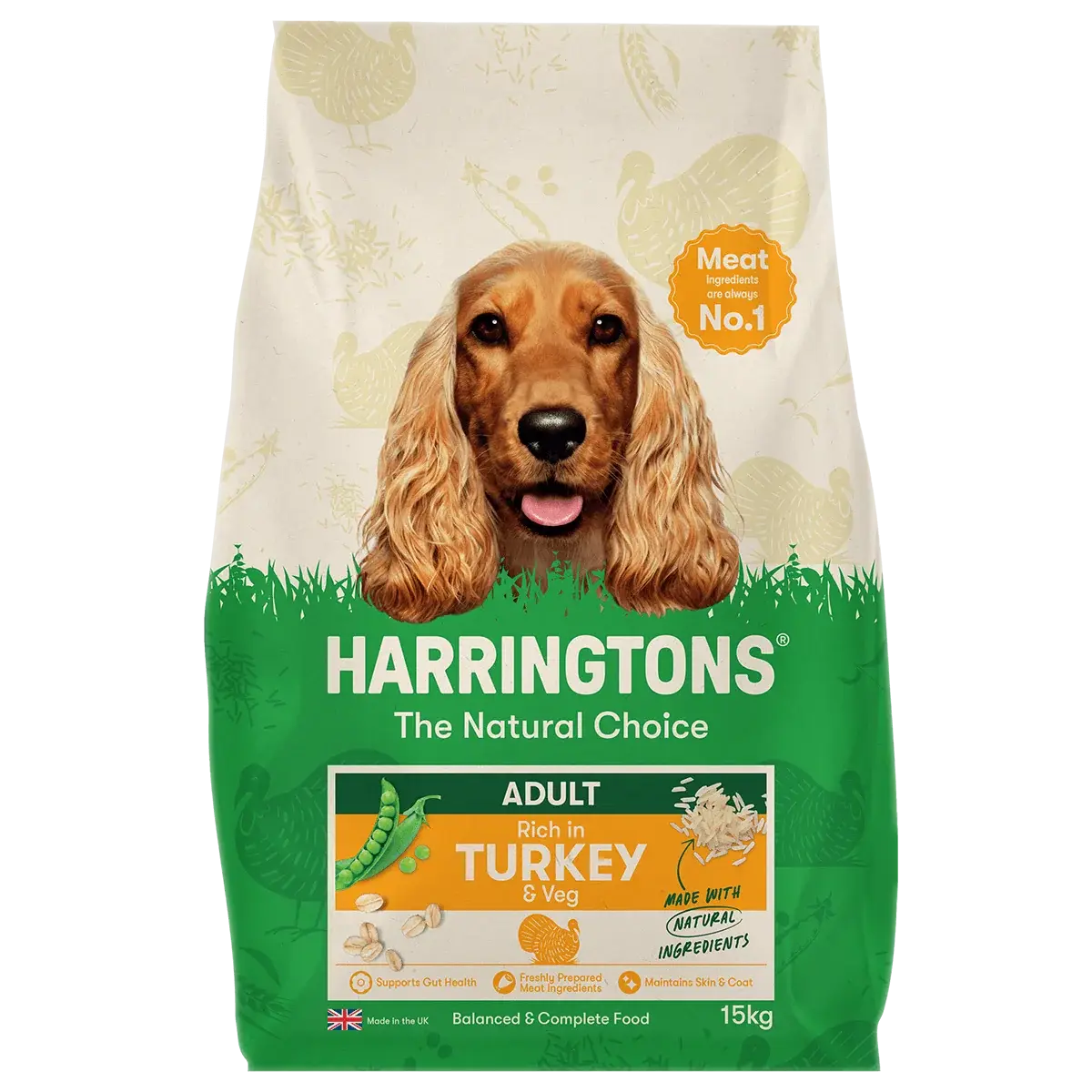
Harringtons Adult Dog Turkey
A complete dry dog food with turkey and freshly prepared chicken, for dogs from 8 weeks
From£13.09
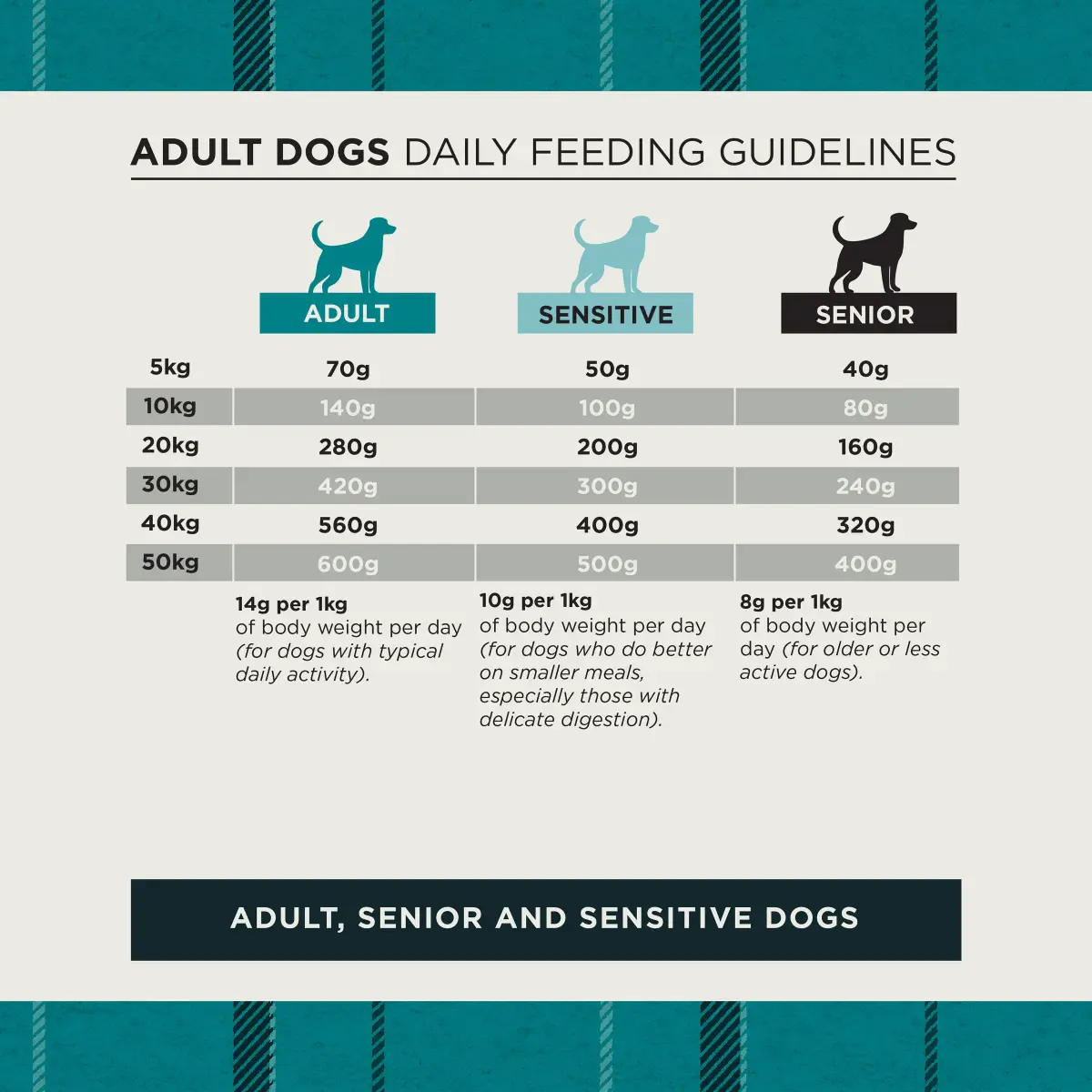
Burns Adult/Senior Dog Original Lamb and Brown Rice
Single-source lamb and brown rice, formulated for adult and senior dogs with sensitivities
£35.99
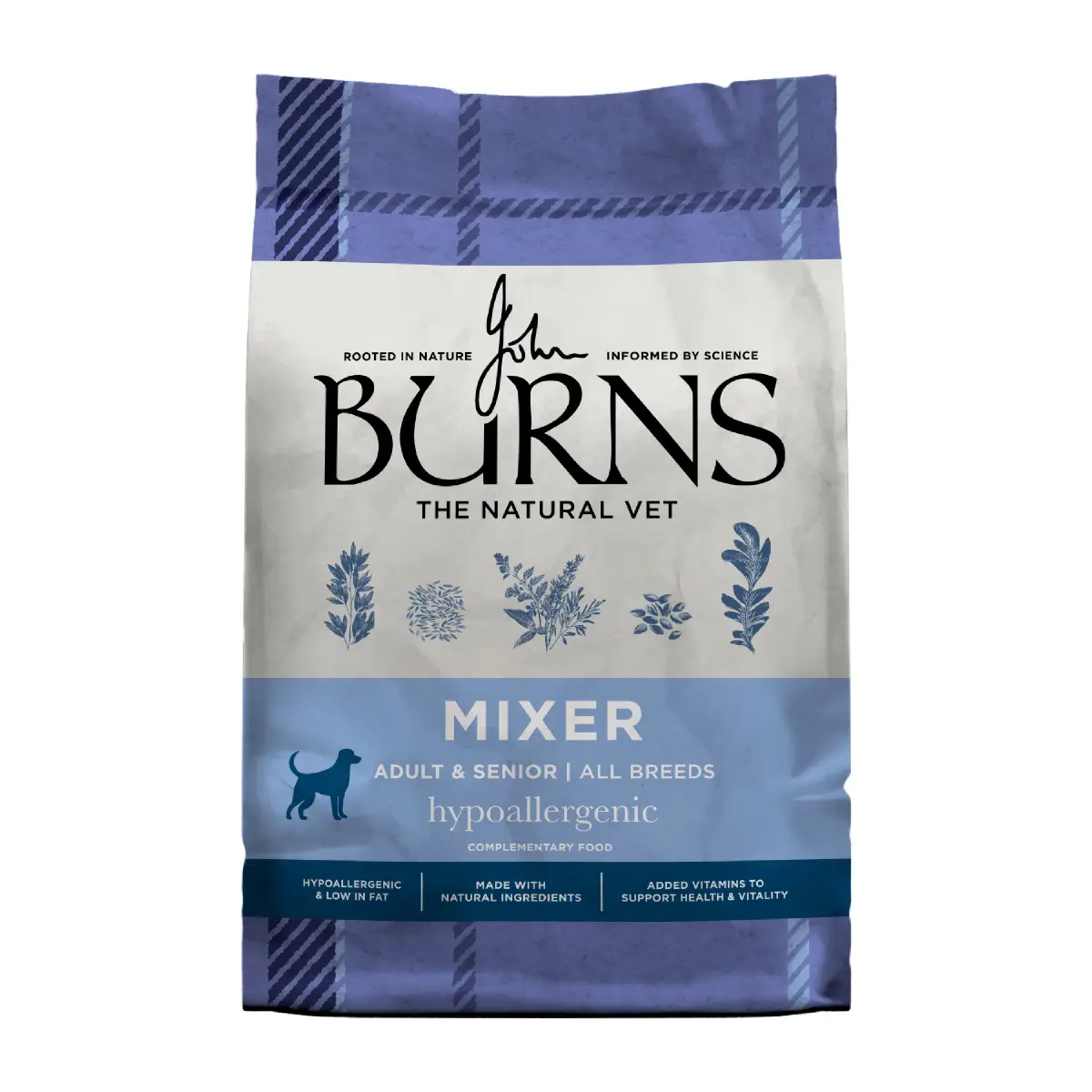
Burns Adult/Senior Dog Hypoallergenic Mixer
Hypoallergenic dry mixer for combining with wet food or a home-cooked diet - not a complete food
£13.49
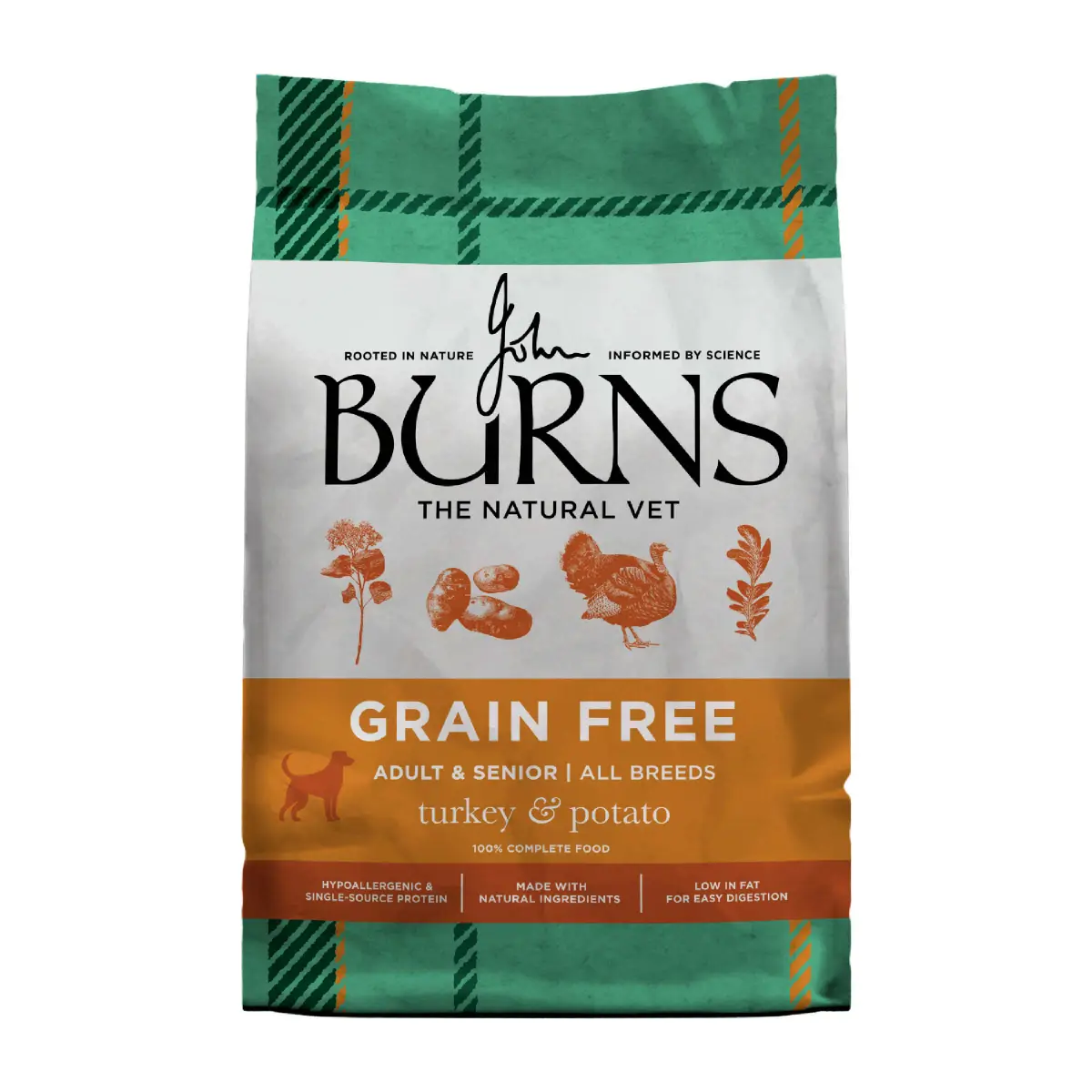
Burns Adult/Senior Dog Sensitive Grain Free Turkey & Potato Dry Dog Food
Six-ingredient grain-free dry food for adult and senior dogs, single-source turkey
£15.49
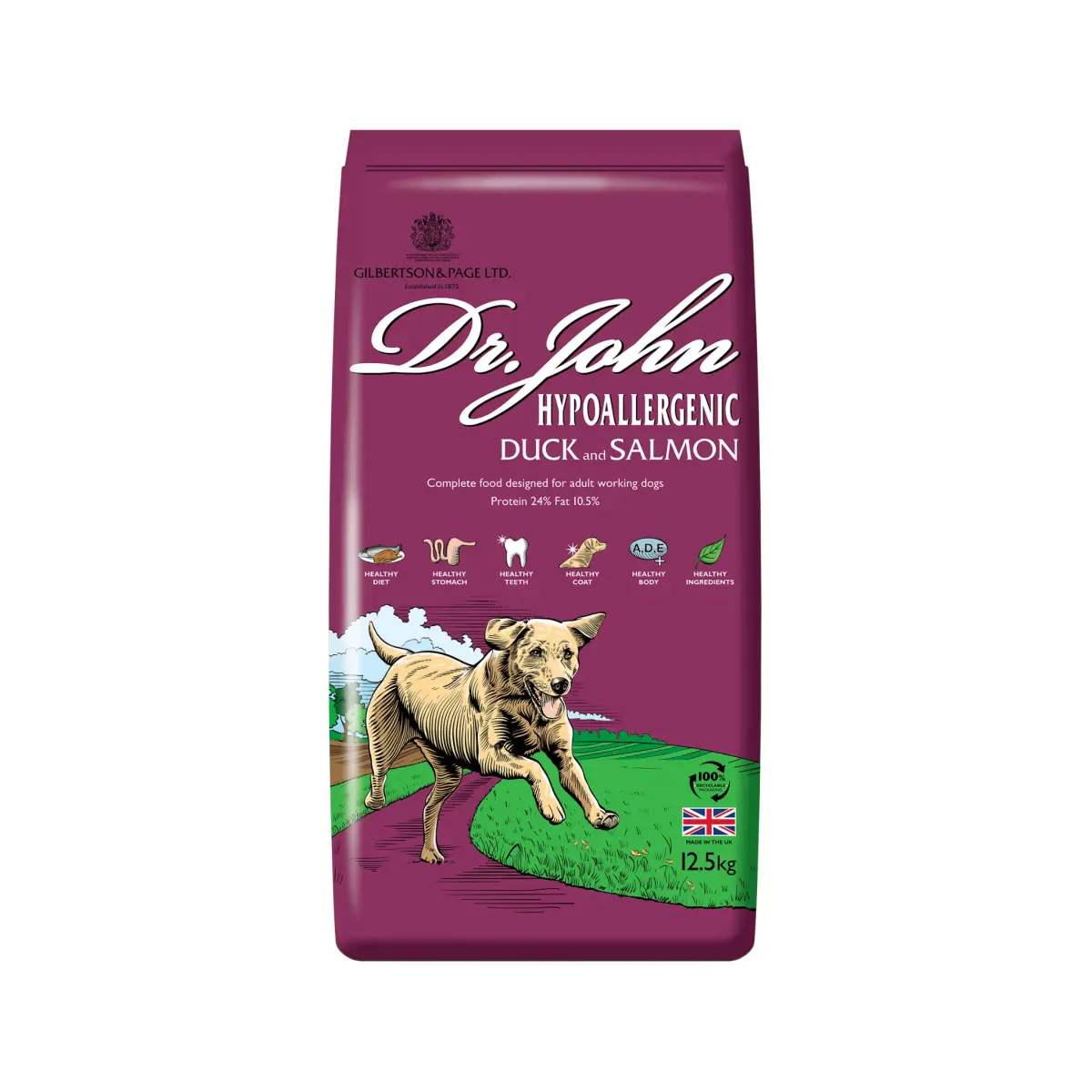
Dr John Hypoallergenic Duck and Salmon
Hypoallergenic dry dog food for sporting and working dogs, duck and salmon based
From£7.49
Common questions
- Does grain-free food help with dog flatulence?
- Not necessarily — grain is not inherently a cause of flatulence, and some grain-free recipes use ingredients, such as certain legumes, that can be just as fermentable. Look at the overall recipe and ingredient quality rather than assuming grain-free automatically means less gas.
- Can treats cause flatulence even if the main food is fine?
- Yes, treats and table scraps count too, and a dog on an otherwise well-suited food can still have a lot of gas from rich, fatty or unusual treats. If flatulence is a problem, look at everything your dog eats in a day, not just the main meal.
- How long does it take to see if a new food is helping?
- Give any food change at least two to three weeks before judging the result, since a dog's gut needs time to adjust after a switch. Judging too early, particularly during the transition itself, can make a perfectly suitable food look worse than it is.
- Is it normal for dogs to have some flatulence?
- Yes, a small amount of gas is normal for every dog, the same as it is for people. It only becomes worth addressing when it is frequent, unusually strong-smelling, or comes alongside other symptoms like diarrhoea or discomfort.
- Should I speak to my vet about my dog's flatulence?
- If a food change and gradual introduction do not improve things within a few weeks, or your dog shows other symptoms alongside the gas, speak to your vet. Persistent flatulence occasionally points to something beyond diet that is worth ruling out.
Related
Written by Matt Garnett, who runs Giddy Pets and is a lifelong pet owner — not a vet. This is general information, not veterinary advice, and it cannot replace an examination by the vet who knows your animal. How we write these guides.