






Dog treats for puppies
A puppy treat needs to do less, not more, than an adult one. It should be small enough for a young mouth, soft enough to chew without effort, and low enough in calories that it doesn't quietly replace part of a growth diet that is already balanced for your puppy's age and breed size.
Why a puppy treat is a different job to an adult one
Puppy food is formulated to a tighter set of numbers than adult food — calcium and phosphorus balance for growing bones, calories for a body that is still building itself, protein for the same reason. A treat sits outside that formulation, so the more of it a puppy eats, the more it dilutes a diet that was designed as a whole, not as a base you top up.
That is the practical reason treats for puppies are usually smaller and lower in calories than the equivalent adult product, rather than a marketing distinction. A liver or chicken training treat broken into pieces the size of a fingernail does the job of a reward without adding up to a meaningful chunk of the day's food.
You'll find our dog treats in the shop.
What to check on the pack
Look at the size of the individual piece against the size of your puppy, not the size of the bag. A treat sized for a Labrador is a mouthful for a Chihuahua puppy, and a hard chew that is fine for an adult's jaw can be too much for milk teeth that are still coming through.
Ingredient lists worth trusting are short and specific — a single named meat, not a vague 'meat derivatives' line — because that is also what makes it easier to spot a treat that does not agree with your puppy if you ever need to rule one out. Training treats sold as a 'super value pack' are usually the right shape for this: small, low-calorie, and cheap enough to use often without the cost adding up.
How many is too many
There is no single number that applies to every puppy, but the working rule most owners are given is that treats should stay a small minority of what a puppy eats in a day, with the complete puppy food doing the actual job of feeding them. A training session that gets through a large handful of treats is worth balancing out by cutting the next meal down slightly rather than ignoring it.
If your puppy is having a lot of loose stools, refusing their normal food, or putting on weight faster than expected, treats are one of the first places to look before assuming it is the main diet. Cutting back is usually enough; if it is not, that is a conversation for your vet rather than something to guess at.
What we stock
Our treat shelf runs from soft training treats sized for repetition through to harder natural chews for older puppies whose adult teeth are through, alongside the everyday biscuit-style treats most owners reach for day to day. What is shown in the grid above is what we currently have in stock, and it changes as the range does.
If you are buying for a very small breed puppy, it is worth reading the pack rather than assuming — a treat labelled simply 'dog treats' with no size guidance is more often sized for an adult dog of no particular breed than for an eight-week-old puppy.
What we stock
Everything below is in stock with us, priced with delivery worked out, and packed and posted by hand in the UK.
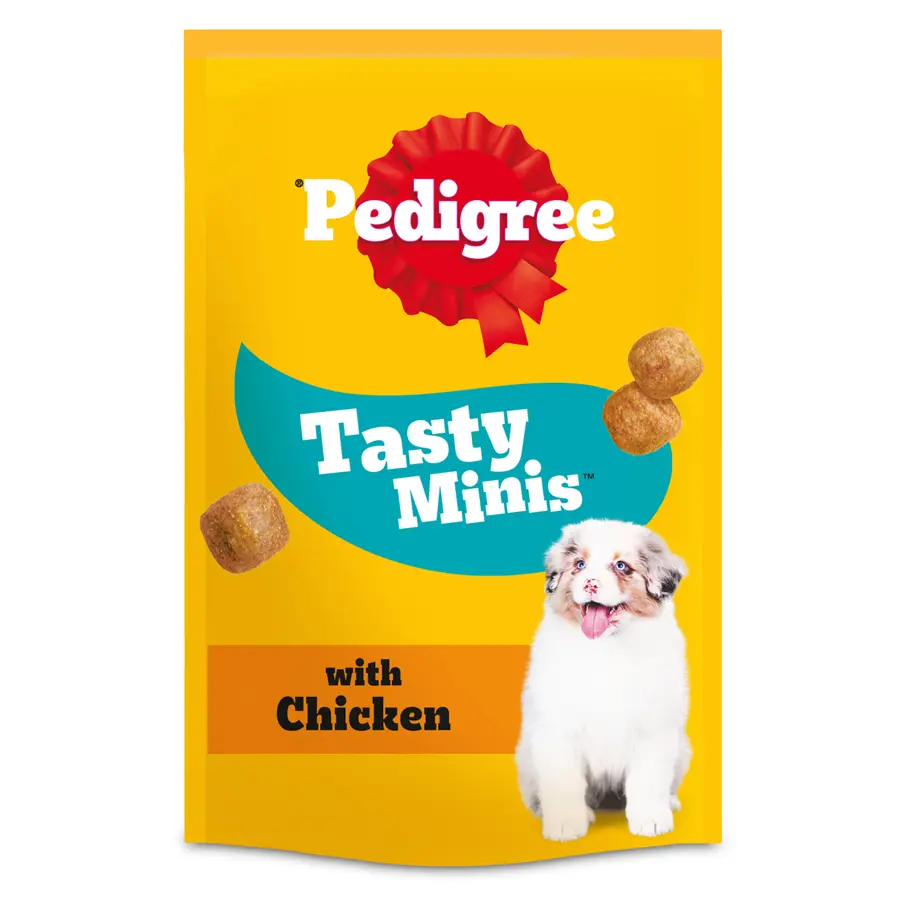
Pedigree Tasty Minis Puppy Treats Chewy Cubes with Chicken
Soft chewy puppy training treats with 13% chicken and added calcium, 125g
£2.25
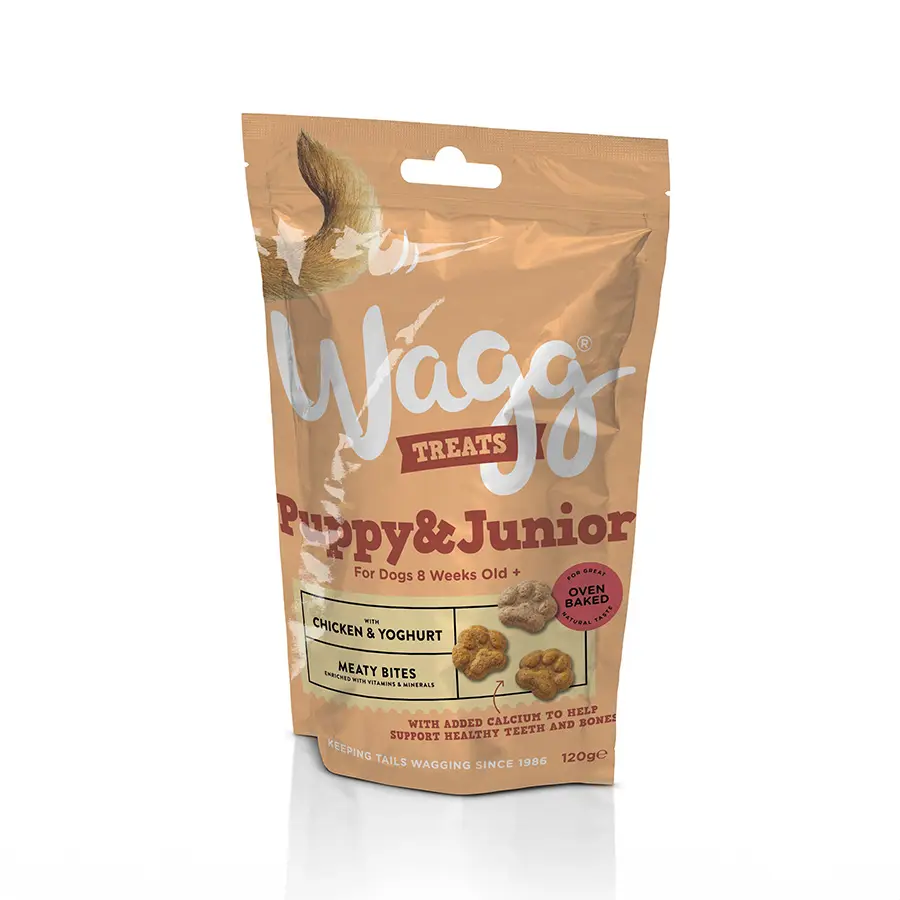
Wagg Puppy Treats
Puppy Treats in a 120G pack, with 23.2% protein and 7% fat and full label detail
£1.49
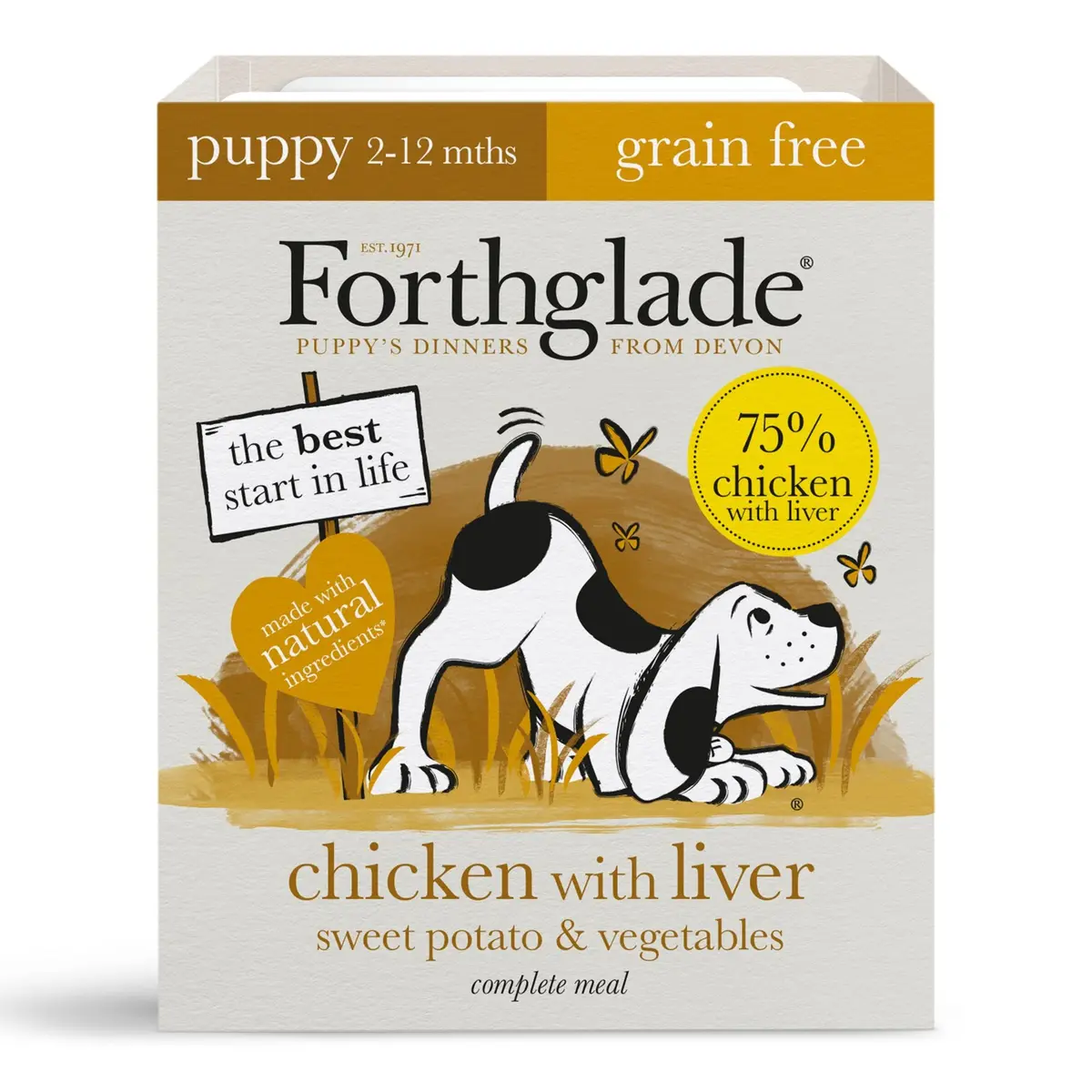
Forthglade Complete Puppy Chicken with Liver Grain Free — 18 x 395g Trays
Sold as a case: 18 x 395g trays. A complete grain-free wet food for puppies, built on 71% chicken and 4% chicken liver
£35.89
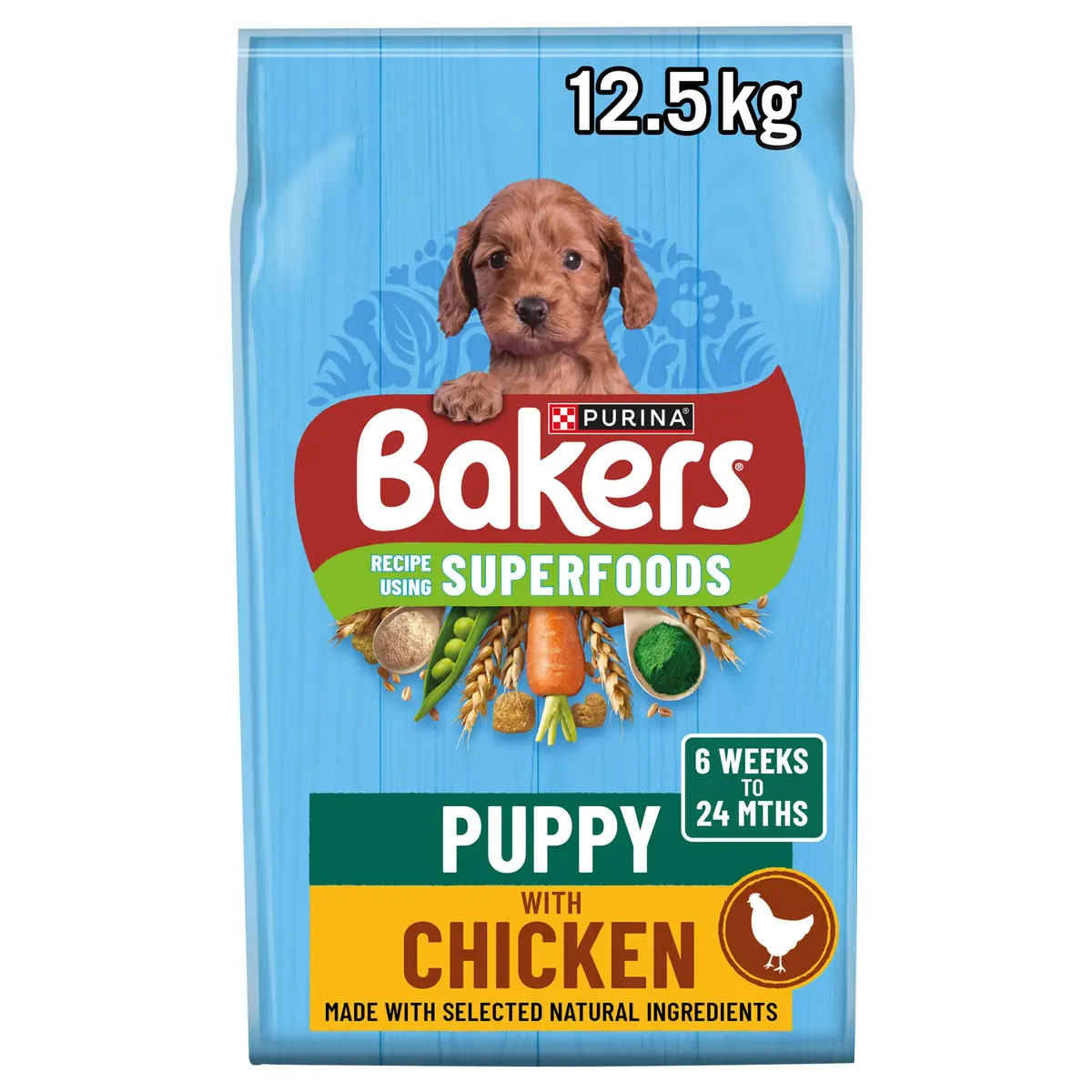
Bakers Puppy Superfoods Chicken with Vegetables
Bakers Puppy Chicken & Vegetables dry dog food, 12.5kg, complete food for puppies from 6 weeks to 24 months
£39.15
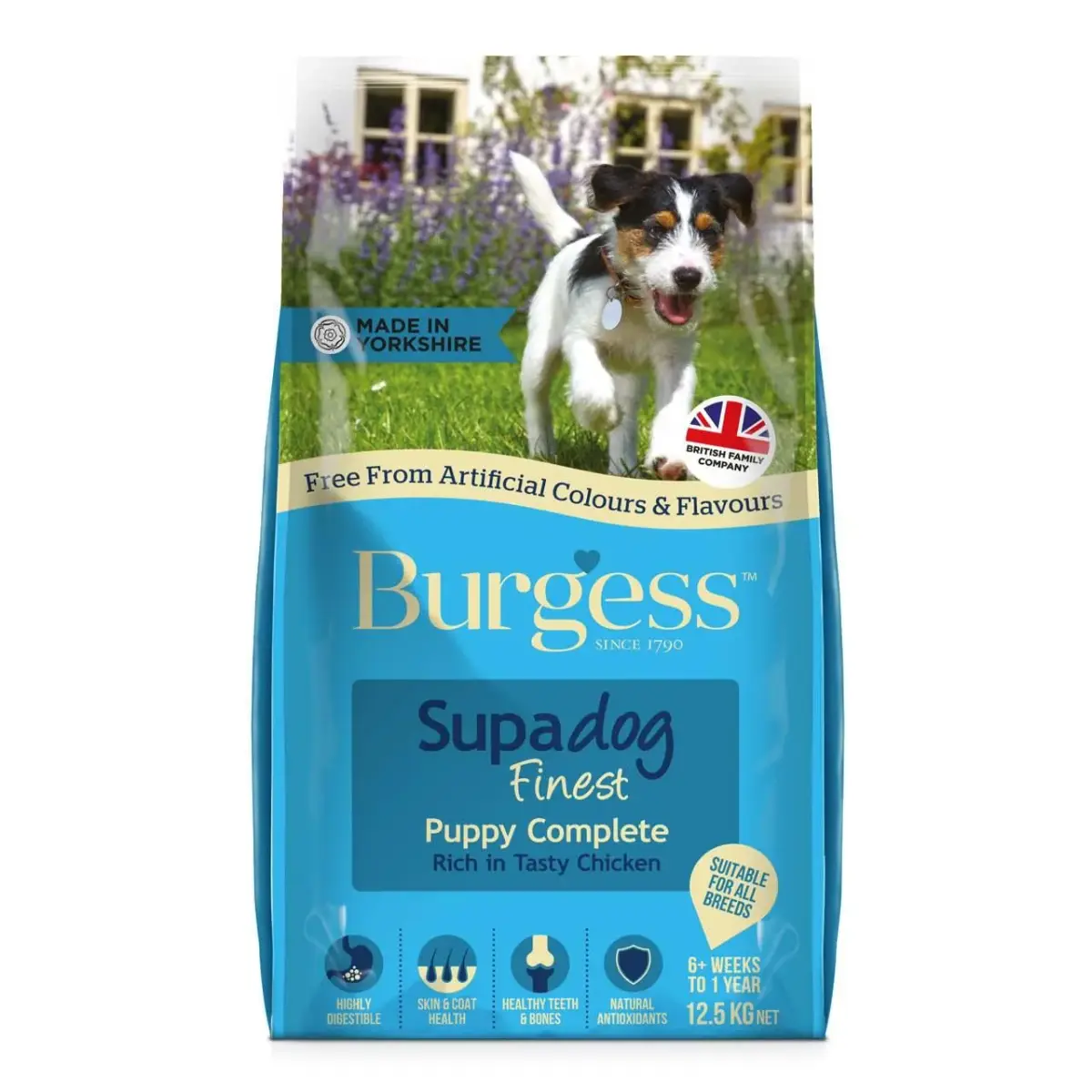
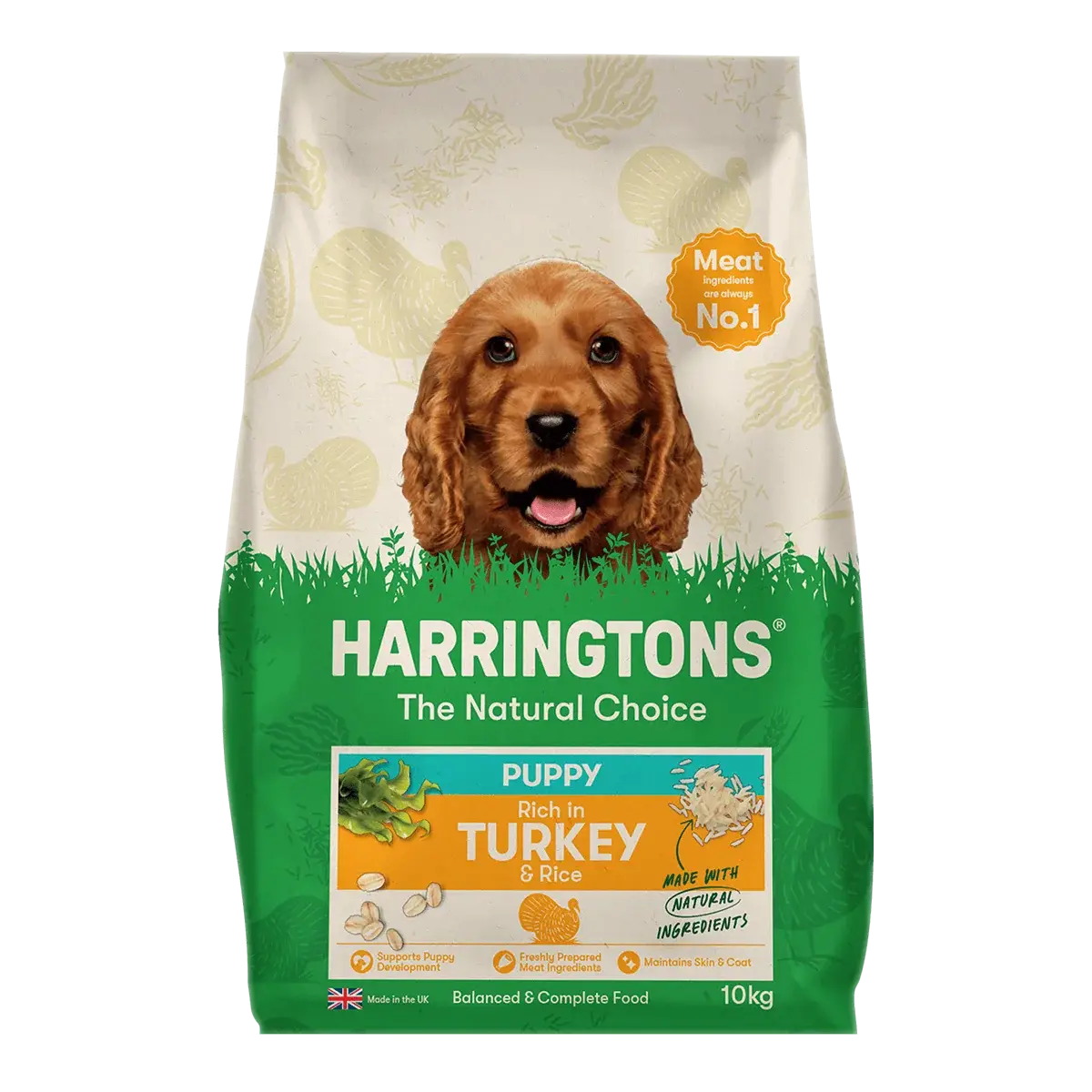
Harringtons Puppy Turkey & Rice
Complete turkey puppy food with 30% protein and feeding bands by adult weight
£6.49
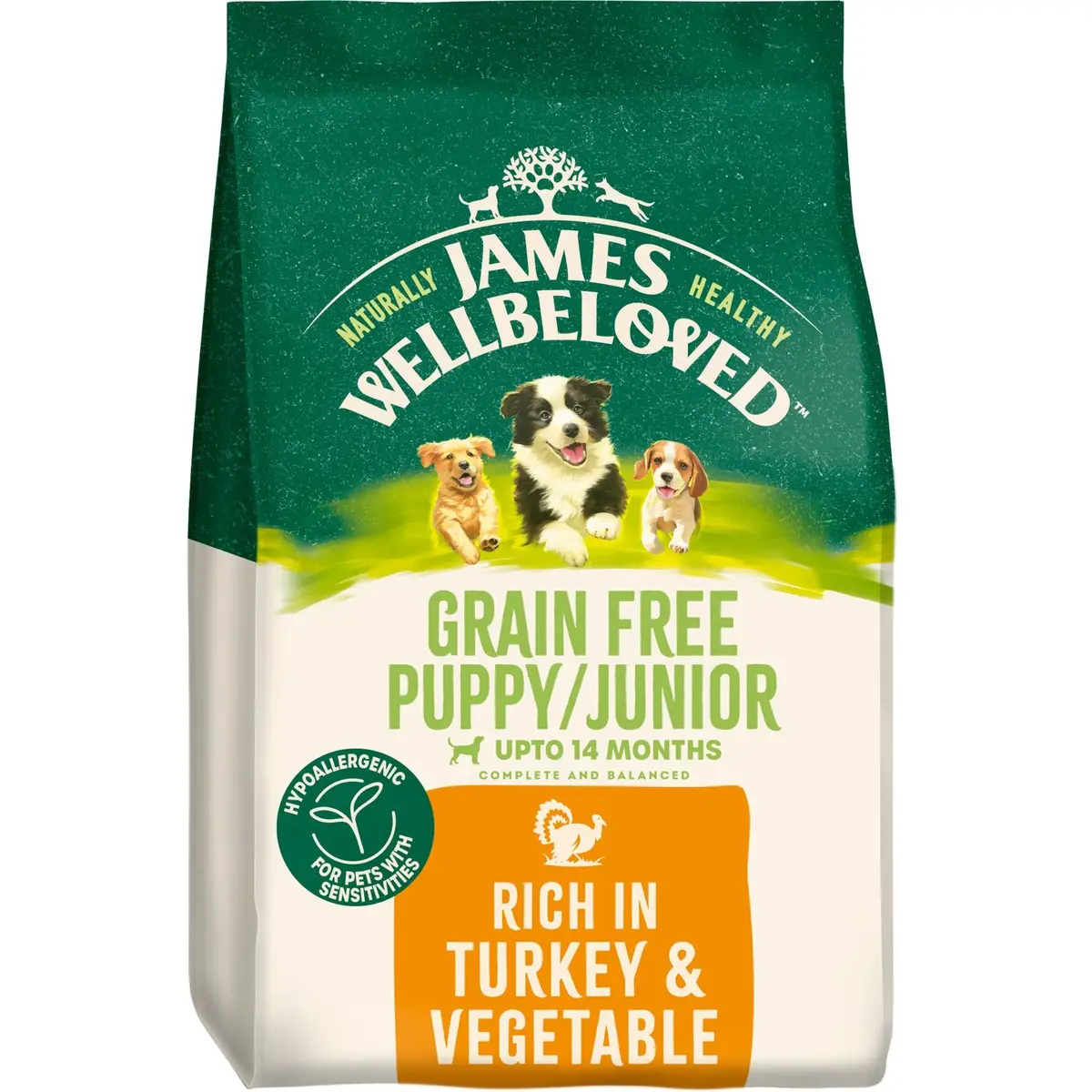
James Wellbeloved Grain Free Puppy/Junior Dry Dog Food Turkey & Veg
Grain-free turkey and potato kibble for puppies and junior dogs, evenly balanced recipe
£12.75
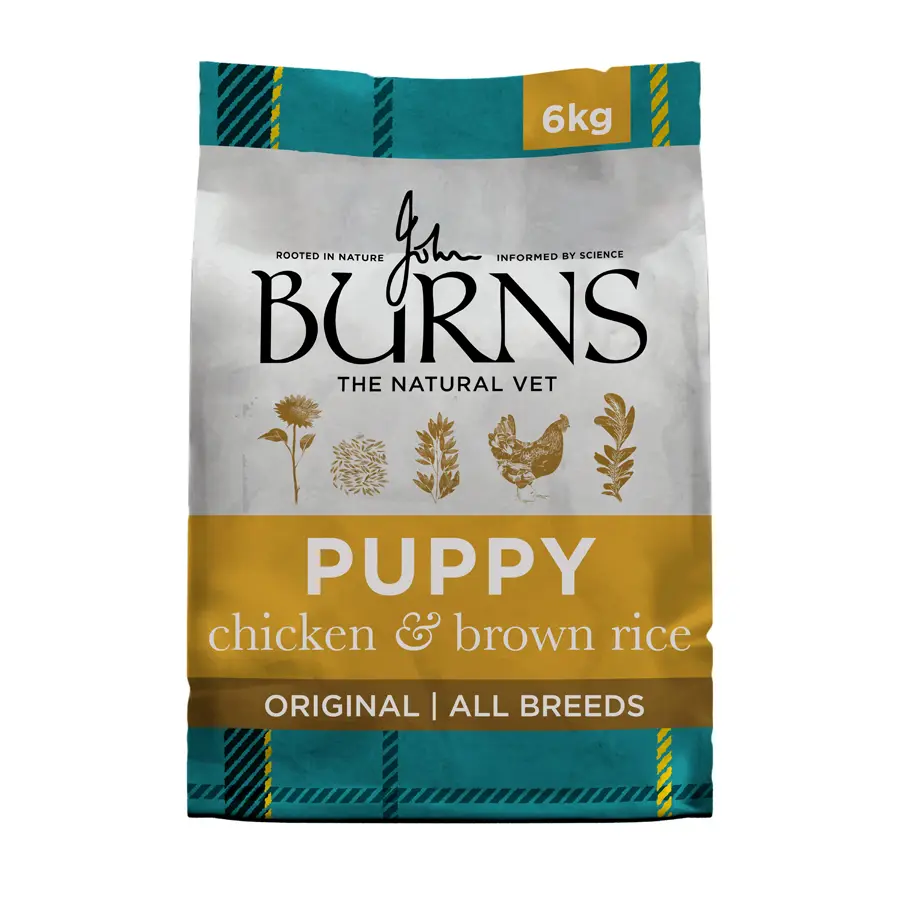
Burns Puppy Junior Original Chicken Rice
A complete puppy and junior food with dried chicken 31% and controlled fat at 15%
From£14.99
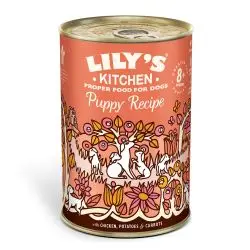
Lily's Kitchen Puppy Chicken Recipe — 6 x 400g Tins
Sold as a case: 6 x 400g tins. Complete 400G wet puppy chicken recipe with 67% fresh chicken
£22.79
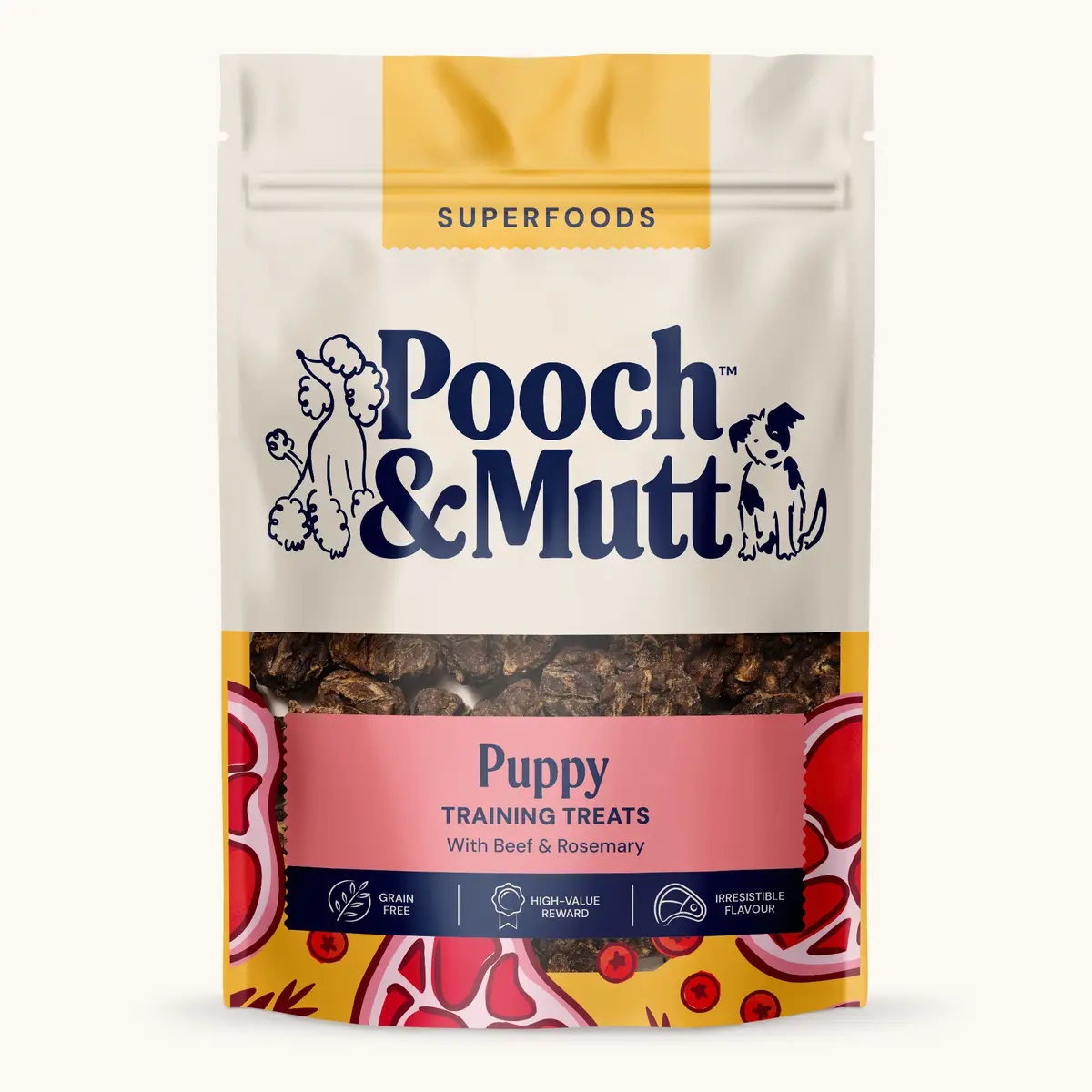
Pooch & Mutt Puppy Bite Size Beef Jerky
Bite-size beef jerky training treats for puppies, scaled by dog size
£3.99
Whimzees Puppy
Softer dental chews for puppies over three months old, grain free and gluten free
£7.99
Burns Grain Free Puppy Duck Potato
Grain-free duck and potato puppy food with a prebiotic, for starting a new litter on a novel protein
From£16.49
Common questions
- When can I start giving my puppy treats?
- Once they are weaned and settled onto their normal puppy food, which is typically from around eight weeks. Start with something soft and break it into small pieces rather than handing over a treat sized for an adult dog.
- Are puppy treats different from adult dog treats?
- They are usually smaller and lower in calories, aimed at a body that is still growing and a mouth that is still developing. An adult treat is not dangerous for a puppy, but it is often a bigger portion and a bigger chew than a young dog needs.
- How many treats can a puppy have a day?
- Enough to reward training without treats becoming a meaningful part of their daily food. If a training session uses more than a few, trim the next meal slightly rather than adding the treats on top of a full portion.
- Can treats replace part of a puppy's meal?
- No. A puppy's complete food is balanced for their growth in a way treats are not, so treats should sit alongside it as an extra rather than a substitute for any part of a meal.
Related
Written by Matt Garnett, who runs Giddy Pets and is a lifelong pet owner — not a vet. This is general information, not veterinary advice, and it cannot replace an examination by the vet who knows your animal. How we write these guides.