






Food Allergy or Seasonal Allergy in Dogs: How to Tell
Food, pollen and flea allergies all make dogs itch, but they differ in timing, body areas and how a vet confirms them. Here is what UK veterinary sources say about telling them apart.

The quick answer
A food allergy usually causes itching all year round, sometimes with tummy upsets, while a seasonal allergy to pollen is worse in spring and summer and better in winter. Flea allergy is the third common cause and tends to show around the lower back and tail base. The signs overlap, so a vet rules out parasites first, then uses a strict diet trial to check for food allergy.
Shop the guide
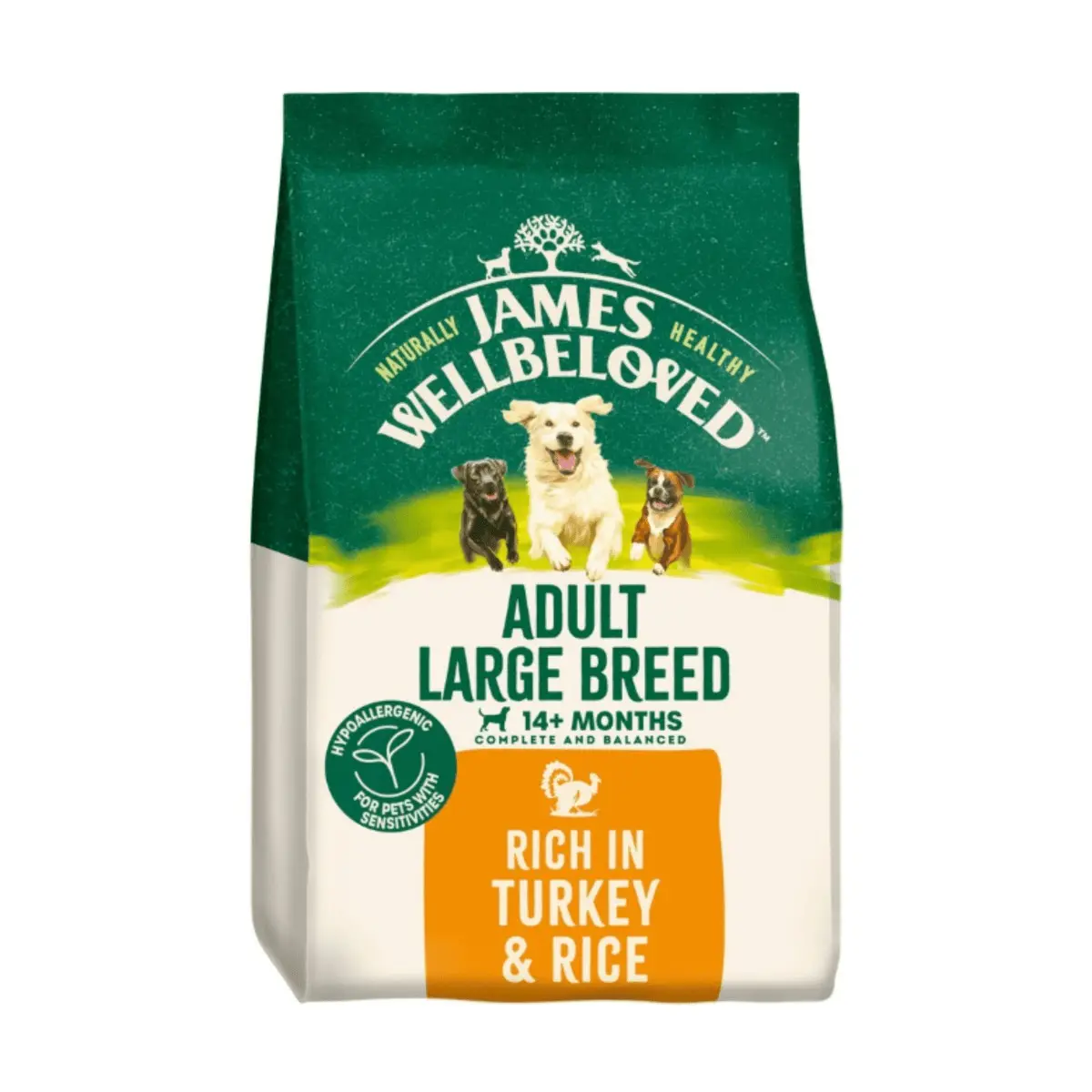
James Wellbeloved Adult Breed Dry Dog Food Turkey Rice
A hypoallergenic dry food for adult dogs, in small and large breed versions, built around single-source turkey protein
From£45.75
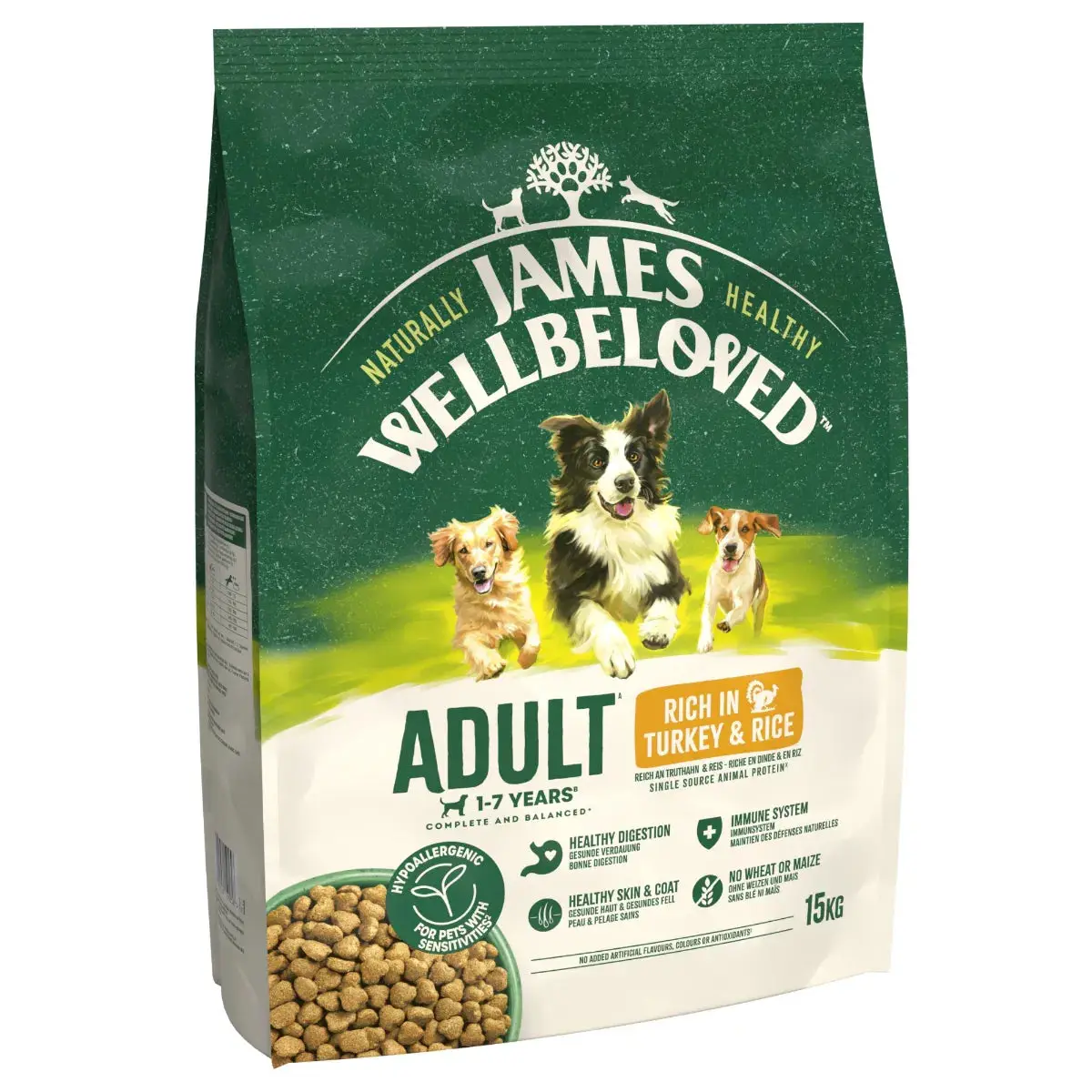
James Wellbeloved Adult Dry Dog Food Turkey Rice
A hypoallergenic dry food for adult dogs, built around a single source of turkey protein
From£41.45

Burns Adult/Senior Dog Original Lamb and Brown Rice
Single-source lamb and brown rice, formulated for adult and senior dogs with sensitivities
£35.99
A food allergy usually causes itching all year round, sometimes with tummy upsets, and often starts in a dog's first year. A seasonal allergy to pollen flares in spring and summer, then eases in winter. Flea allergy tends to show around the lower back and tail base. The signs overlap, so a vet has to work through the causes in order.
This guide sets out what UK veterinary sources say about food allergies vs seasonal allergies in dogs, with flea allergy included as the third common cause. It is general information, not veterinary advice. Itchy skin always needs a vet, because several different problems look alike and many dogs have more than one at once.
Timing is the biggest clue
No single sign separates one allergy from another. What differs is the pattern: when the itch happens, where on the body it shows, and whether the gut is involved. Blue Cross notes that vets often reach a diagnosis by excluding other causes and looking at the pattern of the itch.
| Food allergy | Seasonal (pollen) allergy | Flea allergy | |
|---|---|---|---|
| When it happens | All year, whatever the weather | Worse in spring and summer, better in winter | Any time; fleas can be more common in summer but are seen all year in warm homes |
| Typical signs | Itchy skin and ears, red or sore skin, saliva staining, sometimes vomiting, diarrhoea or wind | Licking or chewing paws, scratching, head shaking, rubbing the ears or muzzle | Intense itching after bites, a rash, bald patches or rough fur, turning to nibble the back end |
| Body areas named | Feet, ears, face, chin, tummy and groin | Around the eyes and ears, between the toes, the belly | Lower back, back end and above the base of the tail, where flea dirt is usually found |
| Age it starts | Any age, most often under one year | The sources say skin allergies can develop at any age | Not given in the sources we read |
| How vets confirm it | A strict diet trial, usually 6 to 12 weeks | Ruling out other causes first, then the pattern of the itch; blood or skin tests are sometimes used | Prescription parasite treatment for every pet and the home, then seeing whether the itch settles |
Treat the table as clues, not a diagnosis: paws, ears and belly appear in more than one column. For a fuller list of signs, see our guide to dog allergy symptoms and relief.
Food allergy: what the sources describe
PDSA describes a food allergy as the immune system reacting to one or more ingredients in the diet, causing skin problems, stomach problems or both. Three points from its page surprise many owners:
- It is usually a protein. Meat and dairy proteins are the most common culprits, especially beef, chicken and lamb, which are widely used in dog food. Wheat is also named.
- It can be a food your dog has eaten for years. A dog can become allergic to any ingredient it has already eaten, so 'but nothing has changed' does not rule food out.
- It often starts young. PDSA says food allergies can begin at any age but most commonly start before a dog's first birthday.
The skin signs PDSA lists are itchy skin and ears, a rash or red, sore skin (particularly on the feet, ears, face, chin, tummy and groin) and pink or brown saliva staining where the dog licks. The gut signs are vomiting, diarrhoea, a sore tummy and excessive wind. Our guide to the signs of food allergies in dogs goes into more detail.
Seasonal allergy: pollen and other environmental triggers
Seasonal allergy is one form of what vets call atopic dermatitis or allergic skin disease: an oversensitivity to things in the dog's surroundings. PDSA lists pollens, grass, trees, moulds and house dust mites as triggers, and says most allergic dogs react to more than one thing.
People with hay fever sneeze. Dogs are far more likely to itch. PDSA's pollen advice lists licking or biting the paws, frequent scratching, head shaking, rubbing the ears or muzzle, and red, sore skin, especially around the eyes and ears, between the toes and on the belly.
The calendar is the giveaway. PDSA's rough guide is tree pollen in March and April, grass pollen in May, June and July, and flowering weeds from June to August, with the timing shifting depending on where you live. If the problem is worse in summer and better in winter, PDSA says pollen is the most likely cause. Blue Cross adds that moulds are more common in damp weather.
Two cautions. First, not every environmental allergy is seasonal. House dust mites are a household trigger, so a dog reacting to them will not necessarily follow the pollen calendar. Second, a dog can have both a pollen allergy and a food allergy, which is why PDSA says a vet may still suggest a diet trial for a dog that looks seasonal. PDSA notes that skin allergies can affect any dog at any age.
Flea allergy: the third common cause
Some dogs are allergic to flea bites. PDSA describes a severe skin reaction, with intense itching and irritation each time the dog is bitten, and Dogs Trust explains that the reaction is to flea saliva and can leave the skin very sore or infected.
Flea allergy can look seasonal, because fleas can be more common in summer, yet PDSA is clear that they are seen all year round, largely because our homes are warm. You may never see one, either: PDSA says live fleas are not always easy to spot. The clues it gives are a dog turning quickly to nibble its back end, bald patches or rough, spiky fur, and specks of flea dirt, most often on the lower back and above the base of the tail.
Fleas also make every other itch worse. A Blue Cross leaflet puts it neatly: itches can 'add up', so a dog with another allergy will scratch far more if fleas are present too.
How vets tell them apart
The sources describe a process of elimination that starts with the causes that are easiest to control.
Parasites first
PDSA says vets begin by ruling out fleas and mites, using a prescription parasite treatment. Every pet in the household and the home itself need treating too, otherwise the dog keeps being bitten. The BSAVA PetSavers leaflet agrees: all pets in the house must be treated, even those that are not scratching.
Then a diet trial
If the itch continues, the next step is usually a food trial, sometimes called an elimination diet. PDSA describes it as feeding a veterinary diet, chosen by the vet, that the dog should not react to. The dog eats that diet and water only, usually for 6 to 12 weeks. Nothing else is allowed, including treats and dental sticks, because any reaction could not then be traced. If the dog improves, something in the old food was to blame.
This is a job to do with your vet, not alone. Blue Cross points out that most common brands of pet food, including many labelled low allergy or hypoallergenic, contain multiple ingredients, so swapping brands at home rarely gives a clear answer. Our guide to hypoallergenic dog food explains what that label does and does not mean.
What about blood, saliva and hair tests?
PDSA states that blood tests are not accurate for diagnosing food allergies in dogs and that the food trial is the best method. Blue Cross goes further, saying a diet trial is the only way to diagnose a food allergy. None of the UK veterinary pages we read recommends a saliva or hair test for this purpose.
For environmental allergies, blood and skin tests do have a place, but PDSA says they are not 100 per cent reliable. Blue Cross says they do not always give the complete picture, that medication has to be stopped for a time beforehand, and that they are mainly needed when desensitising injections are being considered.
What to note down before the appointment
Dogs Trust suggests going to the vet with notes on your dog's recent health, diet and activities, and on when and where the signs started. Because timing and pattern matter so much, it helps to write down:
- When the itching began, and whether it is constant or comes and goes with the seasons.
- Whether it was better last winter.
- Which parts of the body your dog licks, chews or scratches most, with photos if you can.
- Any vomiting, loose stools or wind.
- Everything your dog eats, including treats, chews, table scraps and anything shared with other pets.
- Which flea product you use, when it was last given, and whether other pets in the house are treated.
If you are listing table scraps, our free Can My Pet Eat This? checker tells you whether a particular food is safe for a dog or cat to eat. It checks safety, not allergy, so it cannot tell you what your dog reacts to.
What management generally involves
Allergies are managed, not cured, and the plan is tailored to the dog. In outline, the sources describe:
- Food allergy: staying on a suitable complete diet long term, with no other food or treats. Once things settle, a vet may guide you through reintroducing ingredients one at a time to find which are safe.
- Seasonal and environmental allergy: reducing exposure where possible, for example walking when pollen counts are lower, wiping paws and coat after walks, and washing bedding. A vet may add anti-itch medication, skin supplements or a soothing shampoo. PetSavers notes that some dogs with seasonal allergies only need medication for the relevant season each year. Immunotherapy injections are an option for some dogs, though PDSA says they do not work for every dog.
- Flea allergy: regular flea control for every pet and the home, all year.
Across all three, PDSA warns against giving human medicines unless a vet has advised it, and suggests talking openly about costs, since long-term skin care can be expensive. With the right plan, PDSA says most allergic dogs go on to live long, happy lives. For the wider picture, start with our overview of dog allergies.
Sources
- PDSA – Food allergies in dogs
- PDSA – Skin allergies in dogs
- PDSA – Is your pet suffering with the high pollen count?
- PDSA – Fleas on dogs
- Dogs Trust – Common dog allergies: spot the symptoms
- Dogs Trust – How do I treat my dog for fleas?
- BSAVA PetSavers – My dog has been diagnosed with itchy skin (client information leaflet)
- Blue Cross – Skin and ear disease (dog advice leaflet)
Common questions
How can I tell if my dog's itching is a food allergy or a seasonal allergy?
Timing is the most useful clue. A food allergy tends to cause itching all year round and may come with vomiting, diarrhoea or wind. A pollen allergy is usually worse in spring and summer and better in winter. The body areas overlap, though, and a dog can have both, so the pattern only points a vet in the right direction. It cannot confirm the cause by itself.
Can a blood, saliva or hair test show what my dog is allergic to?
For food allergy, PDSA says blood tests are not accurate in dogs, and both PDSA and Blue Cross describe a vet-supervised diet trial as the way to diagnose it. None of the UK veterinary pages we read recommends saliva or hair tests. Blood and skin tests are sometimes used for environmental allergies, but PDSA notes they are not 100 per cent reliable.
Can a dog suddenly become allergic to a food it has eaten for years?
Yes. PDSA says a dog can become allergic to any ingredient it has already eaten, and that this can happen at any stage of life, even after years on the same food with no problems. Food allergies most commonly start before a dog is one year old, but an older dog is not ruled out. Your vet can advise whether a diet trial is worthwhile.
My dog has no fleas that I can see. Could it still be a flea allergy?
It could. PDSA points out that live fleas are not always easy to see, and a dog with a flea allergy can react strongly each time it is bitten. That is why vets usually start with a prescription parasite treatment for every pet in the household, plus the home, before looking at food or environmental causes. Fleas are seen all year round, not only in summer.
How long does a food trial for a dog take?
PDSA and Blue Cross both say a diet trial usually lasts between six and twelve weeks, and your vet will confirm the exact length. During that time the dog eats only the diet the vet has chosen, plus water. Treats, dental sticks and scraps are all off the menu, because one slip can make the result impossible to interpret.
Should I change my dog's food myself to see if the itching stops?
It is better to see your vet first. Itching has many causes, including parasites and skin infections, and these need ruling out before food is blamed. Blue Cross also notes that most ordinary dog foods, including many sold as hypoallergenic, contain several ingredients, so switching brands at home rarely gives a clear answer. A vet can choose a suitable diet and tell you how long to feed it.
About the author
Matt Garnett — founder, Giddy Pets
Matt started Giddy Pets to make getting pets the good stuff simpler and fairer. Everything in these guides comes from real life with pets and a lot of trial and error — it's practical guidance, not veterinary advice. If a guide gets something wrong, tell him directly.
Advice & planning
Free tools & more guides
Practical calculators and trusted guides relevant to this product.
Read next

Dog Allergies: Signs, Triggers and How to Help
Itchy skin, ear infections and tummy upsets can all be signs of allergies. Learn the common triggers, what helps at home, and when your dog needs veterinary care.

Dog allergies: symptoms and how to help
How to spot flea, food and environmental allergies in dogs, and the vet-backed treatments that actually bring relief

Dog food allergies: signs your dog may be allergic
How to spot the skin, ear and digestive signs of a dog food allergy, the common trigger ingredients, and how vets actually diagnose it

Hypoallergenic Dog Food: What It Really Means
"Hypoallergenic" isn't a regulated promise. Here's what the label actually means, when it helps a dog with allergies or a sensitive tummy, and how vets diagnose food reactions.