




Best Retractable Dog Lead UK: Safety-First Picks
Looking for the best retractable dog lead in the UK? Here's how to choose one safely, where it suits, where to avoid it, and what features actually matter.
The quick answer
They're safe in the right places, namely open, low-traffic spaces, with a reliable brake and good technique. Near roads and crowds they offer little fine control, so a fixed lead is usually safer there.
Mentioned in this guide

Retractable Dog Lead with One-Button Brake
A smooth retractable dog lead with an ergonomic handle and a responsive one-button brake. The auto-retract reel gives your dog freedom to sniff and explore, then reels back neatly when you need them close.
£7.99

Retractable Dog Lead with Elastic Bungee
A retractable lead with elastic give that lets your dog roam, then reels back smoothly.
£8.99

Retractable Dog Lead with Step-In Harness
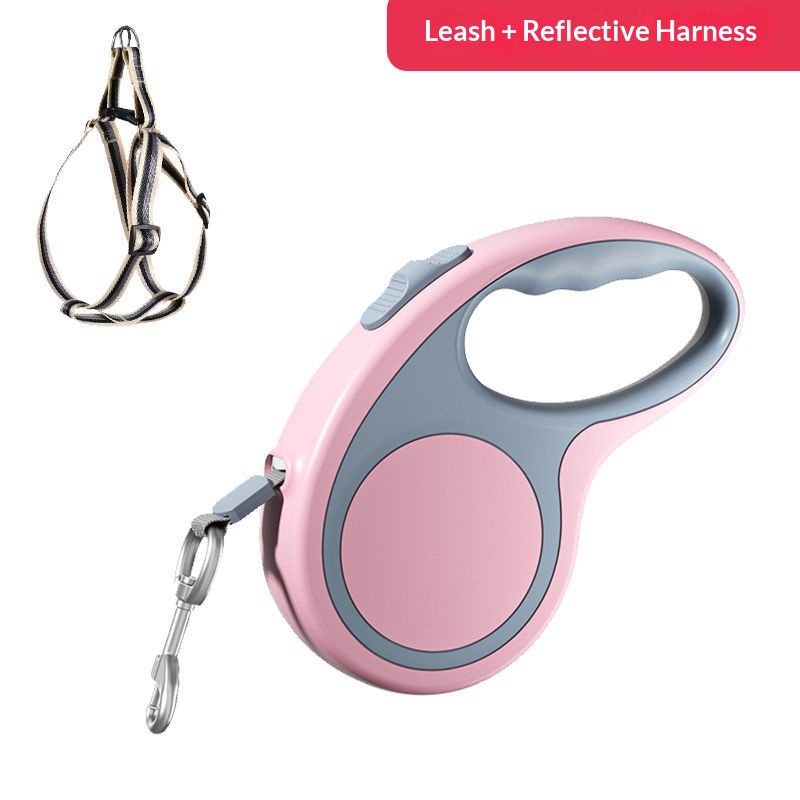
A compact retractable lead with an ergonomic grip and one-button brake, bundled with a reflective step-in harness. The auto-retracting reel gives pets freedom to explore while keeping you in control.
From£13.99
The best retractable dog lead for a UK owner is one with a reliable one-handed brake, a strong belt-style tape rather than a thin cord, and a length matched to your dog's size. Used in the right places, an open field or a quiet path, it gives a dog freedom to sniff while you keep control. Used near roads, it's a known hazard, so where you walk matters as much as which lead you buy.
If you have weighed the risks and still want one, browse our retractable dog leads.
Our picks
Three retractable setups with genuinely different advantages. Use them in open spaces with a calm dog, never beside traffic or for a dog that lunges.
Best straightforward retractable lead
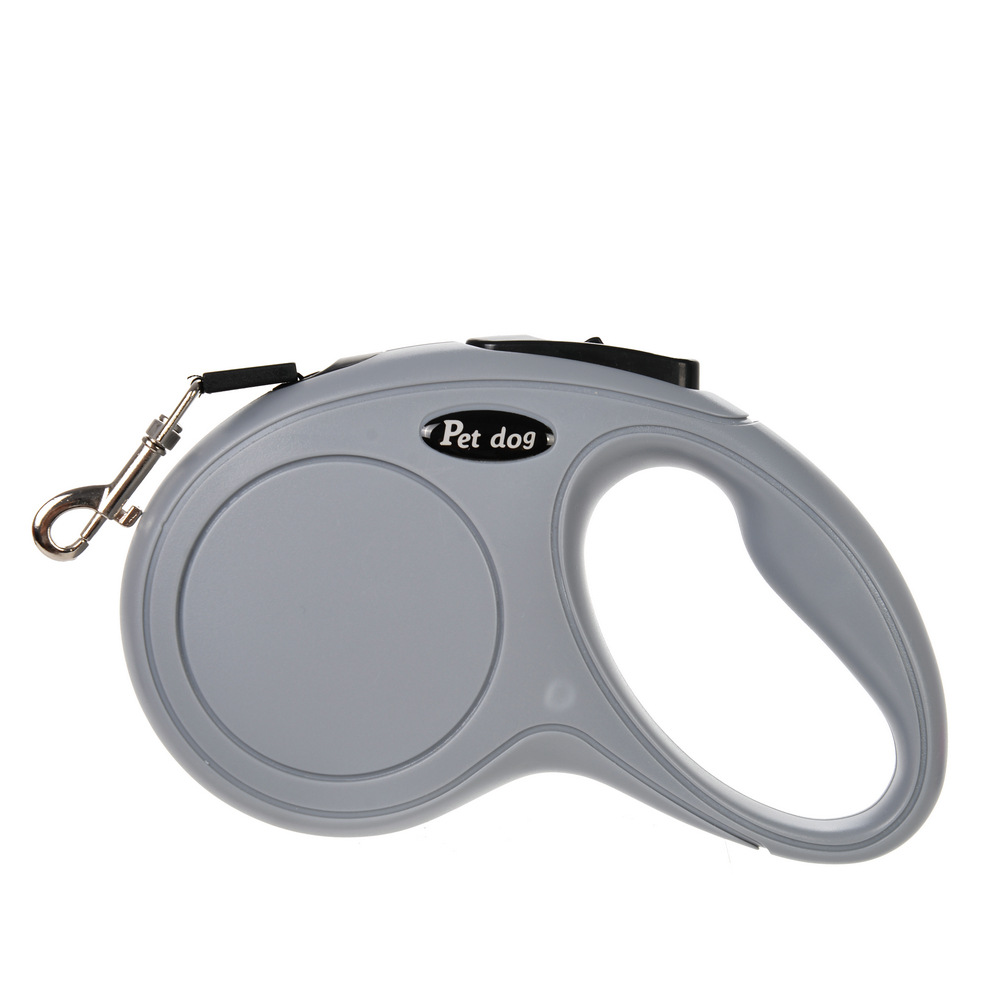
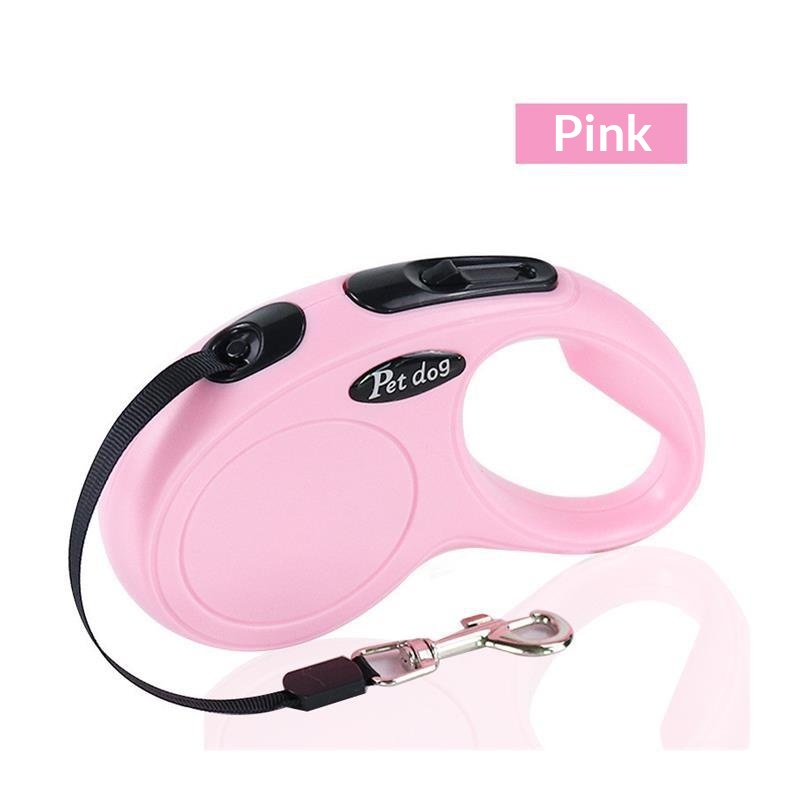
Retractable Dog Lead with One-Button Brake
Why we picked it
A simple one-button brake sits directly under the thumb, with no extra mechanism to learn when the dog reaches the end of the safe space. It suits relaxed sniffing walks, not a strong dog that lunges.
- In stock
- Tracked delivery: 8–13 working days
Best for softening sudden stops
Retractable Dog Lead with Elastic Bungee
Why we picked it
The short bungee section absorbs some of the jolt when a dog reaches the end of the line, which is kinder on the shoulder and elbow. It reduces the shock; it does not make roadside retractable use safe.
- In stock
- Tracked delivery: 8–13 working days
Best small-dog harness set
Retractable Dog Lead with Step-In Harness
Why we picked it
The retractable lead comes with a step-in harness, keeping line pressure off a small dog’s neck and removing one sizing decision. Measure the chest carefully and use it only where extra range is appropriate.
- In stock
- Tracked delivery: 8–13 working days
From £13.99See price, delivery & options
When a retractable lead is the right tool
Retractable leads shine in open, low-traffic spaces where your dog can range a bit without being fully off-lead. For recall training in a big field, for a dog who needs sniffing freedom but isn't yet trustworthy loose, or for a quiet woodland path, a retractable dog lead lets your dog explore while you keep a line on them.
They're less suited to busy pavements, crowded parks and anywhere near traffic. The long line gives little fine control, can wrap around legs, and a dog can reach the kerb before you can react. Be honest about where you'll actually use it.
The features that matter for safety
Not all retractables are equal. Prioritise these:
- A solid, one-handed brake and lock. You must be able to stop the tape instantly and hold it, without fumbling. Test it in the shop or on day one.
- Belt-style tape over thin cord. Flat tape is far less likely to cause friction injuries to hands and legs than a thin cord, which can cut badly if it catches you or another walker.
- A weight rating that matches your dog. Using a small-dog mechanism on a strong puller risks the brake failing. For a [retractable lead for large dogs], buy one rated above your dog's weight, not just at it.
- A comfortable, secure handle with a wrist strap, so a sudden lunge doesn't rip it from your grip.
Check the clip and tape regularly for fraying or cracking. A retractable lead under tension fails suddenly, not gradually, so worn kit is worth replacing before it lets go.
Matching the lead to your dog
Size and strength drive the choice. A small or medium dog is well served by most quality retractables, where comfort and a smooth brake matter most. A large or powerful dog needs a heavier-duty mechanism and a longer reach, and you should pause to ask whether a retractable is the safest option for a strong puller at all.
For everyday town walks, a fixed lead often beats any flexi for control, and many owners keep a retractable for the field and a standard lead for the street. Our Retractable Lead vs Fixed Lead: Pros, Cons and Safety lays out that trade-off clearly.
Using one safely
A good lead is only half the job; technique is the rest. Keep it locked short near roads, junctions and other dogs, and only let the tape run out when there's clear space. Never grab a running tape with your hand, since that's how the worst friction burns happen. And never clip a retractable to anything but a well-fitted harness or collar your dog can't slip.
If your dog pulls hard on the lead, a retractable can quietly reward that pulling, since lunging gets them more line. Loose-lead skills come first, and our Best Training Lead for Loose-Lead Walking covers building those before you trust a flexi.
The honest verdict
Retractable leads aren't inherently dangerous, but they're widely misused, and our Are Retractable Dog Leads Safe? UK Roadside Risks Explained goes into the real-world risks near British roads. Buy one with a dependable brake and proper tape, match it to your dog's size, and reserve it for open spaces.
For more on walking and travelling with your dog, see our Dog Walking & Travel hub, and browse leads in our walk and travel range.
Used thoughtfully, a quality retractable is a genuinely useful bit of kit. The mistake is treating it as a pavement lead; keep it for the field and you'll get the freedom without the risk.
Common questions
Are retractable dog leads safe to use?
They're safe in the right places, namely open, low-traffic spaces, with a reliable brake and good technique. Near roads and crowds they offer little fine control, so a fixed lead is usually safer there.
What length retractable lead should I get?
Match it to where you'll walk and your dog's size. A longer line suits open fields; for town walks you'll mostly keep it locked short, so reach matters less than a dependable brake.
Can I use a retractable lead for a big strong dog?
Only with a mechanism rated above your dog's weight, never one that just meets it. For a strong puller, work on loose-lead walking first and consider whether a fixed lead is safer.
Why shouldn't I grab the tape with my hand?
A retractable line under tension can cause serious friction burns or cuts if you grab it while it's running. Always use the brake to stop the tape rather than your hand.
About the author
Matt Garnett — founder, Giddy Pets
Matt started Giddy Pets to make getting pets the good stuff simpler and fairer. Everything in these guides comes from real life with pets and a lot of trial and error — it's practical guidance, not veterinary advice. If a guide gets something wrong, tell him directly.
Advice & planning
Free tools & more guides
Practical calculators and trusted guides relevant to this product.
Read next
Dog winter safety: common myths debunked
We separate fact from fiction on fur coats, frozen paws and winter exercise, with guidance from PDSA, RSPCA, Dogs Trust and VCA vets

How often should you walk a dog?
Exercise and walk-frequency guidance for dogs by life stage and breed size, with puppy-specific safety rules
Essential dog care tips for new owners
A practical, vet-informed guide to feeding, exercise, grooming, health checks and routine for anyone bringing home their first dog

Laziest dog breeds for apartment living
The calmest, lowest-energy dog breeds genuinely suited to flats and small homes, and the health trade-offs worth knowing first