






Dog winter safety: common myths debunked
We separate fact from fiction on fur coats, frozen paws and winter exercise, with guidance from PDSA, RSPCA, Dogs Trust and VCA vets

The quick answer
Not all, but many benefit. Short-coated breeds like greyhounds and Staffies, puppies, senior dogs and unwell dogs generally need extra warmth, while thick double-coated breeds like huskies and German shepherds usually cope well without one. Choose a coat that fits snugly without restricting movement or toileting.
Shop the guide

Replacement Cage Lid Pin (33cm)
A genuine spare lid pin for folding cages — 33 cm in length, so your cage stays secure when the original goes walkabout.
£6.49

Spare Short Pin for Folding Cage
A spare short pin for the folding cat cage — so a missing pin doesn't put your cage out of action.
£5.99

3-in-1 Folding Pet Stroller with Removable Carrier
A folding pet stroller whose carrier lifts out to use on its own, giving small, senior or recovering pets a wheeled ride to the vet and back home again.
£115.99

Supa Cardboard Pet Carrier
A flat-pack cardboard pet carrier for cats, rabbits and small dogs, in two sizes: Medium 33 x 20 x 20cm and Large 38 x 25 x 25.5cm inside
From£4.25
Winter brings a fresh batch of dog-care advice, some of it useful and some of it decades out of date. A lot of it gets passed around because it sounds logical: dogs have fur, so surely they're built for the cold? Salt is just for the roads, not a hazard for paws? Walks can wait until spring if it's grim outside?
Most of these ideas contain a grain of truth wrapped around a much bigger misunderstanding, and a few of them can genuinely put your dog at risk if you follow them without question. Below, we go through the winter myths we hear most often from owners and set out what the major UK animal welfare charities and veterinary bodies actually recommend.
None of this is about wrapping your dog in cotton wool. It's about knowing which precautions matter, which ones are overkill for your particular dog, and where the real hazards are hiding.
Myth: 'My dog has a fur coat, so they don't feel the cold'
This is probably the most persistent winter myth, and it isn't entirely wrong, just incomplete. Some breeds genuinely are built for cold conditions. Dogs such as huskies, Labradors and German shepherds carry a dense double coat that traps air and insulates effectively, and these dogs are usually comfortable in weather that would chill a short-coated breed within minutes.
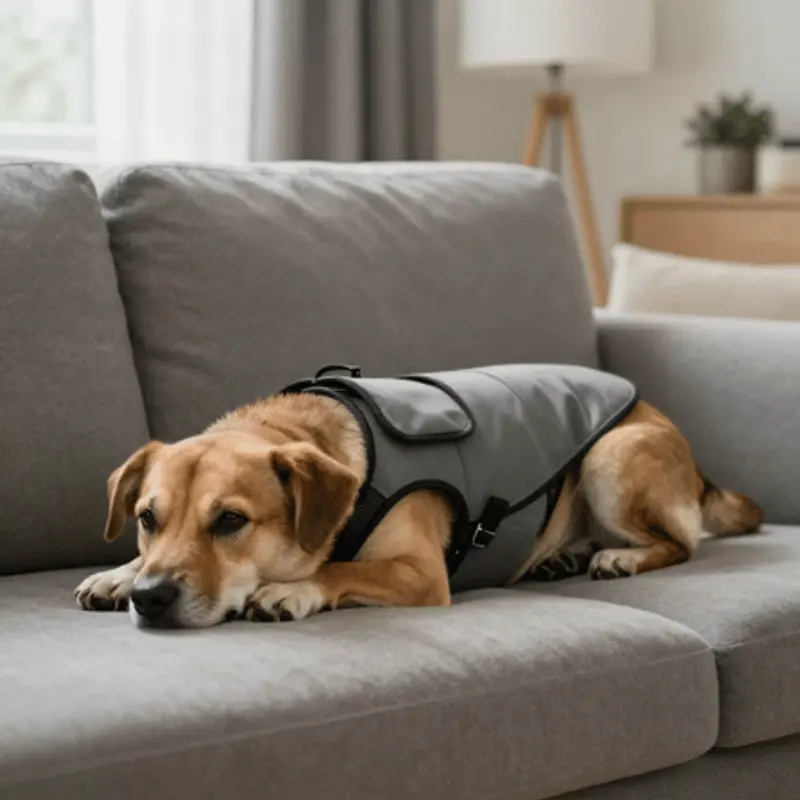
The problem is treating having fur as if it's the same as having adequate winter insulation. Short-coated breeds — greyhounds, whippets, Staffordshire bull terriers, boxers and similar low-body-fat, thin-coated dogs — have very little natural protection against cold. So do puppies, senior dogs, and dogs recovering from illness or surgery, all of whom struggle to regulate their body temperature as well as a fit adult dog. PDSA and the RSPCA both recommend a well-fitting coat for these groups on cold walks, alongside older dogs whose joints and circulation are less efficient at generating warmth.
Wind and wet weather make the picture worse for every dog, coated or not. A thick coat that's soaked through loses much of its insulating value, and wind chill can strip heat away far faster than still, dry cold of the same temperature. If your dog comes back from a walk properly wet, towel them off and let them warm up properly rather than assuming their fur will sort it out.
Myth: 'A coat is just for looks — dogs don't really need one'
The flip side of the fur myth is dismissing coats altogether as an unnecessary fashion accessory. For the right dog, a coat is a genuine welfare tool, not a costume. Dogs Trust's cold-weather guidance specifically recommends coats for shorter-haired breeds and puppies once temperatures drop, and PDSA lists a good winter coat as one of the simplest ways to keep a vulnerable dog comfortable on cold walks.
The key word is well-fitting. A coat that's too tight can restrict movement and chafe under the legs; one that's too loose can slip, trail in wet ground, or spook a nervous dog. It should allow full leg movement and easy access for toileting. If your dog has never worn one before, introduce it gradually and positively — a few minutes at a time indoors with treats and praise, building up before you rely on it for a proper walk. Rushing this step is why some dogs seem to dislike coats; often they've simply never been given a calm introduction.
Myth: 'A quick walk means I don't need to worry about paws'
Paw care gets skipped more than almost any other piece of winter advice, mostly because the damage isn't obvious straight away. Rock salt and grit, spread on pavements and roads to prevent ice, can irritate the skin between paw pads and cause cracking and soreness with repeated exposure. It's also mildly toxic: if a dog licks a significant amount off their paws or fur, the RSPCA notes it can cause thirst, vomiting, lethargy and, in severe cases, convulsions and kidney damage.
The fix is straightforward and doesn't require an expensive kit. Wipe or rinse your dog's paws, legs and belly with lukewarm water after every winter walk, checking between the pads for grit, ice balls or small cuts as you go. PDSA recommends trimming the fur between the pads to reduce snow and ice clumping, and applying a thin layer of paw balm to stop pads drying out and cracking. Dog boots are a further option for dogs who tolerate them, giving a physical barrier against both cold ground and de-icing chemicals. None of this needs to be elaborate — a towel by the door and two minutes of attention after each walk covers most of it.
Myth: 'Cold weather means my dog needs far less exercise'
It's tempting to cut walks short once the clocks change and the weather turns, and short-term adjustments for genuinely dangerous conditions (ice, storms, extreme cold) are sensible. But treating winter as a reason to let exercise drop off across the board isn't good for your dog's physical or mental health. PDSA is direct about this: dogs shouldn't become winter couch potatoes, because reduced activity over weeks can affect weight, joint health and behaviour.
If you do need to shorten outdoor walks because of poor light, ice or heavy rain, make up some of the shortfall indoors. Dogs Trust suggests scent games, hide-and-seek with treats, tug and puzzle feeders as easy ways to keep a dog mentally engaged when a full walk isn't safe. If you're not sure how much exercise your dog actually needs for their breed, age and size, our Dog Walking Calculator is a useful starting point for building a realistic winter routine.
If your dog's activity levels do drop over winter, adjust their food accordingly — PDSA is clear that calorie intake should scale down with exercise, not stay the same by default.
That last point matters more than owners often realise. A dog getting shorter, less frequent walks but the same size dinner will put on weight over a winter, which is why keeping half an eye on portion sizes alongside activity is worth doing every year, not just when a vet flags it.
Myth: 'It's only dangerous once it's actually freezing'
Temperature alone doesn't tell the whole story. Wind chill can make a few degrees above freezing feel much colder, and wet dogs lose heat far faster than dry ones even in relatively mild conditions. A dog that's been standing in drizzle for twenty minutes can be more at risk of getting properly cold than a dry, coated dog out in a still, crisp minus two.
This is where knowing your own dog matters more than following a blanket rule. A fit adult Labrador on a dry, calm day has very different cold tolerance to a thin, elderly terrier in driving wind and rain. Watch your dog's behaviour on walks: shivering, reluctance to keep moving, lifting paws off the ground repeatedly, or wanting to turn back early are all signs they're cold enough that the walk should end.
Myth: 'A confident swimmer will be fine near a frozen pond'
Frozen or partially frozen water is one of the more serious winter hazards, and it catches out sensible, well-supervised dogs every year. Ice that looks solid rarely is, and a dog that goes through the surface can struggle to climb back out, with the cold water itself posing an additional, serious risk on top of the fall. Both PDSA and the RSPCA recommend keeping dogs on a lead near any frozen or partly frozen body of water, however tempting it looks to them, and however strong a swimmer they normally are. If your dog does go through ice, do not go in after them — call for help and try to guide them toward the bank from solid ground, since a rescuer going into the same water frequently ends up in worse trouble than the dog.
Myth: 'Antifreeze is a garage problem, not a dog problem'
Antifreeze (ethylene glycol) is one of the most dangerous substances a dog can encounter in winter, and it's genuinely sweet-tasting, which means dogs will readily lap up spills or puddles of it. Both PDSA and Dogs Trust describe it as highly poisonous, and the RSPCA notes it causes kidney failure and can be fatal even in fairly small amounts. Symptoms of poisoning can take hours to appear, by which point serious internal damage may already be underway, so this is one situation where you should never wait and see.
Store antifreeze and screen wash well out of reach, clean up any spills or drips immediately, and be alert to puddles on driveways or in car parks during a walk. If you have any reason to suspect your dog has ingested antifreeze — a puddle they were sniffing at, an open container nearby, sudden vomiting or unsteadiness — treat it as an emergency and call your vet straight away rather than waiting for more symptoms to develop.
Recognising when the cold has become a real problem
Beyond the day-to-day precautions, it's worth knowing what a genuine cold-weather emergency looks like, because early action makes a real difference. The RSPCA lists shivering, drowsiness, pale gums, loss of coordination and collapse as warning signs of hypothermia. Frostbite, according to VCA Hospitals, most commonly affects the paws, ears and tail — the extremities furthest from the heart with the least blood flow — and shows up as pale, grey or bluish, cold or brittle skin, sometimes with swelling. As frostbitten tissue starts to thaw, it can become red, painful and inflamed. Dogs with conditions that reduce blood flow to the extremities, such as heart disease or diabetes, are at greater risk of frostbite even in less extreme conditions.
If you notice any of these signs, get your dog somewhere warm and dry as quickly and safely as possible and contact your vet promptly, rather than waiting to see if things improve on their own.
When to see your vet
Contact your vet promptly if your dog shows signs of hypothermia (persistent shivering, drowsiness, pale gums, wobbliness or collapse), suspected frostbite (pale, grey, blue or unusually cold skin on the paws, ears or tail), suspected antifreeze ingestion, or ongoing lameness or paw soreness after walking on salted or gritted surfaces. Older dogs, puppies, and dogs with existing health conditions are worth watching more closely through the winter months, since they have less capacity to cope with cold and recover more slowly if something does go wrong.
*This is general guidance, not a substitute for advice from your vet, who can assess your individual pet.*
Sources
- PDSA — winter pet care advice, including coats, paw care and antifreeze hazards (pdsa.org.uk).
- RSPCA — winter and cold weather care for dogs, including hypothermia signs and rock salt hazards (rspca.org.uk).
- Dogs Trust — cold weather advice for dogs, including coats, paw care and antifreeze (dogstrust.org.uk).
- VCA Hospitals — frostbite in dogs, including signs and at-risk body parts (vcahospitals.com).
Common questions
Do all dogs need a coat in winter?
Not all, but many benefit. Short-coated breeds like greyhounds and Staffies, puppies, senior dogs and unwell dogs generally need extra warmth, while thick double-coated breeds like huskies and German shepherds usually cope well without one. Choose a coat that fits snugly without restricting movement or toileting.
Is road salt actually dangerous for dogs?
Yes. Rock salt and grit can irritate and crack paw pads, and if licked off in any quantity it can cause vomiting, lethargy and, in severe cases, kidney damage, according to the RSPCA. Wipe your dog's paws, legs and belly after every winter walk to remove residue.
Should I reduce my dog's walks in winter?
Not as a default. PDSA advises against dogs becoming winter couch potatoes, since reduced activity affects weight and joint health. Shorten or skip walks only when conditions are genuinely unsafe (ice, storms, extreme cold), and make up the difference with indoor games. If activity does drop, reduce food portions to match.
What are the signs of hypothermia in dogs?
The RSPCA lists shivering, drowsiness, pale gums, loss of coordination and collapse as warning signs. If you notice these, warm your dog gradually in a dry area and contact your vet promptly rather than waiting to see if they improve.
Can dogs get frostbite in the UK?
Yes, particularly in prolonged cold, wet or windy conditions. VCA Hospitals notes the paws, ears and tail are most at risk, showing as pale, grey or bluish, cold or brittle skin, sometimes with swelling. Dogs with conditions like heart disease or diabetes are at higher risk and should be seen by a vet if frostbite is suspected.
About the author
Matt Garnett — founder, Giddy Pets
Matt started Giddy Pets to make getting pets the good stuff simpler and fairer. Everything in these guides comes from real life with pets and a lot of trial and error — it's practical guidance, not veterinary advice. If a guide gets something wrong, tell him directly.
Advice & planning
Free tools & more guides
Practical calculators and trusted guides relevant to this product.