Dog-Friendly Holidays in the UK: How to Plan Your Trip
A practical planning guide to holidays with your dog in the UK: what to ask before you book, the rules for cars, trains, beaches and countryside, and what to pack.

The quick answer
Dog friendly holidays in the UK work best when you sort four things before booking: accommodation that truly welcomes dogs, a safe and legal way to travel, the local rules for beaches and countryside, and a vet near where you are staying. Check your dog's collar tag and microchip details, pack their usual food and bedding, and never leave them in a parked car.
Shop the guide

Supa Cardboard Pet Carrier
A flat-pack cardboard pet carrier for cats, rabbits and small dogs, in two sizes: Medium 33 x 20 x 20cm and Large 38 x 25 x 25.5cm inside
From£4.25
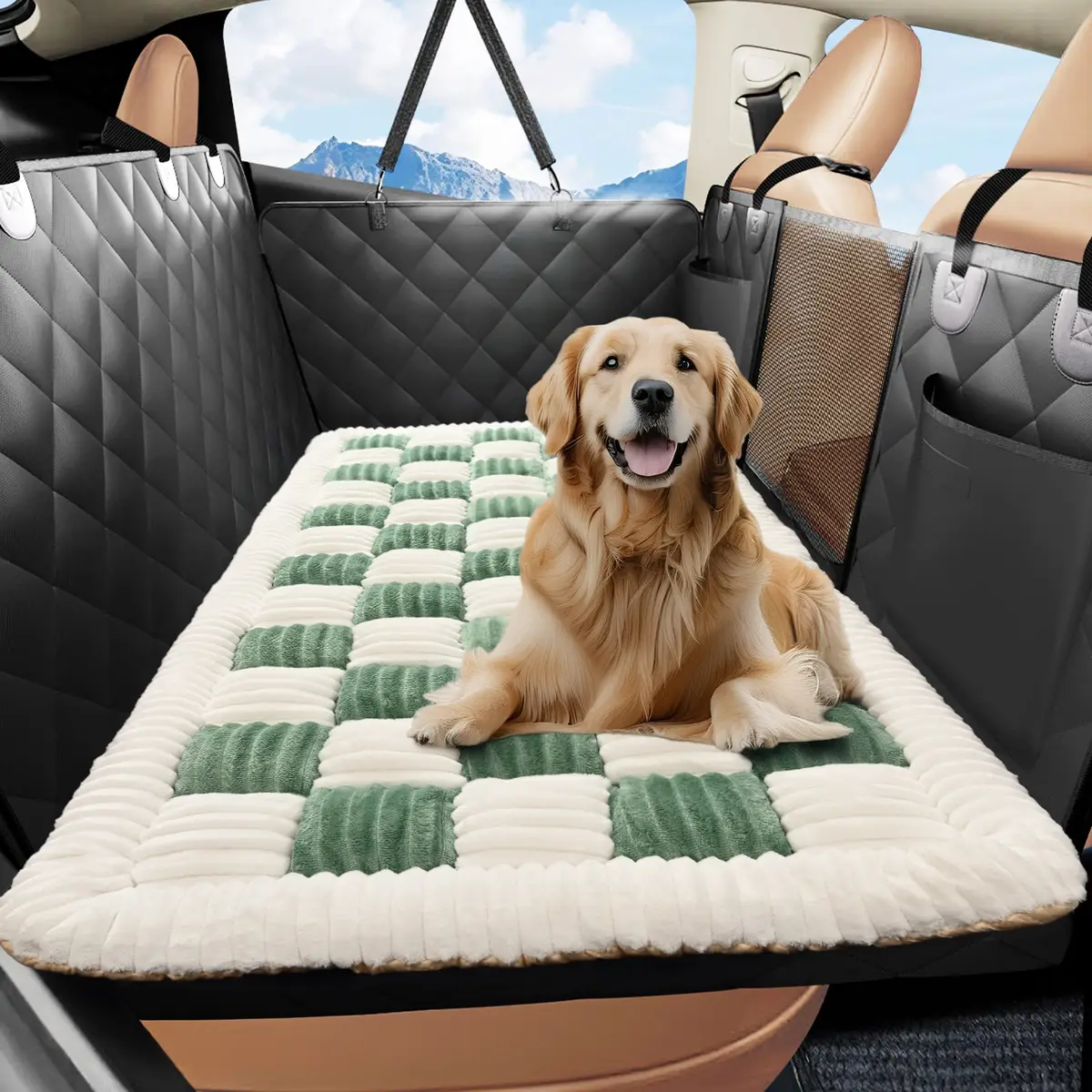
Plush Checkered Dog Car Back Seat Bed
A quilted checkered car bed that turns the back seat into one flat, cosy platform for your dog.
From£11.99

Replacement Cage Lid Pin (33cm)
A genuine spare lid pin for folding cages — 33 cm in length, so your cage stays secure when the original goes walkabout.
£6.49
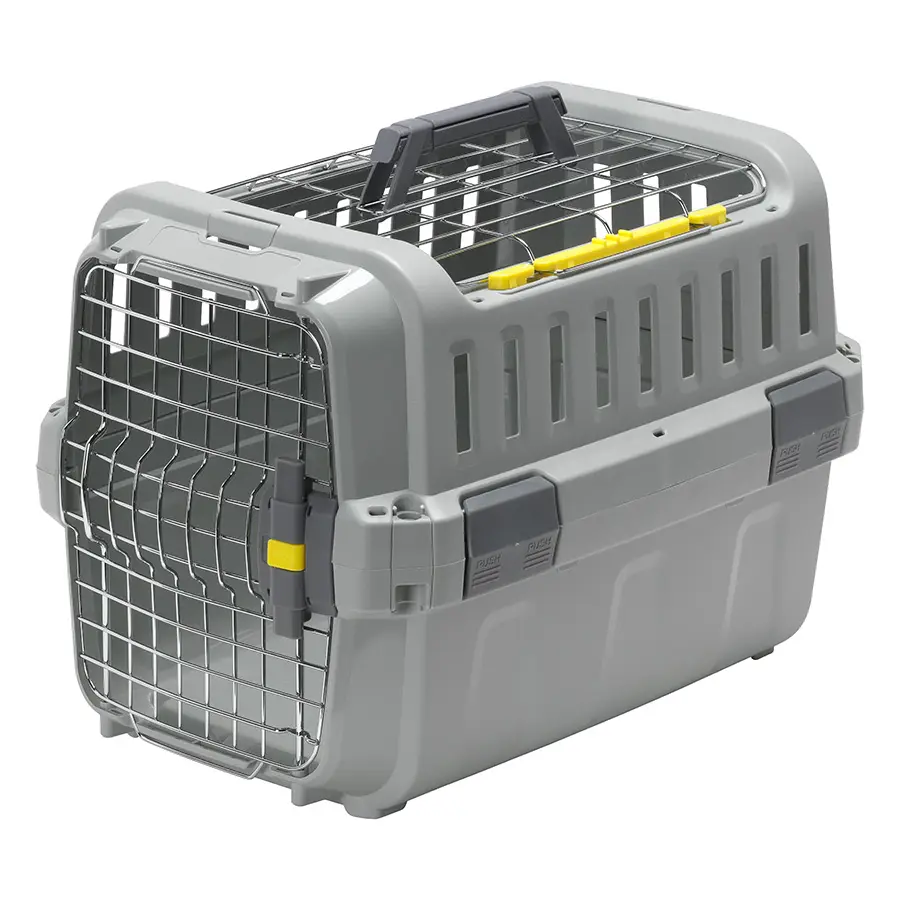
Moderna Odyssey Carrier
A hard plastic carrier with top and front openings, and a fold-away handle
From£47.99
Dog friendly holidays in the UK are easy to arrange if you plan four things before you book: a place that truly welcomes dogs, a safe way to travel, the local rules for beaches and countryside, and a vet near where you are staying. This guide covers each one, drawing on the Highway Code, the Countryside Code and advice from UK animal charities.
First, be honest about whether your dog will enjoy it. Dogs Trust suggests thinking about how your dog copes with busy places, unfamiliar dogs and long journeys. Puppies, fast-growing large breeds and dogs with conditions such as arthritis may need a gentler trip, or may be happier at home. If you are unsure, speak to your vet.
Choosing somewhere genuinely dog-friendly
"Dog-friendly" can mean anything from a warm welcome to a dog being tolerated in one room. The only way to know is to ask before you pay. Useful questions, based on advice from Dogs Trust and PDSA:
- Is there an extra charge for a dog, and what are the house rules?
- Where are dogs allowed? Ask about furniture, bedrooms and, in a hotel, whether your dog can join you at breakfast.
- Is the garden enclosed, and where is the nearest spot for a late-night toilet trip?
- What is provided, such as a bed or bowls? Your dog may still prefer their own.
- Can a dog be left alone in the property, and for how long?
- On a campsite, are there areas dogs cannot go, and is there somewhere to dispose of waste?
- Are there places to walk and eat nearby that welcome dogs?
On the question of leaving your dog, Dogs Trust is clear that it only suits a dog who is relaxed on their own, and that an unsettled dog should not be left in an unfamiliar place.
Plan the days around your dog, not just the scenery. Dogs Trust notes that most dogs need 16 to 18 hours of rest or sleep a day, and recommends keeping meals and walks close to the home routine. Our dog walking calculator gives a rough idea of how much exercise your dog needs, which helps when you are choosing between a hillwalking base and somewhere flatter. If you would rather have a city break than the coast, our research into the UK's most dog-obsessed cities is one place to start.
Travelling by car: what the Highway Code says
Rule 57 of the Highway Code says dogs and other animals must be suitably restrained in a vehicle, so they cannot distract the driver or hurt you or themselves if you stop quickly. It lists four ways to do that: a seat belt harness, a pet carrier, a dog cage or a dog guard.
The charities add some useful detail:
- The Royal Kennel Club says a dog should never travel in the front passenger seat, because of distraction and the risk of injury from an airbag.
- PDSA points out that a boot guard protects the passengers but not the dog, and that an unrestrained pet may affect your insurance.
- Your dog needs enough room to stand, turn around and lie down.
- Do not let your dog put their head out of the window.
Our guide to car seats, crates and seatbelt harnesses compares the options in more detail.
For the journey itself, stop regularly so your dog can stretch, go to the toilet and have a drink. PDSA advises not feeding right before you set off, and the Royal Kennel Club suggests holding food back for about two hours beforehand. If your dog is not used to the car, build up with short trips well before the holiday. A dog who is sick or frightened in the car needs more than a longer run-up, so speak to your vet, and see our guide to reducing travel anxiety in dogs.
Trains and public transport
Trains are usually the simplest public transport with a dog. National Rail's guidance says:
- You can take up to two animals with you at no extra cost. Ask your train company if you want to bring more.
- Dogs must be on a lead or in a carrier, on the train and at the station.
- Animals are not allowed on seats.
- Pets are not allowed in restaurant cars. Assistance dogs are the exception.
- Sleeper services charge for a deep clean if you bring a dog.
- Dogs should be carried on escalators.
- Staff can remove an animal that is causing a nuisance to other passengers.
Other transport is less predictable. Dogs Trust says coaches usually do not take dogs, buses tend to be at the driver's discretion and taxis vary, so check with the operator before you rely on any of them. It also suggests travelling off-peak when it is quieter, carrying water and a bowl, and accepting that public transport does not suit every dog, particularly in hot weather.
Beaches: how to check the rules
Many UK beaches welcome dogs all year, but plenty restrict them, most often in summer. Dogs Trust adds that some beaches also have restrictions in early winter, when seals are pupping. The rules are set locally, so a list of beaches goes out of date quickly. It is more useful to know how to check.
In England and Wales, councils can make Public Spaces Protection Orders. According to GOV.UK, these can ban dogs from an area, require leads, and require you to clean up after your dog. Councils must publish them, and signs should be in place where a restriction applies. Ignoring one can mean a £100 fixed penalty, or a fine of up to £1,000 if it goes to court.
Before you travel:
1. Find out which council covers the beach and look on its website for dog restrictions and the dates they apply. 2. Check whether the rule covers the whole beach or only a marked section. 3. Read the signs at the entrance when you arrive, because they are the final word. 4. Ask your accommodation host, who will usually know the local beaches well.
For inland swimming in lakes, ponds and reservoirs, read our guide to blue-green algae and dogs before you go.
The countryside: leads, livestock and access land
The Countryside Code asks you to keep your dog under effective control, and to "always keep your dog on a lead or in sight". You should be confident that your dog will come back when called, and keep them to the path or area you have a right to use.
The key points for a walking holiday:
- Livestock: a lead around farm animals is good practice everywhere. On open access land and at the coast it is a requirement.
- Open access land in England: GOV.UK says your dog must be on a lead no more than 2 metres long between 1 March and 31 July, to protect ground-nesting birds, and at all times near livestock.
- Local signs: some areas need a lead for part or all of the year, and some do not allow dogs at all, so read the signs.
- If you feel threatened by livestock or horses: let go of the lead. The Code says not to risk injury protecting your dog, and that releasing them helps you both get to safety.
- Farmers: the Code warns that a farmer can shoot a dog that is attacking or chasing livestock.
- Dog mess: bag it and bin it in any public waste bin, or take it home. Never leave bags behind, even to collect later.
On the way to the footpath, rule 56 of the Highway Code says to keep your dog on a short lead on pavements, roads and paths shared with cyclists or horse riders.
Heat, ID and finding a vet
Heat. Never leave your dog alone in a car on a warm day, even for a few minutes. The RSPCA says that when it is 22°C outside, a car can reach 47°C within an hour, and that parking in the shade or opening a window does not make it safe. The same warning applies to caravans, tents and conservatories. On hot days, PDSA recommends travelling in the early morning or late evening. If you see a dog in distress in a hot car, the RSPCA's advice is to call 999.
Collar and tag. The Control of Dogs Order 1992 requires a dog in a public place to wear a collar with the owner's name and address on it, or on a tag attached to it. A microchip does not replace the tag. For a holiday, make sure the tag also carries a mobile number you will answer while you are away.
Microchip. GOV.UK says dogs must be microchipped and registered on a database by eight weeks old, and that you can be fined up to £500 if they are not. You are responsible for keeping the details current. To change them, contact the database your dog is registered with. A fee may apply.
A vet near where you are staying. Dogs Trust and PDSA both advise finding a local vet before you travel, so you are not searching during an emergency. Our UK vet directory lists practices by area. Save the phone number, check what the practice does out of hours, and take a note of your dog's veterinary history and any regular medication. It is also worth asking your own vet whether parasite protection needs reviewing for the area you are visiting.
What to pack
This checklist combines the Dogs Trust, PDSA and Royal Kennel Club lists:
- Enough of your dog's usual food for the whole trip, plus treats
- Food and water bowls, including a travel bowl and water for the journey
- Collar with ID tag, lead, harness and a spare lead
- A long line if recall is unreliable in new places
- Their own bed or a familiar blanket
- Toys and something to chew
- Poo bags
- Towels, kitchen paper and pet-safe wipes
- Any regular medication, and a dog first-aid kit
- A cool mat for warm weather, or a coat for cold weather
- Your vet's details and the number of a vet at your destination
- The crate, carrier or car harness your dog travels in
Going abroad instead
Taking a dog out of Great Britain involves paperwork, and the rules depend on where you are going. For travel to an EU country, GOV.UK says your dog needs a microchip, a rabies vaccination and an animal health certificate from your vet. A pet passport issued in Great Britain is no longer accepted. You need a new certificate for each trip, and there are waiting periods after vaccination, so start early. Some countries also require tapeworm treatment. The rules for Northern Ireland are different.
Read the current GOV.UK guidance on taking your pet abroad and speak to your vet well ahead. Dogs Trust advises against flying with a dog where it can be avoided. If you are considering it, our guide to sedating a dog for air travel explains why that is a conversation to have with your vet first.
Sources
- GOV.UK – The Highway Code: Rules about animals (47 to 58)
- GOV.UK – The Countryside Code: advice for countryside visitors
- GOV.UK – Rights of way and accessing land: Use your right to roam
- GOV.UK – Controlling your dog in public: Public Spaces Protection Orders
- GOV.UK – Get your dog or cat microchipped
- GOV.UK – Taking your pet abroad
- legislation.gov.uk – The Control of Dogs Order 1992, article 2
- National Rail – Train travel with pets
- RSPCA – Dogs in hot cars
- Dogs Trust – Everything you need to know about taking your dog on holiday
- Dogs Trust – Using public transport with your dog
- PDSA – Safe car travel for pets
- PDSA – Planning the perfect dog friendly staycation
- The Royal Kennel Club – Travelling with your dog
Common questions
Is it illegal to have an unrestrained dog in the car in the UK?
Rule 57 of the Highway Code says dogs must be suitably restrained in a vehicle so they cannot distract the driver or injure anyone if the car stops quickly. It lists a seat belt harness, pet carrier, dog cage or dog guard as ways to do it. PDSA also warns that travelling with a loose pet may affect your car or pet insurance, so a proper restraint is worth using on every journey.
Can I take my dog on a train in the UK?
Yes. National Rail's guidance says you can bring up to two animals at no extra cost, as long as your dog is on a lead or in a carrier and stays off the seats. Dogs are not allowed in restaurant cars unless they are assistance dogs, and sleeper services charge a cleaning fee. Staff can ask you to remove a dog that is disturbing other passengers. Check with your train company before you travel.
How do I find out if dogs are allowed on a beach?
Look on the website of the council that covers the beach, because dog restrictions are set locally and often apply only in summer or to part of the beach. In England and Wales these are usually Public Spaces Protection Orders, which councils must publish. When you arrive, read the signs at the beach entrance, as they show the rule in force. Breaking an order can lead to a £100 fixed penalty.
Does my dog have to be on a lead in the countryside?
Not everywhere, but you must keep your dog under effective control. The Countryside Code says a lead around livestock is good practice anywhere and required on open access land and at the coast. On open access land in England, GOV.UK says dogs must be on a lead no longer than 2 metres from 1 March to 31 July. Local signs may set stricter rules, so always check them.
Does my dog need a tag if they are microchipped?
Yes. The Control of Dogs Order 1992 requires a dog in a public place to wear a collar showing the owner's name and address, either on the collar or on a tag. Microchipping is a separate legal requirement, with a fine of up to £500 if a dog is not chipped and registered. Before a holiday, check that both the tag and the microchip database hold your current details.
What do I need to take my dog from Great Britain to the EU?
GOV.UK says your dog needs a microchip, a valid rabies vaccination and an animal health certificate issued by a vet. You need a new certificate for every trip, and a pet passport issued in Great Britain is not accepted. Some countries also require tapeworm treatment. Because there are waiting periods after vaccination, read the GOV.UK guidance and book a vet appointment well before you plan to travel.
About the author
Matt Garnett — founder, Giddy Pets
Matt started Giddy Pets to make getting pets the good stuff simpler and fairer. Everything in these guides comes from real life with pets and a lot of trial and error — it's practical guidance, not veterinary advice. If a guide gets something wrong, tell him directly.
Advice & planning
Free tools & more guides
Practical calculators and trusted guides relevant to this product.
Read next

Blue-green algae and dogs: how to spot it and stay safe
Blue-green algae can poison a dog that drinks, swims in or licks affected water off its coat. Here is how to spot a possible bloom in the UK, what the warning signs look like, and what to do straight away.

Should you sedate a dog for air travel?
Why vets and airlines advise against sedating a dog for flights, and safer ways to calm an anxious traveller

Collar vs Harness: Which Is Better for Your Dog?