



How Much Exercise Does a Cane Corso Need? UK Guide
The quick answer
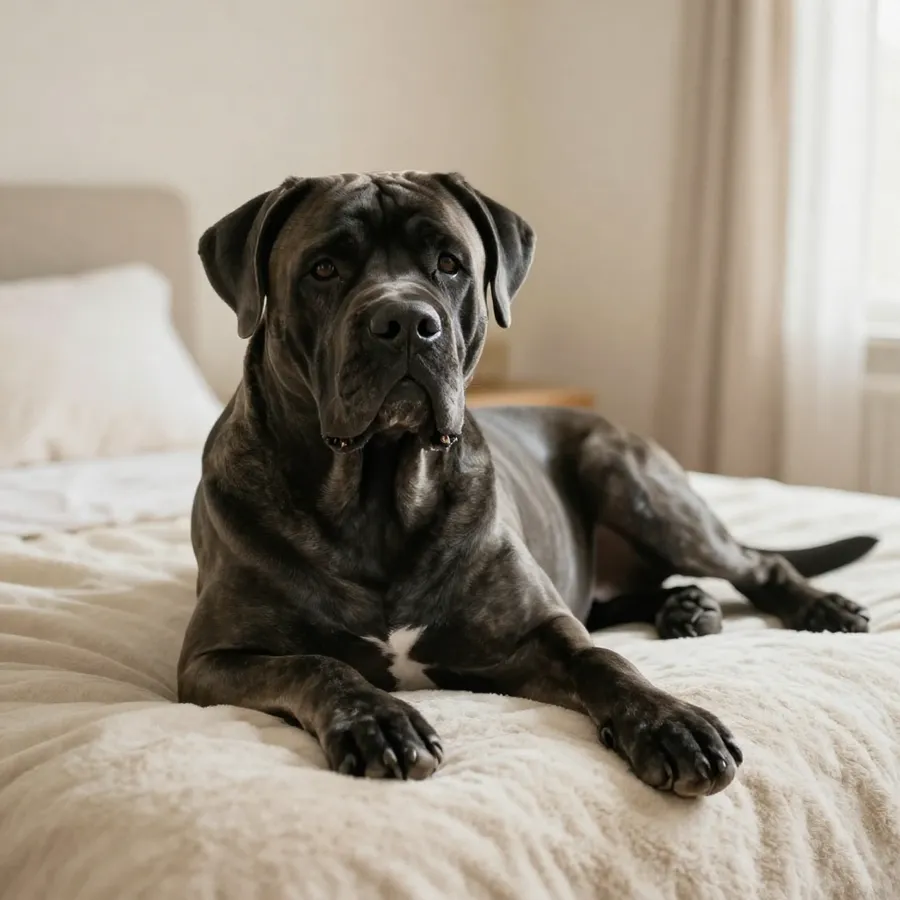
An adult Cane Corso needs around two hours of exercise a day, split across two or more walks with some secure off-lead time and daily mental work. Puppies need far less: use roughly five minutes of formal walking per month of age, up to twice a day, and avoid high-impact activity until their joints mature at 12–18 months.
Mentioned in this guide

Sunflower Snuffle Mat Slow Feeder
A felt sunflower snuffle mat, roughly 37.5cm across, with yellow petals and a fluffy brown centre that hides kibble and treats. Encourages natural foraging to slow fast eaters and ease boredom. Ties on to fix it in place; machine washable.
£12.99

Padded No-Pull Dog Harness with Handle for Medium and Large Dogs
A padded no-pull harness for medium and large dogs, with a sturdy top grab handle and adjustable straps. The breathable padded panels spread pressure across the chest for comfortable, controlled walks.
From£23.99
The Cane Corso is a big, powerful Italian guardian breed, and its exercise needs match its size and working history. An adult needs a lot more than a stroll round the block, but a puppy needs far less than most owners expect. Getting the balance right protects a breed that's genuinely prone to joint problems, so here's what a Cane Corso actually needs at each stage.
How much exercise does an adult Cane Corso need?
A fully grown, healthy Cane Corso needs around two hours of exercise a day. That figure comes straight from PDSA, and it's a good target to plan your day around. This is a working molosser, not a couch potato — they were bred to guard property and livestock and to be on their feet all day.
That said, two hours doesn't mean two hours of hard pounding. As a heavy, deep-bodied breed, the Cane Corso isn't built to run for miles on hard ground, and doing so puts needless strain on the joints. A better shape for the day looks like:
- Two or more decent walks — a brisk 45–60 minutes each, on varied ground rather than only pavement.
- Some secure off-lead time where they can move at their own pace, sniff, and stretch out. A safely enclosed field is ideal for a breed with a strong guarding instinct.
- Short bursts of play and training scattered through the day, which tire the brain as well as the body.
Every adult dog should get at least one walk a day, often two, as the Royal Kennel Club puts it — and for a Cane Corso, two is the sensible minimum.
Puppies: much less than you'd think
This is where owners of large and giant breeds most often go wrong. A Cane Corso puppy's skeleton is still growing, and the soft growth plates at the ends of the long bones don't finish closing until roughly 12 to 18 months in a breed this size. Overloading those immature joints is linked to painful developmental problems later on, so a puppy needs strictly limited formal exercise.
The usual starting point is the Royal Kennel Club's five-minute rule: about "five minutes of formal exercise per month of age (up to twice a day) until the puppy is fully grown." In practice that means:
| Puppy age | Formal walking (per session) |
|---|---|
| 3 months | ~15 minutes, up to twice a day |
| 4 months | ~20 minutes, up to twice a day |
| 6 months | ~30 minutes, up to twice a day |
| 9 months | ~45 minutes, up to twice a day |
| 12 months+ | Build gradually towards adult levels |
Treat this as a floor to build from, not a rigid law. A sober evidence review in the Veterinary Ireland Journal points out that the five-minute rule isn't backed by hard science and is really a cautious rule of thumb. What the evidence does suggest is more useful: gentle, free, off-lead movement on soft, varied ground is good for a puppy's developing hips, while repetitive high-impact loading is the real risk. The same review notes that puppies given the chance to potter and play off-lead on undulating terrain tend to have *lower* rates of hip problems, whereas forced repetition does the damage.
The key distinction is who sets the pace. Twenty minutes of structured on-lead walking counts against the cap. Forty minutes of a puppy mooching around a secure garden, sniffing, playing and flopping down for a rest when tired, does not — because the puppy is in charge and stops when it's had enough.
What to avoid while a Cane Corso is growing
- Repeated stairs, especially in the first few months.
- Jumping down from sofas, beds, car boots or heights — lift them or use a ramp.
- Running alongside a bike or jogger, or any forced, sustained running.
- Long forced marches on hard pavement.
- Rough play that involves twisting, skidding or high jumps on slippery floors.
Getting feeding right matters just as much here: overfeeding a giant-breed puppy makes it grow too fast and heavy for its joints. Our guide on how much to feed a puppy by age and weight covers keeping growth steady and lean.
Mental exercise matters as much as the walk
The Cane Corso is intelligent and was bred to work, and PDSA is clear that they "love to be kept occupied and hate being bored," thriving when given specific tasks. A bored Cane Corso is a large, strong dog looking for its own entertainment — rarely a good outcome.
Build in daily brain work:
- Reward-based training sessions. PDSA stresses that positive, reward-based training from a young age is really important for a dog this powerful. Five to ten focused minutes several times a day is plenty.
- Scent games — scatter feeding in the garden, a snuffle mat, or hiding treats around a room.
- Puzzle feeders and food-dispensing toys to make mealtimes a job.
- Structured tasks — carrying, fetching to order, simple obedience chains. This breed genuinely enjoys having a purpose.
A good rule: on a day when you can't manage the full two hours of physical exercise, doubling down on training and enrichment takes the edge off. Mental effort tires a Cane Corso surprisingly well.
Health cautions that shape how you exercise
The Cane Corso has a few breed weaknesses that directly affect how and when you exercise it. These aren't reasons to skip exercise — they're reasons to be sensible about it.
Hip and elbow dysplasia. PDSA lists both as concerns: joints that don't fit together perfectly and eventually lead to arthritis. This is exactly why puppy over-exercise matters, and why lean body weight throughout life is protective. Always check that a breeder has hip- and elbow-scored both parents.
Bloat (gastric dilatation-volvulus, GDV). This deep-chested breed is at risk of the stomach twisting — a genuine emergency needing urgent veterinary care, as PDSA warns. To lower the risk around exercise, don't let your Cane Corso do vigorous activity on a full stomach. Leave a gap of about an hour either side of a main meal before and after hard exercise, and feed a couple of smaller meals rather than one huge one.
Heat. A large, muscular, often dark-coated dog overheats easily. In summer, walk in the cool of early morning or evening, carry water, and cut activity right back on hot days. Never exercise hard in high heat.
The short coat and cold. The flip side is that a Cane Corso's short coat offers little insulation, so older dogs, puppies or lean individuals can feel a cold, wet British winter. Some appreciate a well-fitted coat for slow walks in bad weather — our guide on whether dogs need coats in winter helps you judge.
A sample daily routine for an adult Cane Corso
- Morning: 45–60 minute brisk walk, ideally including some off-lead time in a secure space.
- Midday: a short training session or a puzzle feeder to break up the day.
- Afternoon/evening: a second 45–60 minute walk on different ground, plus a few minutes of scent games or obedience.
- Throughout: free access to potter in the garden, but keep meals and hard exercise well apart.
That comfortably hits the two-hour mark while spreading the load and keeping the mind busy.
Signs you've got the balance wrong
Too little exercise tends to show up as destructiveness, restlessness, weight gain, excessive barking or guarding, and difficulty settling. A Cane Corso with too much unspent energy and boredom is hard to live with.
Too much, or the wrong kind, shows up as stiffness, limping or lagging on walks, reluctance to get up, or soreness after activity — especially in a growing puppy or an older dog. If you see any of these, cut back and speak to your vet, as they can be early signs of joint trouble.
Aim for a dog that comes home pleasantly tired and settles well, not one that's wired or one that's sore. With a giant breed, erring slightly on the side of *less* forced exercise while young, and *more* mental work throughout life, is the safe way to get it right.
Sources
Common questions
How much exercise does an adult Cane Corso need each day?
Around two hours a day, according to PDSA. Spread it across two or more walks with some secure off-lead time and daily training or enrichment. Avoid long stretches of hard running on pavement — this is a heavy breed better suited to brisk walks and varied ground than to endurance running.
How much should I walk a Cane Corso puppy?
Far less than an adult. A common starting point is five minutes of formal walking per month of age, up to twice a day — so about 15 minutes at three months, 20 at four months. Let most of their activity be free, self-paced play, and avoid stairs, jumping and forced running until 12–18 months.
When can a Cane Corso start proper long walks and running?
Wait until the growth plates have closed, which in a giant breed is roughly 12–18 months. Build up gradually rather than jumping straight to long or high-impact exercise. Your vet can advise on your individual dog, especially before starting any running or jogging alongside you.
Can I run or jog with my Cane Corso?
Only once fully grown, and even then in moderation. As a heavy, deep-chested breed they aren't natural distance runners and hard road running stresses the joints. Short, gentle jogs on soft ground are fine for a fit adult, but brisk walks with off-lead time suit the breed far better.
How do I exercise a Cane Corso safely given the bloat risk?
Keep vigorous exercise well away from mealtimes — leave about an hour either side of a main meal — and feed smaller meals rather than one large one. Bloat (GDV) is a life-threatening emergency in deep-chested breeds, so if the belly swells and the dog retches unproductively, seek urgent veterinary help.
What if I can't manage two hours of walking one day?
Lean on mental exercise. Training sessions, scent games, snuffle mats and puzzle feeders tire a Cane Corso well and take the edge off a missed walk. This intelligent working breed hates boredom, so brain work is a genuine substitute on a busy or bad-weather day — not just a nice extra.
Does a Cane Corso need mental stimulation as well as walks?
Yes, and it's not optional. PDSA notes they love to be kept occupied and hate being bored. Daily reward-based training, scent work, puzzle feeders and structured tasks keep this powerful guardian breed calm and well-behaved. A physically tired but mentally bored Cane Corso often still finds trouble.
About the author
Matt Garnett — founder, Giddy Pets
Matt started Giddy Pets to make getting pets the good stuff simpler and fairer. Everything in these guides comes from real life with pets and a lot of trial and error — it's practical guidance, not veterinary advice. If a guide gets something wrong, tell him directly.
Advice & planning
Free tools & more guides
Practical calculators and trusted guides relevant to this product.
Read next
How Much to Feed a Puppy, by Age and Weight
"How much should I feed my puppy?" is one of the first questions every new owner asks - and the honest answer is that the bag in your cupboard knows better than any blog. Here's how to read your food's feeding chart by age and expected adult weight, how to use body condition instead of obsessing ove
How Much Exercise Does a Staffy Need?
A healthy adult Staffy needs a minimum of an hour of exercise a day, split across a few outings rather than one big slog. They're muscular little powerhouses who love tug, fetch and strength play, but they overheat easily and puppies' joints need protecting. Here's how much exercise a Staffy really

How Much Exercise Does a Cockapoo Need?
Most Cockapoos need around an hour of exercise a day, but the real answer depends on which parent line they take after. Here's how to read your own dog, why a clever brain needs as much work as the legs, and how to keep a growing puppy's joints safe.
Xoloitzcuintli: breed guide
A complete guide to the Xoloitzcuintli (Mexican hairless dog) — temperament, sizes, skin and dental care, exercise needs and whether it suits your home