


Christmas Dinner for Dogs: What’s Safe and What Isn’t (UK)
A plate-by-plate guide to Christmas dinner for dogs — what is safe plain, what is genuinely dangerous, and why fat rather than poison causes most Christmas vet visits.
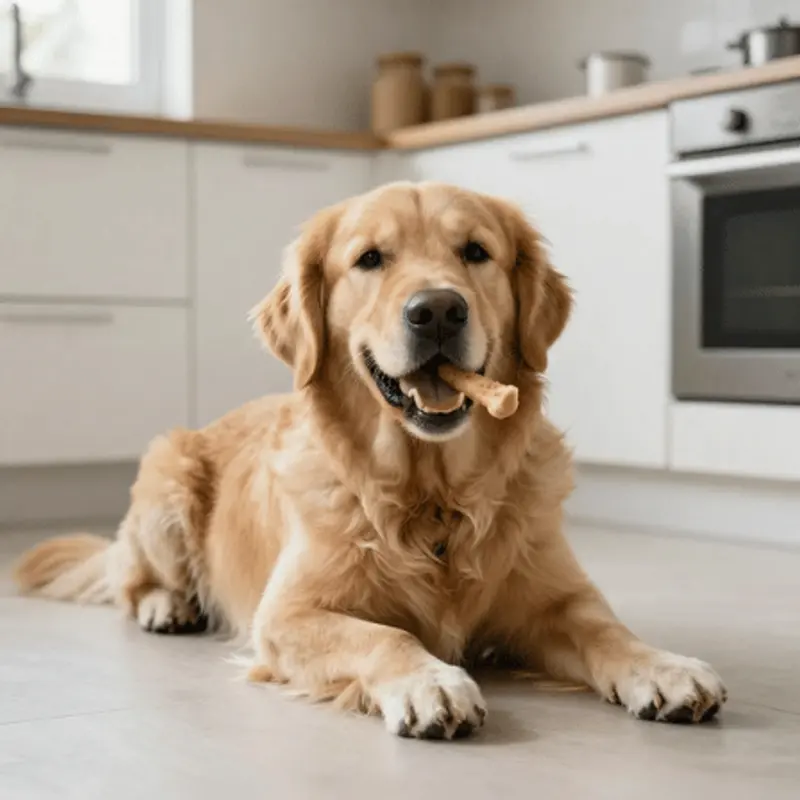
Most people ask this the wrong way round. The question is rarely "can my dog eat Christmas dinner" — it is "the plate is going down and everyone is slipping him something, so what actually matters?" The honest answer is that two or three things on a Christmas table are genuinely dangerous, a handful are fine plain, and the biggest risk of the day is not a poison at all.
If you would rather give something made for them, browse our Christmas dog treats and stockings.
The one that sends most dogs to the vet is fat, not poison
The commonest Christmas emergency is pancreatitis — inflammation of the pancreas triggered by a sudden load of fatty food in a dog whose diet is normally consistent. It does not require anything toxic. Turkey skin, sausage meat, buttery potatoes, a bowl of gravy and the trimmings off everyone's plate will do it.
Signs usually appear within a day or two: repeated vomiting, a hunched or "praying" posture with the front end down and the back end up, a hard or painful belly, refusing food, and obvious lethargy. It is painful, it can be serious, and it is far more likely than chocolate poisoning simply because fat is everywhere on Christmas Day and chocolate is usually in a box.
The practical defence is boring and it works: decide in advance what your dog is having, put it in their own bowl, and tell the room that the dog has already been done.
Never — these are the genuine hazards
- Onions, garlic, leeks, shallots and chives, raw, cooked, dried or in powder. They damage red blood cells and can cause anaemia. This is why sage and onion stuffing and most gravy are off the list rather than merely rich, and why "just a bit of gravy on his biscuits" is the single most common well-meant mistake of the day. - Raisins, sultanas and currants — so Christmas pudding, mince pies, stollen, panettone and fruit cake. The toxic dose is unpredictable rather than proportional to size, which is what makes it different from chocolate. We cover this in dog ate a mince pie and are raisins poisonous to dogs. - Chocolate, including the tin of Quality Street left within reach. Dark and cooking chocolate are the worst. See how much chocolate is toxic to dogs. - Cooked bones of any kind. Cooking makes them brittle, so they splinter rather than crush. The turkey carcass left on the side overnight is a classic. - Macadamia nuts, and nuts generally — high fat, a choking risk, and often salted. - Alcohol, including the trifle, the brandy butter and an unattended glass at dog height. - Anything sweetened with xylitol (sometimes labelled birch sugar), which turns up in sugar-free desserts and mints and is dangerous to dogs in small amounts.
Fine in small amounts, plain
Cook or set these aside before the butter, oil, salt and seasoning go on:
- Turkey breast, no skin, no bones. The full picture is in can dogs eat turkey. - Carrots, parsnips and swede, plain boiled or raw. - Peas and green beans, plain. - Brussels sprouts, plain and in small numbers. They are not harmful; they do cause wind, and you will be sharing a room with the result. - Plain boiled or mashed potato with nothing added. Not roast potatoes, which are cooked in fat, and never raw or green potato. - Plain cooked white fish or a little unseasoned gammon-free ham — though see below on salt.
The ones people are surprised by
Pigs in blankets are the worst single item on the table for a dog: processed sausage wrapped in cured bacon, so both very fatty and very salty. One will not poison a dog. They are still the thing most likely to start the pancreatitis story above.
Gammon and ham are cured, which means salt levels far above anything a dog should eat. Salt in quantity causes excessive thirst, vomiting and, at the extreme, sodium poisoning.
Cheese is high fat and many dogs are lactose intolerant. A cube is not a crisis; the cheeseboard grazed all evening is.
Cranberry sauce is mostly sugar. Plain cranberries are harmless, but the jar is not the same thing, and some versions contain raisins or port.
Yorkshire puddings, stuffing balls and bread sauce are not toxic in themselves but are made with milk, egg, fat and usually onion. They are filler that displaces your dog's actual food.
How much is reasonable
Treats and extras should stay under about 10% of daily calories, and Christmas is the day that rule quietly collapses because five people each give "just a little bit". A useful trick: take your dog's normal daily food, put a portion of it aside in the morning, and let that be what gets handed out through the day. The dog gets the ritual of being included, and nothing is added on top.
Small dogs need far more care than big ones here. A stone-and-a-half terrier eating three pigs in blankets has eaten proportionally what a labrador would need a whole plate to match.
If something has gone wrong
Do not wait to see whether symptoms develop, and do not try to work out whether it was "enough to matter" — with raisins in particular, that calculation does not exist. Ring your vet or the out-of-hours service. Treatment in the first few hours is far more effective than treatment once a dog is visibly unwell, and every practice has emergency cover over Christmas even when the building is shut.
Know before the day where your out-of-hours provider is and how long it takes to get there. That is a five-minute job on the 23rd and an awful one at 9pm on Christmas Day. Our Christmas safety checklist covers the rest of the house — decorations, plants, cables and presents under the tree.
Give them something of their own instead
The easiest way to stop a dog working the table is to give them a job at the same moment everyone sits down: a stuffed and frozen toy, a long-lasting chew, or a festive dog treat recipe you have made yourself and know the ingredients of. It takes the dog out of the room mentally for twenty minutes, which is usually the whole problem solved.
Common questions
Can dogs eat Christmas dinner?
Parts of it. Plain turkey breast without skin or bones, and plain vegetables such as carrots, parsnips, peas and sprouts, are fine in small amounts. Anything containing onion or garlic — including most gravy and sage and onion stuffing — is not, and neither is anything with raisins in it. Set your dog's portion aside before the fat and seasoning go on.
Can dogs eat pigs in blankets?
They are not toxic, but they are the worst thing on the table for a dog: processed sausage in cured bacon, so very high in both fat and salt. A sudden load of fatty food is the usual trigger for pancreatitis, which is a more common Christmas emergency than poisoning. One will not hurt a large dog; several will risk it, especially in a small one.
Can dogs eat gravy?
No. Almost all gravy is made with onion and is very high in salt, and onion damages a dog's red blood cells whether it is raw, cooked or powdered. Gravy poured over food is one of the most common well-intentioned mistakes on Christmas Day.
Can dogs eat Brussels sprouts?
Yes, plain and in small numbers. They are not harmful, they are high in fibre, and they will produce a great deal of wind. Do not give sprouts cooked with bacon, butter or onion.
Can dogs eat roast potatoes?
Not really. The potato itself is fine, but roast potatoes are cooked in fat and often salted and seasoned, which is exactly the load that triggers pancreatitis. Plain boiled or mashed potato with nothing added is fine. Never give raw or green potato.
Can dogs eat Christmas pudding or mince pies?
No, and these are among the genuinely dangerous items. Both are full of raisins, sultanas and currants, which can cause acute kidney failure in dogs at an unpredictable dose, and both usually contain alcohol and suet as well. Ring your vet if your dog eats any amount rather than waiting for symptoms.
What are the signs my dog has eaten too much rich food?
Repeated vomiting, a hunched or "praying" posture with the front down and the back end raised, a painful or tense abdomen, refusing food and unusual lethargy — typically within one to two days. These are signs of pancreatitis and need a vet rather than waiting it out.
How much Christmas dinner can I give my dog?
Keep all extras under about 10% of their daily calories, and remember every person in the room is doing the same thing. The simplest method is to set aside a portion of your dog's normal daily food in the morning and hand that out through the day, so they are included without anything being added on top.
About the author
Matt Garnett — founder, Giddy Pets
Matt started Giddy Pets to make getting pets the good stuff simpler and fairer. Everything in these guides comes from real life with pets and a lot of trial and error — it's practical guidance, not veterinary advice. If a guide gets something wrong, tell him directly.
Advice & planning
Free tools & more guides
Practical calculators and trusted guides relevant to this product.
Read next
Cats and Christmas Trees: How to Keep Both Standing
Why cats cannot leave a Christmas tree alone, which decorations are genuinely dangerous, and what actually works to stop them climbing it.
Festive Christmas Dog Treat Recipes (Vet-Sensible & Easy)
Keeping Your Dog Safe at Christmas: Hazards Checklist
Best Christmas Jumpers for Dogs in the UK
A knitted jumper cut for a dog, bought by chest measurement and worn for the walk, not the whole day. Which dogs need one, knit versus fleece versus print, and how to get the size right first time.