






Cat feeding schedule: the UK owner's complete guide
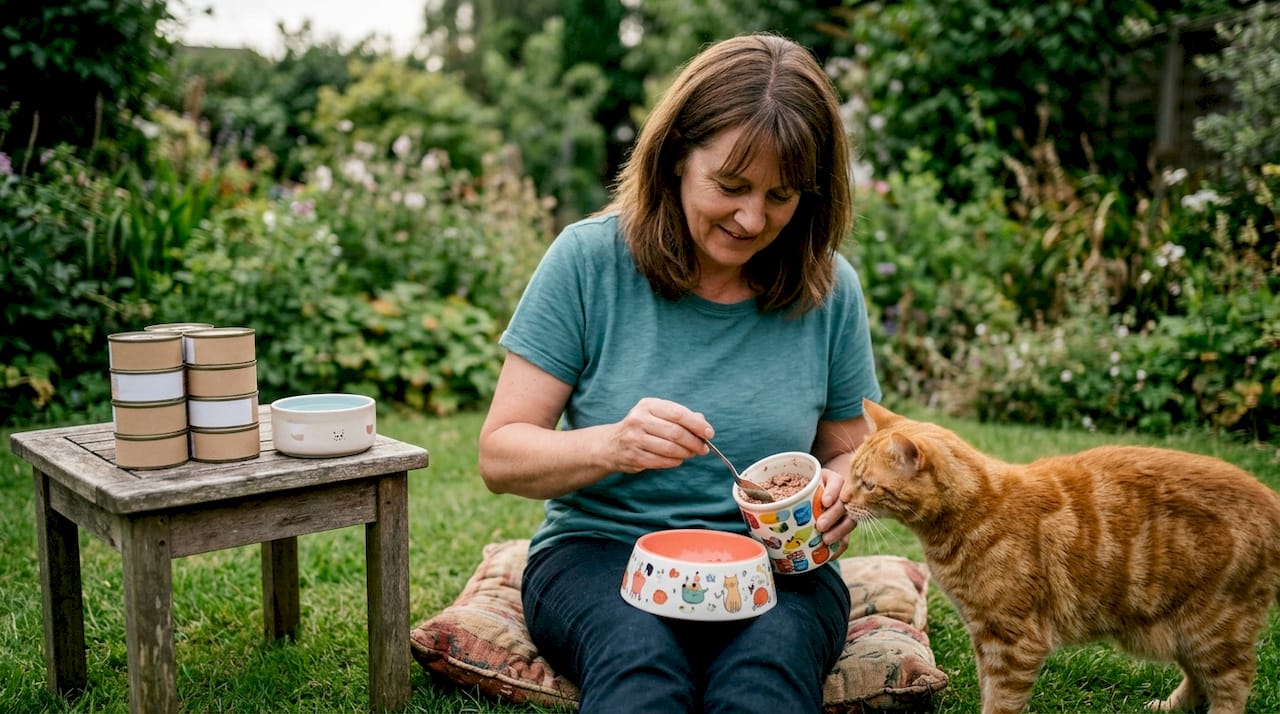
Cat feeding schedule: the UK owner’s complete guide
What does a good cat feeding schedule look like?
Most cats do best on several small meals spread across the day rather than one or two large ones. The UK Government’s Code of Practice for the Welfare of Cats is clear: feed your cat every day, splitting the daily ration into several small meals unless your vet advises otherwise. That guidance reflects feline biology. A cat’s stomach empties within several hours, so stretching gaps beyond about half a day risks bilious vomiting.
A solid daily routine for an adult cat looks like this:
- Kittens (up to 12 months): 3–4 meals daily with micro-portions; avoid overnight fasting longer than 10–12 hours
- Adults (1–7 years): 3–4 meals daily, typically 7:00am, 12:00pm, 6:00pm, and an optional 10:00pm dry snack
- Seniors (7+ years): 3–4 smaller meals daily to ease digestion and align with any medication timing
Wet-to-dry ratio: Veterinary nutritionists generally recommend a 2:1 wet-to-dry ratio by calories, ensuring your cat stays hydrated while still getting the dental benefits of dry kibble. Wet food at breakfast and dinner, dry food at midday and late evening, works well for most UK households.
Feeding environment: The British Veterinary Association highlights that feeding location matters as much as timing. Place bowls well away from the litter tray and anything your cat finds frightening. In multi-cat homes, give each cat a separate, private station to prevent guarding and stress.
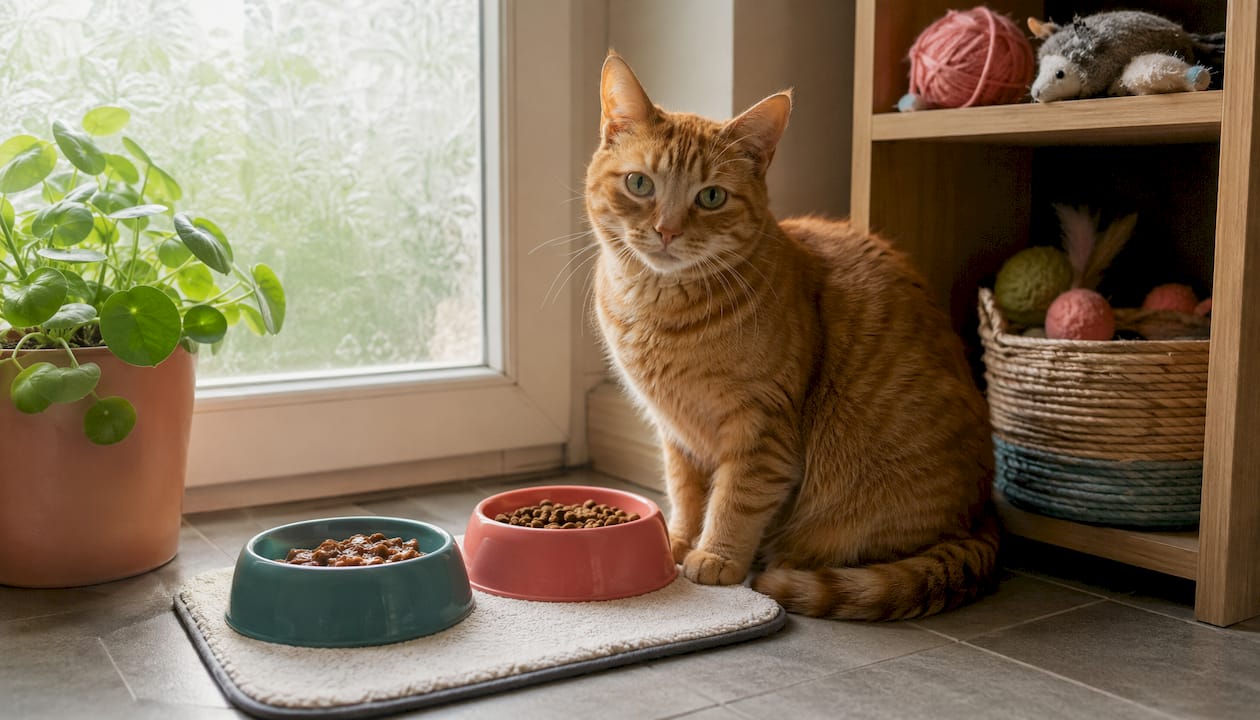
Portion control: Weigh portions accurately rather than estimating by eye. If your cat’s weight creeps up, reduce rations; if they lose condition, increase them. Your vet can confirm the right target weight and adjust guidance for any health conditions.
How to set the right frequency and portions for your cat
Scheduled meals beat free-choice grazing for most cats. Predictable mealtimes reduce anxiety, begging, and night waking by satisfying the natural hunt-eat-groom-sleep cycle. They also make it far easier to spot early warning signs: a cat that skips a meal it normally devours is telling you something is wrong.
- Read the label first. Feeding instructions on commercial foods give a daily calorie target. Divide that total across your chosen number of meals rather than treating each meal as a full portion.
- Kittens need frequent, small amounts. Three to four meals daily prevents bile vomiting and supports rapid growth without overloading a small stomach.
- Seniors benefit from warming wet food slightly to boost aroma and palatability, particularly if their sense of smell has faded.
- Automated feeders fill the midday gap on long UK workdays and prevent early-morning hunger spikes. They work best dispensing dry food; wet meals should stay manual.
- Slow feeders help cats that gulp their food, reducing the risk of vomiting. Giddypets stocks a range of cat slow feeders designed for exactly this.
- Water matters. Cats on a dry-heavy diet need encouragement to drink. A cat water fountain can make a real difference to daily intake.
Pro Tip: Weigh your cat monthly and score their body condition: you should feel the ribs easily but not see them. Adjust portions by small increments rather than dramatic cuts or increases.
How to transition your cat to a new feeding schedule
Any change to your cat’s diet or routine should happen gradually. A sudden switch risks digestive upset and stress, so the BVA advises making all significant dietary changes slowly.
The standard approach runs over one to two weeks: start with 75% current food and 25% new food, then shift the ratio every 3–4 days until you reach the target. If you are also changing meal timing, move each mealtime by 15–30 minutes per day rather than jumping straight to the new schedule.
Key takeaways
A structured cat feeding schedule built around multiple small, timed meals and a 2:1 wet-to-dry ratio supports healthy digestion, stable weight, and calmer behaviour across every life stage.
| Point | Details |
|---|---|
| Meal frequency by age | Kittens need 3–4 meals daily; adults 3–4; seniors 3–4 smaller meals. |
| Stomach emptying window | A cat’s stomach empties in 8–10 hours; space meals no more than 12 hours apart. |
| Wet-to-dry ratio | A 2:1 wet-to-dry ratio balances hydration with dental health. |
| Portion accuracy | Weigh food rather than estimating; adjust if weight or condition changes. |
| Diet transitions | Move to any new food or schedule gradually over 1–2 weeks to avoid digestive upset. |
Giddypets has everything you need to put this routine into practice. From automatic pet feeders that handle the midday meal while you are at work, to whisker-friendly cat food bowls that make every mealtime more comfortable, the range is built around real feline needs.