Best Cat Water Fountains UK: Our Picks Compared
The best cat fountains are quiet, easy to clean and made of steel or ceramic. Here's what to look for before you buy, and the features that actually matter.
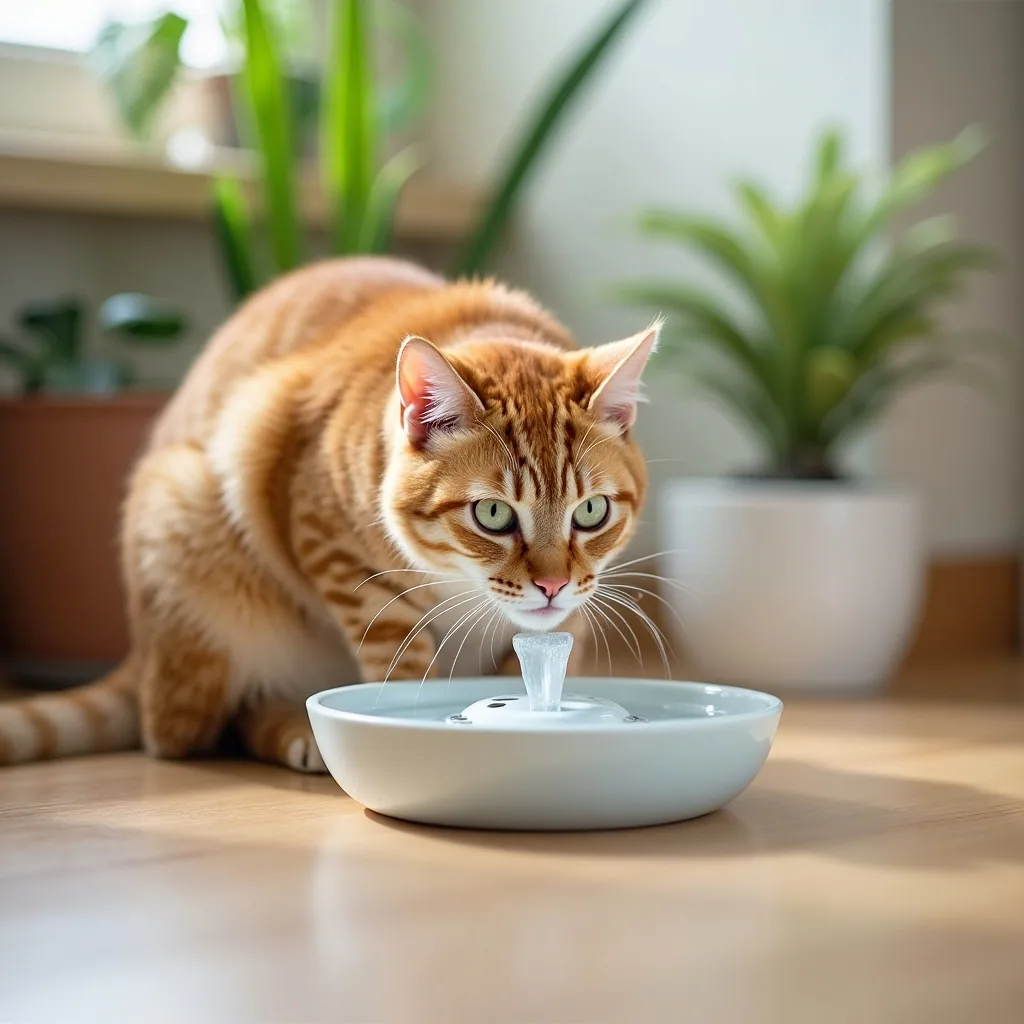
The quick answer
Start with a fountain you can take apart and clean easily. Our shortlist compares stainless steel, ceramic, budget, larger-capacity and cordless options, with the reason for each pick and current product prices.
The best cat water fountain for most UK homes is a quiet, stainless-steel or ceramic model with a simple design you can take apart and clean easily. Cats drink more from moving water, but a fountain only helps if it stays clean and your cat isn't put off by a noisy pump. Get those two things right and everything else is detail.
Before you buy, the questions that matter are: how easy is it to clean, how quiet is the pump, and what's it made of? Cheap plastic fountains that are a faff to scrub end up unplugged in a cupboard, no matter how good the reviews looked.
Why a fountain in the first place?
Cats evolved from desert animals with a weak thirst drive, and many chronically under-drink — especially those on dry food. Moving water is more enticing, fresher-tasting and triggers the instinct to drink from a flowing source, so a fountain can genuinely lift daily water intake. Better hydration supports kidney and urinary health, which is why fountains are so often recommended for cats prone to urinary trouble.
If you're still deciding whether you need one at all, Cat Water Fountain vs Bowl: Which Should You Buy? and Do Cats Prefer Running Water? The Science Explained are the place to start.
Material: steel and ceramic beat plastic
Material is the first real decision. Plastic scratches easily, and those micro-scratches harbour bacteria and can trigger feline chin acne. Stainless steel and ceramic are more hygienic, more scratch-resistant and far easier to keep genuinely clean.
- Stainless steel — tough, hygienic, dishwasher-friendly and hard to break. A stainless steel dispenser is the safe all-rounder.
- Ceramic — heavy, stable and attractive, though it can chip if dropped.
- Plastic — cheapest, but choose only if it's BPA-free and you're prepared to clean it diligently.
We compare all three in Stainless Steel vs Ceramic vs Plastic Cat Fountains. Browse the full cat water fountains range to see the materials side by side.
Our picks
Chosen against the same three tests as the rest of this guide: material, noise and how easily it comes apart to clean.
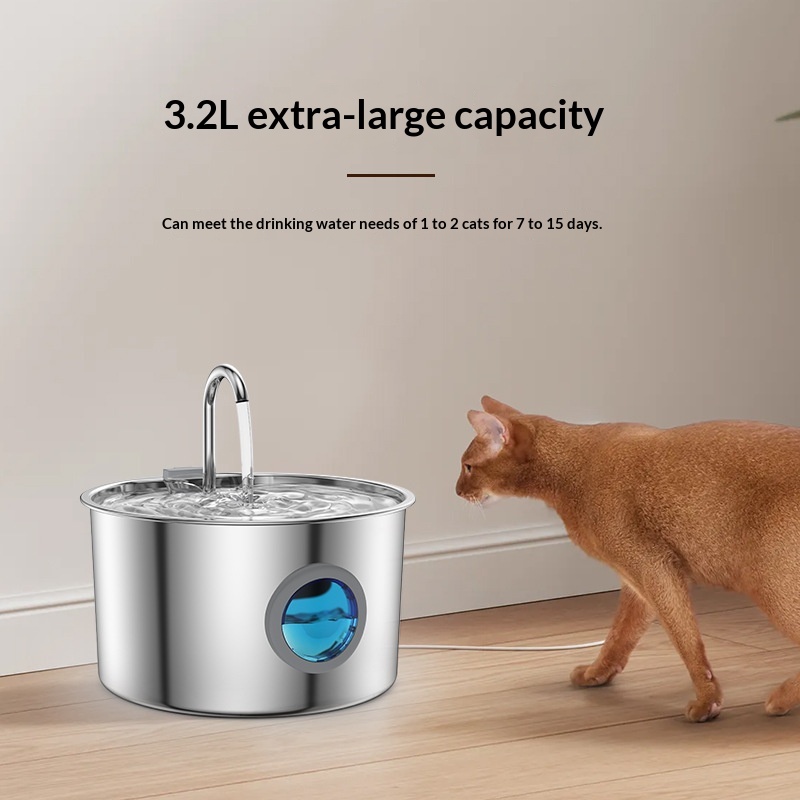
Best overall
Stainless Steel Pet Water Fountain 3.2L
A 3.2 litre 304 stainless steel bowl with a gooseneck spout and a side window you can read without lifting the lid. It hits all three things that actually decide whether a fountain survives past month two: steel rather than plastic, a quiet submerged pump, and few enough parts that cleaning it is a two-minute job.
From £39.99View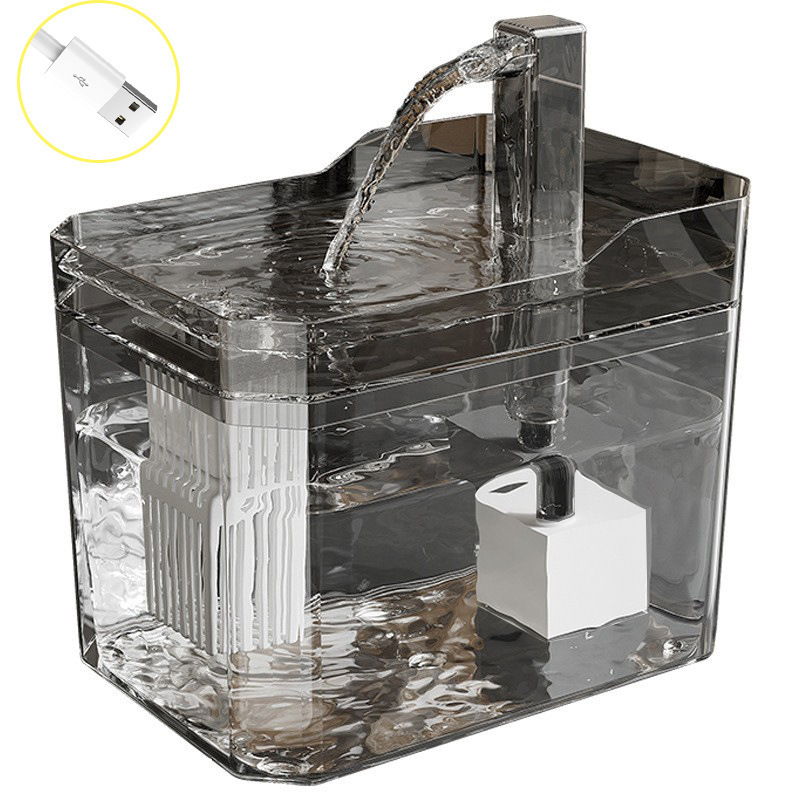
Best on a budget
Automatic Cat Water Fountain with Filter
USB-powered with a near-silent pump and a gentle waterfall spout. The tank is clear, so you can see the level at a glance rather than discovering it dry. If you are not sure your cat will take to a fountain at all, start here before spending more.
£24.99View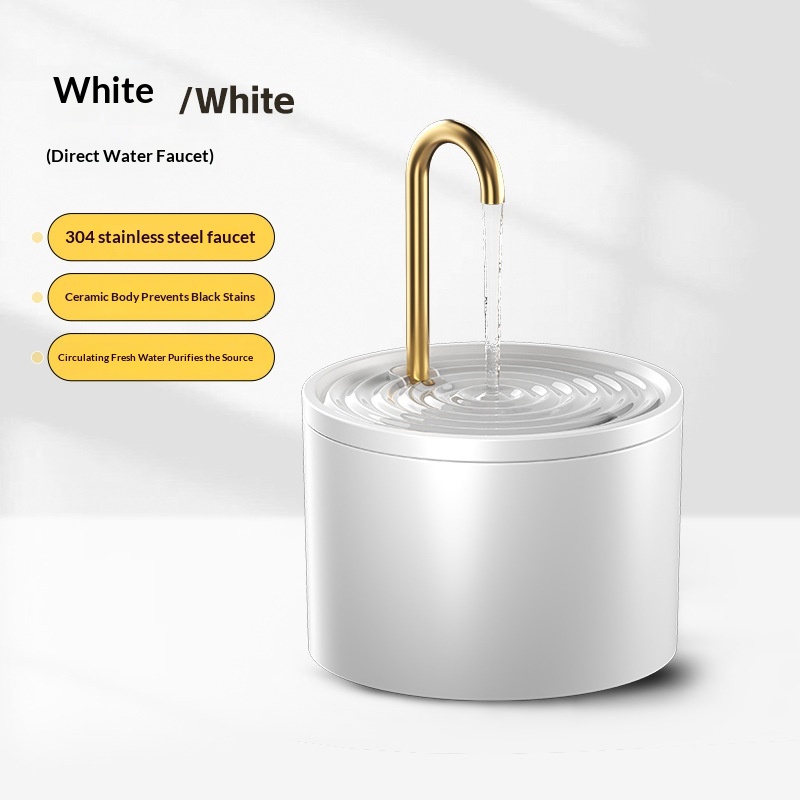
Best ceramic
Ceramic Cat Water Fountain with Stainless Steel Spout
A ceramic basin with an arched 304 stainless steel spout. Ceramic has the weight to stay put while a cat drinks and the glaze means nothing soaks in - the trade-off is that it will chip if you drop it, so it suits a settled spot rather than a busy hallway.
From £37.99View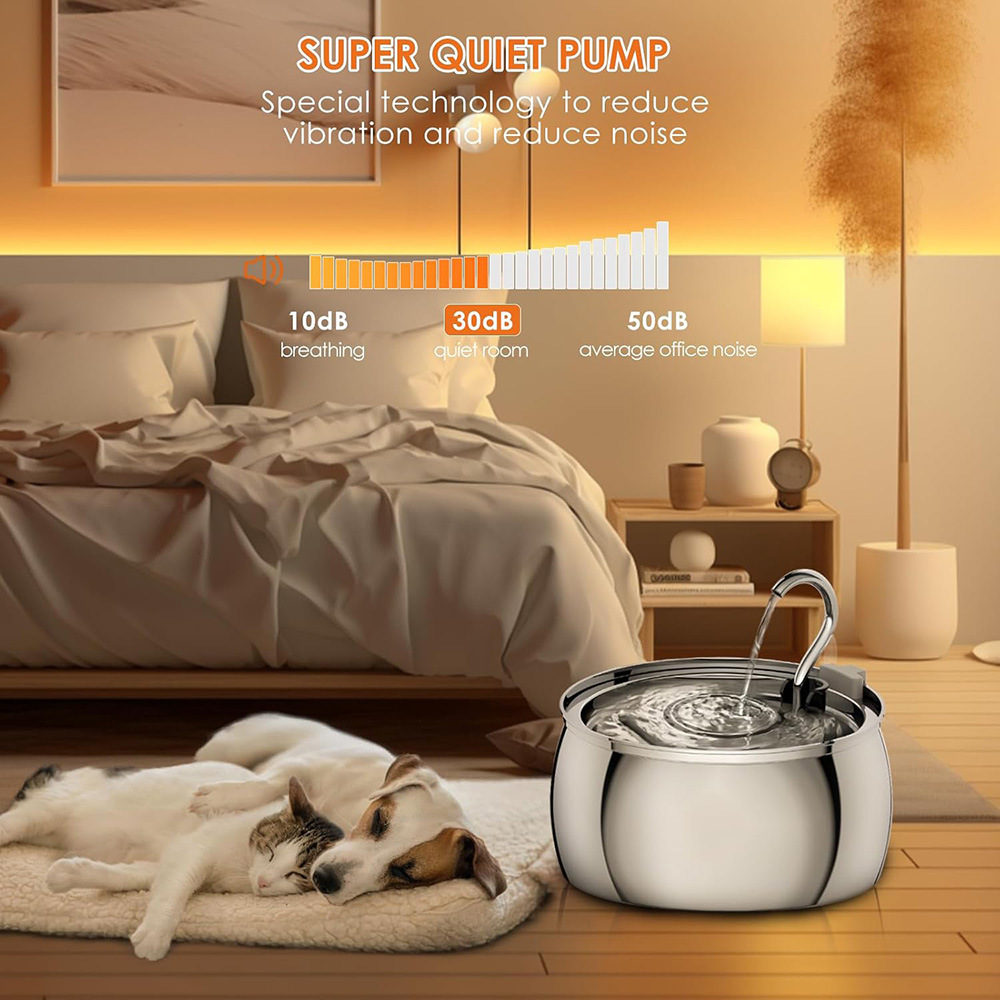
Best for multi-cat homes
4L Stainless Steel Pet Water Fountain
Four litres, which is the point: a bigger reservoir is not about how many cats drink from it but about how long it can go unattended. A pump that runs dry is loud, and a cat who hears that once will often refuse the fountain afterwards.
From £35.99View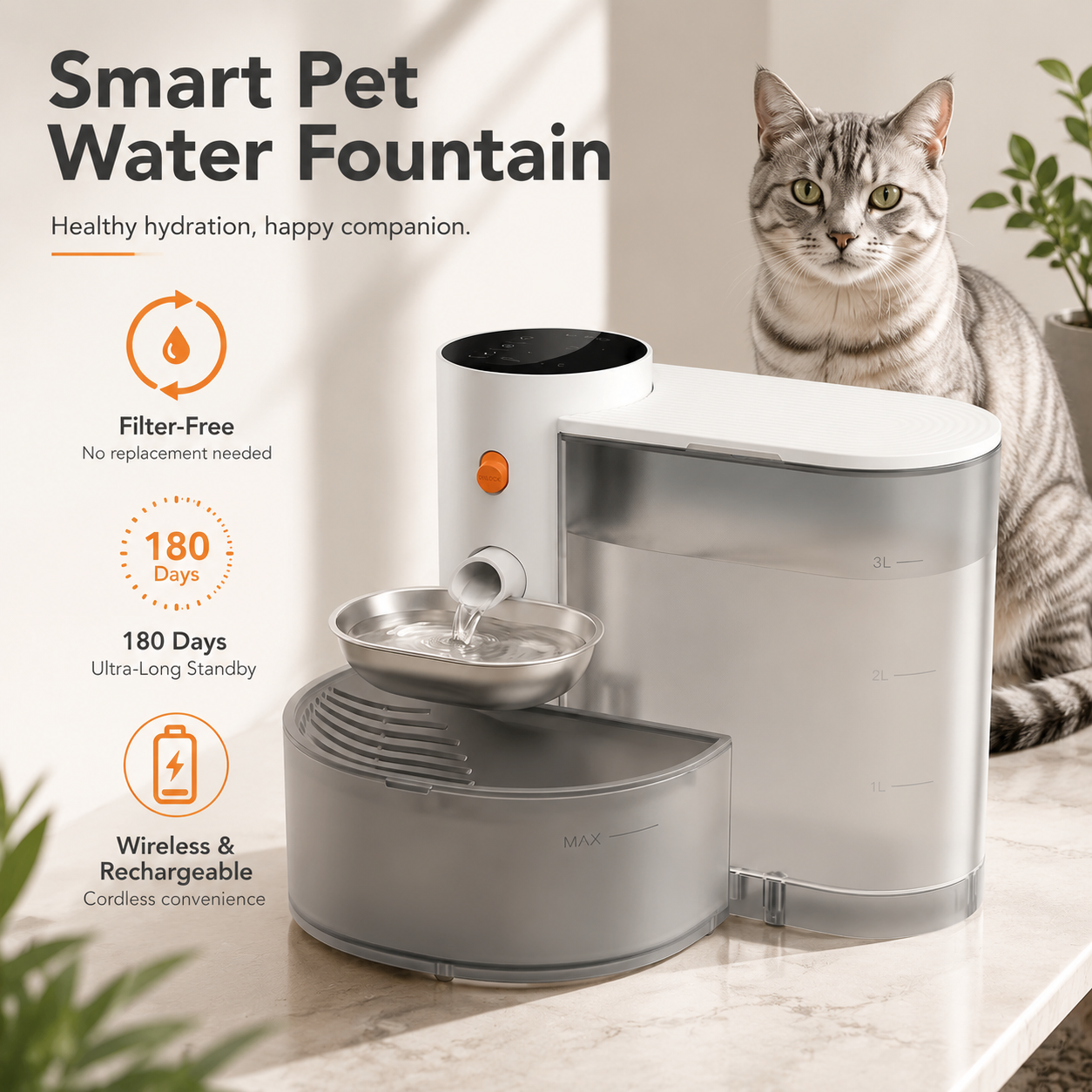
Best without a socket
Cordless Filter-Free Cat Water Fountain 3L
Battery-powered and filter-free, so it can sit where the cat wants it rather than where the wiring allows, and there is no cartridge to keep re-ordering. Cordless means remembering to charge it, so it suits someone who will actually keep an eye on it.
From £58.49View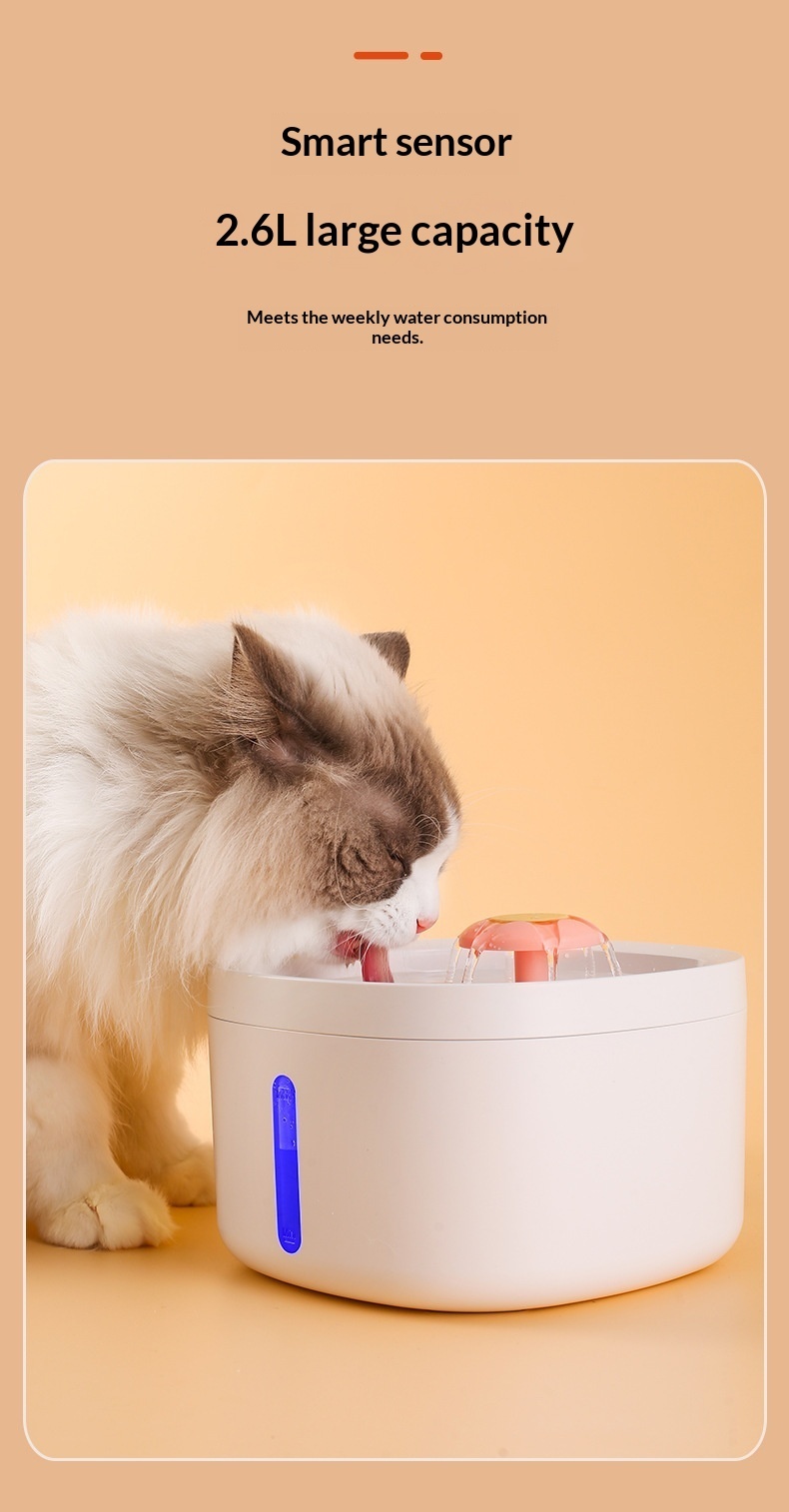
Best sensor model
Smart Sensor Cat Water Fountain 2.6L
2.6 litres with four-stage filtration and a sensor that runs the pump when your cat approaches instead of around the clock. Quieter in a kitchen you sit in, and it stops the constant trickle that some cats - and some owners - never settle to.
From £40.99View
Noise: the make-or-break feature
A noisy fountain defeats the point — a cat won't drink from something that buzzes or gurgles, and you'll resent it humming in the kitchen at 3am. Look for a quiet, well-reviewed pump, and check two things that cause most noise complaints:
- A low-water cut-off, so it never runs dry and rattles.
- A submersible pump sitting fully under the water, which runs far quieter than one half-exposed.
Keep the bowl topped up and the pump submerged and most quality fountains run to a soft trickle you'll quickly stop noticing.
Ease of cleaning and filters
This is where good intentions die. A fountain needs the water changed regularly and a full clean every few days, so the fewer fiddly parts the better. Look for a model that comes apart simply, with a pump you can actually open and rinse — slime builds up inside the impeller, and a sealed pump you can't access becomes grim fast.
Replaceable carbon filters keep the water fresh and palatable; just check the filters are cheap and easy to source in the UK before you commit, so you're not stuck hunting an obscure size. A roomier ceramic model suits multi-cat homes, while a compact stainless steel fountain fits smaller kitchens.
Capacity, flow style and multi-cat homes
Match the size to your household. One or two cats are fine with a smaller reservoir; three or more, or anyone away at work all day, will want a larger capacity so it doesn't run low. Flow style matters to fussy cats too — some prefer a gentle stream, others a wide trickle or a still upper bowl, and several fountains offer adjustable flow so you can find what your cat likes.
It's worth flagging that if your cat suddenly starts drinking far more or far less than usual, a fountain isn't the answer — that's a vet visit, as big changes in thirst can signal kidney, thyroid or diabetes issues. See the wider bowls and feeders shop and our cat feeding and hydration hub for the rest of the setup.
Buy the fountain you'll actually keep clean: quiet pump, steel or ceramic, few parts. A spotless simple fountain beats a clever one that lives in the cupboard.
Common questions
Are cat water fountains worth it?
For many cats, yes. Moving water encourages cats to drink more, which supports kidney and urinary health, particularly for cats on dry food who tend to under-drink.
What is the best material for a cat fountain?
Stainless steel or ceramic. Both are more hygienic and scratch-resistant than plastic, which can develop micro-scratches that harbour bacteria and may trigger feline chin acne.
How often should I clean a cat water fountain?
Change the water regularly and give it a full clean, including the pump, every few days. Choosing a fountain with few parts makes this routine far more likely to actually happen.
Why is my cat's fountain so noisy?
Usually a low water level or a pump that isn't fully submerged. Keep the reservoir topped up, choose a model with a low-water cut-off, and make sure the pump sits under the water.
About the author
Matt Garnett — founder, Giddy Pets
Matt started Giddy Pets to make getting pets the good stuff simpler and fairer. Everything in these guides comes from real life with pets and a lot of trial and error — it's practical guidance, not veterinary advice. If a guide gets something wrong, tell him directly.
Advice & planning
Free tools & more guides
Practical calculators and trusted guides relevant to this product.
Read next
How Often Should You Clean a Cat Water Fountain?
A simple, vet-aware cleaning schedule for cat water fountains, from daily rinses to deep descaling, so the water stays fresh and your cat keeps drinking.
Can French Bulldogs Swim? Water Safety Guide
Most French Bulldogs can't swim safely and can drown easily. Why, and how to let yours enjoy water without the risk.
Persian Cat Health Problems: An Honest Guide
An honest look at Persian cat health problems — polycystic kidney disease (PKD), the brachycephalic flat face, watery eyes and eye conditions, dental crowding and coat or skin issues.