







5–10 Minute Maine Coon Grooming Routine Owners Use to Stop Mats
5–10 Minute Maine Coon Grooming Routine Owners Use to Stop Mats
Brush your Maine Coon several times weekly, increasing frequency to daily short sessions during heavy seasonal shedding, and you will prevent almost every mat before it starts. The simplest session takes five to ten minutes: work through with a slicker brush, then a wide-tooth comb, checking the armpits and belly. The basic grooming kit is available from online pet supplies retailers, and we’ll walk through the fuller routine below.
TL;DR:
- Regular grooming with a slicker brush and wide-tooth comb prevents almost all mats, especially during heavy seasonal shedding when daily brushing becomes essential.
- Using tools designed for distinct coat textures, such as a stainless-steel wide-tooth comb and undercoat rake, is more effective than relying on a single gadget.
- Short, calm grooming sessions involving face, back, tail, and underbelly help build trust and reduce the likelihood of stress or injury during grooming.
- Frequent checks and targeted cleaning of common trouble spots like armpits, belly, and base of the tail lower the risk of persistent mats and skin issues.
- A basic grooming kit of a daily slicker, weekly deshedding comb, and grooming gloves is sufficient for routine maintenance and encourages consistent grooming habits.
Table of Contents
- Weekly Maine Coon grooming routine at a glance
- Which grooming tools does a Maine Coon actually need?
- How do you groom a Maine Coon step by step?
- When and how should you bathe a Maine Coon?
- Why do mats and skin problems keep coming back?
- When should you see a groomer or a vet?
- Grooming Maine Coon kittens vs adults: what changes?
- What grooming mistakes do Maine Coon owners make most often?
- What are the signs of grooming-related skin or coat problems?
- Our take on building a Maine Coon grooming kit that actually gets used
- Where to buy your Maine Coon grooming kit
- Sources
Weekly Maine Coon grooming routine at a glance
A Maine Coon’s semi-long, water-resistant double coat needs more regular attention than a shorthair, but each session stays short if you keep to a rhythm. Consistency, more than any single tool, is what protects a cat from painful mats, and a weekly grid makes that consistency easy to stick to.
- Daily: use a slicker brush over the back, sides and tail; spend longer during moulting.
- Every other day: perform finger checks through armpits, belly and britches for early tangles.
- Weekly: do a full comb-through with a wide-tooth comb, including behind the ears and the tail base.
- Every few weeks: perform nail trims and quick ear checks.
- Every 6 to 12 weeks: consider a professional deshedding session if volume becomes hard to manage.
During spring and autumn coat blow, shift the daily brush from optional to non-negotiable. A Maine Coon shedding its winter undercoat can mat overnight if you skip more than a day or two.
Which grooming tools does a Maine Coon actually need?
You don’t need a shelf of gadgets. A Maine Coon’s coat has three distinct textures, guard hairs, a dense undercoat, and the famous ruff and britches, and each responds to a different tool.
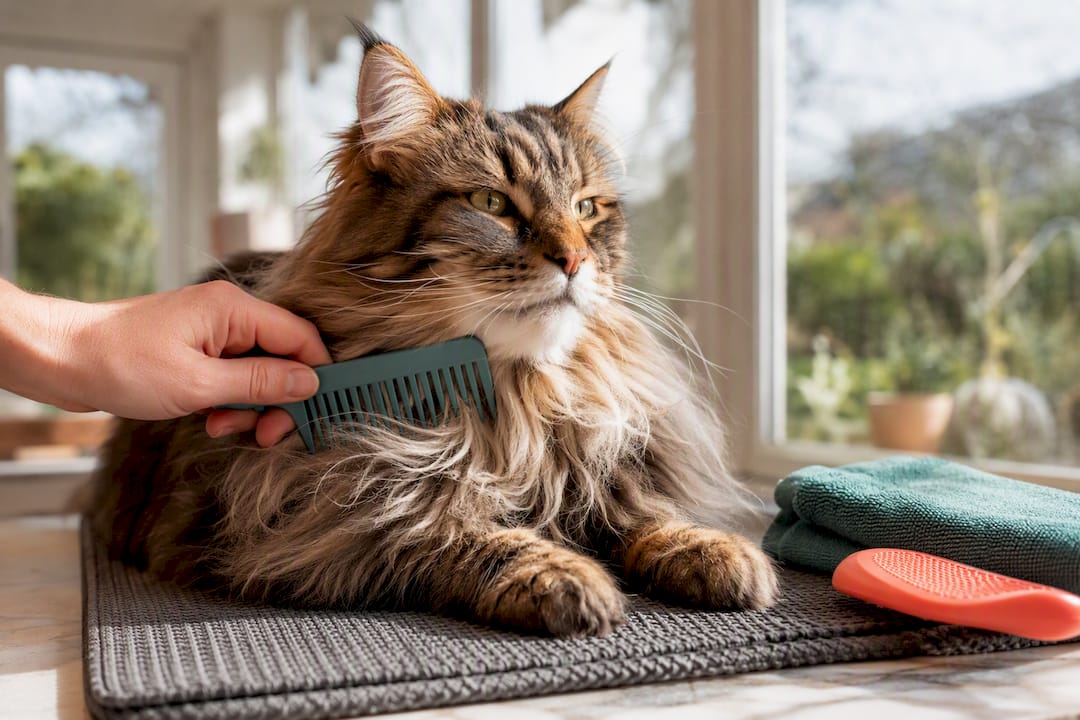
- Wide-tooth steel comb: finds hidden tangles close to the skin that a brush glides straight over. Choose stainless-steel teeth over plastic, which bend and snag on thick fur.
- Slicker brush: smooths the topcoat and lifts loose hair from the surface. This is your daily, five-minute tool.
- Undercoat rake: pulls out the dense seasonal undercoat without cutting the topcoat. Use it weekly, not daily, since overuse can thin the coat unevenly.
- Dematting tool: works on small, isolated tangles by slicing gently through them. It is not for large, tight mats close to the skin.
- Grooming gloves: a gentle option for nervous cats or quick top-up sessions, useful alongside a proper brush rather than instead of one.
When buying, size matters more than most owners expect. A Maine Coon’s chest and ruff are considerably broader than an average domestic cat’s, so a brush designed for smaller breeds will feel cramped in use and miss patches of fur. Look for an ergonomic handle you can grip for several minutes without hand fatigue, and consider a self-cleaning slicker if you groom daily. Pairing a self-cleaning slicker with a weekly undercoat rake covers both the daily and seasonal workload efficiently, which matters when you’re doing this several times a week for years.
Pro Tip: Never use a dematting tool on a mat that’s tight against the skin or larger than a coin. Forcing it through risks cutting the skin underneath the fur, which you often can’t see until it’s too late.
How do you groom a Maine Coon step by step?
Set up in a quiet room away from other pets, with treats close by and, ideally, a second pair of hands for the first few sessions. Keep it under fifteen minutes. A rushed, tense groom teaches a Maine Coon to dread the process; a calm, short one does the opposite.
- Start at the face and shoulders. Use the slicker brush in gentle strokes, letting the cat see and sniff the tools first.
- Move down the back. This area rarely tangles and builds the cat’s tolerance before you reach trickier zones.
- Work the tail. Hold it gently near the base and brush from root to tip in short sections.
- Check the belly, britches and armpits last. These are the friction hotspots where mats form first, so save them for once the cat is relaxed.
- Comb through with the wide-tooth comb. Go section by section, checking for tangles a brush would have missed.
- Handle any small tangles carefully. Never wet a mat before working on it, since water tightens it rather than loosening it. Hold the skin firmly near the mat, comb from the outer edge inward, and stop the moment the cat shows pain or the mat won’t budge with gentle teasing. That’s your signal to book a groomer rather than push on.
- Finish with a nail trim. Press gently on each paw pad to extend the claw, trim just the sharp tip with cat-specific clippers, and check the fur between the pads for trapped debris.
- Peek in the ears. Look for redness, odour or dark wax; a clean ear needs nothing more than a glance.
End every session on a calm note, even a short one. A treat and a few minutes of play afterwards turns grooming into something the cat tolerates rather than avoids.
When and how should you bathe a Maine Coon?
Most Maine Coons don’t need frequent baths. Reach for the tub when the coat looks greasy, smells noticeably, has picked up heavy dirt, or you’re prepping for a show. Always comb through and clear any mats first, since wetting a matted coat only tightens the tangles and makes them harder to remove afterwards.
- Pre-comb thoroughly, including the britches and tail.
- Use a cat-safe shampoo, working it in against the direction of growth to reach the dense undercoat.
- Rinse until the water runs completely clear and the coat feels squeaky clean, not slick.
- A light conditioner helps detangling on longhaired coats but isn’t essential.
Residual shampoo trapped in a dense undercoat is one of the most common causes of a coat looking greasy days after a bath, so rinse longer than feels necessary. Towel blot first, then finish with a low-heat dryer while combing through in sections; a full adult coat can take 30 to 60 minutes or more to dry completely, and any dampness left near the skin invites new mats within days.
Why do mats and skin problems keep coming back?
Mats form fastest where fur rubs against fur or against the ground: armpits, the belly, behind the ears, the britches and the base of the tail. Friction plus a dense undercoat is a reliable recipe for tangles, especially if a session gets skipped for a week.
Oily or “stud tail,” a greasy patch near the tail base, and chin acne are the other two issues Maine Coon owners see repeatedly. Both usually respond to more frequent targeted cleaning and a closer eye during grooming sessions rather than any special product.
- Comb the armpits, belly and britches every other day, even on days you skip a full brush.
- Increase frequency during seasonal shedding rather than waiting for mats to appear.
- Use a detangler spray on early tangles before they compact into full mats.
- Stop and seek help if a mat is tight against the skin, if the skin looks red or broken underneath, or if the cat reacts with pain rather than mild fidgeting.
When should you see a groomer or a vet?
Book a professional groomer for large or multiple tight mats, a full seasonal deshedding treatment, or if your cat becomes genuinely unmanageable during home sessions. Professional deshedding every 6 to 12 weeks suits owners who can’t keep on top of volume alone.
See a vet instead for skin redness, persistent greasy stud tail that doesn’t improve, visible lesions, pain on touch, or a sudden behavioural change during grooming. When choosing a groomer, ask about experience with large longhaired breeds, their sedation policy, and whether drying and a sanitary trim are included. A cat-friendly veterinary practice is worth seeking out for a breed this size and this sensitive to handling.
Grooming Maine Coon kittens vs adults: what changes?
Kittens have a softer, finer coat that mats far less readily than an adult’s dense double coat, but the habits you build now decide how the adult sessions go. Introduce a soft brush or grooming glove for two or three minutes at a time from as early as eight weeks, always paired with treats and calm handling. The goal isn’t a perfect groom yet; it’s teaching the kitten that being handled and brushed is normal and safe.
Around six months to a year, the adult coat starts coming in properly, the ruff thickens, the britches fill out, and mats become a genuine risk for the first time. This is when you introduce the wide-tooth comb and step up frequency to match the adult routine. Breeders and vets consistently find that cats started on grooming as kittens are far easier to handle as adults, largely because the cat has never associated the process with stress.
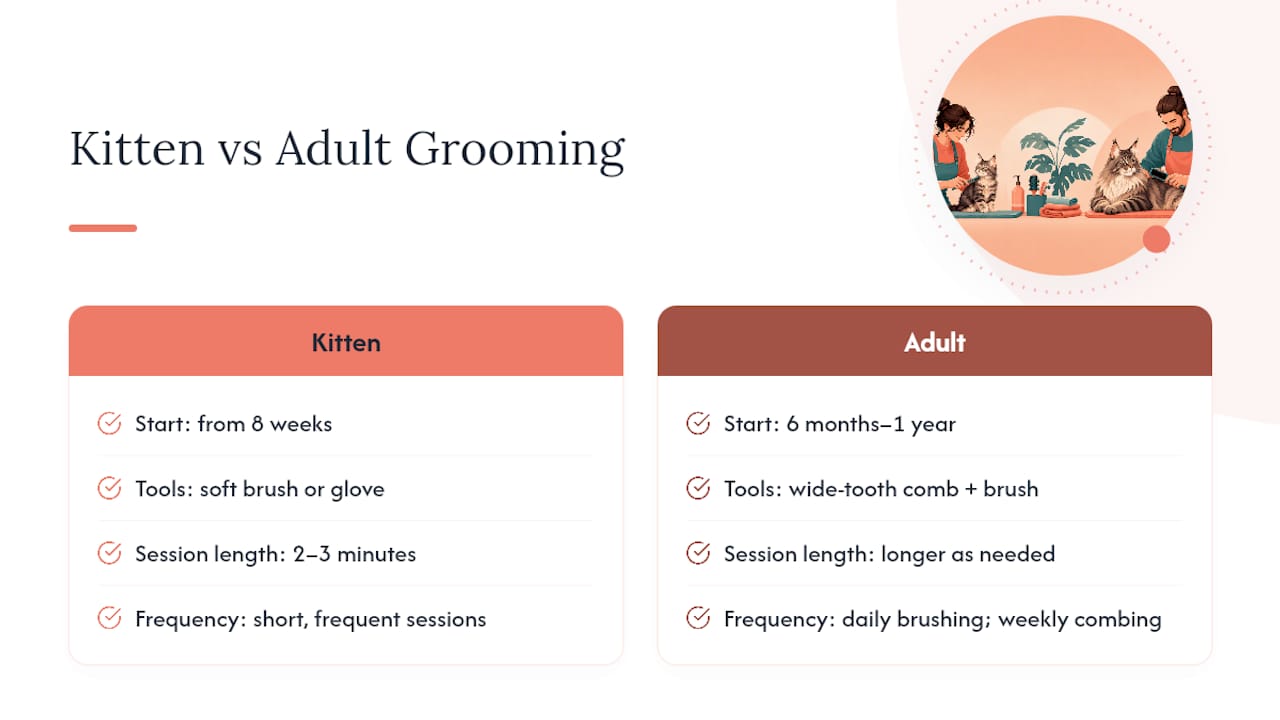
Adult Maine Coons need the full weekly grid: daily brushing, weekly combing, regular nail trims. Older adults sometimes groom themselves less effectively, particularly around the hips and tail, if arthritis makes twisting uncomfortable, so watch for mats appearing in new spots as a cat ages rather than assuming the routine that worked at three years old still covers everything at ten.
If you’re bringing home a kitten for the first time, resist the urge to do a “full” groom early on. Short, frequent, low-pressure sessions beat one long thorough session every time, for kittens and nervous adults alike.
What grooming mistakes do Maine Coon owners make most often?
The single biggest mistake is treating grooming as an occasional chore rather than a routine. Skipping a week “because the coat looks fine” is exactly how a small tangle behind the ear becomes a mat requiring a groomer’s help.
The second mistake is using the wrong tool for the job. A slicker brush alone misses tangles close to the skin because it only reaches the topcoat; without a wide-tooth comb behind it, hidden mats build undetected in the undercoat.
Bathing a matted coat without combing first ranks third. Water tightens existing tangles, turning a five-minute comb-out into a much harder job, or one that needs shaving out entirely.
Other recurring errors:
- Overusing the undercoat rake. Daily use can thin the coat unevenly; weekly is usually enough outside heavy shedding season.
- Pulling on mats instead of teasing them apart. This hurts the cat and can tear skin, not just fur.
- Skipping the armpits and belly. These are the first places mats form, yet the easiest to overlook during a quick surface brush.
- Rushing nail trims. Cutting too close to the quick causes pain and makes the next trim far harder to manage.
- Ignoring paw fur. Trapped debris between pads goes unnoticed until it causes limping or matting between the toes.
Most of these come from good intentions applied inconsistently. A shorter, more frequent routine beats an occasional marathon session every time.
What are the signs of grooming-related skin or coat problems?
A coat that looks dull, feels greasy within days of a bath, or develops flaking usually points to either an underlying diet issue or, more often for Maine Coons, incomplete rinsing during a previous bath. Check first whether shampoo residue could be trapped in the undercoat before assuming anything more serious.
Redness or small scabs under a removed mat are common and usually heal within a few days if kept clean and dry. Persistent redness, swelling, or a scab that won’t heal needs a vet look rather than home treatment.
Watch for these specific signs:
- Bald or thinning patches, especially where a rake or comb has been used heavily. This suggests overgrooming with a tool, not the cat’s own behaviour.
- A greasy patch at the tail base that doesn’t clear with cleaning. This is stud tail, and if it persists despite regular attention, it needs veterinary input.
- Small bumps or blackheads on the chin. Feline chin acne is common and mild cases respond to gentler cleaning; persistent or inflamed cases need a vet check.
- Sudden flinching or aggression during grooming in a previously tolerant cat. This can signal pain, sometimes unrelated to the coat itself, such as arthritis or a skin infection underneath a mat that’s gone unnoticed.
- Fur that mats in the same spot repeatedly within days of removal. This often means the underlying skin is irritated and needs a look before you keep cutting mats out of the same patch.
Catching these early nearly always means an easier fix. Left for weeks, most of them turn into a job for a groomer or a vet rather than something a comb can solve at home.
Our take on building a Maine Coon grooming kit that actually gets used
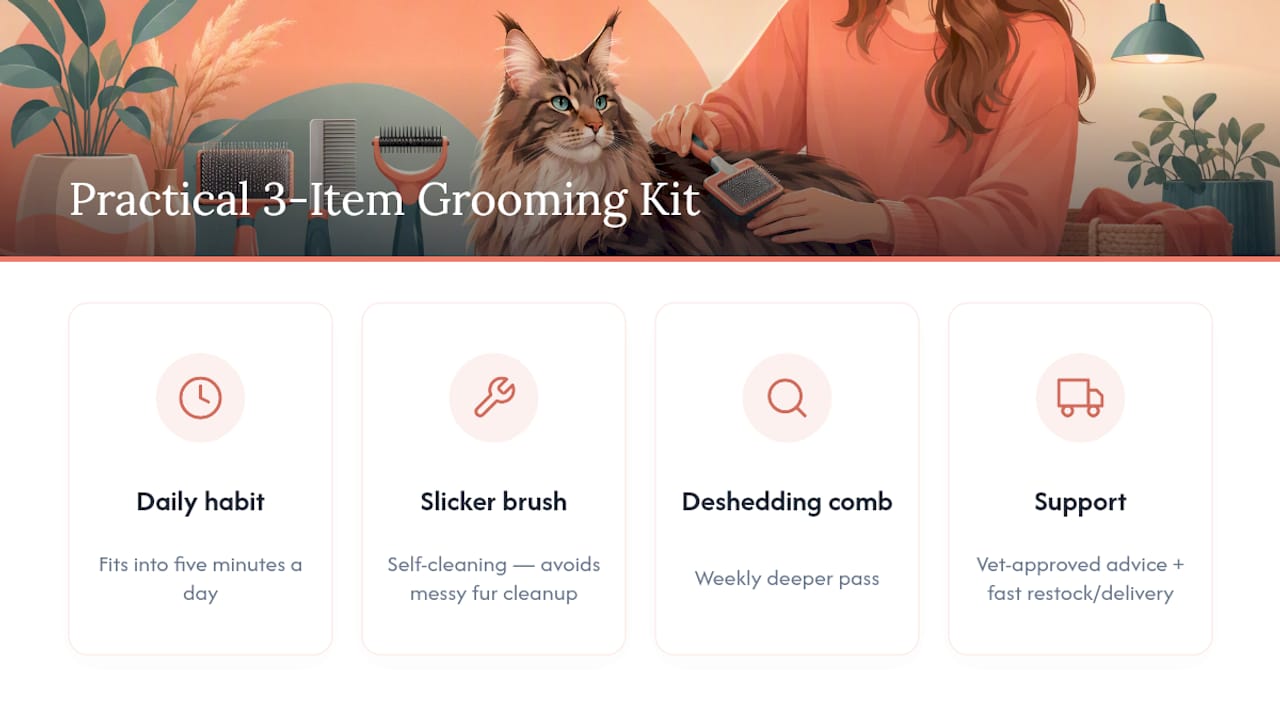
The grooming advice that gets followed is the advice that fits into five minutes a day, not the advice that demands a perfect thirty-minute session nobody has time for. Owners give up on the elaborate routines fastest, and a coat that’s ignored for two weeks straight is far harder to fix than one brushed briefly every day.
A self-cleaning slicker brush removes the single biggest reason people skip a session: the mess of clearing fur off a normal brush afterwards. Add a deshedding comb for the weekly deeper pass and a pair of grooming gloves for nervous cats or quick top-ups, and you’ve covered the whole weekly grid without needing to think hard about which tool to reach for. A practical kit paired with vet-approved advice and fast delivery options makes replacing a worn-out dematter or restocking gloves less of a chore. The right tools, chosen for a Maine Coon’s specific coat rather than a generic “cat brush,” make the difference between a routine that sticks and one that quietly stops happening.
— Giddy
Where to buy your Maine Coon grooming kit
Building a proper kit is far simpler than most new owners expect: one daily brush, one weekly deshedding tool, and gloves or a dematter for problem spots covers nearly everything a Maine Coon needs.

Giddy pets stocks each of these as a straightforward, no-fuss purchase rather than a bundle of extras you’ll never use. Start with the cat grooming brushes range for a daily slicker suited to a large, dense coat, add a deshedding brush for the weekly undercoat pass, and pick up grooming gloves if your cat is still getting used to handling. For a first-time kit in one go, the grooming brushes category covers everything above without the guesswork of matching tools to your cat’s coat type. Every item ships with the same vet-approved advice you’ve read here, so the routine and the kit line up from day one.
Sources
- Maine Coon cat grooming guide — coat care, routine, products, and finding a groomer
- Maine Coon cat grooming – 6 tips & tricks (Catster)
- Maine Coon grooming guide: coat care, mats, brushing and bathing tips