






Limit Treats to 10%: Vet Backed Human Foods UK Dog Owners Can Use
Limit Treats to 10%: Vet Backed Human Foods UK Dog Owners Can Use
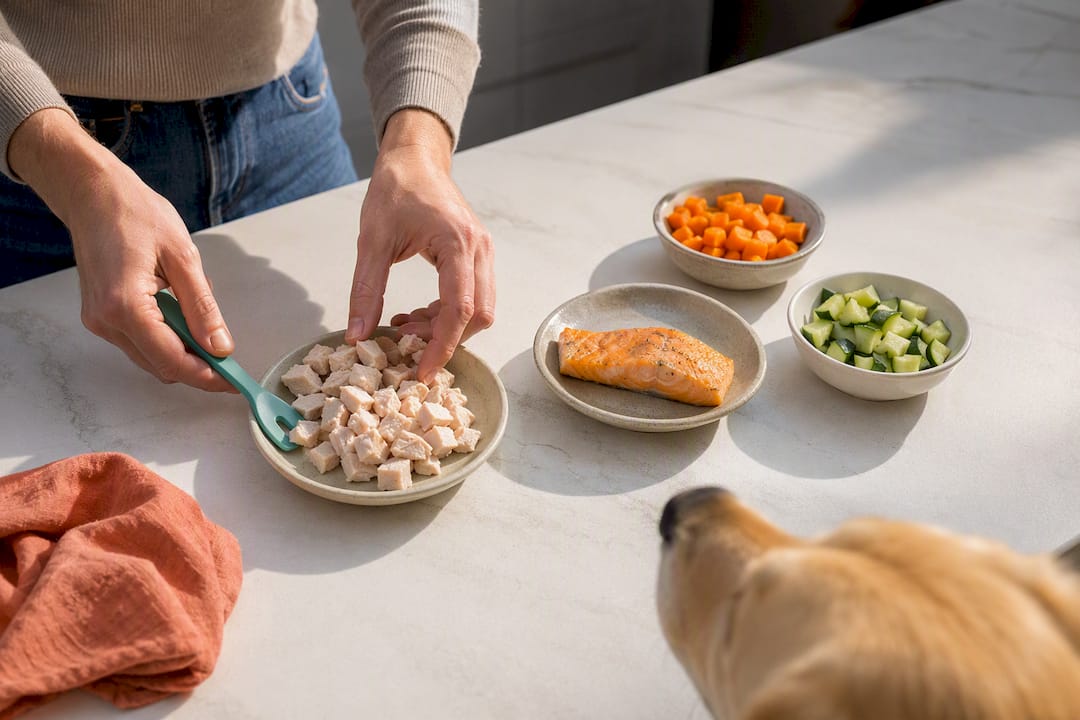
Plenty of everyday human foods are safe for dogs when they’re plain, unseasoned, and given in moderate amounts. Cooked lean meat, cooked eggs, plain yoghurt, and fruits or vegetables like blueberries and carrots all fit comfortably into an occasional treat routine.
TL;DR:
- Safe human foods should only be given in moderation, making up no more than 10% of a dog’s daily calories to prevent weight gain.
- Fully cooked meats, fish, eggs, and dairy are safe, but must be prepared plainly, with bones removed and avoiding rich or greasy options.
- Toxic foods include xylitol, chocolate, grapes, onions, garlic, macadamia nuts, alcohol, raw yeast dough, and cooked bones, which can cause severe health issues.
- Introduce new foods gradually, monitor for adverse reactions within 24 to 48 hours, and always remove pits, skins, and bones before feeding.
- Use portion-control tools like treat pouches and slow feeders to ensure safe feeding habits and prevent overconsumption or choking.
Table of Contents
- Which human foods are safe for dogs? Quick shortlist
- What are the best human foods to feed dogs by category?
- What human foods are toxic to dogs?
- How much human food can dogs eat safely?
- What are the signs of food poisoning in dogs?
- How do you introduce new human foods to a dog?
- How is this human food guidance verified?
- What matters most when feeding human foods to dogs?
- Where can you get portion-control tools for treats?
- Sources
Which human foods are safe for dogs? Quick shortlist
If you’re standing in the kitchen wondering whether to drop a scrap into the bowl, this is the fast-check version. Each category comes with the one caveat that actually matters.
- Meats: cooked chicken, turkey, or lean beef, with no skin, fat trimmed, and no bones.
- Eggs: fully cooked (scrambled or boiled), never raw.
- Dairy: plain yoghurt or a small cube of low-fat cheese, and only if your dog tolerates lactose.
- Fruits: blueberries, apple slices (core and pips removed), banana in small amounts because of its sugar content.
- Vegetables: carrots, green beans, and cucumber, chopped to a size that suits your dog.
- Grains: plain cooked rice or plain porridge oats, useful for settling an upset stomach.
- Peanut butter: unsalted, and always checked for xylitol before it goes anywhere near a spoon.
These foods are widely accepted as safe additions to a dog’s diet when served plain and in bite-sized pieces, but they’re additions, not a substitute for a complete dog food.
What are the best human foods to feed dogs by category?
Knowing that chicken is “safe” isn’t quite the same as knowing how to prepare it, how much to give, or when normally fine food turns risky. Here’s the detail that separates a good treat from a trip to the vet.
Cooked lean meats
Plain, cooked chicken, turkey, or lean beef gives your dog protein without the seasoning, garlic, onion powder, or excess salt that often comes baked into a family dinner. Strip off the skin and visible fat before serving. Fatty cuts and crispy skin are two of the more common culprits behind an upset stomach the next morning, because a dog’s digestive system isn’t built to process rich, greasy meat the way ours is. Bones are a separate hazard entirely: cooked bones splinter, and even a “safe” bone can lodge in the throat or gut.
Fish
Cooked salmon and whitefish offer omega-3 fatty acids that support skin and coat condition, but only when thoroughly cooked and completely deboned. Avoid raw fish, and be cautious with species known for higher mercury levels if you’re feeding fish regularly rather than as an occasional extra. One stray fish bone causes more emergency vet visits than most owners expect.
Eggs
Fully cooked eggs, scrambled or boiled with nothing added, are a genuinely good source of protein. Raw eggs are where the trouble starts: they carry a salmonella risk, and raw egg white contains a protein that interferes with biotin absorption over time. Cooking the egg removes both problems.
Dairy
Plain yoghurt (unsweetened, no artificial sweeteners) and a small amount of low-fat cheese are the safer dairy choices. Many adult dogs have reduced lactose tolerance, so a splash too much dairy can mean loose stools rather than anything more serious. Start with a teaspoon-sized amount and watch how your dog responds before making it a habit.
Fruits
- Apple: slice it, always remove the core and pips first, since apple pips contain trace cyanogenic compounds.
- Banana: fine in small amounts, but its natural sugar content means it’s a treat, not a daily staple.
- Blueberries: a favourite low-calorie option, rich in antioxidants, and easy to use in training.
- Watermelon: remove the seeds and rind, then serve in small chunks as a hydrating summer treat.
Vegetables
Carrots, green beans, cucumber, and cooked pumpkin are all solid choices. Raw carrot and cucumber give a satisfying crunch, but chop them into pieces sized for your dog rather than handing over a whole carrot, which becomes a choking hazard for smaller breeds in particular. Cooked, unseasoned pumpkin is often used to support digestion, though it works as an occasional addition rather than a fix for ongoing tummy trouble.
Grains and similar staples
Plain cooked rice and plain porridge oats are gentle, easily digested, and commonly recommended alongside bland chicken during a bout of digestive upset. They’re filler foods, not nutritional stars, so they shouldn’t crowd out the protein and vegetables that do more nutritional heavy lifting.
Nuts and seeds
This is a category to approach cautiously as a whole. Macadamia nuts are outright toxic (covered in detail below), and many other nuts are high in fat, which can trigger digestive upset or contribute to pancreatitis in dogs prone to it. If you want to include seeds, keep portions minimal and always check for added salt or flavouring first.
Fats and leftovers
Rich, fatty table scraps, gravy, crackling, bacon fat, are one of the most common causes of pancreatitis flare-ups in dogs that otherwise eat well. Even foods that are technically “safe” in their plain form become risky once they’re coated in butter, sauce, or drippings. Some foods that look harmless carry their own quirks too: coconut flesh, for instance, can cause diarrhoea in some dogs even though it isn’t toxic, which is a good reminder that “safe” and “always fine in any quantity” aren’t the same thing.
Pro Tip: Keep a small notebook or note on your phone logging what you’ve fed and when. If a new symptom shows up, you’ll be able to tell your vet exactly what changed in the last 24 to 48 hours, which speeds up diagnosis considerably.
What human foods are toxic to dogs?
These aren’t foods to limit. They’re foods to keep off the floor, off the counter, and out of reach entirely.
- Xylitol: found in sugar-free gum, some peanut butters, baked goods, and toothpaste. It triggers a rapid insulin release in dogs, causing dangerous hypoglycaemia and, in higher doses, liver damage.
- Chocolate and caffeine: both contain compounds like theobromine that dogs metabolise far more slowly than people do, leading to vomiting, elevated heart rate, tremors, and in severe cases, seizures.
- Grapes and raisins: even a small quantity has been linked to acute kidney failure in some dogs, and the exact toxic mechanism still isn’t fully understood, which makes “just a few” a genuine gamble.
- Onions, garlic, and chives: members of the allium family damage red blood cells and can lead to a form of anaemia, whether raw, cooked, or powdered.
- Macadamia nuts, alcohol, excessive salt, and raw yeast dough: each carries its own toxic mechanism, from muscle tremors to nervous system depression.
The ASPCA is direct about this: foods considered perfectly safe for people can cause serious organ damage in pets, and “human-grade” is not the same as “dog-safe”. Raw yeast dough deserves its own mention because the danger is twofold. As it sits in a warm stomach, it keeps rising, causing painful bloating, and the fermentation process produces alcohol as a byproduct, meaning a dog that eats raw dough can end up dealing with both gastric distension and alcohol toxicity at once. Cooked bones round out the list for a different reason: they splinter into sharp fragments that can tear or obstruct the gut, rather than poisoning your dog outright.
How much human food can dogs eat safely?
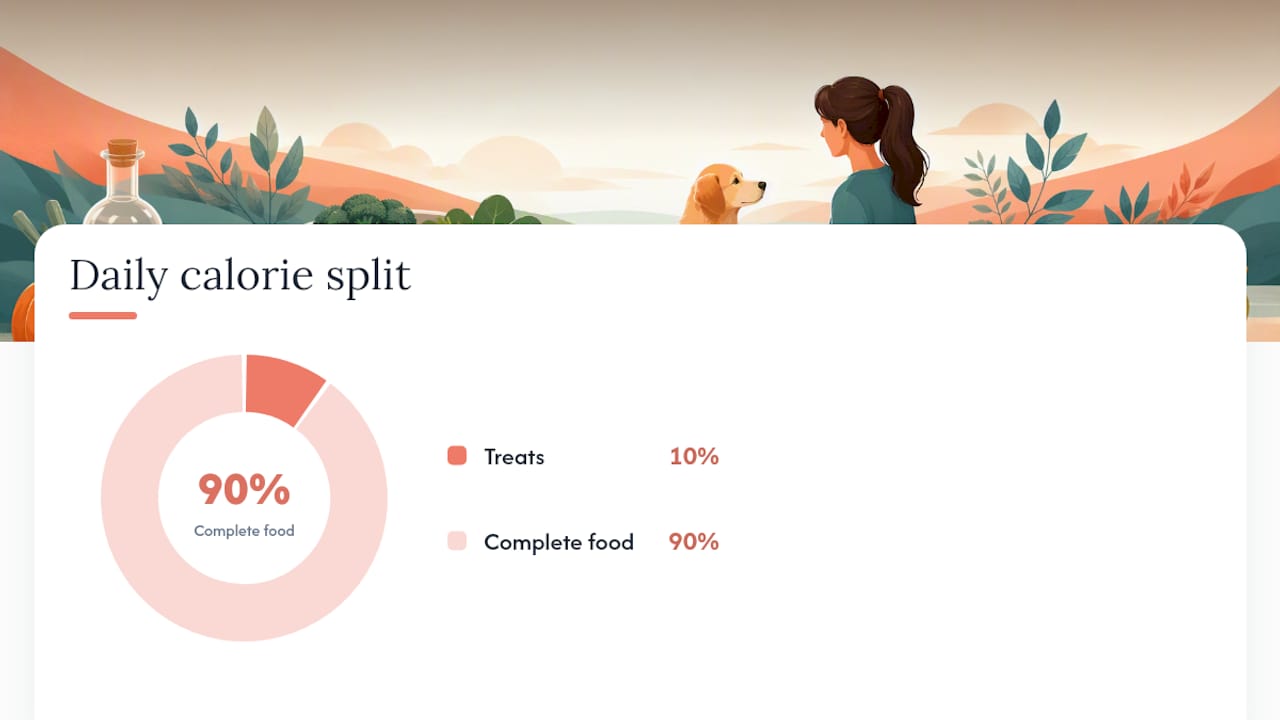
Veterinary guidance is consistent on this point: treats of any kind, including human-food treats, should make up no more than 10% of a dog’s daily calorie intake, with the remaining 90% coming from a nutritionally complete dog food. Go over that regularly and you risk diluting the balanced nutrition your dog’s main diet is designed to provide, and gradually piling on excess weight.
What that looks like in practice, by size:
- Small dogs (under 10kg): a few blueberries, a quarter apple slice, or half a boiled egg is already a meaningful treat.
- Medium dogs (10 to 25kg): a tablespoon of shredded chicken, a small handful of green beans, or a full apple slice.
- Large dogs (over 25kg): two tablespoons of chicken, a small carrot, or a few extra blueberries scattered through a puzzle feeder.
Always dice, mash, or slice food to match your dog’s mouth and swallowing style, remove skins, pips, and pits without exception, and let anything hot cool fully before it goes in the bowl. It’s also worth resisting the urge to feed from the table while you’re eating; doing so tends to reinforce begging behaviour, whereas the same treat handed over during a training session or stuffed into a toy does double duty as both reward and mental stimulation.
Pro Tip: *Weigh your dog’s usual treats for a week using kitchen scales rather than guessing.
What are the signs of food poisoning in dogs?
Symptoms often point to the specific culprit, which helps enormously when you’re on the phone to a vet.
- Weakness, wobbliness, or seizures: classic signs of xylitol-induced hypoglycaemia, often within 30 to 60 minutes of ingestion.
- Vomiting, restlessness, rapid heartbeat, or tremors: typical of chocolate or caffeine toxicity, sometimes delayed several hours.
- Vomiting, lethargy, and reduced urination: possible early signs of the kidney injury linked to grapes or raisins.
- Pale gums, weakness, and dark urine: can indicate the red blood cell damage caused by onions or garlic.
- Bloating, distress, and disorientation: consistent with raw yeast dough expanding and fermenting in the stomach.
If you suspect your dog has eaten something dangerous, gather the packaging or a list of ingredients, note the approximate amount eaten and your dog’s weight, and call your vet or a pet poison helpline straight away. Don’t induce vomiting unless a vet specifically tells you to, since some substances cause more harm coming back up. Speed matters here: many of these toxins are far easier to manage in the first hour or two than after symptoms have fully set in.
How do you introduce new human foods to a dog?
Treat every new food as a trial, not a certainty. Offer a small amount and watch for 24 to 48 hours before trying anything else new, so if your dog reacts, you know exactly what caused it. Digestive upset, itching, or excessive gas are the usual signs something didn’t agree with them.
- Introduce one food at a time, never a new mix of three or four at once.
- Favour low-calorie fruit and veg, blueberries, cucumber, green beans, for frequent training rewards.
- Track what you’ve fed against the 10% calorie guideline rather than eyeballing it.
- Try frozen fruit pieces on a hot day, or mix a few safe scraps into a puzzle feeder for enrichment rather than a straight handout.
- A stuffable toy loaded with a small amount of plain yoghurt or mashed banana turns a two-second treat into ten minutes of engagement.
How is this human food guidance verified?
This guide draws on vet-reviewed sources, including UK Pet Food’s treat guidance, the ASPCA’s poison control advice, and MedVet’s clinical food safety resource, cross-checked against UK availability and labelling for the products most likely to sit in a British kitchen cupboard. Every food listed here has been checked for toxicology risk, realistic portion sizes, and choking hazards before making the cut, and the framing throughout treats fruit and vegetables as supplemental extras rather than diet replacements, in line with how vets generally position these foods.
A food-safety checker and a UK vet-finder tool are available online to assist when wondering whether a scrap of dinner is safe to share. Use them alongside this guide rather than instead of a proper conversation with your own vet, particularly for a dog with existing health conditions.
What matters most when feeding human foods to dogs?
The conventional advice on this topic tends to obsess over the danger list, chocolate, grapes, xyliton, and skims past the more common problem: gradual overfeeding of “safe” treats until a dog’s diet is quietly unbalanced. Toxicity cases are dramatic and rare. Weight gain from a daily handful of cheese, bits of toast, and “just a bit” of whatever’s on the plate is unglamorous and far more common.
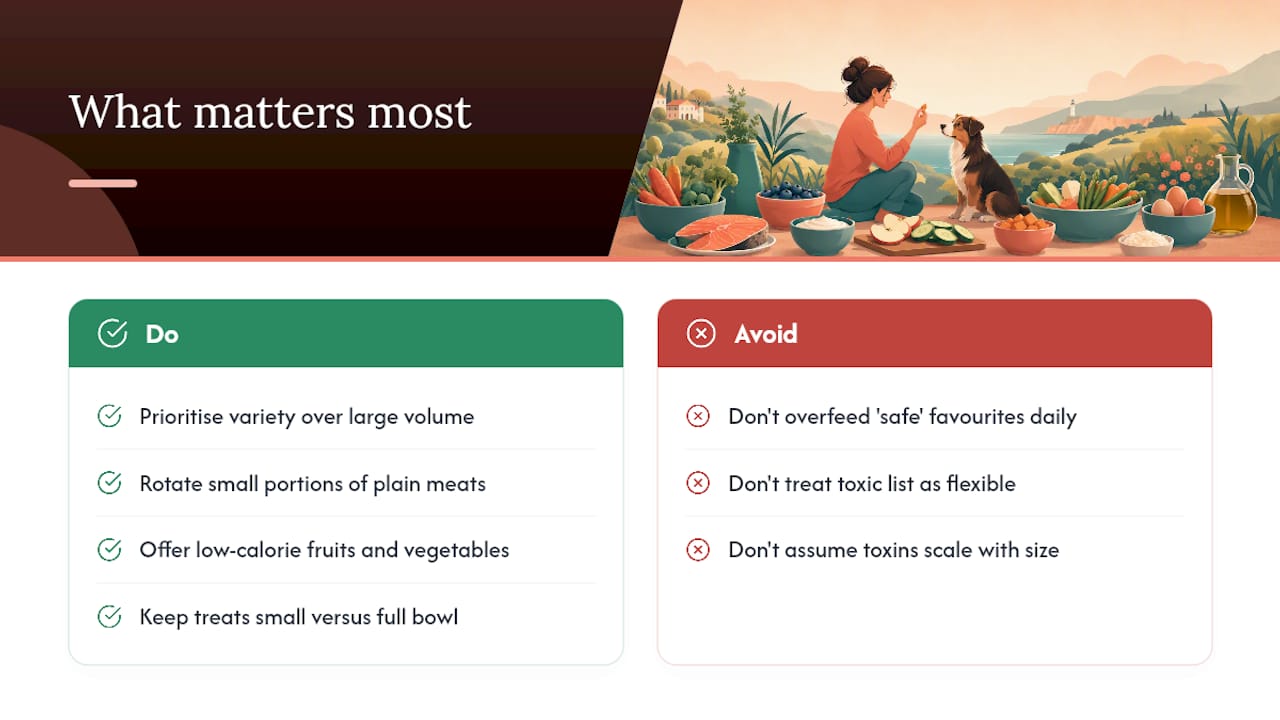
It’s not a scare tactic, it’s the actual mechanism by which safe foods stay safe. A blueberry is harmless. Twenty blueberries a day, every day, on top of a full bowl of dog food, isn’t.
Prioritise variety over volume: a small rotating cast of plain meats, low-calorie fruit, and vegetables beats one “safe” favourite fed in large amounts. And treat the toxic list as genuinely non-negotiable, not a guideline with wiggle room, because the mechanisms behind xylitol, grapes, and onions don’t scale down gently with a smaller dog.
— Giddy
Where can you get portion-control tools for treats?
A dog treat pouch keeps measured portions of chicken, blueberries, or training treats within reach without you eyeballing handfuls from a bag. For enrichment at home, stuffable dog toys let you spread a small amount of yoghurt or mashed banana over a longer session, so the same treat lasts longer and does more work mentally.
If gulping or overeating is a concern with softer foods, a slow feeder dog bowl slows the pace down and reduces the risk of choking on bite-sized extras. And once you’ve settled on your dog’s safe favourites, an airtight dog food storage container keeps fresh ingredients like oats or dried treats free from pests and moisture. Browse Giddy Pets’ full pet food and treats range to build a treat kit that fits your dog’s size and your own portion-control habits from day one.
Sources
- MedVet — Human foods cats & dogs to eat and avoid
- ASPCA — People foods to avoid feeding your pets
- Blue Cross — foods poisonous to dogs