



Dog food storage: keep kibble fresh and pest-free
Dog food storage: keep kibble fresh and pest-free
How to store dog food properly at home
The single most effective thing you can do for your dog’s food is keep it in a hard-sided, airtight container, stored in a cool, dry place below 27°C. That one habit protects against moisture, pests, rancid fats, and nutrient loss all at once. Here is what proper dog food storage looks like in practice:
- Use an airtight, hard-sided container made from food-grade, BPA-free plastic or stainless steel to block air, moisture, and pests.
- Keep dry food inside its original bag, then place the whole bag inside the container. The bag acts as a second barrier for fats and oils, and carries the lot number, UPC code, and best-by date you will need if there is ever a recall.
- Refrigerate opened wet food immediately at 2–4°C and use it within 3–5 days. Any portion left in your dog’s bowl for more than a few hours should be discarded.
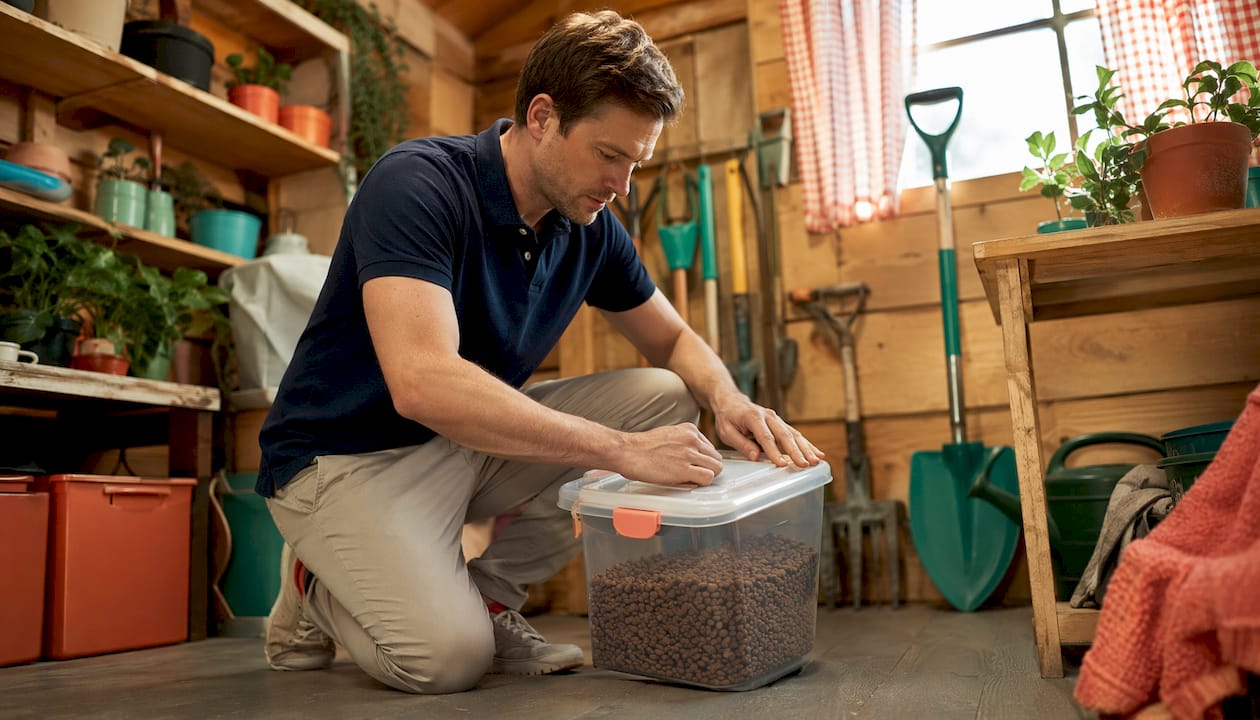
- Choose your storage location carefully. Garages and garden sheds are tempting but often too warm and humid. Temperature swings above 27°C accelerate fat rancidity even inside a sealed container. A kitchen cupboard or utility room shelf is far better.
- Remove uneaten food from bowls after a couple of hours. Leaving kibble or wet food sitting out encourages bacterial growth, particularly in warmer months.
Dry kibble, once opened, is best used promptly for peak freshness and safety. Unopened bags and cans should be used before the printed best-by date, which is the manufacturer’s guarantee of nutritional quality, not just palatability.
How to choose the right dog food storage container
Not every bin labelled “pet food storage” is worth your money. The features that genuinely matter are airtightness, material safety, size, and how easy the container is to clean between refills.
- Airtight seal with a gasket. A lid that simply snaps on is not the same as one with a rubber or silicone gasket. Kibble is sprayed with oils during manufacture, and those fats oxidise quickly when exposed to air, turning food stale and eventually rancid. A proper gasket seal slows that process significantly.
- Food-grade, BPA-free materials. Look for food-grade BPA-free plastic or stainless steel. Stainless steel is non-porous, resists odours, and is generally easier to clean thoroughly, which matters when residual oils can harbour bacteria.
- Correct capacity for your household. Match the container size to the bag you actually buy. A container that holds 15 kg suits a large-breed owner buying in bulk; a compact 5–7 kg bin works well for smaller dogs or those on specialist diets with shorter shelf lives.
- Included accessories. A measuring scoop stored inside or under the lid removes the guesswork from portion sizes and keeps a separate utensil off the worktop. Wheels or castors are genuinely useful on larger, heavier containers.
- Ease of cleaning. Wide openings make it possible to reach the bottom properly. Containers with internal seams or ridges trap residual oils and crumbs, which is exactly where mould and bacteria take hold.
Pro Tip: If you cannot fit the entire original bag inside your container, photograph the bag’s label before decanting so you always have the lot number and best-by date to hand.
Which containers are popular for storing dog food in the UK?
The UK market offers a good spread of container styles, from simple plastic bins to more considered designs with locking lids and accessories. Here is an honest look at the main types and some of the brands you will encounter.
Material types: plastic, stainless steel, and metal
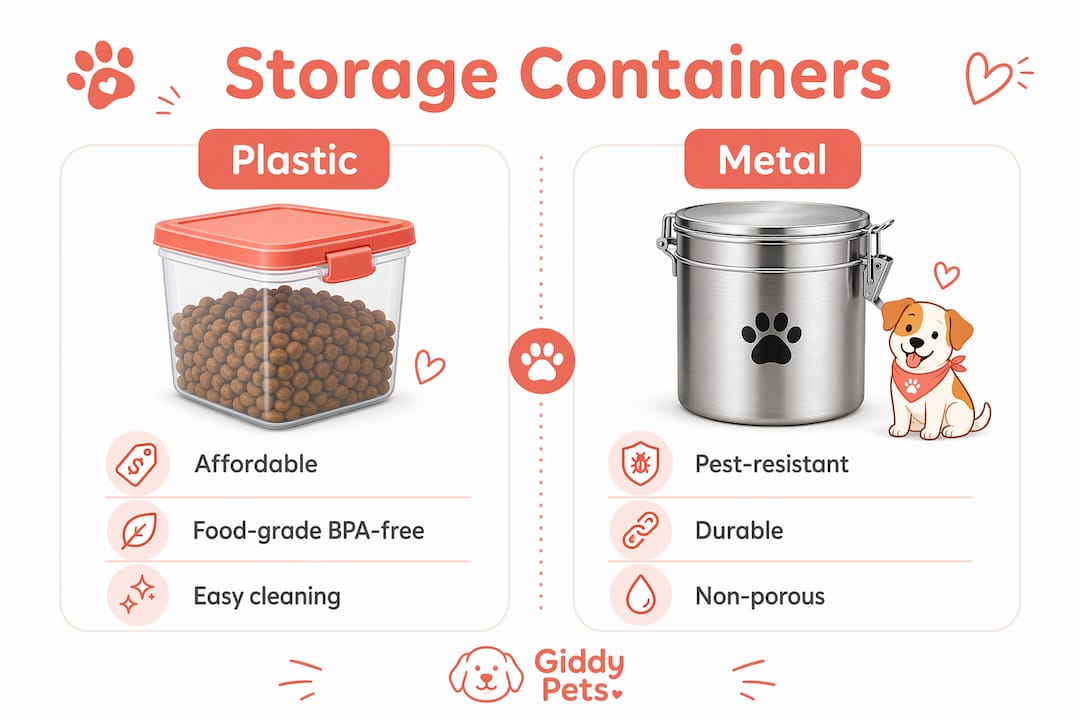
Plastic containers are the most widely available and usually the most affordable. The key is to choose food-grade, BPA-free plastic. Lighter-weight plastics can absorb odours over time and may scratch, creating grooves that are difficult to clean. Hard-sided, thick-walled plastic holds up much better.
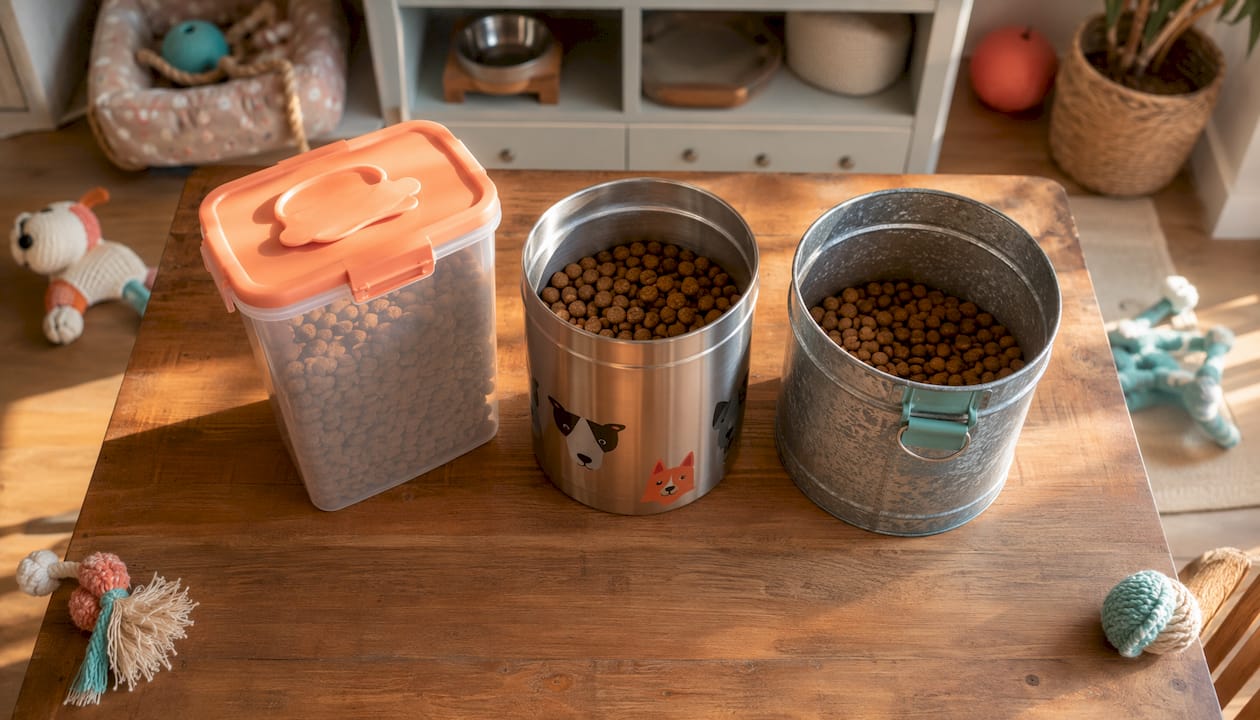
Stainless steel containers cost more but offer real advantages: they do not absorb smells, they are non-porous, and they tend to last longer. They are a particularly good choice if you have had mould or contamination issues with plastic bins in the past.
Metal tins (often galvanised or powder-coated steel) are popular for their pest-resistance. Rodents cannot chew through them, which makes them a sensible option for anyone storing food in a utility room or garage, provided the lid seals properly.
Notable UK-available brands
Curver Petlife offers a range of plastic storage containers with clip-lock lids, available in several sizes. The lids create a reasonable seal and the containers are lightweight, making them easy to move for cleaning.
Taylor & Brown produce airtight food storage bins that are widely stocked online. Their containers typically feature a screw-top or clip-seal lid and come in sizes suited to small and medium dogs.
Amazon Basics pet food storage containers are a budget-friendly entry point. Build quality is functional rather than premium, but for owners who prioritise value and clean regularly, they do the job.
Moderna Pet Wisdom containers are designed with a particular focus on hygiene, featuring smooth internal surfaces and tight-fitting lids. They are stackable, which suits multi-pet households or anyone with limited floor space.
Flamingo Kody bins are a sturdier option with a more considered locking mechanism. They tend to suit owners who want a container that a determined dog cannot nudge open.
Comparison of key features
| Container | Airtight seal | Material | Capacity range | Accessories | Ease of cleaning | Price range |
|---|---|---|---|---|---|---|
| Curver Petlife | Clip-lock lid | BPA-free plastic | Small to large | None typically included | Good, smooth interior | Budget to mid-range |
| Taylor & Brown | Screw or clip seal | BPA-free plastic | Small to medium | Some include scoop | Good | Budget to mid-range |
| Amazon Basics | Snap-fit lid | BPA-free plastic | Small to large | Scoop on some models | Moderate | Budget |
| Moderna Pet Wisdom | Clip-lock lid | BPA-free plastic | Small to large | None typically included | Very good, smooth walls | Mid-range |
| Flamingo Kody | Locking lid | Plastic | Medium to large | None typically included | Good | Mid-range |
Stackable containers are worth considering for multi-pet homes, where keeping different foods clearly separated avoids accidental mix-ups. Portable or collapsible bins suit owners who travel regularly with their dogs, keeping food secure and contained without taking up boot space.
How to keep your dog food containers clean and organised
Good habits around cleaning and organisation make a real difference to how long food stays safe. The rules are straightforward, but they are easy to skip when life is busy.
- Never top off a container. Pouring fresh kibble over old crumbs is one of the most common mistakes dog owners make. Leftover residue accumulates oils that go rancid and create the conditions for bacteria and mould to grow. Always finish the old food first.
- Wash between every refill. Use hot soapy water or white vinegar, rinse thoroughly, and allow the container to dry completely before adding fresh food. Even a small amount of residual moisture can trigger mould growth on the new batch.
- Store containers off the floor. Raising bins onto a shelf or worktop reduces the risk of pests finding their way in, and makes cleaning around them much easier.
- Use separate containers for each pet’s food. In multi-pet homes, dedicated bins for each food type prevent cross-contamination and make it easy to track how quickly each food is being used.
- Keep scoops and bowls clean. Wash scoops after each use and dry them before returning them to the container. A damp scoop introduces moisture directly into the food supply. Wash food bowls after every meal and water bowls daily.
Organising your storage space with labelled containers and a clear rotation system (older food at the front, newer at the back) takes two minutes to set up and saves you from accidentally feeding your dog food that is past its best.
What vets and pet nutritionists say about dog food storage
The guidance from veterinary and nutrition experts is consistent and worth taking seriously. A few points stand out as particularly important.
Keeping food in its original packaging inside an airtight container gives you two layers of protection. The bag is engineered to preserve nutritional integrity and slow fat oxidation. The container blocks pests and air. Together, they outperform either approach alone. The FDA notes that less than half of pet food complaints they receive include the lot number, which makes it harder and slower to investigate potential problems. Keeping the original bag solves that immediately.
On storage location, experts are clear: cool, dry, stable conditions below 27°C are non-negotiable for maintaining nutritional quality. Even a well-sealed container cannot fully compensate for a hot, humid environment. Nutrients degrade, fats go rancid, and mould finds a way.
Pro Tip: Inspect your dog’s food before every meal. If it smells stale or musty, or if the colour or texture has changed, discard it. Rancid or discoloured food can cause digestive upset and, in more serious cases, illness.
Signs that food has spoiled and should be thrown away:
- A stale, sour, or rancid smell
- Visible mould (blue, green, or white growth)
- Dark spots or unusual discolouration
- Hardened or clumped kibble
- Presence of insects or rodents
- Your dog refuses to eat it or becomes unwell after eating
Dry kibble is generally best used within one month of opening. Opened wet food should be consumed within 3–5 days when refrigerated. Unopened canned food can last considerably longer, but should always be used before the printed best-by date.
How to store homemade dog food and treats
Homemade dog food and treats require more careful handling than commercial products, because they lack the preservatives that extend shelf life in manufactured foods.
Cooked homemade meals should be cooled quickly and refrigerated within two hours of preparation. In the fridge, they will typically keep for 3–4 days. For longer storage, portion the food into meal-sized amounts, seal them in airtight freezer bags or containers, and freeze. Frozen homemade food is best used within 2–3 months for optimal quality.
Homemade treats follow similar rules. Soft, moist treats (those made with meat, eggs, or dairy) should be refrigerated and used within a week. Drier baked treats, such as those made with oats or peanut butter, can last up to two weeks at room temperature in an airtight tin, or longer in the fridge.
Label everything with the preparation date. It takes seconds and removes any guesswork about freshness. Use glass or stainless steel containers for homemade food where possible, as these do not absorb odours and are straightforward to sterilise between batches.
Giddypets has the storage solutions your dog deserves
Getting the storage right is only half the picture. You also need containers you can actually trust, sourced from a place that understands what dog owners in the UK genuinely need. Giddypets stocks a curated range of airtight, pest-proof containers chosen for their seal quality, material safety, and practical design, so you are not wading through hundreds of options to find one that works.
Whether you are storing dry kibble for a large breed, managing food for multiple dogs, or looking for a compact solution for a smaller household, the Giddypets range covers it. And if you want to take your feeding routine a step further, the automatic pet feeders on the site pair neatly with good storage habits, delivering precise portions at set times without any guesswork. Browse the dog food storage range at Giddypets and find the right fit for your home today.
Key takeaways
Airtight, food-grade containers stored below 27°C in a cool, dry location are the foundation of safe, fresh dog food storage at home.
| Point | Details |
|---|---|
| Use airtight containers | Choose food-grade BPA-free plastic or stainless steel with a gasket seal to block air, moisture, and pests. |
| Keep the original bag | Place the sealed bag inside the container to preserve nutrients and retain lot number and best-by date for recalls. |
| Refrigerate opened wet food | Store at 2–4°C and use within 3–5 days; discard any portion left in the bowl for more than a few hours. |
| Clean between every refill | Wash with hot soapy water or white vinegar, rinse, and dry completely before adding fresh food to prevent mould and bacteria. |
| Giddypets storage range | Giddypets stocks airtight, pest-proof dog food storage containers suited to UK households of all sizes. |