








Stop Guessing: UK Cat Vomiting Triage With Printable Vet Checklist
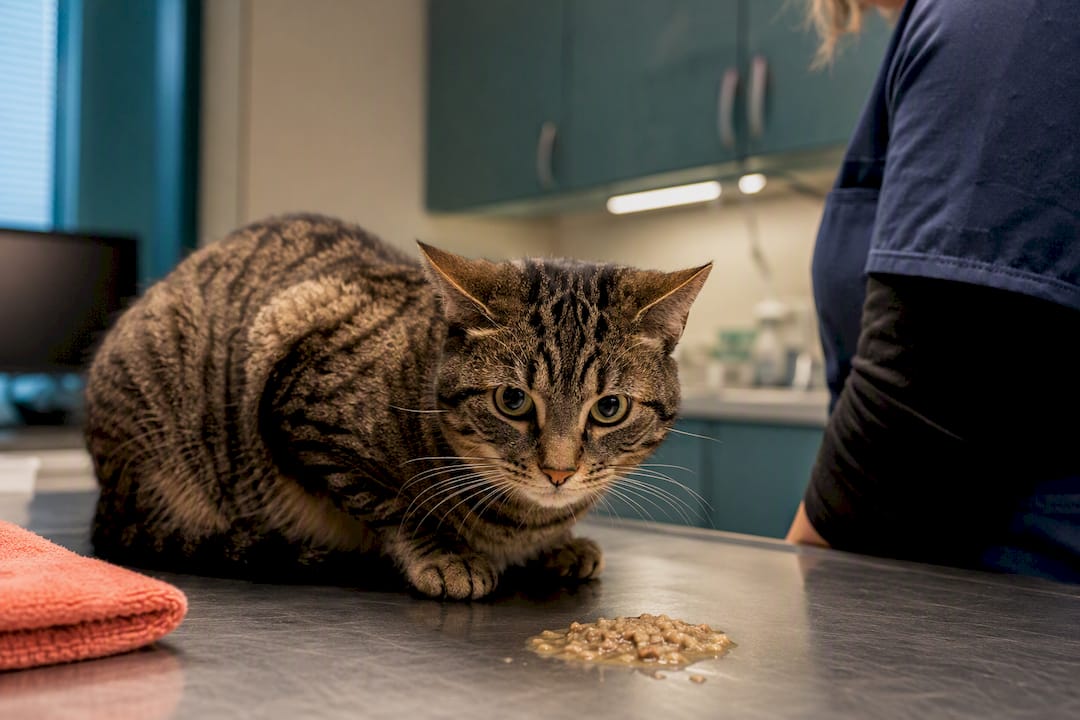
Stop Guessing: UK Cat Vomiting Triage With Printable Vet Checklist
A single vomit after dinner is rarely a crisis. Repeated episodes, blood, collapse, or signs of dehydration are. Watch what comes up, how often, and how your cat acts afterwards. Photograph it, note the timing, and call your vet the moment anything looks systemic rather than a one-off.
TL;DR:
- Frequent vomiting more than once a week or blood in the vomit indicates a need for urgent veterinary assessment.
- Vomiting that occurs hours after eating, especially with weight loss or behavioral changes, suggests possible systemic illness requiring thorough investigation.
- Cats that vomit passively without retching, especially if still hungry and active afterward, are often experiencing regurgitation rather than true vomiting.
- Repeated episodes of hairball vomiting, particularly with poor appetite or excessive grooming, may signal underlying gut motility issues.
- Using tools like slow feeders and grooming brushes can prevent common triggers like speed-eating and hair ingestion, reducing the risk of recurrent vomiting.
Table of Contents
- What cat vomiting causes actually look like: recognising the real thing
- Common short-term causes of cat vomiting after eating or exposure
- Chronic and systemic illnesses that cause recurrent vomiting
- What the colour and texture of vomit tells you
- Red flags that mean your cat needs a vet now, not tomorrow
- The diagnostic path: what a vet actually checks, step by step
- Safe first aid at home while you arrange veterinary advice
- Your at-home checklist and the small changes that cut future episodes
- Why owners get this wrong more often than you’d think
- Giddy pets’ prevention picks for hairballs and speed-eating
- Sources
What cat vomiting causes actually look like: recognising the real thing
Vomiting and regurgitation get lumped together constantly, but they’re mechanically different events, and telling them apart changes everything about what happens next.
True vomiting is an active process. Your cat will typically drool, lick their lips, retch with visible abdominal heaving, then forcefully expel stomach contents, sometimes with bile mixed in. It’s effortful, and you’ll usually see the build-up coming. Regurgitation, by contrast, is passive. Food comes back up with little warning, no retching, and it’s often still tube-shaped, undigested, and coated in mucus rather than acid. The Merck Veterinary Manual notes that vomiting involves retching and abdominal contraction, while regurgitation is passive and often tube shaped, a distinction vets rely on heavily during a phone consultation.
Coughing muddies the water further. Cats sometimes cough up foamy material that looks suspiciously like vomit, particularly with asthma or airway irritation. The giveaway is what precedes it: a coughing fit usually starts with a dry, hacking sound from the chest, not the salivation and retching pattern of true vomiting.
Timing relative to meals matters just as much as the mechanics. A cat that regurgitates a tube of barely-chewed food within minutes of eating has a different problem to one that vomits bile on an empty stomach at 4am. Vets ask about this sequence because it narrows the list of likely causes fast.
Signs worth logging every time:
- Onset: sudden versus building over hours or days
- Relation to food: immediately after eating, hours later, or unrelated to meals
- Sequence: did you see salivation and retching, or was it silent and passive
- Frequency: a one-off, or the third time this week
- Behaviour after: back to normal within minutes, or lethargic and withdrawn
That last point is where owners often get caught out. A cat that vomits once, then eats, plays, and uses the litter tray normally, is telling you something very different to a cat that vomits and then hides. Owner-provided history around timing, frequency, appearance and diet changes is repeatedly flagged by veterinary sources as the single most useful diagnostic input a vet has, more useful in many cases than the vomit itself.
Common short-term causes of cat vomiting after eating or exposure
Most vomiting falls into this category: acute, usually self-limiting, and traceable to something specific your cat ate, encountered, or picked up.
- Hairballs. Grooming cats swallow fur, and most cope by vomiting up a cylindrical mass every week or two without any drama — more detail on managing this is available in Examples of pet hair carpet damage: a Canadian pet owner’s guide. The Merck Veterinary Manual states hairballs can be normal every one to two weeks, but frequent hairball vomiting, several times a week, or accompanied by poor appetite, suggests either excessive grooming or a gut motility problem worth investigating. Long-haired breeds and cats under stress groom more, which is why hairball frequency can spike after a house move or a new pet arrives.
- Dietary indiscretion and sudden diet changes. Cats scavenging, eating something rich or spoiled, or being switched onto a new food overnight will often vomit within hours. Purina points out that transitioning diets too quickly is a common trigger, and recommends a gradual switch over several days rather than swapping bowls cold. If you’re managing a cat towards a leaner body condition, pairing gradual food changes with a properly structured diet plan avoids this exact trap.
- Foreign objects, especially linear ones. String, tinsel, hair ties, and thread are genuinely dangerous because they can anchor at one end (often under the tongue) while the intestine bunches up around the rest. Repeated unproductive retching, reduced appetite, and a painful abdomen are red flags that need same-day veterinary attention, not a wait-and-see approach.
- Infections and parasites. Gut parasites, particularly in kittens or cats with patchy worming histories, cause vomiting alongside weight loss or a dull coat. Sticking to a proper worming schedule closes off one of the more preventable causes on this list. Viral and bacterial infections can also trigger acute vomiting, usually with a fever or lethargy attached.
- Toxins and houseplants. Lilies are lethal to cats even in small quantities, and common household chemicals, human medications, and some essential oils cause vomiting as an early warning sign of poisoning. Any vomiting cat with known access to a toxic plant or substance needs a vet call immediately, not observation.
- Eating too fast. Cats that bolt their food often bring it straight back up within minutes, undigested and tube-shaped, which technically leans towards regurgitation rather than vomiting proper. A slow feeder or a shallower, wider bowl that doesn’t press on sensitive whiskers can reduce this considerably, though it’s worth mentioning to your vet if it’s frequent, since rapid eating sometimes masks an underlying anxiety or competition issue in multi-cat households.
Pro Tip: Keep a two-week log on your phone, just date, time, and a one-line description of what came up. Patterns that feel random in the moment often reveal themselves clearly once you see a week of entries side by side, and that log is gold when a vet asks “how often, exactly?”
Causes span a wide taxonomy, from straightforward dietary upset to foreign bodies and parasites, and most acute cases resolve once the trigger is removed. The exceptions are the ones that don’t settle within a day or two.
Chronic and systemic illnesses that cause recurrent vomiting
When vomiting keeps returning, week after week, the cause usually sits well beyond the stomach. This is the category vets take seriously even when a cat seems otherwise bright, because several of these conditions progress quietly.
Chronic kidney disease is one of the most common culprits in older cats. Failing kidneys can’t clear waste products efficiently, and the resulting build-up causes nausea and vomiting long before an owner notices anything else wrong. Increased thirst and larger litter tray clumps often appear alongside it.
Hyperthyroidism, caused by an overactive thyroid gland, typically shows up as weight loss despite a ravenous appetite, restlessness, and a fast heart rate, with vomiting as a secondary symptom rather than the headline complaint.
Inflammatory bowel disease (IBD) and chronic gastritis cause ongoing gut inflammation that triggers intermittent vomiting, sometimes for months before diagnosis, often mistaken for “just a sensitive stomach.” Weight loss and inconsistent stool quality tend to accompany it.
Pancreatitis, liver disease, and gastrointestinal tumours are the group that demands the fastest attention. Pancreatitis in cats presents subtly, often just reduced appetite and lethargy alongside vomiting, unlike the dramatic abdominal pain seen in dogs. Liver disease can cause a yellow tinge to the gums or eyes (jaundice). Tumours, whether in the gut wall or elsewhere, often cause slowly worsening vomiting with weight loss that owners initially write off as “just getting older.”
Medication side effects are underappreciated as a cause. Certain drugs are a recognised trigger of vomiting in cats, and if vomiting starts within days of a new prescription, that timing is worth reporting rather than assuming it’s coincidence.
What ties these together, and what makes chronic vomiting genuinely different from an acute upset, is this:
- Vomiting can be intermittent rather than constant, easy to dismiss as “just a sensitive stomach”
- Appetite and energy often stay deceptively normal for weeks
- Weight loss, changes in thirst or urination, or coat quality frequently accompany the vomiting
- Blood tests, not just a physical exam, are usually needed to catch these early
Even cats that seem outwardly normal can be carrying significant chronic disease, which is why vets tend to push for investigation once vomiting becomes a pattern rather than a one-off, regardless of how well the cat is otherwise behaving.
What the colour and texture of vomit tells you
The look of what comes up is one of the fastest triage tools you have, and it costs nothing but a glance before you clean it away.
- Undigested, tube-shaped food shortly after eating usually points to regurgitation or fast eating, not a deeper problem.
- Yellow, frothy bile, especially first thing in the morning on an empty stomach, is common and often benign in cats that eat infrequently overnight, but if it happens daily it can signal gastritis or a motility issue worth mentioning to your vet.
- Fresh red blood is an urgent finding, full stop. Cornell’s Feline Health Centre is clear that fresh red blood in vomit warrants immediate veterinary assessment, as it can indicate active bleeding higher up the gut or in the mouth and throat.
- Coffee-ground or black material looks less dramatic than fresh blood, but it’s arguably more concerning, since it usually means blood has been partially digested, pointing to a bleed further along the digestive tract. This is treated with the same urgency as fresh red blood by veterinary sources.
- Visible worms in vomit mean it’s time to review your parasite control and book a vet visit, even if your cat seems otherwise fine.
Cats are notoriously good at hiding pain, which is part of why colour cues matter so much: they’re often the only objective clue you get before behaviour changes catch up days later.
If you spot anything blood-tinged or unusual, photograph it on your phone against a plain background (a white tile or kitchen roll works well) and, if possible, scoop a small sample into a sealed food bag or container to bring to the appointment. Vets can often learn more from seeing the sample directly than from a description over the phone.
Red flags that mean your cat needs a vet now, not tomorrow
Some signs override any “wait and see” instinct entirely. If you’re seeing any of the following, treat it as urgent:
- Continuous or repeated vomiting within a few hours, especially if your cat can’t keep water down either
- Blood in the vomit, fresh red or coffee-ground/black
- Collapse, severe lethargy, or unresponsiveness
- Visible abdominal pain, a hunched posture, reluctance to be touched, or a rigid belly
- Signs of dehydration, sunken eyes, dry or sticky gums, or skin that stays “tented” when gently pinched
- Difficulty breathing alongside vomiting
Beyond the emergencies, frequency itself is a rule worth memorising. Acute vomiting lasting under two to three days often resolves on its own, but anything more persistent, or vomiting more than once a week on an ongoing basis, warrants a proper veterinary review rather than repeated home management.
Watch, too, for company symptoms that turn a “probably fine” vomit into something that needs a closer look: unexplained weight loss, drinking noticeably more or less than usual, diarrhoea running alongside the vomiting, a yellow tinge to the gums or eyes, or a general drop in energy that lasts more than a day.
Pro Tip: Before you call, have three things ready: how many times your cat has vomited in the last 24 hours, what it looked like each time, and whether they’re eating, drinking, and using the litter tray normally. Vets triage phone calls fast when the details are already organised, and it often means the difference between “bring them in now” and “let’s see how the next 24 hours go.”
The diagnostic path: what a vet actually checks, step by step
Your description of events, the timing, frequency, appearance, and anything unusual your cat has eaten, is often worth more than any single test in the early stages. Vets build their entire initial approach around that history before touching a needle or a scanner.
From there, the process is deliberately staged rather than jumping straight to the most invasive option:
- Physical examination first, checking hydration status, abdominal pain, body condition, and any obvious masses
- Bloodwork (a complete blood count and biochemistry panel) to screen for kidney disease, liver problems, thyroid abnormalities, and signs of infection or inflammation
- Urinalysis, which pairs with bloodwork to assess kidney function and hydration more precisely
- Faecal parasite screening, particularly relevant in kittens or cats with an uncertain worming history
- Imaging, x-rays or ultrasound, brought in when a foreign body, obstruction, tumour, or organ enlargement is suspected
- Endoscopy or biopsy, reserved for cases where earlier tests point to something structural or inflammatory that needs direct visualisation or tissue sampling
This staged structure isn’t bureaucracy for its own sake. A phased approach, moving from history and basic tests towards imaging and only then to endoscopy or surgery, is the recommended pathway in veterinary literature, largely because it avoids putting a cat through invasive, expensive procedures before cheaper tests have ruled out the obvious.
Endoscopy in particular carries a useful nuance: it can diagnose and treat some foreign bodies in one sitting via direct visual retrieval, but linear foreign bodies, string being the classic example, often need exploratory surgery instead, because the risk of the intestine bunching and perforating is too high to manage endoscopically.
Treatment follows whatever the working diagnosis turns out to be. Dehydrated cats commonly get subcutaneous or intravenous fluids. Antiemetic medication controls the vomiting itself while the underlying cause is addressed. Cats with suspected dietary triggers may go onto a short-term bland or hypoallergenic diet trial. Confirmed obstructions, particularly linear foreign bodies, usually mean surgery without much room for a wait-and-see approach.
Safe first aid at home while you arrange veterinary advice
There’s a narrow, genuinely useful window of home care between “definitely fine” and “needs the vet immediately,” and it’s worth knowing exactly what belongs in it.
- Short-term food withholding can help, but only cautiously. Withholding food for around 24 hours is sometimes advised for otherwise healthy adult cats, though this should be checked with your vet first, and it is not appropriate for kittens, elderly cats, or those with known chronic disease, since they can decompensate quickly without regular calories.
- Water should stay available, offered in small amounts rather than withheld, unless your cat is vomiting immediately after every sip, in which case call your vet rather than continuing to offer more.
- Never give human painkillers or antiemetics. Paracetamol is highly toxic to cats even in tiny doses, and ibuprofen and other NSAIDs designed for humans can cause severe gastrointestinal damage and kidney failure. Veterinary guidance is consistent on this: don’t reach for the medicine cabinet without professional advice first.
- Keep your cat warm, quiet, and away from other pets while you’re monitoring them, since stress alone can prolong nausea.
- Slow the eating down once your cat is back to normal meals, a shallow, wide bowl or a purpose-built slow feeder reduces the gulping that leads to regurgitation-style vomiting in the first place.
- Don’t attempt to induce vomiting at home under any circumstance. Unlike some other species, there’s no safe home method for cats, and attempting one risks aspiration and chemical injury to the throat.
- Gather your evidence before the appointment: photos of the vomit, a note of frequency and timing, any recent food or treat changes, and a list of current medications, including flea and worming treatments.
Your at-home checklist and the small changes that cut future episodes
A page of scribbled notes is genuinely more useful to a vet than an anxious, unstructured description over the phone. Keep this running for any cat that vomits more than once in a fortnight.
History checklist to bring or read out:
- When did it start, and how many times in the last 24 to 48 hours
- What did it look like: bile, blood, undigested food, hair, worms
- Timing relative to meals
- Any diet changes, new treats, or scavenging opportunities in the last week
- Access to plants, chemicals, or medications
- Other symptoms: appetite, thirst, energy, litter tray habits
Pack for the vet visit:
- Photo or physical sample of the vomit
- Full list of current medications and supplements, including flea and worm treatments
- Details of any recent diet change
- Results of previous tests, if this is a recurring issue
Prevention leans on a handful of genuinely evidence-backed habits rather than anything elaborate. Regular grooming reduces the volume of fur your cat swallows, cutting hairball frequency directly, and Giddy pets’ grooming brushes are built for exactly this, alongside routines like the Maine Coon-style five-minute grooming session that works for most long-haired breeds. Gradual diet transitions over several days, rather than a same-day switch, avoid the digestive upset that comes with sudden change. Feeding little and often, rather than one or two large meals, can reduce bile vomiting on an empty stomach.
| Situation | What it usually means | What to do |
|---|---|---|
| One vomit, cat acts normal after | Likely hairball or minor dietary upset | Monitor, log it, no urgent action needed |
| Vomiting more than once a week | Possible chronic condition | Book a routine vet appointment |
| Fresh blood or black/coffee-ground vomit | Active or digested bleeding | Seek same-day veterinary care |
| Vomiting with lethargy, weight loss or altered thirst | Possible systemic illness (kidney, thyroid, IBD) | Book bloodwork-based investigation |
| Vomiting after a diet or medication change | Likely trigger identified | Discuss with vet, revert gradually if diet-related |
This guidance supports, but never replaces, a proper veterinary consultation for any cat showing persistent or severe signs.
Why owners get this wrong more often than you’d think
Most panic about cat vomiting is misplaced in one specific direction: owners either dismiss something serious as “just a hairball,” or they spiral over a single, unremarkable episode that needed nothing more than a bowl of water and an evening’s observation. Both mistakes come from the same root cause, which is not tracking what actually happened.
The single biggest error I see repeated is delay dressed up as caution. An owner notices vomiting, decides to “give it a day or two,” and that day or two turns into a week because the cat seems fine in between episodes. Cats are exceptionally good at masking discomfort right up until they’re not, and that gap between “seems fine” and “is fine” is exactly where chronic kidney disease and early pancreatitis hide.
The second mistake is reaching for the medicine cabinet. Nobody would knowingly give a cat paracetamol, but plenty of well-meaning owners have tried “just a bit” of an anti-nausea tablet leftover from their own prescription, with genuinely dangerous results.
The fix isn’t complicated. Keep a simple log. Know the colour-based red flags. Call the vet when frequency crosses from occasional to regular, rather than waiting for a dramatic symptom to force the decision. And treat prevention, proper grooming, gradual diet changes, slower feeding, as worth doing before a pattern starts, not after.
— Giddy
Giddy pets’ prevention picks for hairballs and speed-eating
None of this replaces a vet, and it’s not meant to. But two of the most common triggers on this list, hairballs and fast eating, respond genuinely well to the right equipment, and it’s worth having it in place before a pattern of vomiting starts rather than after.

A slow feeder breaks up kibble or wet food so your cat physically can’t bolt an entire meal in under a minute, which cuts down on the regurgitation-style vomiting that follows speed-eating almost immediately. For cats sensitive around the muzzle, a whisker-friendly bowl reduces the stress some cats feel with deep, narrow dishes, and calmer mealtimes often mean less gulping too. On the grooming side, a good deshedding brush used a few times a week pulls loose fur out before your cat swallows it, which is the most direct way to bring hairball frequency down. None of these tools diagnose or treat illness. If vomiting is frequent, bloody, or paired with weight loss or lethargy, that’s a vet visit, not a shopping list. But for the ordinary, preventable causes, they’re a sensible first step, and you can browse the full range in Giddy pets’ cat shop today.
This article is general information, not a substitute for advice from a qualified doctor. Consult a qualified healthcare professional about your own circumstances before acting on anything here.
Sources
- Merck Veterinary Manual — Vomiting in cats
- PetMD — Cat vomiting: causes, types, and what to do
- Mechanisms, causes, investigation and management of vomiting disorders in cats — PMC
- VCA Animal Hospitals — Vomiting in cats
- Cornell Feline Health Center — Vomiting
- Purina — Why does your cat throw up after eating?