






UK Cat Food Allergies: 8–12 Week Elimination Trial and Contamination Pitfalls
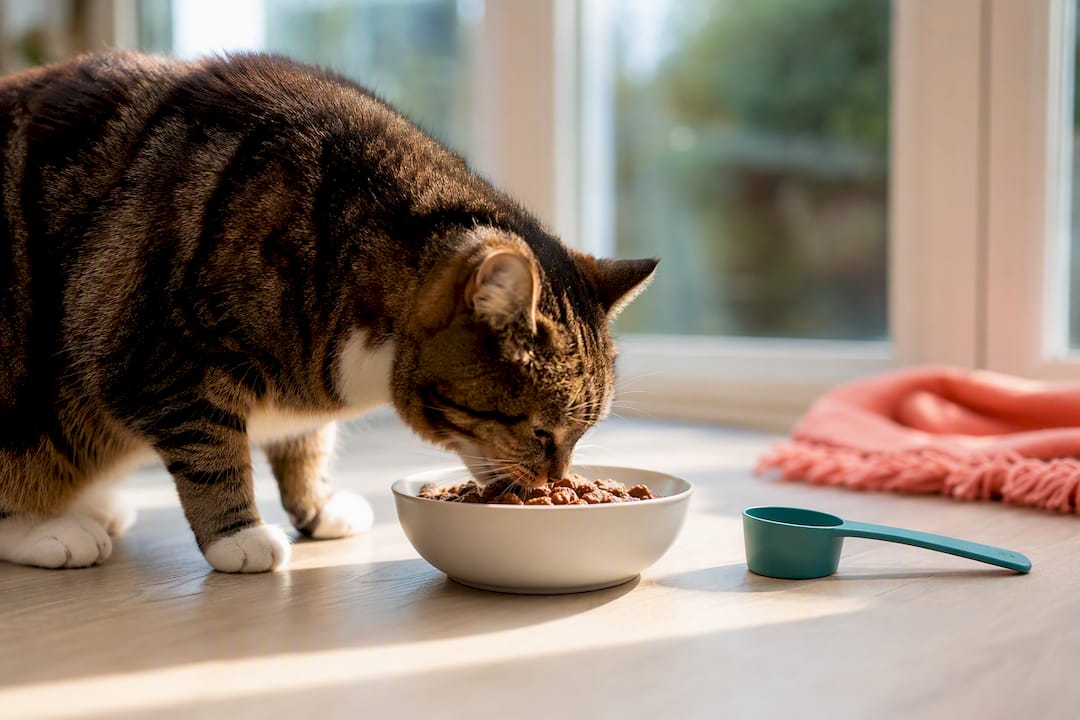
Chronic itching, sore skin and recurrent tummy troubles that never quite settle are the classic red flags of a food allergy in cats. There’s no shortcut test that confirms it. The only reliable way to know for certain is a strict 8 to 12 week elimination diet trial run with your vet. If your cat is showing these signs, book a veterinary assessment before changing anything yourself.
TL;DR:
- Most cats need a strict 8 to 12 week elimination diet trial to conclusively diagnose food allergy, as no blood test or skin test is reliable.
- The most common food allergens are beef, chicken, fish, and dairy, while novel proteins like venison or kangaroo can help manage allergies.
- Symptoms often include persistent skin itching and signs of gastrointestinal distress, with symptoms lasting year-round indicating a food-related issue.
- Proper diet transition over 7 to 10 days is crucial during the trial to avoid digestive upset that could mislead results and cause early abandonment.
- Continuous monitoring with a symptom diary and vet follow-ups are essential to confirm if allergy symptoms resolve and to identify potential recurrences.
Table of Contents
- What is a cat food allergy, and how is it different from food intolerance?
- Symptoms of cat food allergies: skin and gastrointestinal signs
- Common food allergens and other causes of reactions in cats
- How vets diagnose a food allergy: the elimination diet trial explained
- Treating and managing a cat food allergy long-term
- When to see your vet about suspected food allergies
- How Giddy Pets supports owners through a food allergy trial
- Why a gradual diet transition matters, even during an elimination trial
- Monitoring your cat during and after the elimination trial
- Do supplements or other therapies help alongside diet changes?
- Running an elimination trial: what to actually expect
- Everyday products that make an elimination trial easier to stick to
- Sources
- FAQ
What is a cat food allergy, and how is it different from food intolerance?
A true food allergy is your cat’s immune system overreacting to a specific protein, treating something harmless, usually a meat or dairy protein, as a threat. It normally takes repeated exposure before the immune system reacts this way, which is why allergies often appear in cats who’ve eaten the same diet for months or years, not just after a new food.
Food intolerance is a different problem entirely. It’s a digestive issue, not an immune one, and it can show up the very first time a cat eats something that disagrees with them, much like lactose intolerance. Because both conditions can cause itching or an upset stomach, history matters more than symptoms alone when working out which one you’re dealing with.
Look out for these distinguishing clues:
- Onset: Allergy usually follows long-term exposure; intolerance can strike on the first try of a new food.
- Symptom pattern: Allergy often centres on the skin; intolerance leans towards digestive upset.
- Response to diet change: Intolerance symptoms may ease within days; allergy needs weeks of strict elimination to confirm.
Symptoms of cat food allergies: skin and gastrointestinal signs
Skin problems are the headline symptom, and they’re relentless rather than seasonal. Watch for itching around the face, ears, paws and belly, along with hair loss, scabs, or skin that looks angry and inflamed from constant scratching. Left unchecked, that broken skin invites secondary bacterial or yeast infections, which is often what finally prompts a vet visit.
Gastrointestinal signs travel with the skin symptoms in a meaningful number of cases. According to Cornell Feline Health Center, food allergy is the third most common feline allergy overall, and roughly a third of affected cats show gastrointestinal signs alongside their skin problems. That means most cases present as skin issues alone, but a vomiting or loose-stool cat with itchy skin is a strong combination pointing towards diet.
Key things to track:
- Itching that doesn’t let up, regardless of season or flea treatment status.
- Recurrent vomiting or diarrhoea, especially alongside skin symptoms.
- Scooting, appetite changes, or gradual weight loss.
- Red flags needing prompt care: severe or bloody vomiting, signs of dehydration (sunken eyes, dry gums, lethargy), or skin that’s clearly infected with pus or a strong odour.
A pattern that’s constant year-round, rather than flaring with pollen season or a flea infestation, is one of the strongest clues you’re looking at a food-related problem.
Common food allergens and other causes of reactions in cats
Proteins are the usual suspects, not grains or fillers, despite what a lot of pet food marketing implies. VCA Animal Hospitals names beef, chicken, fish and dairy as the most commonly implicated ingredients, largely because they’re the proteins that turn up most often in commercial cat food, giving the immune system more opportunities to react.
That’s also why “novel protein” diets work as a diagnostic and management tool. A novel protein like venison, duck, or kangaroo is one your cat’s immune system has never encountered, so it can’t have built up a reaction to it. Other causes worth ruling out before assuming allergy include:
- Lactose intolerance, a digestive rather than immune issue, common in cats given milk or cream.
- Spoiled food or contaminants, which cause acute reactions rather than the chronic pattern typical of allergy.
- Concurrent conditions like flea allergy dermatitis or environmental allergies (atopy), which can mimic or overlap with food allergy symptoms and complicate the picture. If fleas are part of your cat’s history, our guide on managing flea allergy flares is worth reading alongside this one.
How vets diagnose a food allergy: the elimination diet trial explained
There’s no blood test or skin prick that reliably diagnoses a food allergy in cats. PetMD confirms that the only definitive method is a strict elimination diet trial lasting 8 to 12 weeks, during which your cat eats nothing but the prescribed diet. No treats, no table scraps, no flavoured medication, nothing else.
Vets choose between two main approaches. A novel-protein diet uses an ingredient your cat has never eaten before. A hydrolysed diet breaks proteins down into fragments too small for the immune system to recognise as allergens. Both work, but palatability and owner compliance are the most common stumbling blocks, since some hydrolysed diets are less appealing to fussy cats.
Running a compliant trial in practice:
- Get a prescription diet from your vet rather than guessing at a shop-bought “limited ingredient” option.
- Remove all other food, treats and flavoured supplements from the household for the full 8 to 12 weeks.
- Feed only the trial diet, weighed out, with no exceptions from any family member.
- Keep a daily symptom diary, noting itching, stool quality and appetite.
- Once symptoms resolve, your vet may recommend a “challenge” of reintroducing the old diet to confirm the allergy before settling on long-term management.
Pro Tip: Even a lick off someone’s plate can introduce trace amounts of the trigger protein and reset the clock on your trial. Tell everyone in the house, guests included, that the cat is on a strict diet and nothing else goes in that bowl.
Treating and managing a cat food allergy long-term
Once you’ve identified the trigger, the treatment is refreshingly simple in principle: avoid it. Many cats do well for the rest of their lives on the diet used in the elimination trial, or a similar maintenance version your vet suggests once the culprit ingredient is confirmed.
Flare-ups and secondary problems sometimes need medical support alongside diet. Vets may prescribe a short course of steroids to calm severe itching or antibiotics if skin infections have taken hold, but these are supporting measures, not substitutes for identifying and removing the trigger food, and should only be used under veterinary supervision.
Day-to-day habits matter as much as the diet itself:
- Read every label. Manufacturers change recipes without much fanfare, and “chicken flavour” can mean chicken derivatives you’re trying to avoid.
- Keep separate feeding stations if you have multiple pets, so nobody’s food gets mixed up or stolen.
- Choose treats made from the same safe protein, or skip treats entirely during a trial.
- Wash bowls thoroughly between uses, especially if the same bowl was ever used for a different food.
Pro Tip: A whisker-friendly, clearly labelled bowl kept separate from any other pet’s dish removes a surprising amount of daily guesswork, and it means nobody in the house accidentally grabs the wrong bowl at feeding time.
Some cats have concurrent allergic conditions such as environmental allergies or flea sensitivity, and diet changes alone won’t fully resolve symptoms in those cases. If itching continues despite a compliant trial, a broader allergy management plan may be needed alongside the dietary work.
When to see your vet about suspected food allergies
Some symptoms warrant a same-day appointment rather than waiting to see if things settle. Severe or repeated vomiting, signs of dehydration, or skin that’s visibly infected all need prompt veterinary attention rather than a wait-and-watch approach.
For non-urgent cases, your vet’s typical workflow starts with a detailed diet history and physical exam, then rules out other causes like fleas or intestinal parasites before recommending an elimination trial. Expect a follow-up appointment around the 4 to 6 week mark to check progress, with the full trial running its course before any food challenge is attempted.
- Same-day care needed: persistent vomiting, dehydration, visibly infected or bleeding skin.
- Routine vet visit: chronic itching, intermittent digestive upset, or unexplained weight change.
- During a trial: scheduled check-ins to monitor progress and adjust the plan if needed.
How Giddy Pets supports owners through a food allergy trial
Vet-approved guides cover the practical side of allergy management, from foods that are never safe to give a cat to therapeutic diet basics. Curated categories help you source separate feeding equipment and skin-supportive grooming tools while your vet leads the actual diagnosis and treatment plan.
Why a gradual diet transition matters, even during an elimination trial
Switching your cat’s food suddenly, even to the “right” hypoallergenic diet, often causes its own digestive upset that can muddy your trial results. A cat’s gut needs time to adjust to a new protein source and different fibre content, and an abrupt switch can trigger vomiting or diarrhoea that has nothing to do with an allergy at all.
The standard approach is a transition over 7 to 10 days, mixing increasing proportions of the new diet with decreasing amounts of the old one. Start with roughly a quarter new food to three-quarters old, then move to half and half, then three-quarters new, before finishing on the new diet alone. This matters enormously during an elimination trial specifically, because any digestive upset in the first few days can be mistaken for the diet not agreeing with your cat, when really it’s just the transition itself.

If your vet has prescribed a hydrolysed diet and your cat is reluctant to eat it, a gradual transition also gives their palate time to adjust rather than facing an abrupt, unappetising switch that risks them refusing food altogether. Cats are notoriously prone to associating a bowl with a bad experience, so a food refused too fast can become a food refused forever, complicating your trial before it’s even started properly.
Skipping this step is one of the most common reasons trials get abandoned early. An owner sees loose stools on day two, assumes the new diet is the problem, and switches back, never getting the 8 to 12 weeks needed to see whether the underlying allergy actually resolves.
Monitoring your cat during and after the elimination trial
A symptom diary is your most useful tool throughout the trial. Note daily observations on itching severity, stool consistency, vomiting episodes, appetite and general energy levels, since patterns that are easy to miss day to day become obvious once you look back over several weeks.
Most vets schedule a check-in around the halfway point, roughly 4 to 6 weeks in, to assess whether symptoms are improving, unchanged, or worsening. This isn’t just a formality. It’s the point where your vet decides whether to continue the current diet, investigate other causes, or extend the trial if progress is slow but still trending the right way.
Once the full 8 to 12 weeks are up and symptoms have resolved, the next step is often a food challenge, deliberately reintroducing the old diet to confirm that symptoms return. This sounds counterproductive, but it’s the step that turns “symptoms improved” into an actual diagnosis, ruling out coincidence or a separate condition resolving on its own.
After a confirmed diagnosis, ongoing monitoring shifts to a lower-key routine: periodic vet check-ups, watching for any return of symptoms if a treat or food brand changes, and staying alert to new signs that might suggest an additional or evolving sensitivity. Cats can develop new allergies over time, so a cat successfully managed on one diet for years isn’t necessarily protected against ever reacting to something new.
Owners often ask whether cats can outgrow food allergies entirely. It’s uncommon rather than impossible, and most cats need lifelong avoidance of the trigger ingredient rather than an eventual return to their old diet.
Do supplements or other therapies help alongside diet changes?
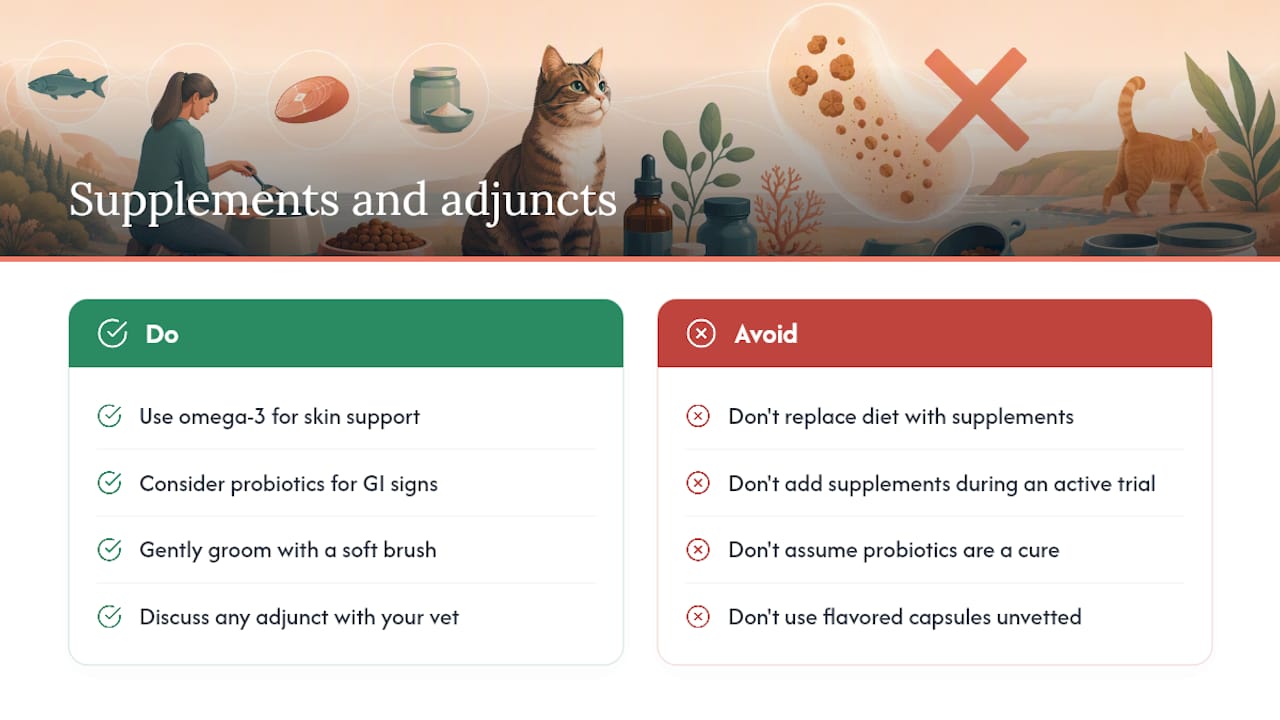
Diet is the foundation of managing a food allergy, but some supportive measures can help with comfort while the underlying trigger is being identified or avoided. Omega-3 fatty acid supplements are commonly recommended by vets to support skin barrier health and reduce inflammation, though they work alongside dietary management rather than replacing it.
Probiotics sometimes feature in management plans too, particularly when gastrointestinal signs are prominent, on the theory that supporting gut flora may ease digestive symptoms during the transition to a new diet. The evidence for probiotics in feline food allergy specifically is limited, so treat this as a supportive measure to discuss with your vet rather than a guaranteed fix.
For skin irritation and hair loss caused by scratching, gentle grooming can help remove loose fur and reduce the buildup of allergens or bacteria on the coat without irritating already sore skin further. A soft grooming brush used regularly is a small but genuinely useful addition to a management routine, especially for cats with facial or paw itching who groom themselves raw.
Whatever supplement or adjunct approach you’re considering, run it past your vet before adding it during an active elimination trial. Even seemingly harmless supplements can contain flavourings or protein sources that undermine the strict exclusion your trial depends on, and something as small as a fish-oil capsule with an undisclosed flavouring could reintroduce the very protein you’re trying to rule out.
Running an elimination trial: what to actually expect
Patience is the hardest part, honestly. Most owners see the first signs of improvement somewhere between week 3 and week 6, but the full picture doesn’t emerge until the trial’s complete. Sticking rigidly to the diet, involving the whole household, and keeping that symptom diary going even when nothing seems to be changing are what separate a trial that gives you a real answer from one that gets abandoned halfway through. If progress stalls, that’s a conversation for your vet, not a reason to start experimenting on your own.
— Giddy
Everyday products that make an elimination trial easier to stick to
Running a strict elimination trial is as much a household logistics challenge as a medical one, and the right equipment removes a lot of the daily friction. A slow feeder keeps mealtimes controlled and prevents a food-motivated cat from bolting down more than their measured portion, which matters when every gram of the trial diet needs to be accounted for. Separate, clearly designated whisker-friendly bowls stop cross-contamination in multi-pet households, one of the quiet trial-wreckers nobody warns you about until it’s happened.
For skin comfort while you wait out the trial, a soft grooming brush helps manage hair loss and irritation without adding stress to already sore skin. If your cat’s allergy sits alongside environmental sensitivities, it’s also worth looking at litter and household hygiene through a brand like Litter Room, since minimising other irritants in the home supports the same goal.
Before buying any prescription hydrolysed or novel-protein diet, always check with your vet first. These are formulated for specific medical purposes and work best when they’re part of a plan your vet is actively supervising. Browse the full Giddy Pets range for feeding and grooming supplies that support the trial once your vet has confirmed the diet itself.
Sources
This article draws on veterinary and academic resources including Cornell Feline Health Center, PetMD, VCA Animal Hospitals, and a peer-reviewed elimination-diet study on PMC. Bring these links to your vet appointment if you’d like to discuss the elimination trial process together.
- Adverse reactions to food in cats (VCA Animal Hospitals)
- Food Allergy in the Cat: A Diagnosis by Elimination (PMC)
FAQ
What’s the most common food allergen for cats?
Beef, chicken, fish and dairy are the most commonly implicated proteins, largely because they appear so often in commercial cat food.
How do I know if my cat is allergic to their food?
Chronic itching (especially face, ears, paws and belly), skin infections, and sometimes vomiting or diarrhoea are the main signs, but a confirmed diagnosis requires an 8 to 12 week elimination diet trial rather than symptoms alone.
How can I treat my cat’s food allergy?
Long-term avoidance of the trigger ingredient through a novel-protein or hydrolysed maintenance diet is standard, with short-term veterinary treatments like steroids or antibiotics used only for flare-ups or secondary infections.
What are the signs of an allergic reaction in cats?
Persistent itching, hair loss, scabs and skin infections are the leading signs, and roughly a portion of affected cats also show vomiting or diarrhoea alongside the skin symptoms.
Can cats outgrow food allergies?
It’s uncommon. Most cats need lifelong avoidance of the identified trigger rather than an eventual tolerance developing on its own.