






Dog treats for weight loss
Treats do not have to disappear entirely when a dog is losing weight — the key is choosing genuinely low-calorie options and counting them as part of the day's total food, rather than as extras on top of a carefully measured meal. A treat with a clear calorie count per piece makes that far easier to manage than one with no information at all.
What "low-calorie" actually means on a label
Look for the calorie content per treat or per gram on the packaging rather than trusting a front-of-pack claim like "light" or "healthy" on its own — those terms are not strictly regulated and vary a lot between brands. A single-ingredient treat, such as plain dried meat or vegetable, is often lower in calories than a baked biscuit-style treat with added fillers.
Freeze-dried and air-dried treats can be surprisingly calorie-dense for their size because the moisture has been removed, so check the actual figure rather than assuming a small treat is automatically a low-calorie one.
You'll find our dog treats in the shop.
Making treats work within a weight-loss plan
Whatever your dog's daily calorie allowance is, treats should come out of that total rather than being added on top of it — if your vet or the food packaging has set a daily amount, reduce the meal portion slightly to account for any treats given that day. Breaking a treat into smaller pieces stretches it further and can make training sessions or a daily treat feel more generous without adding extra calories.
Vegetables like small pieces of carrot or cucumber are a genuinely low-calorie option many dogs enjoy, and can be used to bulk out treat time without the calorie cost of a commercial treat.
Beyond the treat itself
A slow feeder or puzzle feeder can make a small number of treats last longer during a training session or as enrichment, which helps if part of the goal is reducing how much food a dog gets through in a sitting rather than just the calorie count of each treat.
Splitting a dog's daily food allowance to include some as hand-fed training rewards through the day, rather than treating separately on top of full meals, is another way to keep total calories on track without cutting out reward-based training altogether. Weighing out the day's allowance in the morning and drawing both meals and training rewards from that single amount removes the guesswork entirely.
What we stock
Everything below is in stock with us, priced with delivery worked out, and packed and posted by hand in the UK.
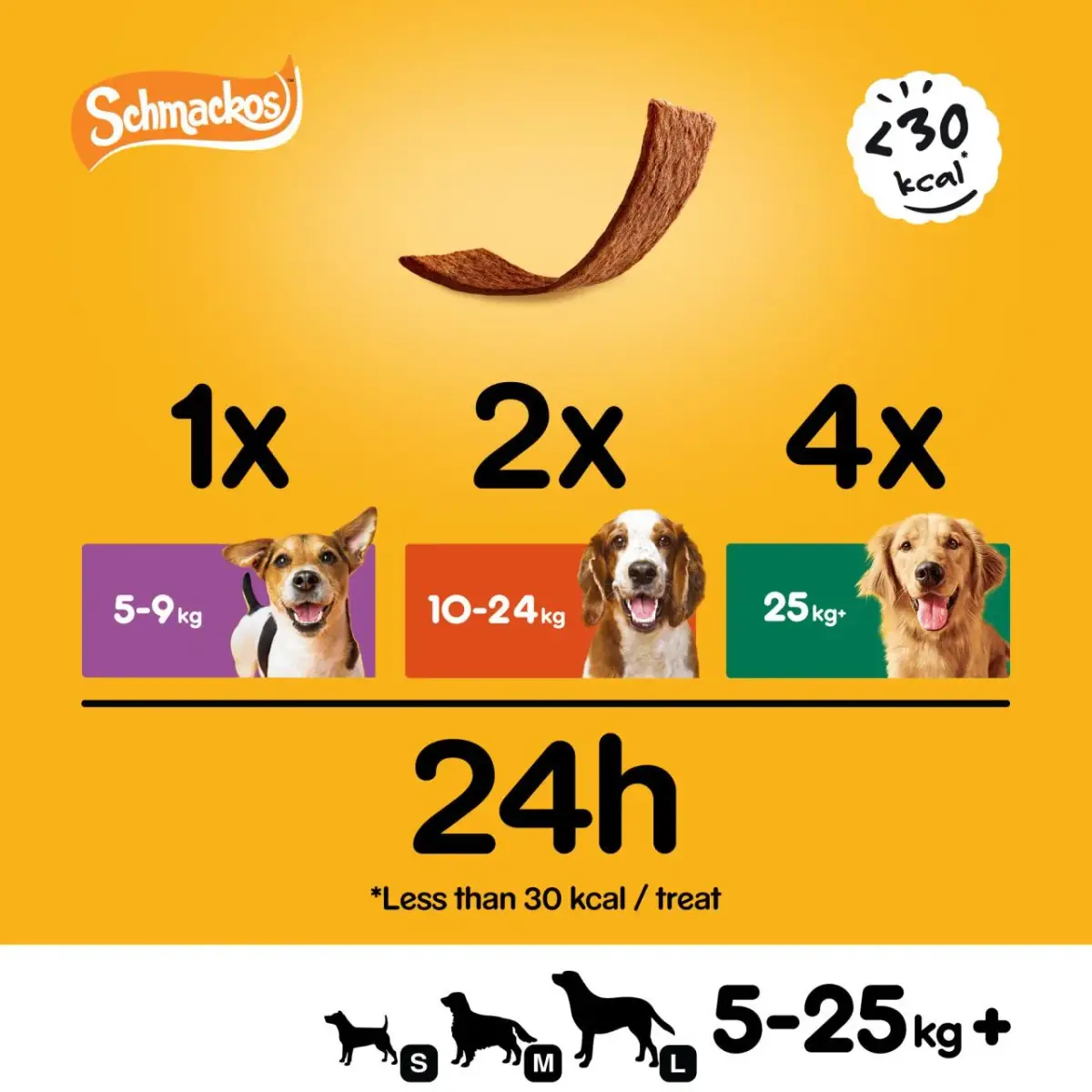
Pedigree Schmackos Dog Treats Meat Variety
Meat-variety dog treat sticks, 20 per pack, under 30 kcal each, banded by dog weight
£2.75
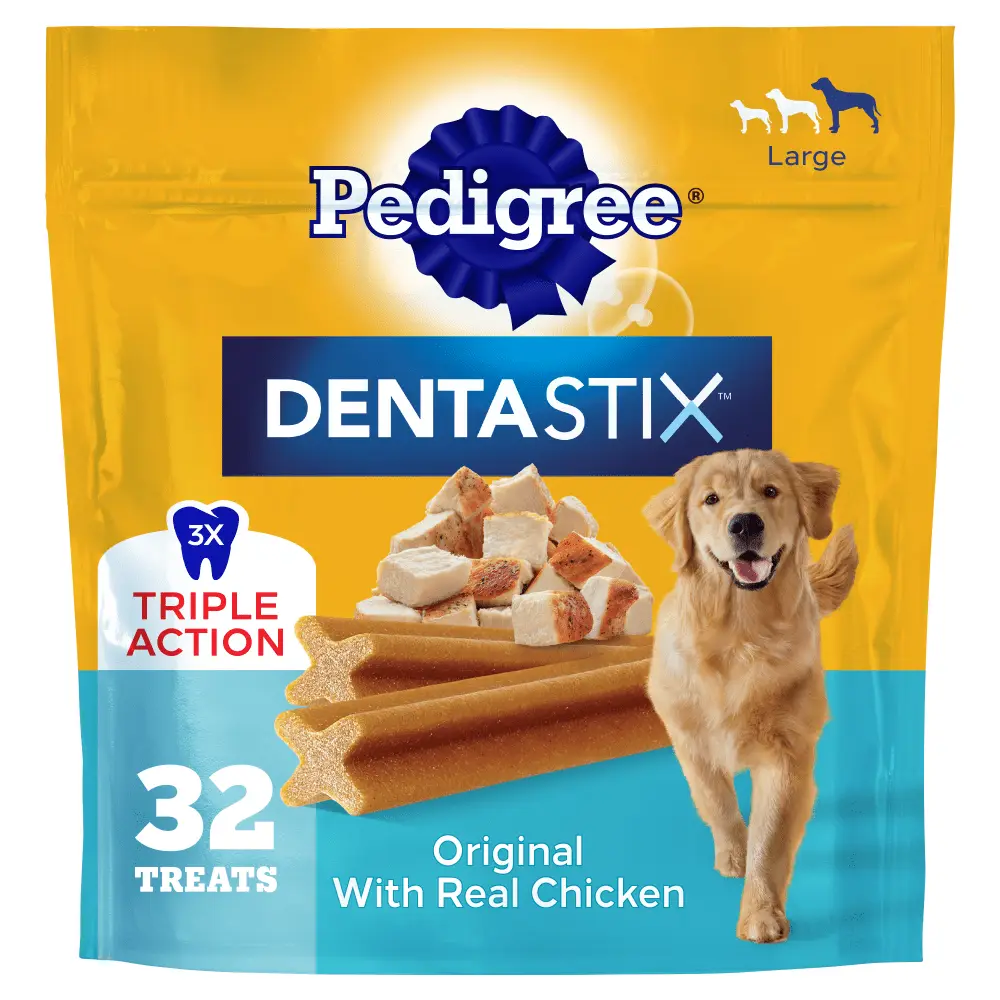
Pedigree DentaStix Daily Large Dog Dental Treats
Daily Pedigree DentaStix dental chews portioned for large dogs
£2.29
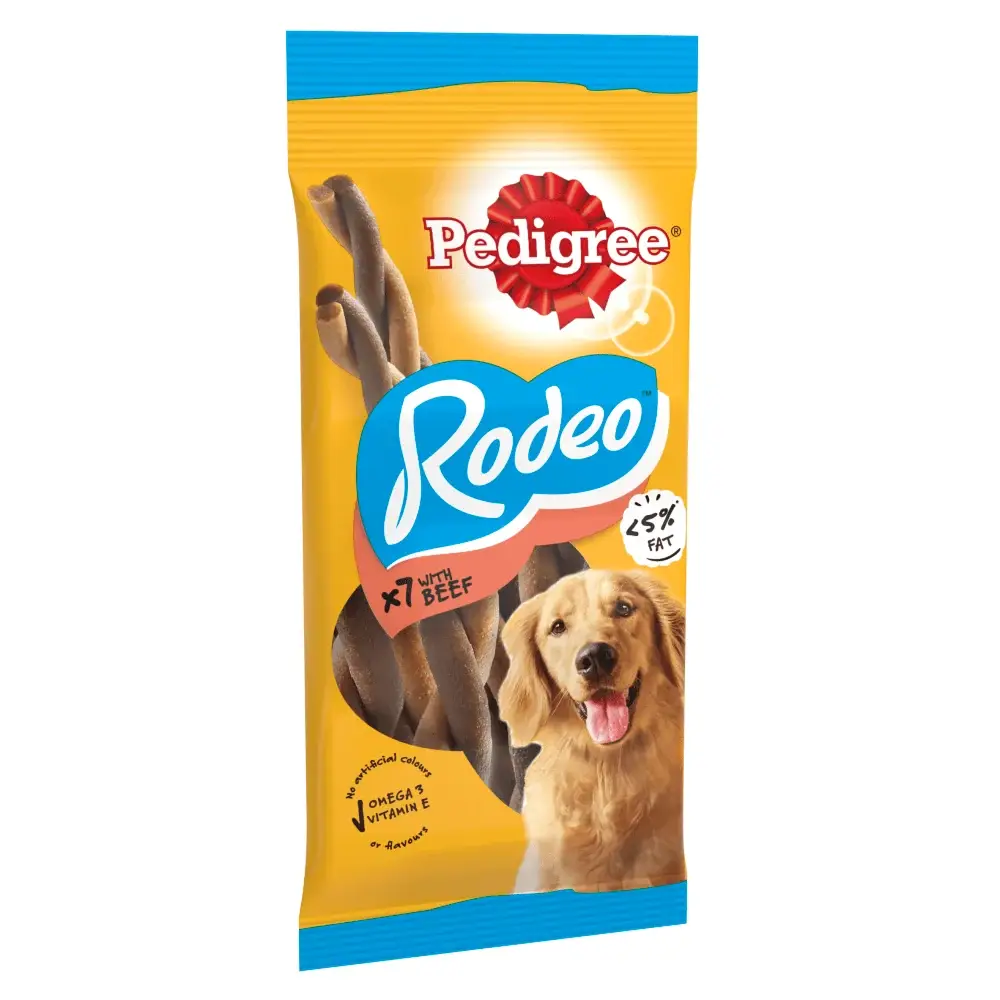
Pedigree Rodeo Dog Treats with Chicken
Pedigree Rodeo chicken twists with weekly limits for dogs over the stated weight
£2.75
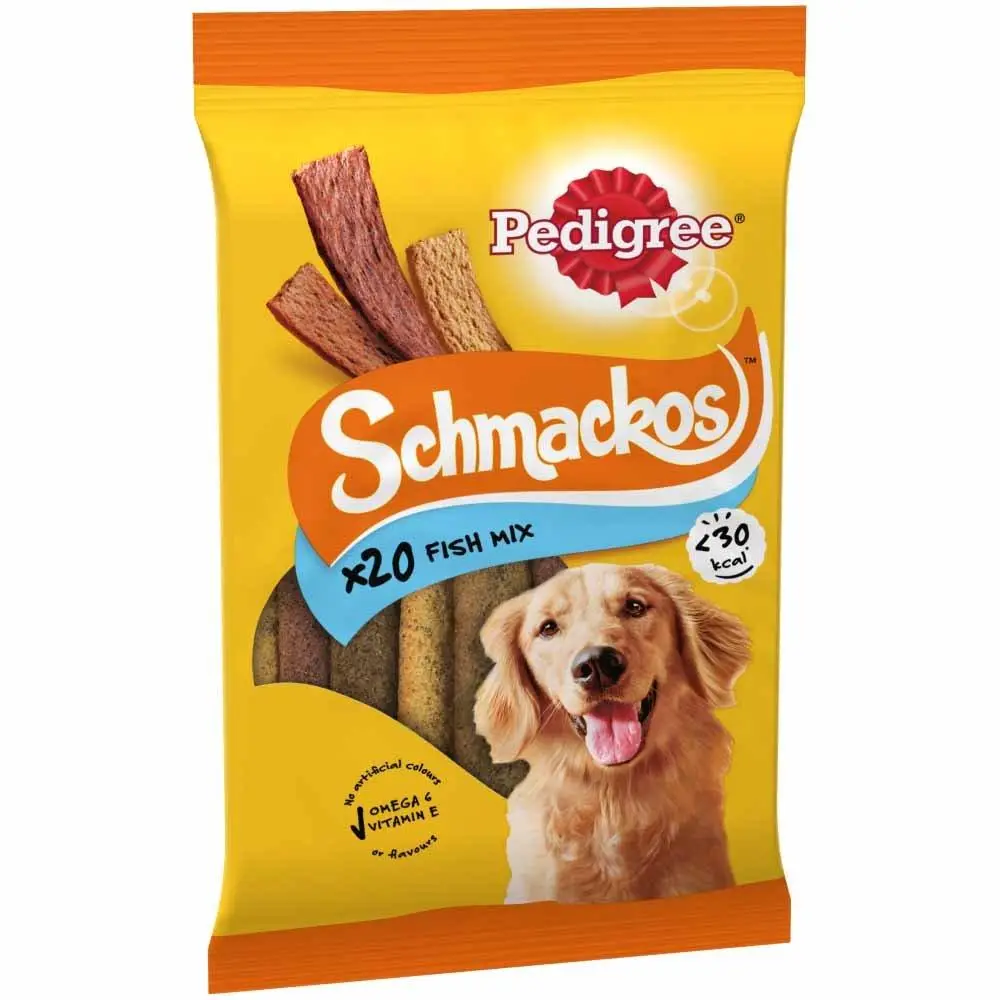
Pedigree Schmackos Dog Treats with Fish
Pedigree Schmackos fish-flavour strips with daily dog-size allowances
£2.75
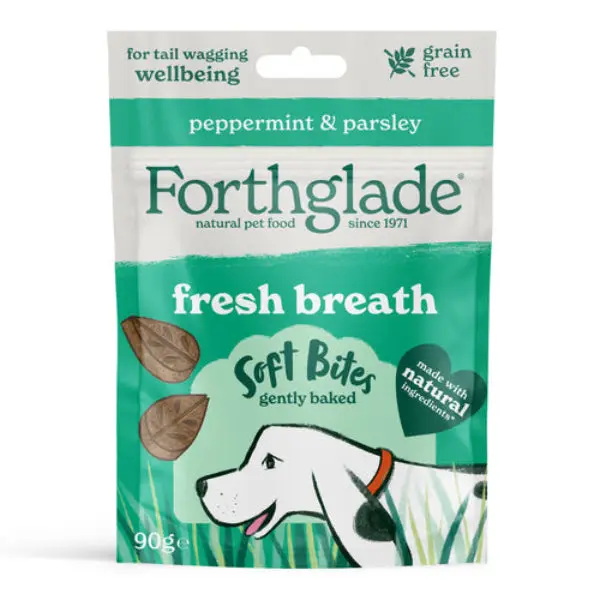
Forthglade Grain Free Soft Bites Fresh Breath Treats 90g
Chicken soft dog treats with parsley and peppermint oil for fresh breath
£2.45
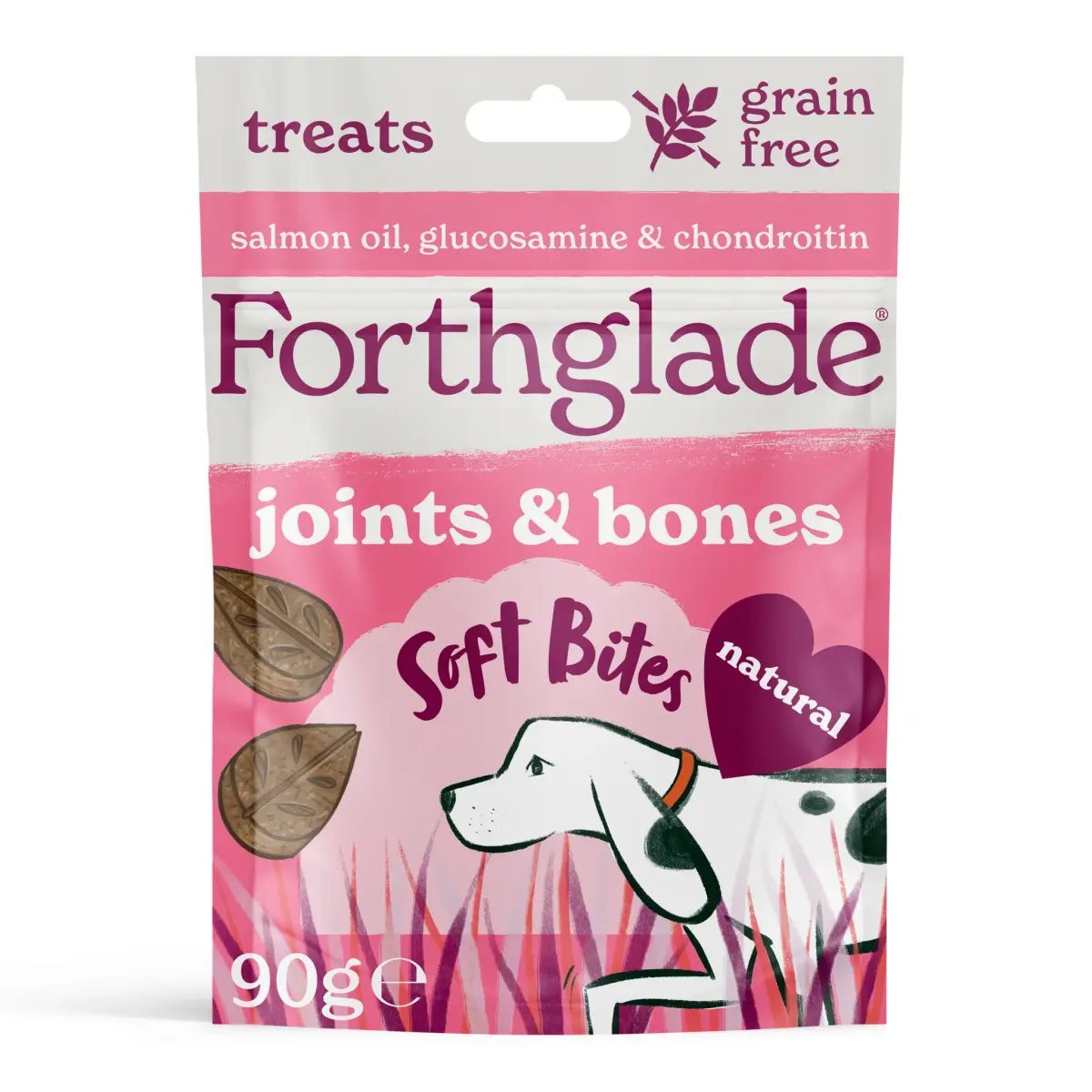
Forthglade Soft Bite Grain Free Joints & Bones Treats
Grain-free salmon dog treats with salmon oil, glucosamine and chondroitin
£2.45
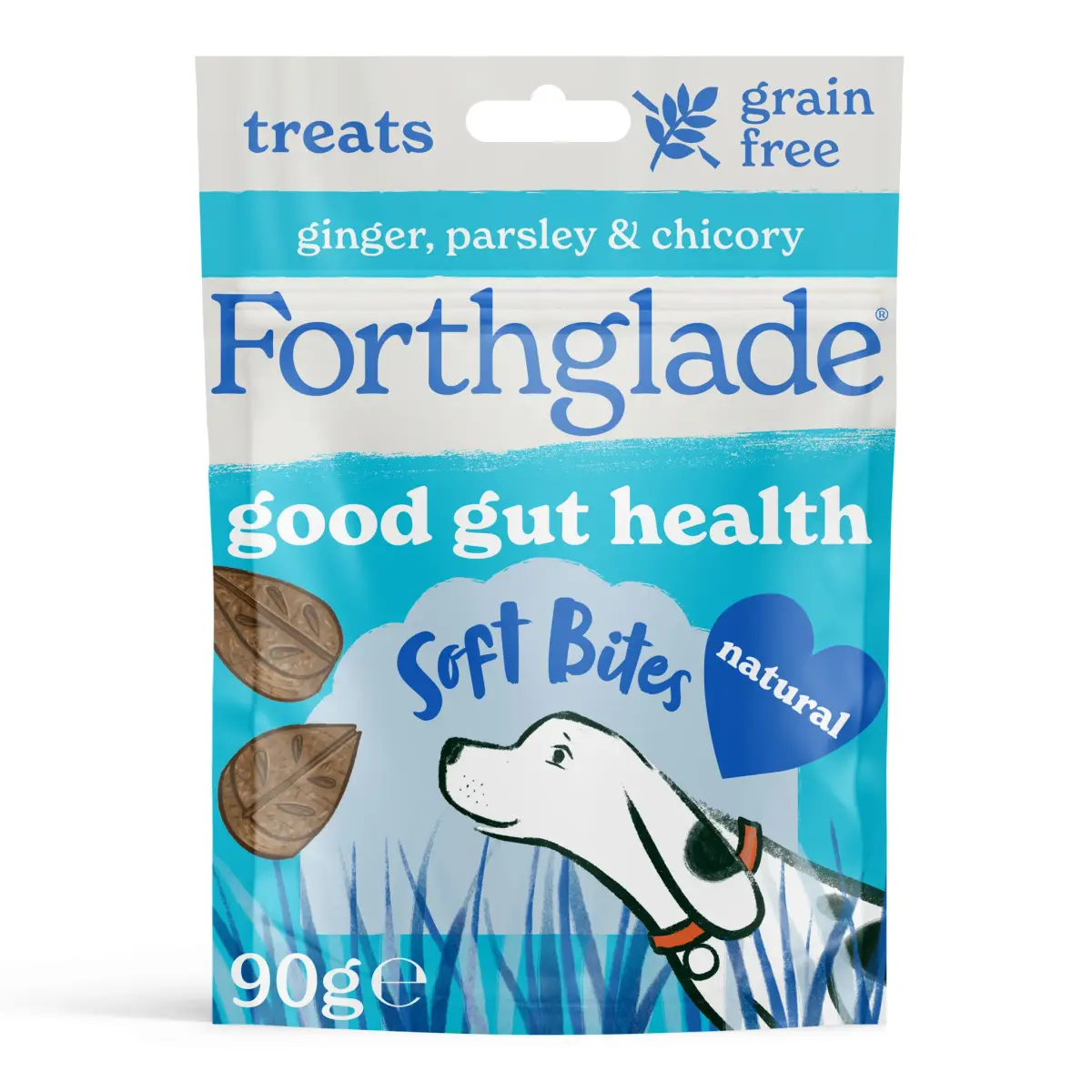
Forthglade Soft Bite Grain Free Good Gut Health Treats
Grain-free chicken dog treats with ginger, chicory root and MOS
£2.45
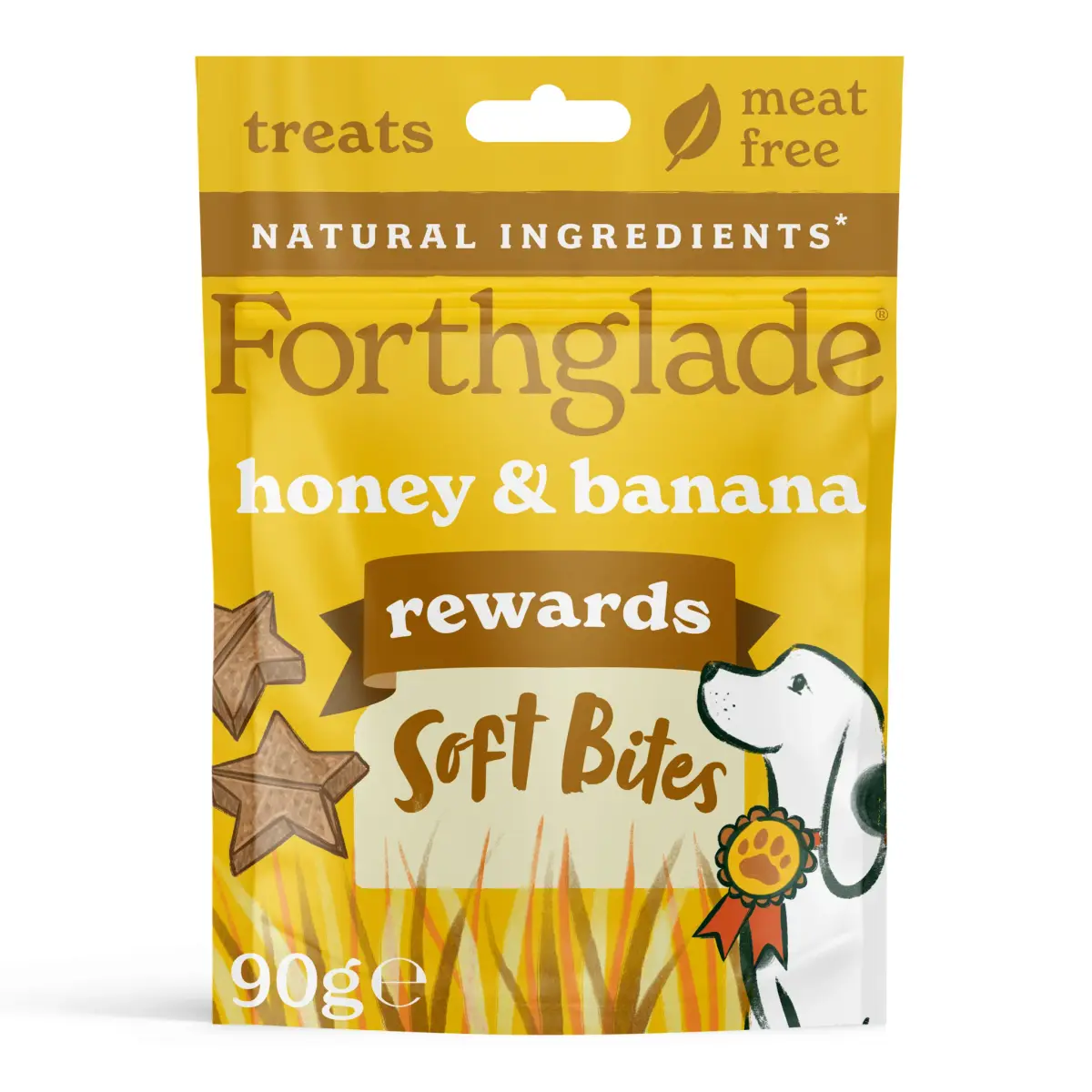
Forthglade Functional Soft Bite Treats - Plant Based Banana & Honey
Plant-based banana and honey soft dog treats for training rewards
£2.45

Chicken-Wrapped Milk Stick Dog Treats
Chewy dog treats of soft milk sticks wrapped in real chicken or duck for tasty, protein-rich rewarding.
From£12.99
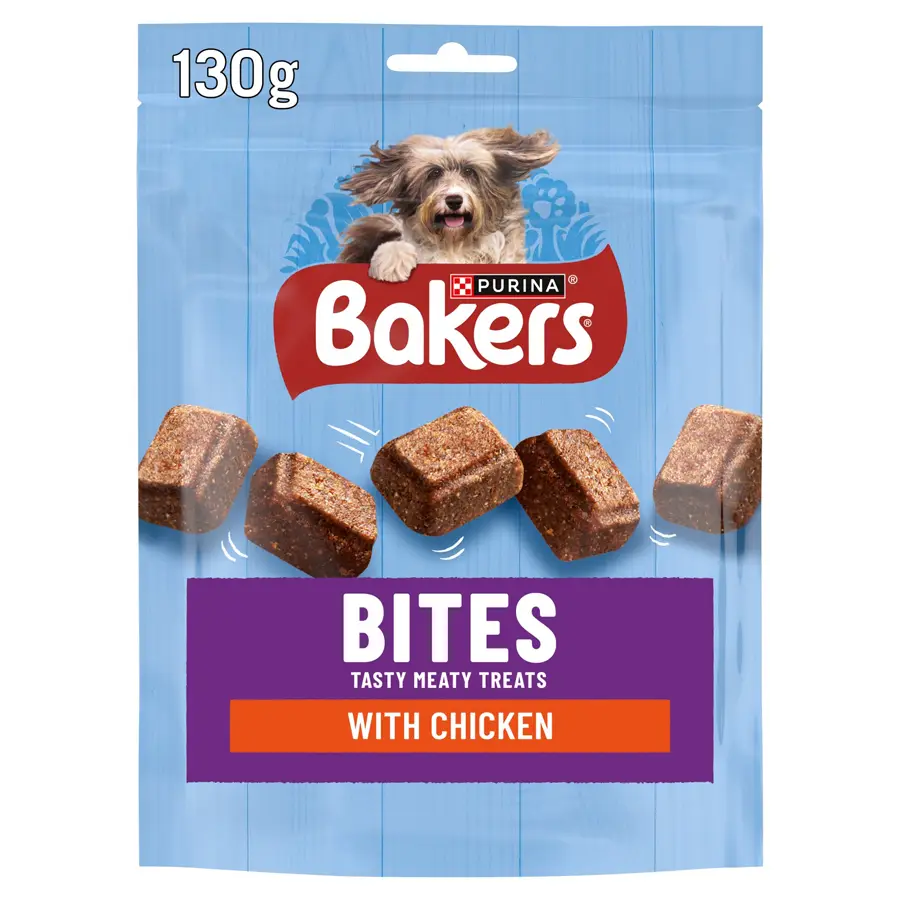
Bakers Bites Chicken Dog Treats
130G BAKERS Bites Chicken Dog Treats: complementary dog food or treat with composition and analysis made clear
£1.99
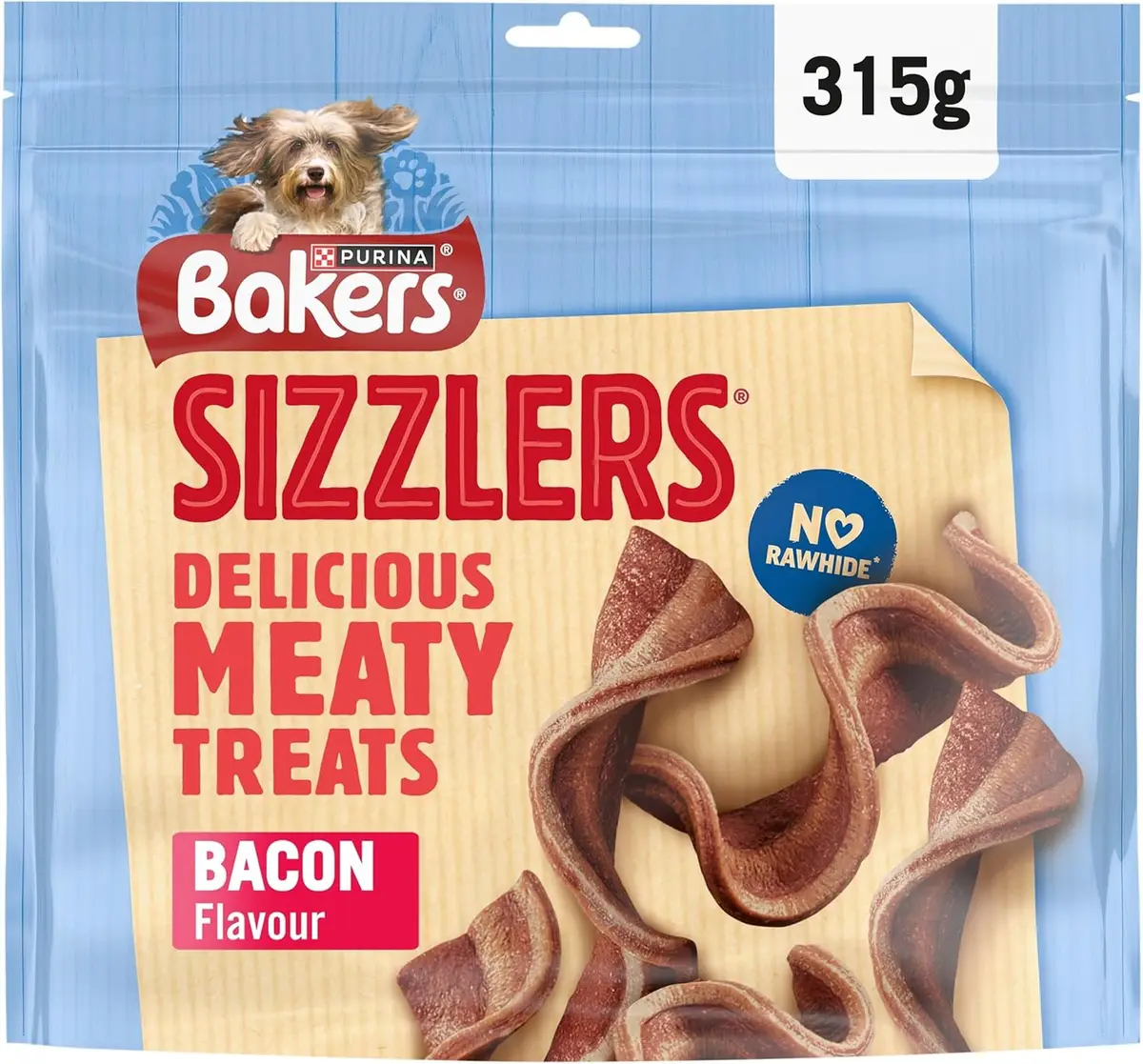
Bakers Sizzlers Bacon Dog Treats
315G BAKERS Sizzlers Bacon Dog Treats: complementary dog food or treat with composition and analysis made clear
£4.00
Advent & Treats Set
A dog advent calendar, Christmas chicken twisters and a highland cow plush to open on the day.
£14.49
Common questions
- How many treats can a dog have while losing weight?
- There is no single number — it depends on your dog's daily calorie allowance and the calorie content of the specific treat. A rough rule some vets suggest is keeping treats to no more than about ten percent of daily calories, with the main meal adjusted to account for them.
- Are vegetable treats better than commercial treats for weight loss?
- Plain, unseasoned vegetables like carrot or cucumber are generally lower in calories than most commercial treats, which makes them a reasonable option to bulk out treat time, though they should not replace a dog's proper balanced diet.
- Should I stop treats entirely while my dog loses weight?
- Not necessarily — it is more about choosing lower-calorie options and counting them properly rather than cutting them out altogether, especially if treats are used for training. Speak to your vet if you are following a specific weight-loss plan for guidance on where treats fit in.
- Do freeze-dried treats have fewer calories than regular treats?
- Not automatically — removing moisture concentrates the remaining nutrients, including calories, so a freeze-dried treat can be more calorie-dense per piece than it looks. Always check the calorie information on the pack rather than assuming based on size.
Related
Written by Matt Garnett, who runs Giddy Pets and is a lifelong pet owner — not a vet. This is general information, not veterinary advice, and it cannot replace an examination by the vet who knows your animal. How we write these guides.