


A clear worming schedule for dogs, from puppy to adult

A clear worming schedule for dogs, from puppy to adult
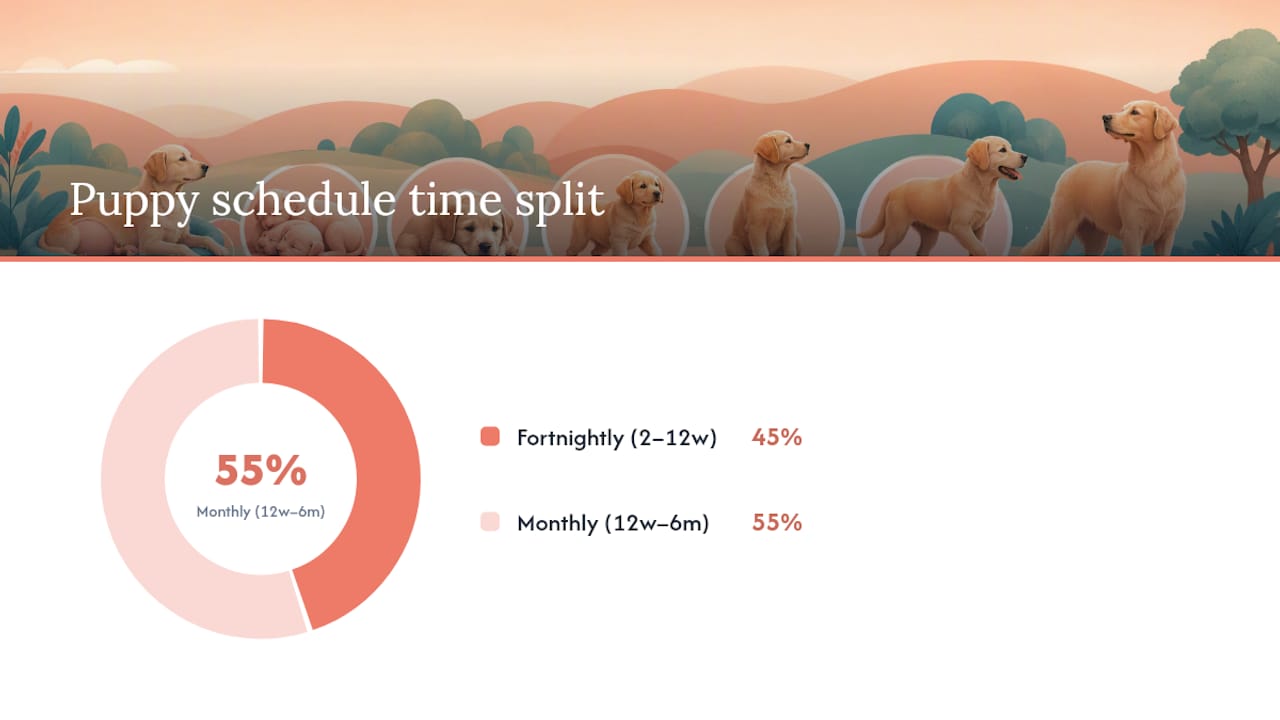
Start puppies on a wormer at two weeks old, repeat every two weeks until they reach about 8 to 12 weeks of age, then move to monthly treatments until they turn about six months. After that, adult dogs need worming at least every few months, with monthly treatment for anyone at higher risk (raw feeders, hunters, dog park regulars). If you only remember one thing today, remember this:
- Puppies: every 2 weeks from age 2 weeks to 12 weeks, then monthly to 6 months
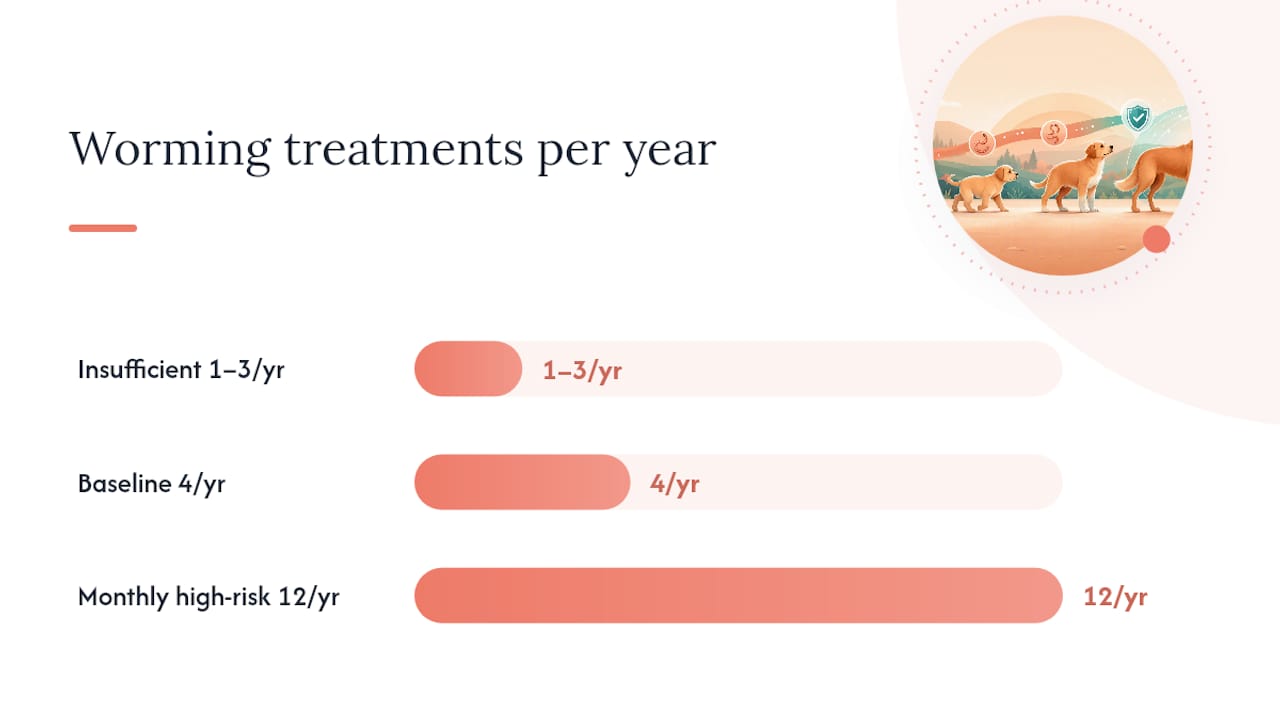
- Adult dogs: minimum every 3 months (4 times a year) as a baseline
- Higher-risk dogs: monthly, based on diet, environment and household
Before you dose anything, weigh your dog, check the product’s weight bracket, and write the date down. If you’re unsure which category your dog falls into, your vet can settle it in five minutes.
Key Takeaways
A safe worming schedule for dogs means fortnightly puppy doses to 12 weeks, monthly to six months, then a minimum of four treatments yearly for adults, rising to monthly for higher-risk lifestyles.
| Point | Details |
|---|---|
| Puppy timetable | Worm every 2 weeks from age 2 weeks until 8 to 12 weeks, then monthly to 6 months. |
| Adult baseline | Treat at least every 3 months; move to monthly for higher-risk dogs. |
| Tapeworm coverage | Confirm your product contains praziquantel; not all broad-spectrum wormers treat tapeworms. |
| Repeat dosing | For confirmed infestations, give a second dose 14 days after the first. |
| Support your routine | Giddy pets stocks hygiene and puppy essentials to complement a vet-approved worming schedule. |
Table of Contents
- Puppy worming schedule: the age-by-age timetable
- How often should you worm an adult dog?
- What lifestyle factors mean your dog needs worming more often?
- Not all wormers treat the same worms
- When should you contact your vet about worming?
- Everyday supplies that support a solid worming routine
- Frequently asked questions
- Sources
Puppy worming schedule: the age-by-age timetable
The reasoning behind starting so early is straightforward: puppies can pick up roundworms from their mother before birth or through her milk, and left untreated, those worms shed eggs that put the whole household at risk. Toxocariasis is a recognised zoonosis, meaning it can pass from dogs to people, which is exactly why the puppy timetable starts so young and repeats so often.
The standard puppy worming schedule looks like this:
- 2 weeks: first dose (liquid or paste formulation, as tablets are often too large)
- 4 weeks: second dose
- 6 weeks: third dose
- 8 weeks: fourth dose, often timed near the first vaccination visit
- 10 and 12 weeks: continue fortnightly if your vet advises it, tapering to monthly from 12 weeks
- Monthly from 12 weeks to 6 months
This fortnightly cadence up to 8 to 12 weeks, then monthly until six months, reflects how quickly roundworm larvae mature in young pups. Weigh your puppy before every single dose. Puppies gain weight fast in the early months, and a dose sized for a 1.5kg pup given six weeks later to a 4kg pup won’t do its job properly. Choose a liquid or paste wormer for very small or young pups, since many tablets have a minimum weight cut-off.
Keep a simple written or digital log of the date, product name, dose given and your puppy’s weight at the time. It sounds fussy, but it saves you from doubling up or missing a gap, and it’s genuinely useful if you switch vets or need to show a boarding kennel your dog’s history. Where practical, line up worming doses with your puppy vaccination schedule visits, since you’re already handling the puppy and weighing them anyway.
If the mother is still nursing, she should usually be treated alongside the litter, as she can pass parasites to her puppies through her milk during lactation. Ask your vet to coordinate her dose with the litter’s timetable.
Pro Tip: Many wormer labels state a minimum age or weight (often 2 weeks and a set minimum body weight). If your puppy is smaller, sicker, or younger than the label allows, don’t guess. Delay and call your vet rather than risk an underdose or an adverse reaction.
How often should you worm an adult dog?
Once your dog passes six months, the baseline drops to a steady maintenance rhythm rather than the puppy sprint; see our guide on caring for your dog for essential ongoing care tips. For most adult dogs, the minimum recommended frequency is every three months, which works out to four treatments a year. That figure isn’t arbitrary. Studies cited by veterinary practices suggest that one to three annual treatments leave meaningful gaps in protection, particularly against roundworms that low-level shed eggs continuously in the environment.
Some dogs need more than the baseline. Consider moving to monthly treatment if your dog:
- Visits dog parks or shared exercise areas regularly
- Eats a raw diet, offal, or scavenges on walks
- Lives with or near livestock
- Shares a home with young children or anyone immunocompromised
- Lives in, or has visited, an area with known lungworm or heartworm risk
- Regularly eats slugs or snails (a direct lungworm risk)
If your dog is on a monthly spot-on or tablet for heartworm prevention, in a country or after travel where that’s relevant, many owners find it practical to align the intestinal wormer to the same monthly date rather than run two separate calendars. That said, don’t assume one product covers everything. Some heartworm-specific treatments don’t tackle tapeworms or lungworm, so check the label or ask your vet exactly what’s covered before you settle on a routine.
The most useful thing you can do here is ask your vet for a personalised plan rather than copying a generic schedule off the internet, and resist the temptation to double up products “just in case” without checking for interactions first.
What lifestyle factors mean your dog needs worming more often?
A basic checklist helps here more than a long explanation. Run through it honestly:
- Raw diet, offal, or regular scavenging
- Hunting instincts or access to rodents and rabbits
- Living in, or visiting, a known parasite hotspot
- Slug or snail ingestion (even accidental, on walks)
- Regular kennelling, boarding, or dog shows
- Young children, elderly relatives, or immunocompromised people in the house
If one or more of these apply, monthly treatment is worth discussing with your vet rather than sticking rigidly to the three-month baseline. If you’re not sure whether your situation counts as high risk, that uncertainty is itself a reason to ask.
Travel adds its own rules. If you’re taking your dog abroad, ESCCAP guidance recommends worming four weeks after arrival, then every four weeks while you’re away, and continuing for up to four weeks after you return, specifically to manage tapeworm risks picked up in higher-risk regions. Areas with high Echinococcus prevalence may call for more frequent praziquantel dosing than the standard UK schedule.
Not all wormers treat the same worms
This is where a lot of owners get caught out. A broad-spectrum wormer that handles roundworms, hookworms and whipworms won’t necessarily touch tapeworms, because tapeworms need a praziquantel-containing product specifically. If your dog eats raw meat, hunts, or has fleas (fleas carry tapeworm larvae), check the active ingredient list before assuming you’re covered. Lungworm and heartworm sit in their own category too, generally requiring dedicated monthly products or seasonal prevention where your vet identifies a real risk.
Dosing accuracy matters as much as frequency. Always weigh your dog on the day of treatment rather than estimating, since underdosing based on an old or guessed weight is one of the most common reasons a wormer appears not to work. Check the product’s stated minimum age and weight bracket every time, particularly for growing puppies.
If your vet confirms an active infestation, expect a repeat dose 14 days after the first. This second treatment kills larvae that had matured past the first dose’s reach but hadn’t yet at the time of treatment.
Pro Tip: Never mix two wormers or double a dose “to be safe” without checking with your vet first. Combining products can cause unnecessary side effects, and some broad-spectrum treatments already contain praziquantel, meaning you’d be dosing twice for the same thing.
When should you contact your vet about worming?
Watch for vomiting, collapse, unusual drooling or tremors after treatment. These are uncommon but genuine signs of an adverse reaction, and if you see them, contact your vet or an emergency vet immediately, and have the product packaging to hand so they know exactly what was given.
Always check with your vet before treating:
- Very young, small, or unwell puppies
- Pregnant or lactating bitches
- Dogs already on other medication
- Breeds with known sensitivities to specific wormer ingredients
Faecal testing has a role here too, particularly for boarding requirements or confirming a treatment worked, but it isn’t a substitute for routine dosing. Egg shedding can be intermittent, so a clear test result on one day doesn’t guarantee your dog is worm-free. Testing supplements a schedule; it rarely replaces one outright. For heartworm and some tapeworm treatments that are prescription-only, your vet is the one who builds the tailored plan, not a generic timetable.
Giddy Pets’ practical approach to parasite prevention
We recommend building a vet-aligned, risk-based schedule rather than a one-size-fits-all date, paired with good hygiene and a simple record of every dose. For anything prescription-only or a complex case, your vet has the final say.
Everyday supplies that support a solid worming routine
Following a worming schedule properly comes down to small habits done consistently: weighing accurately, dosing on time, and keeping mess to a minimum between treatments. Giddy pets stocks the everyday extras that make that easier, from grooming gloves that help you spot skin or coat changes early, to dog wipes for a quick clean-up after muddy walks where slug and snail exposure is highest.
None of what we sell replaces a prescription. Heartworm treatments, certain tapeworm products, and anything your vet has flagged as needed for your dog’s specific risk profile should always come from your vet, not off a shelf. What we can help with is everything around that routine: hygiene tools, puppy starter essentials for new owners setting up their first worming log, and grooming basics that make it easier to notice when something’s off. Browse the full shop range to put together a kit that fits your dog’s routine, and if you’re newly navigating a puppy’s first months, our puppy essentials page is a sensible place to start.
Frequently asked questions
How often should I worm my dog? Adult dogs need worming at least every three months as a baseline, rising to monthly if they’re higher risk. Puppies follow a fortnightly schedule until 12 weeks, then monthly until six months old.
What is the best dog wormer for tapeworms? Look for a product that explicitly lists praziquantel as an active ingredient, since many general roundworm treatments don’t cover tapeworms at all.
Do I need to worm my puppy before their first vaccination? Yes. Puppies typically start worming at two weeks, well before their first vaccination appointment around eight weeks, because roundworm infection can begin before or shortly after birth.
Can I use a faecal test instead of routine worming? Not reliably. Faecal testing can miss infections due to intermittent egg shedding, so it works best alongside a routine schedule rather than replacing it.
This article is general information, not a substitute for advice from a qualified doctor. Consult a qualified healthcare professional about your own circumstances before acting on anything here.
Sources
- Worming puppies — Drontal health guides
- Worming schedule — ASL Vets
- Fecal testing — IDEXX veterinary reference
- Toxocariasis — NHS
Always confirm your dog’s specific plan with your own vet, especially where boarding or kennels require documented faecal testing.