


Puppy teething toys: vet-recommended picks for new owners
Puppy teething toys: vet-recommended picks for new owners
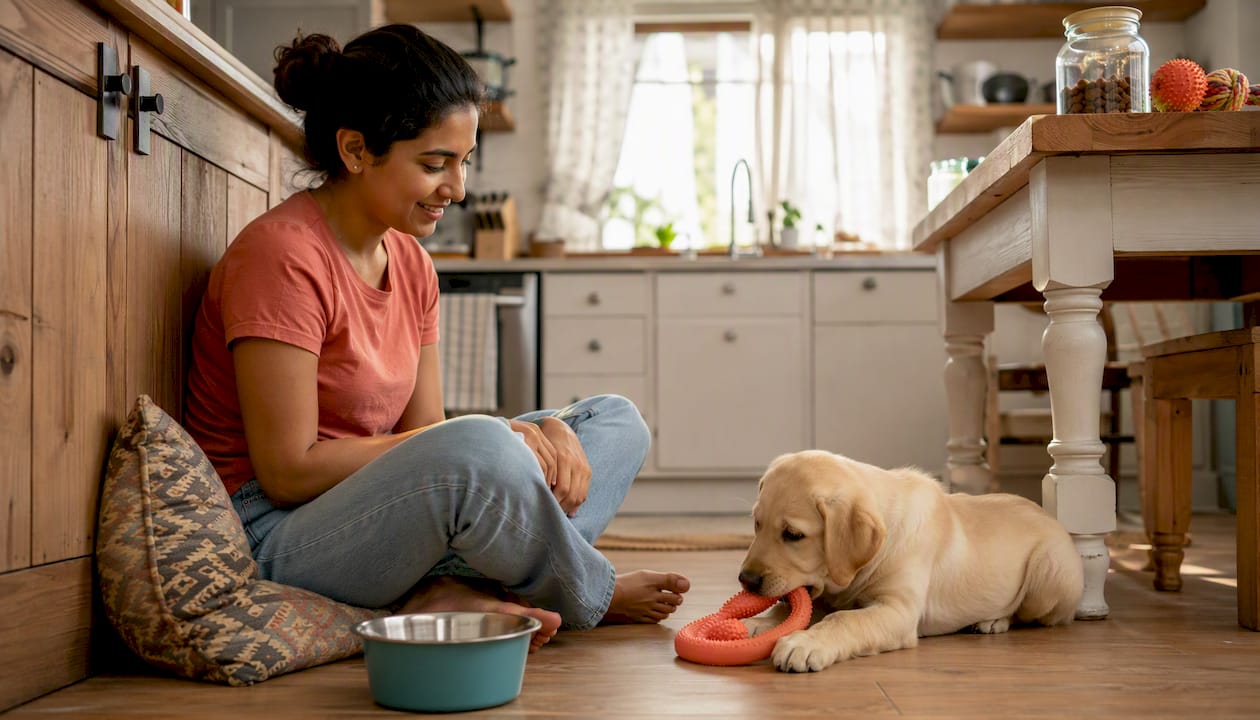
The best puppy teething toys are soft rubber stuffables and freezer-safe textured chews that soothe sore gums, reward natural chewing instincts and double as enrichment. Both types are vet-recommended, made from non-toxic materials and widely available in the UK.
Quick shortlist:
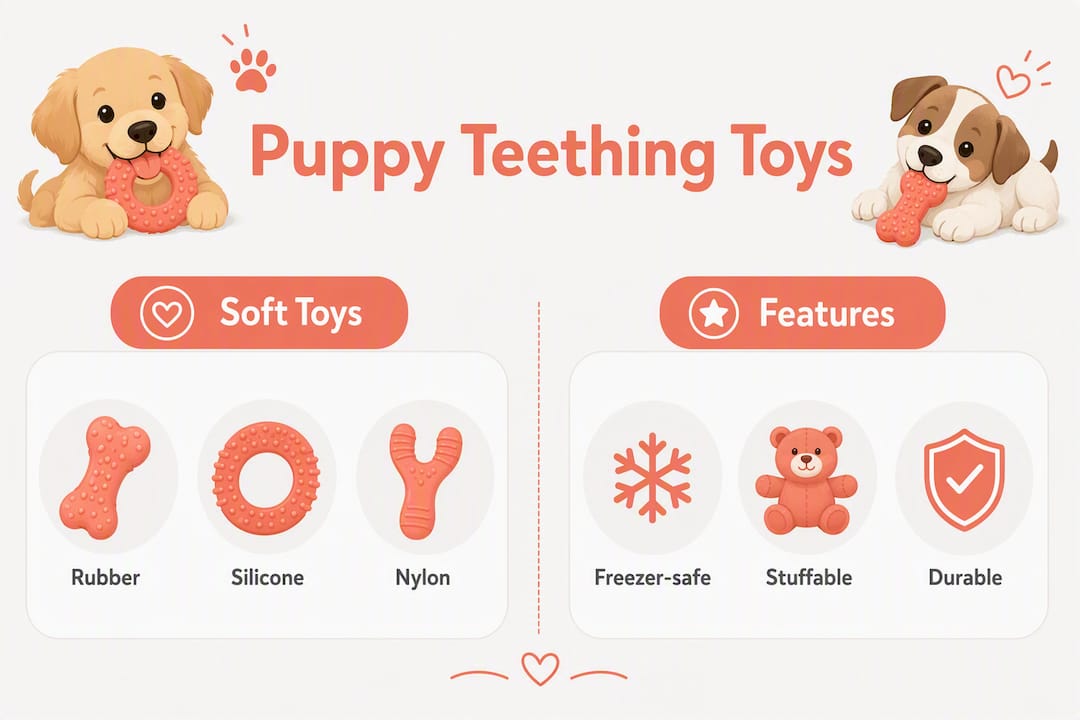
- Soft rubber stuffable (e.g. KONG Puppy) — fill with puppy-safe paste or kibble, freeze for extra gum relief; veterinarian-recommended for teething stages
- Textured freezer chew (e.g. Nylabone Puppy range) — ridged nubs massage gums; vet-promoted and available in size-matched options up to 25 lb
- Giddypets stuffing-safe teething range — curated UK picks combining soothing rubber and enrichment features, all non-toxic and size-labelled
- Rope or textured soft toy (supervised only) — gentle on baby teeth; good for interactive play, not solo chewing
All four types are non-toxic, sized for puppy mouths and available through UK retailers or directly from Giddypets.
Table of Contents
- The best puppy teething toys: a comparison
- How to choose the right teething toy for your puppy
- What materials are safe, and what should you avoid?
- How to use teething toys effectively: freezing, stuffing and cleaning
- Inspecting, replacing and knowing when to call your vet
- Could your puppy be reacting to their toy’s material?
- Key takeaways
- Shop puppy teething toys at Giddypets
The best puppy teething toys: a comparison
Puppies typically begin teething as early as a few weeks old, with a more intense phase during the first months when adult teeth emerge. Choosing the right toy at the right stage makes a real difference, both to your puppy’s comfort and to your furniture.
| Toy type | Material | Best for | Freezer-safe | Stuffable | Suitable ages | Durability | Ease of cleaning | Typical UK price |
|---|---|---|---|---|---|---|---|---|
| KONG Puppy (classic) | Soft natural rubber | Gentle to moderate chewers; enrichment | Yes | Yes | 8 weeks–6 months | High for puppy stage | Dishwasher-safe | £8–£15 |
| KONG Binkie | Soft natural rubber | Teething comfort; crate settling | Yes | Yes | Up to 6 months | Moderate | Dishwasher-safe | £4–£8 |
| Nylabone Puppy Dental Dinosaur | Pliable nylon compound | Teething + dental; moderate chewers | Yes | No | 8 weeks–24 weeks (size-dependent) | High | Rinse/wipe | £4–£8 |
| Nylabone Puppy Flexible Bone | Pliable nylon compound | Gentle chewers; soothing | Yes | No | 8 weeks+ (up to 25 lb) | Moderate–high | Rinse/wipe | £4–£8 |
| Giddypets stuffing-safe teething toy | Soft rubber / textured silicone | All teething puppies; enrichment | Yes (rubber variants) | Yes | 8 weeks+ | High | Dishwasher-safe or rinse | £8–£15 |
| Rope toy (supervised) | Tightly wound cotton rope | Interactive play; gentle gum massage | No | No | 8 weeks+ (supervised only) | Low–moderate | Hand-wash | £4–£8 |
A note on sizing and price bands: budget picks (£4–£8) cover most rope and basic nylon options; mid-range (£8–£15) covers the KONG Puppy and Giddypets rubber stuffables. For most new owners, one rubber stuffable and one textured freezer chew covers the teething phase without overspending.
How to choose the right teething toy for your puppy
Size is the single most important factor. A toy that fits comfortably in your puppy’s mouth without being swallowable is the baseline. Beyond that, a few questions help narrow the choice quickly.
Ask yourself:
- How old is your puppy? Under 12 weeks calls for the softest rubber; 12–24 weeks suits textured nylon or firmer rubber as bite strength increases.
- What breed or size? A Labrador puppy chews harder at 14 weeks than a Chihuahua at the same age. Match the toy’s weight rating to your puppy’s current weight, not their adult size.
- Will this be used in a crate? A stuffable rubber toy filled and frozen is ideal for crate training because it occupies and soothes simultaneously.
- Single or multi-dog household? In a multi-dog home, supervise teething toys closely; one puppy can shred a toy the other then swallows.
Red flags to walk away from:
- Small detachable squeakers or button eyes on plush toys
- Hard nylon or plastic not labelled for puppies (adult-rated hardness can fracture baby teeth)
- Rawhide and pressed chews that soften into large, swallowable chunks
- Any toy without a size or age recommendation on the packaging
Genuinely durable options matter more than anything labelled “indestructible.” That word is marketing, not a safety standard.
What materials are safe, and what should you avoid?
Vets and manufacturers consistently point to the same short list of safe materials for teething puppies.
Choose these:
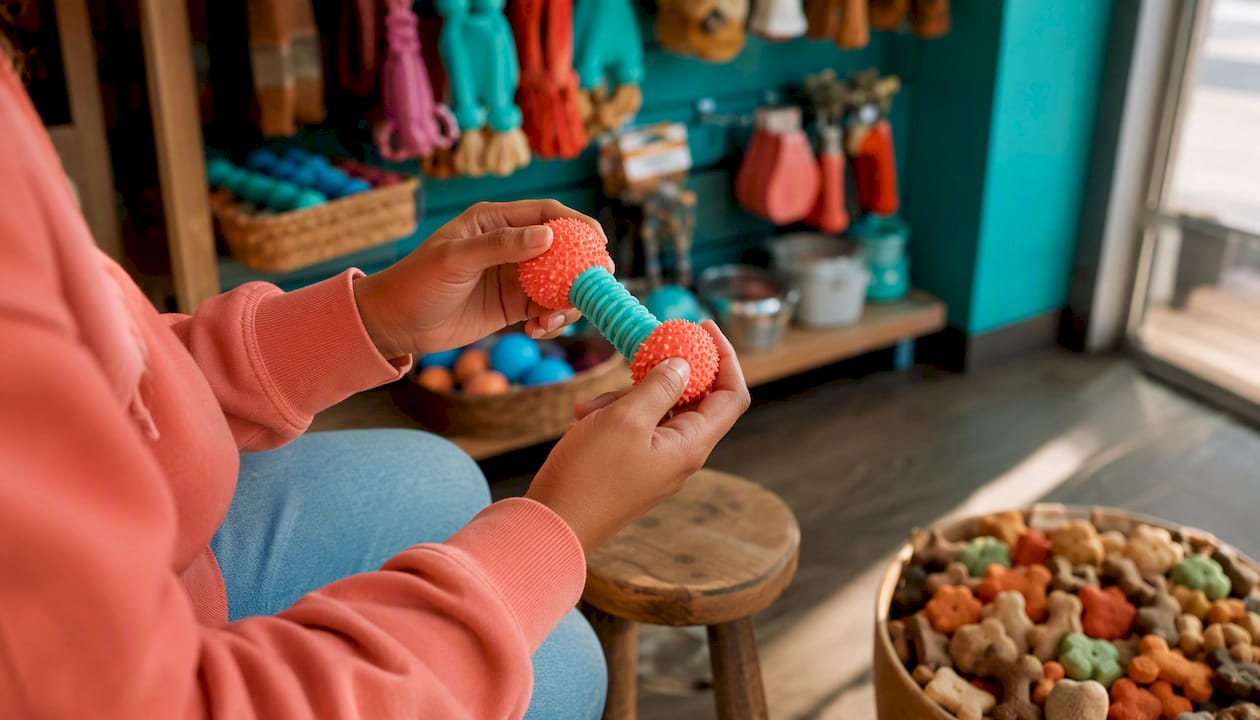
- Soft natural rubber (e.g. KONG’s puppy-specific formula) — pliable enough not to damage baby teeth, firm enough to satisfy chewing; freezer-safe and stuffable
- Teething-grade pliable nylon (e.g. Nylabone Puppy range) — textured nubs massage gums and help clean tooth surfaces; not as hard as adult nylon
- Textured silicone — gentle on gums, easy to clean, holds cold well when chilled
- Tightly wound cotton rope — fine for supervised interactive play; the fibres can act like dental floss, but loose threads are a swallowing risk if left unsupervised
Avoid these:
- Rawhide — softens unevenly, breaks into large pieces and poses a choking and blockage risk for puppies
- Untreated or painted wood — splinters easily; fragments can lacerate gums or cause intestinal injury
- Thin hard plastics — can shatter under bite pressure, creating sharp edges
- Any toy with small detachable parts — buttons, googly eyes, squeaker units that are not fully encased
Only freeze purpose-made, pliable rubber or explicitly freezer-rated toys. Hard plastics and non-rated materials can become brittle and crack when frozen, creating sharp fragments that are a genuine swallowing risk.
Pro Tip: As your puppy’s adult teeth come through (usually from around 4–6 months), soft puppy rubber toys become less appropriate. Adult teeth can shred them into hazardous pieces. Begin transitioning to tougher, adult-rated chews once you notice the puppy toys showing real wear.
How to use teething toys effectively: freezing, stuffing and cleaning
Getting the most from a teething toy is mostly about preparation. A frozen, stuffed rubber toy takes about five minutes to prepare and can keep a puppy occupied and soothed for far longer than an empty one.
Freezing
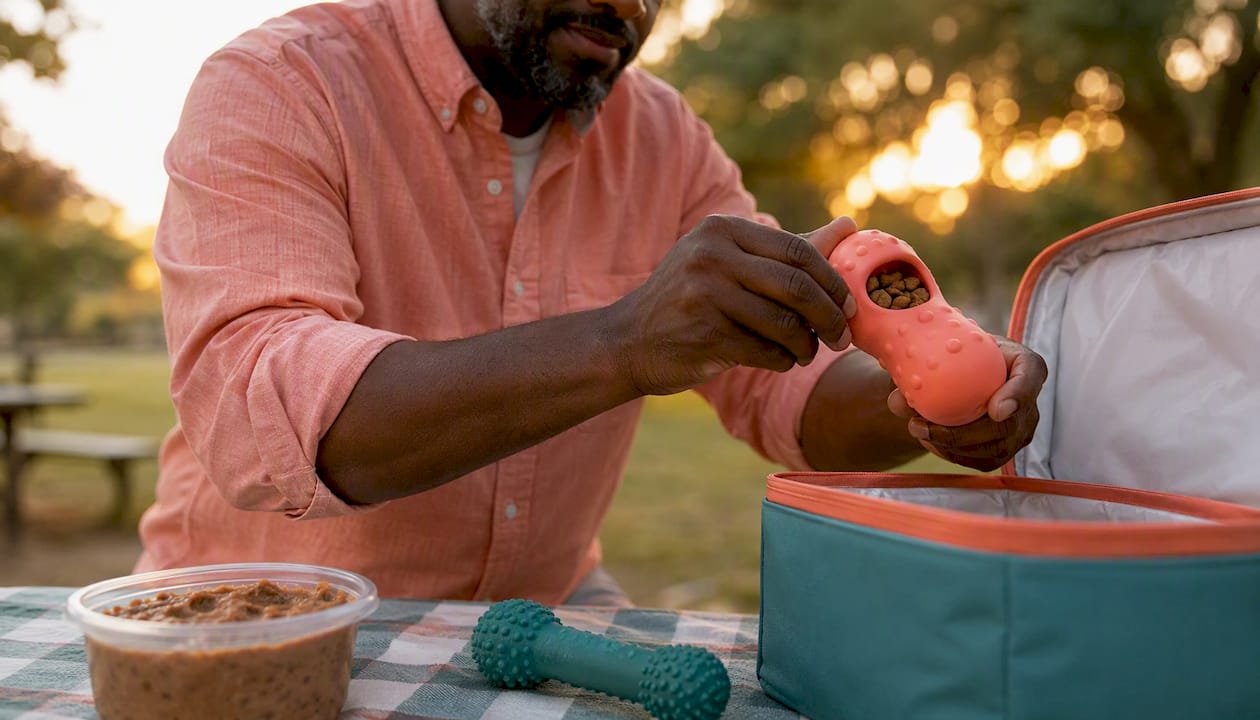
Only freeze toys made from soft rubber or those explicitly marked freezer-safe by the manufacturer. Fill a KONG Puppy or similar rubber toy with a small amount of puppy-safe paste (plain cream cheese, puppy peanut butter without xylitol, or wet puppy food), seal the opening with a piece of kibble and freeze for two to three hours. Frozen carrots are another vet-recommended option for numbing relief; offer them whole and supervised for puppies over 12 weeks.
Stuffing and enrichment
Stuffable toys serve double duty as dog enrichment toys when filled thoughtfully. Keep fillings simple: wet puppy food, a small smear of plain yoghurt, or soaked kibble. Count the filling as part of your puppy’s daily food allowance to avoid overfeeding. For crate settling, a frozen stuffed toy given at the moment the crate door closes is one of the most effective calm-down tools available.
Rotation
Rotating three or four toys rather than leaving all of them out at once keeps each one feeling novel. Toy rotation also extends each toy’s useful life and reduces frantic chewing driven by boredom. Combine a soothing rubber chew with a textured nylon toy and a supervised rope toy, and swap one out every couple of days.
Cleaning
- Rope toys: — hand-wash in warm soapy water, rinse well and allow to dry fully before returning to your puppy; damp rope harbours bacteria quickly
Never return a damaged toy to your puppy. A cracked rubber toy, a fraying rope with loose threads, or a nylon chew worn down to a small stub should all be removed immediately.
Inspecting, replacing and knowing when to call your vet
A simple weekly check takes less than two minutes and prevents most toy-related incidents.
What to look for:
- Cracks, splits or chunks missing from rubber toys
- Fraying threads or unravelling sections on rope toys
- Nylon chews worn down to a size small enough to swallow
- Any sharp edges or exposed internal components on plush toys
Replace a toy as soon as you spot any of these. Nylabone’s own guidance is clear: inspect frequently, supervise use and contact your vet if you suspect your puppy has swallowed any part of a toy. When a toy is retired, replace it with one that matches your puppy’s current size and bite strength. As adult teeth arrive, that usually means stepping up to a tougher, adult-rated chew.
Signs that need a vet check:
- Bleeding gums that do not settle within a day or two
- Prolonged drooling or pawing at the mouth
- Refusal to eat or visible discomfort when chewing
- A broken or visibly damaged tooth
- Any suspicion that your puppy has swallowed part of a toy
Teething discomfort is normal. Persistent bleeding, broken teeth or signs of ingestion are not.
How these picks were chosen
Every toy in this shortlist was assessed against the same criteria: UK availability, vet recommendation or manufacturer safety guidance, clearly stated non-toxic materials, age and size labelling, durability appropriate to the puppy stage, and ease of cleaning. Customer ratings from UK retailers provided a real-world check on how toys hold up in practice.
The KONG Puppy range and Nylabone Puppy line both carry explicit veterinarian-recommended labels and publish detailed safety guidance, which is why they appear consistently across vet blogs and product roundups. Giddypets’ own teething range was selected on the same criteria, with the added benefit of UK fulfilment and vet-backed product curation.
One deliberate choice: no toy here is marketed purely as “indestructible.” That label is aimed at adult power chewers, not puppies. A toy that is too hard for baby teeth can fracture them. Appropriate durability for the puppy stage means firm enough to satisfy chewing, soft enough not to cause harm.
Could your puppy be reacting to their toy’s material?
Most puppies tolerate rubber, nylon and rope toys without any issue. Reactions are uncommon, but they do happen, and knowing what to watch for saves a lot of worry.
Possible sensitivities include:
- Latex sensitivity — some dogs show skin or oral irritation in response to natural latex. If your puppy drools excessively, paws at their mouth or develops redness around the lips after using a rubber toy, switch to a silicone or nylon alternative and mention it to your vet.
- Dye or flavouring reactions — flavour-infused nylon chews (chicken, bacon) occasionally cause loose stools in sensitive puppies. If digestive upset follows the introduction of a new flavoured chew, remove it and try an unflavoured version.
- Rope fibre ingestion — not an allergy, but worth noting: swallowed rope fibres can cause gastrointestinal irritation. Always supervise rope toy use and retire the toy at the first sign of unravelling.
If you suspect a reaction, remove the toy, note the material and consult your vet before reintroducing anything similar. Switching to a single-material toy (plain rubber or plain nylon) makes it easier to identify the cause.
Key takeaways
The most effective puppy teething toys combine soft, non-toxic materials with freezer-safe and stuffable features that soothe gums and support healthy chewing habits from the start.
| Point | Details |
|---|---|
| Prioritise material safety | Choose soft natural rubber, teething-grade nylon or silicone; avoid rawhide, hard plastics and untreated wood. |
| Match size to your puppy now | Size to current weight, not adult size; a too-large or too-small toy is a choking or dental risk. |
| Freeze and stuff for extra relief | Fill rubber stuffables with puppy-safe paste and freeze for 2–3 hours to numb sore gums during peak teething. |
| Inspect weekly, replace promptly | Check for cracks, fraying or worn-down nylon weekly; retire any damaged toy immediately. |
| Giddypets teething range | Giddypets stocks vet-backed, size-labelled rubber stuffables and textured chews with UK delivery. |
A note from Giddy
We put this guide together because we hear from new puppy owners every week who are unsure which toy is actually safe and which is just good packaging. At Giddypets, every teething toy we stock is chosen with the same criteria we’ve outlined here: non-toxic materials, clear age and size labelling, and vet-backed guidance. We’re based in the UK, so everything ships quickly, and if you’re ever unsure whether a toy is right for your puppy’s size or breed, our team is genuinely happy to help you choose. You shouldn’t have to guess at something this important.
Shop puppy teething toys at Giddypets
New puppy owners in the UK can browse Giddypets’ full range of puppy teething toys and stuffable dog toys online, with fast UK delivery and vet-backed product curation. Every pick is size-labelled and non-toxic, so you can shop with confidence rather than guesswork.
Pair a rubber stuffable with a freezer-safe textured chew for complete teething coverage, and browse safe treats and fillings to keep those toys interesting. Stock is subject to availability; always supervise your puppy with any new toy and follow the manufacturer’s size guidance.
Useful sources and further reading
- Teething puppies: tips and tricks — Bakersfield Puppy & Kitten Vets
- Which dog toys are right for your puppy? — AKC
- Giddypets — puppy teething toys category