






60–120 Minute Daily German Shepherd Care Plan for UK Owners
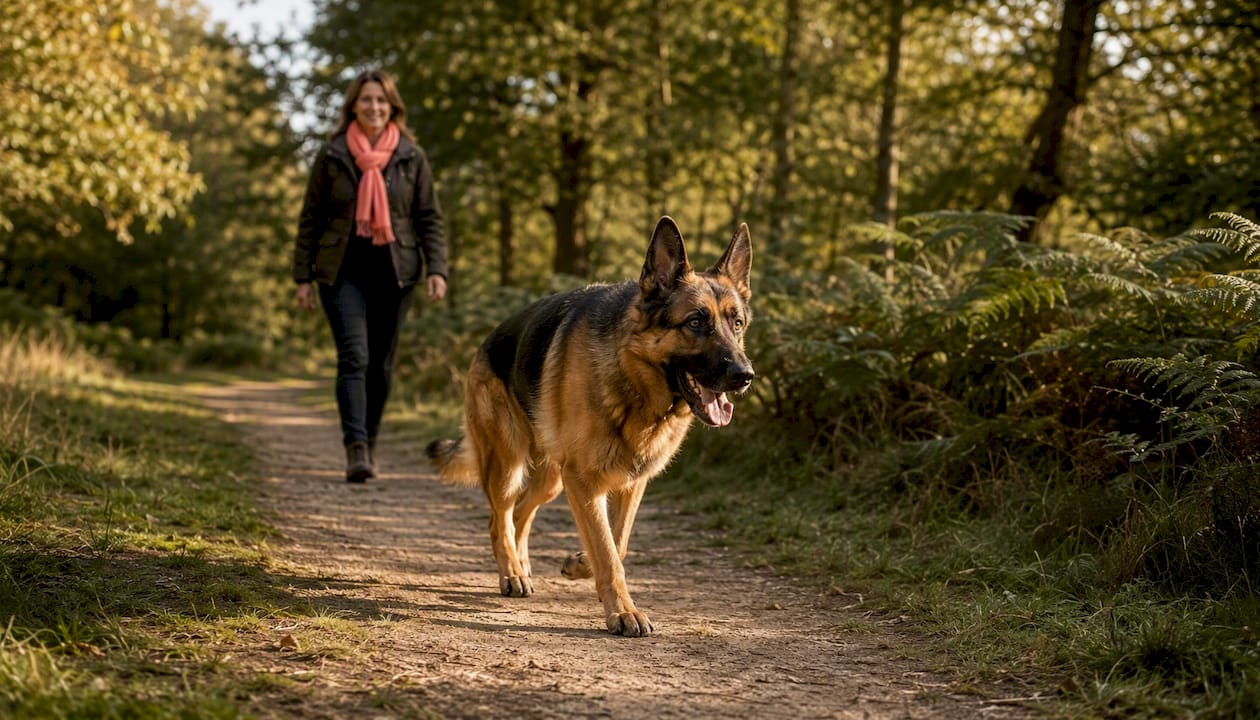
A healthy German Shepherd needs 60 to 120 minutes of exercise daily, split across multiple sessions, plus regular mental work to match that famously busy brain. Add brushing three to five times a week (daily when the coat blows), hip and elbow screening before you commit to a puppy, and awareness of bloat as a genuine emergency risk, and you have the shape of the commitment. Miss any of these and you’ll likely see it in the dog’s behaviour first, and its health second.
TL;DR:
- German Shepherds require 60 to 120 minutes of exercise daily, ideally split into multiple sessions, with mental tasks included to exhaust their busy minds.
- Regular grooming, including brushing three to five times weekly and routine vet screening, is essential to manage their heavy shedding and prevent health issues.
- Feeding should be tailored to life stage, emphasizing portion control based on body condition and avoiding rapid gulping to reduce bloat risk, especially around meals.
- Responsible breeding and weight management are key to preventing hip and elbow dysplasia, while emergency signs like swollen abdomen require immediate veterinary attention.
- Consistent socialisation, mental enrichment, and routine use of appropriate tools support a healthy, well-behaved German Shepherd throughout its lifespan.
Table of Contents
- What does German shepherd care actually involve day to day?
- How much exercise does a German Shepherd need each day?
- What should a German Shepherd eat at each life stage?
- What are the most common German Shepherd health problems?
- How often should you groom a German Shepherd?
- When should you start training and socialising a puppy?
- Is a German Shepherd suited to your home and family?
- What are the signs of a veterinary emergency?
- What practical tools help you stick to this routine?
- Why consistency matters more than perfection
- Kit your routine with the right gear
- Sources
- FAQ
What does German shepherd care actually involve day to day?
Before you build a routine, it helps to know what you’re working with. German Shepherds are a large, athletic working breed, standing roughly 55 to 65cm at the shoulder and typically living 9 to 13 years. That’s a long commitment to a dog bred originally for herding and, later, for police and military work, which explains almost everything about how demanding they are.
The coat is where most new owners underestimate the job. German Shepherds carry a double coat: a coarse, weather-resistant outer layer and a soft, dense undercoat that insulates against both heat and cold. Twice a year, usually spring and autumn, that undercoat “blows”, releasing handfuls of loose fur daily for two to three weeks. Some Shepherds carry a longer-haired “plush coat” variation, which sheds just as heavily but mats more easily if neglected.
Temperament is the other piece owners often miss. This is a working breed, not a decorative one. A German Shepherd left without a job invents one, and it’s rarely a job you’ll thank it for.
- Size and build: Large, athletic, deep-chested (a factor in bloat risk)
- Lifespan: Around 9 to 13 years with good care
- Coat: Double coat, moderate to heavy shedding year-round, seasonal “blowing”
- Temperament: Intelligent, loyal, alert, prone to boredom-driven behaviour without stimulation
- Energy level: High. Bred for sustained working stamina, not short bursts
Understanding this profile is the foundation of every decision that follows, from how you exercise the dog to how you feed it.
How much exercise does a German Shepherd need each day?
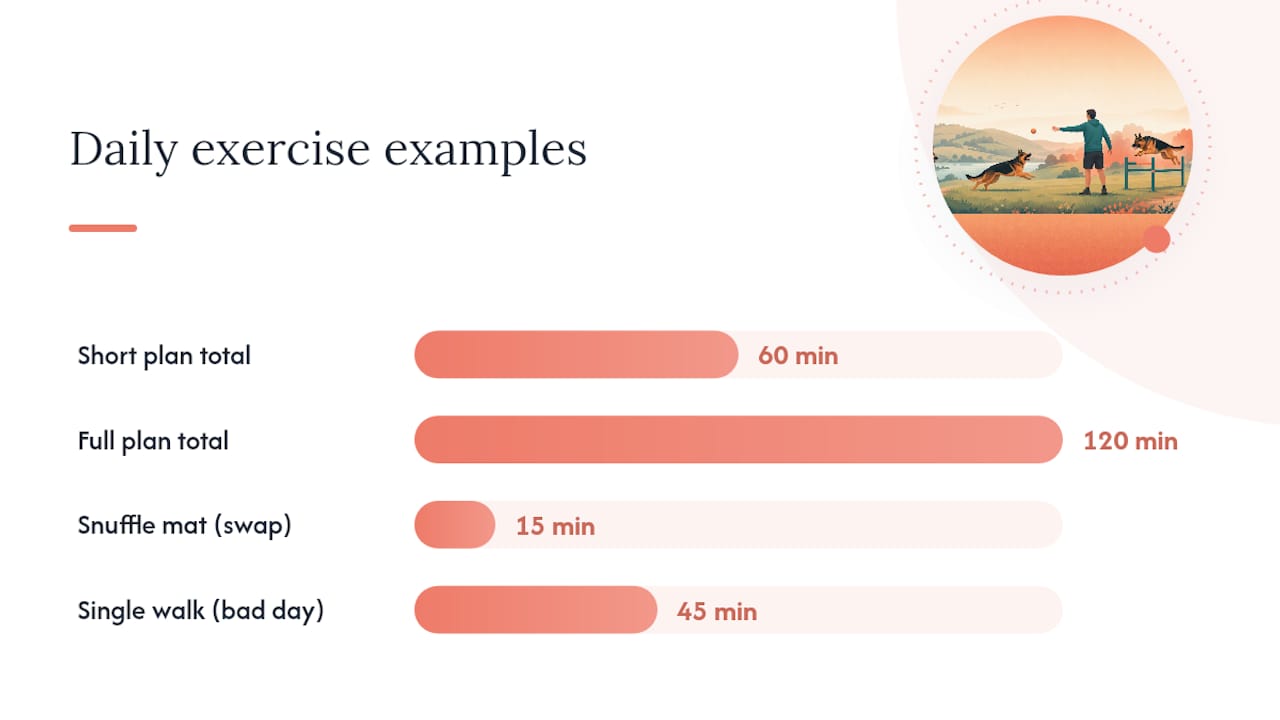
Adult German Shepherds need 60 to 120 minutes of physical exercise daily, and it works better split into two or three sessions than delivered in one long slog. A single hour-long walk leaves plenty of energy unspent; a morning walk, a midday training session, and an evening game of fetch tends to produce a genuinely settled dog by bedtime.
Puppies are a different matter entirely. Their growth plates are still developing, and over-exercising a young Shepherd raises the risk of joint damage later in life. Vets commonly recommend the five minutes per month of age rule: a four-month-old puppy gets roughly 20 minutes of structured exercise per session, not per day. Free play in a garden doesn’t count against this limit in the same way, but forced runs, repeated stairs, and jumping should wait until the dog is closer to 18 months old.
A workable weekly structure looks like this:
- Morning: A 20 to 30 minute walk, ideally with some off-lead time in a safe space
- Midday or afternoon: A 15 to 20 minute training or scent-work session
- Evening: Fetch, tug, or a second walk, plus five to ten minutes of puzzle-toy feeding
- Once or twice weekly: A longer hike, run, or structured activity like agility or flyball
- Daily, regardless of physical exercise: At least one dedicated mental task, since a tired body doesn’t always mean a tired mind
Scent work is the most underused tool here. Hiding treats around a room or garden and letting the dog “hunt” taps into a Shepherd’s natural working drive far more efficiently than another lap of the block.
Pro Tip: On days when weather or time is against you, a 15 minute snuffle mat session can burn as much mental energy as a 45 minute walk. It’s not a replacement for exercise long term, but it’s a legitimate substitute for a single bad-weather day.
What should a German Shepherd eat at each life stage?
Feeding frequency changes as the dog grows: puppies typically need three to four meals a day up to around six months, adults do well on two meals daily, and seniors often benefit from staying on two smaller meals rather than one large one, which is gentler on digestion. This structure matters more for German Shepherds than for many breeds, because their deep chest makes them one of the higher-risk breeds for bloat.
Protein needs run higher than for a sedentary breed, reflecting the dog’s activity level rather than a fixed percentage on a bag. Rather than following the feeding chart on the packaging to the gram, judge portions by body condition score: you should be able to feel the ribs without pressing hard, and see a visible waist from above. Adjust food up or down over a couple of weeks if that picture changes, rather than waiting for a dramatic weight shift to act on.
Bloat prevention deserves its own set of habits, separate from what’s in the bowl:
- Use a slow-feeder bowl to stop rapid gulping, which introduces excess air into the stomach
- Avoid strenuous exercise for at least an hour before and after meals
- Split large meals into two smaller ones rather than one big feed
- Soak dry kibble briefly if your dog eats fast even from a slow feeder
- Keep fresh water available but discourage large gulps straight after vigorous exercise
If you notice sudden weight loss, chronic loose stools, or a dog that seems permanently hungry despite adequate portions, it’s worth a vet conversation. Conditions like exocrine pancreatic insufficiency can masquerade as fussy eating or poor weight gain, and catching it early makes management far easier.
What are the most common German Shepherd health problems?
Hip and elbow dysplasia sit at the top of the list, and they’re largely why responsible breeders screen parent dogs before mating. If you’re buying a puppy, ask to see hip and elbow scores for both parents rather than taking a breeder’s word for it. Lower scores indicate a lower genetic risk of joint deformity, though they don’t guarantee a puppy will be unaffected. Keeping a growing puppy lean and limiting high-impact exercise during development are the two biggest levers you control after the fact.
Did you know? German Shepherds are named repeatedly among the deep-chested breeds most susceptible to bloat (gastric dilatation-volvulus), a condition that can turn fatal within hours if untreated.
Bloat is the emergency every Shepherd owner needs to recognise on sight: a visibly swollen or tight abdomen, unproductive retching (trying to vomit without bringing anything up), restlessness, drooling, and an inability to settle. This is not a “wait and see” situation. It requires immediate emergency veterinary treatment, and some vets discuss prophylactic gastropexy (a surgical procedure that tacks the stomach in place) for high-risk dogs during unrelated procedures like neutering.
Two other conditions worth knowing by name:
- Degenerative myelopathy: A progressive spinal cord disease usually appearing in older dogs, starting with hind-leg weakness or dragging paws. There’s no cure, but physiotherapy and mobility support can extend quality of life.
- Exocrine pancreatic insufficiency (EPI): The pancreas fails to produce enough digestive enzymes, leading to weight loss and pale, greasy stools despite normal appetite. It’s manageable with enzyme supplements once diagnosed.
Routine care matters as much as watching for these specific conditions. Stick to your vet’s vaccination schedule, use year-round parasite prevention, and book annual check-ups for adults, moving to six-monthly visits once your Shepherd passes seven or eight, when age-related issues tend to surface faster.
How often should you groom a German Shepherd?
Brush a German Shepherd three to five times weekly, and daily during the spring and autumn coat blow, when the undercoat sheds in earnest. Skipping brushing during a blow doesn’t stop the shedding. It just moves the fur from the dog to your sofa, and increases the risk of matting that traps moisture against the skin.
The right tools make this manageable rather than miserable. An undercoat rake pulls loose fur from the dense inner layer, a slicker brush finishes the topcoat and catches tangles, and a dedicated deshedding tool speeds up blow season significantly. Breeders and professional groomers often recommend doing the heaviest brushing sessions outdoors during a blow, for obvious reasons involving your carpet.

Bathing should be infrequent, roughly every six to eight weeks unless your dog has rolled in something unmentionable. Over-bathing strips the natural oils that keep the coat weatherproof, which is also why you should never shave a German Shepherd. The double coat regulates temperature in both directions, and shaving it doesn’t just fail to help in summer, it removes the dog’s natural cooling and sun-protection system.
Beyond brushing and bathing, a full routine includes:
- Nail trims: Frequency depends on surface wear; dogs walking mostly on pavement often need trims less often than those exercised on grass or carpet
- Teeth: Brush several times a week to reduce the risk of periodontal disease
- Ears: Check weekly for redness, odour, or discharge, and clean gently as needed
- Skin: Book a vet check if you notice persistent scratching, bald patches, or flaking that grooming alone doesn’t resolve
Pro Tip: A useful sequence for bath day: rake the undercoat before wetting the dog, bathe with a pH-balanced shampoo, and rake again while towel or blow drying to catch the loosened undercoat before it dries flat against the skin.
When should you start training and socialising a puppy?
The critical socialisation window runs roughly from three to fourteen weeks old, and it’s the single best investment you’ll make in your dog’s adult temperament. During this period, positive exposure to new people, sounds, surfaces, and situations does more to prevent fear-based reactivity than any amount of training later in life.
A practical approach:
- Introduce your puppy to at least one new environment (café, park, train station) each week during the socialisation window
- Expose them to a range of people: children, people in hats, people using wheelchairs or walking sticks
- Get them comfortable with handling: paws, ears, mouth, so future vet and grooming visits go smoothly
- Run training sessions of five to ten minutes, several times a day, rather than one long lesson
- Reward calm behaviour around new stimuli rather than only “sit” and “stay”
Short, frequent, positive-reinforcement sessions consistently outperform long, infrequent ones for this breed. German Shepherds are quick learners but lose focus fast if drilled too long.
Much of what owners describe as “problem behaviour”, excessive barking, destructive chewing, over-guarding the house, is under-stimulation wearing a different costume. A bored Shepherd finds its own entertainment, and that entertainment is rarely compatible with your furniture or your neighbours’ patience. Before assuming you have a behavioural case, try doubling the mental enrichment for two weeks and see what changes.
If reactivity, aggression, or anxiety persists despite consistent socialisation and exercise, bring in a qualified behaviourist rather than guessing. Early intervention is far easier than correcting an entrenched pattern at eighteen months old.
Is a German Shepherd suited to your home and family?
A garden helps, but it’s not compulsory. Flats can work if you’re realistic about compensating with longer, more frequent outdoor sessions and daily off-lead time somewhere safe, since a Shepherd cooped up indoors all day will make its frustration known.
Around children, German Shepherds are typically loyal and protective, but supervision matters, particularly with toddlers who move unpredictably and can trigger a herding instinct (nipping at heels is more “confused sheepdog” than aggression, but it still needs managing). Introduce other pets gradually and on neutral territory, and expect a settling-in period of several weeks in multi-animal households.
- Aim for daily off-lead access to a secure space, garden or not
- Never leave young children unsupervised with any large dog, regardless of temperament
- Introduce cats and other dogs slowly, using scent swapping before face-to-face meetings
- Use a secured crate or harness for car travel, and pack food, medication, and vaccination records for any trip away from home
What are the signs of a veterinary emergency?
Some situations don’t allow for a wait-and-see approach. If your German Shepherd shows a swollen abdomen, unproductive retching, or sudden restlessness and pacing, treat it as suspected bloat and get to an emergency vet immediately. Bloat can be fatal within hours without rapid surgical intervention, so speed matters more than certainty.
Other signs demanding the same urgency include laboured or severe breathing difficulty, seizures, sudden collapse, or acute lameness that appears without warning. Do the following:
- Call ahead to the emergency vet so they’re ready when you arrive
- Bring a note of recent food, treats, and any medications given in the last 24 hours
- Bring vaccination records if you have them, especially if attending an unfamiliar clinic
- Keep the dog as calm and still as possible during transport
What practical tools help you stick to this routine?
Turning a care plan into a habit is easier with the right structure. Giddy Pets’ Match Your Week tool breaks down daily exercise minutes by breed energy level, useful for mapping the 60 to 120 minute target onto your actual week. The Winter Pet Care hub covers seasonal adjustments worth revisiting as the blow season and colder walks change what your dog needs.
For the physical side of the routine, keep these categories on hand:
- Deshedding tools and undercoat rakes for blow season
- A slow-feeder bowl to reduce gulping and bloat risk
- Puzzle toys and snuffle mats for daily mental enrichment
- A basic grooming kit covering brushing, nail care, and bathing
Why consistency matters more than perfection
Owners often ask which single change makes the biggest difference, and it’s rarely a dramatic one. Consistent daily exercise, routine screening for the joint and digestive issues this breed is prone to, and genuine mental enrichment do more for a German Shepherd’s wellbeing than any single product or training trick. Vet-approved hubs and product categories exist to make that consistency easier to maintain week to week, not to replace it.
— Giddy
Kit your routine with the right gear
Every routine in this guide relies on having the right tools within reach, not just good intentions. A slow-feeder bowl turns a five-minute inhale-the-dinner habit into a slower, safer meal that directly supports the bloat-reduction steps covered earlier. For coat care, a proper dog grooming kit covering brushes, nail tools, and bathing essentials means you’re not scrambling for the right rake halfway through a blow season, and grooming gloves offer an easy entry point for owners who want a gentler daily brushing habit without investing in a full kit straight away.
On the enrichment side, puzzle toys and stuffable options give you a ready answer for the “tired body, active mind” problem covered in the exercise section, particularly useful on days when a long walk isn’t possible. Giddy Pets stocks all of these as vet-informed categories rather than one-size-fits-all guesses, so you can match the product to the specific routine your Shepherd actually needs. Browse the full range to build out your week, starting with whichever gap in your current routine feels most urgent.
Sources
FAQ
Is a German Shepherd easy to take care of?
Not for a first-time owner without time to spare. They need 60 to 120 minutes of daily exercise, regular brushing, and consistent mental stimulation, making them better suited to active households than low-effort ones.
What should you avoid doing with a German Shepherd?
Avoid over-exercising puppies before their joints mature, shaving the double coat, feeding immediately before or after strenuous exercise, and leaving the dog under-stimulated for long stretches, since boredom tends to surface as destructive or anxious behaviour.
What is the most common health problem in German Shepherds?
Hip and elbow dysplasia are the most widely reported issues in the breed, which is why screening breeding parents and managing puppy growth and weight matter so much.
What is the hardest age with a German Shepherd?
Most owners find adolescence, roughly six months to two years, the toughest stretch, as the dog has adult strength and energy but a puppy’s impulse control. Consistent training and enough physical and mental outlet through this phase makes a significant difference to the dog you end up with.