


The best Felix alternatives for UK cats in 2026

The best Felix alternatives for UK cats in 2026
The five best UK alternatives to Felix are Lily’s Kitchen (best overall), Whiskas (best budget), Applaws (best natural/premium), James Wellbeloved (best for sensitive diets), and Royal Canin (veterinary/prescription option). For a straightforward place to buy, Giddypets stocks a curated range of cat food and accessories with vet-approved guidance to help you choose the right swap.
The short version: Felix scores around 35/100 on PetFoodRate’s independent five-dimension methodology, largely because its pouches rely on vague “meat and animal derivatives” rather than named protein sources. Every alternative below does better on ingredient transparency, named-meat content, or both. FEDIAF labelling rules require complete nutritional information on UK/EU products, but they do not require brands to name the specific animal species — so reading the ingredient list yourself still matters.
- Lily’s Kitchen leads with named meat prominently listed and no added sugars, making it a meaningful step up from supermarket-tier pouches.
- Applaws uses a high named-meat percentage in its wet pâtés, which can deliver greater nutritional density per gram than a standard Felix pouch.
- James Wellbeloved uses a single named protein source per recipe, making it a practical choice for cats with suspected food sensitivities.
Table of Contents
- How do these five Felix alternatives compare at a glance?
- How to choose the right alternative for your cat
- What do you actually trade off when leaving Felix?
- Where can you buy these alternatives in the UK?
- Giddypets makes switching from Felix straightforward
- Key takeaways
- Useful sources
How do these five Felix alternatives compare at a glance?
Each brand below solves a different problem. Here is a one-line summary of why each one earns its place, followed by a compact comparison.
- Lily’s Kitchen — organic, named-meat wet and dry recipes; strong ingredient transparency; widely available online and in specialist pet shops.
- Whiskas — the closest budget match to Felix; scores around 30/100 on PetFoodRate, so not a dramatic upgrade, but familiar to cats and easy to find in any supermarket.
- Applaws — high named-meat wet pâtés; wet pâtés with a high named meat content are cited as examples of better-value nutrition when compared by daily feeding volume.
- James Wellbeloved — single-protein recipes (turkey, duck, fish) designed for sensitive digestion; widely recommended by vets for elimination diets.
- Royal Canin — breed- and condition-specific ranges; prescription lines available through vet clinics for cats with medical dietary needs.
| Brand | Format | Best for | Named-meat cue | Price band | Where to buy (UK) |
|---|---|---|---|---|---|
| Lily’s Kitchen | Wet & dry | Adult, kitten | Named meat listed first | Mid–premium | Online specialist, pet shops |
| Whiskas | Wet & dry | Adult (budget) | “Meat and animal derivatives” | Budget | Supermarket, online |
| Applaws | Wet pâté, dry | Adult, senior | High named-meat % | Mid–premium | Online specialist, pet shops |
| James Wellbeloved | Wet & dry | Sensitive, adult | Single named protein | Mid | Online specialist, vet, supermarket |
| Royal Canin | Wet & dry | All life stages, medical | Named protein + condition-specific | Mid–premium/vet | Vet clinic, online specialist |
Prices and specific SKUs vary by retailer and pack size. Always check the individual product label for the named-meat percentage and crude protein figure before buying.
How to choose the right alternative for your cat
Picking the right food comes down to reading the label carefully, matching the product to your cat’s life stage, and switching gradually. Here is how to do all three.
Reading the label: a step-by-step checklist
- Check what comes first. Ingredients are listed by weight. If “chicken” or “salmon” appears before “cereals” or “sugar,” that is a good sign. If you see “meat and animal derivatives” at the top, named meat is likely only around 4% of the recipe.
- Look for a named-meat percentage. Brands like Applaws and Lily’s Kitchen state this clearly. A higher percentage means more actual animal protein per serving.
- Note crude protein and fat. These appear in the “analytical constituents” panel. Wet foods show lower as-fed protein figures because of high moisture content; convert to dry-matter basis to compare wet and dry products fairly (divide the as-fed protein % by the dry-matter % of the food).
- Check moisture. Wet food typically sits at 75–85% moisture. This matters because cats have a low thirst drive and wet food supports hydration in a way dry food cannot replicate.
- Avoid added sugars and vague fillers. Terms like “various sugars,” “cereals,” or “vegetable protein extracts” add little nutritional value for an obligate carnivore.
- Match the life stage. Kitten foods carry higher protein and fat to support growth. Senior recipes often reduce phosphorus to protect kidney function. “All life stages” is acceptable but check the protein level is adequate.
- Interpret “sensitive” claims carefully. “Sensitive” on a label is not a regulated term in the UK. It usually means a single protein source or reduced additives, but always read the ingredient list rather than trusting the front-of-pack claim.
Switching safely: a 7–10 day transition plan
Cats are creatures of habit, and a sudden food change can cause digestive upset or a flat-out food refusal. A gradual swap avoids both.
- Days 1–2: 75% Felix, 25% new food.
- Days 3–4: 50/50 mix.
- Days 5–6: 25% Felix, 75% new food.
- Days 7–10: 100% new food.
Watch for loose stools, vomiting, or a marked drop in appetite during the transition. A little hesitation is normal; complete refusal for more than 48 hours warrants a call to your vet. A helpful cat feeding schedule guide can make the timing easier to manage.
Pro Tip: Weigh out the recommended daily portion of both the old and new food on day one. If the new food’s daily portion is noticeably smaller (common with higher-density recipes), that is a sign you are getting more nutrition per gram, not less food.
What do you actually trade off when leaving Felix?
Felix is affordable and cats tend to like it. Those are real advantages. But the trade-offs are worth understanding before you commit to a long-term switch.
Wet vs dry: hydration and calorie density
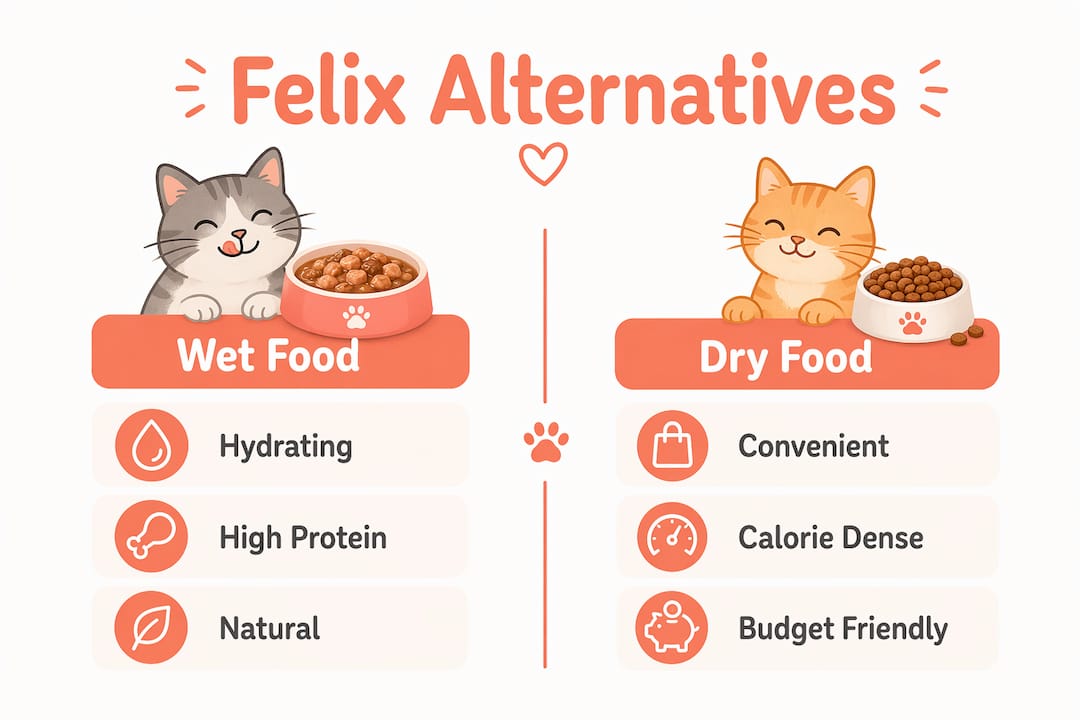
Wet food is the closer match to a cat’s natural prey diet: high moisture, moderate protein, low carbohydrate. Because cats evolved as desert animals with a low thirst drive, wet food’s hydration benefit is not trivial. Dry food is more calorie-dense per gram, which means smaller portions, but it relies on your cat drinking enough water separately.
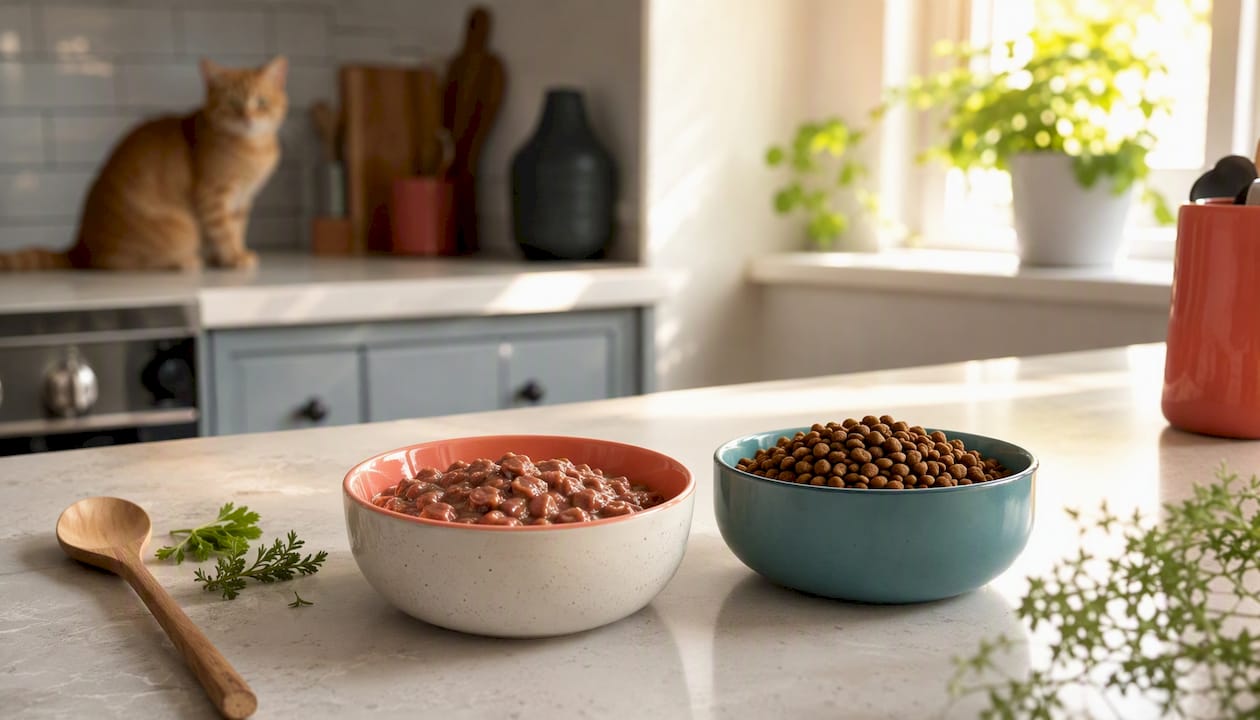
Premium wet foods can contain high named meat content compared with the low named meat found in some supermarket pouch lines. That gap in protein quality is significant for a species that cannot synthesise certain amino acids from plant sources.
Budget vs premium: the daily cost reality
Nutritional density changes the maths. Premium brands may cost more per kilogram but lower daily feeding volumes can equal or reduce daily cost compared with budget brands when you account for what your cat is actually absorbing.
A mid-range wet food with 55% named meat typically requires a smaller daily portion than a budget pouch to meet the same protein target. Over a month, the price difference often narrows considerably.
- Budget tier (Whiskas, some supermarket own-brands): familiar, widely available, low cost per pouch, but lower ingredient transparency.
- Mid tier (Lily’s Kitchen, James Wellbeloved): named protein, clearer labelling, moderate price premium.
- Premium tier (Applaws): very high named-meat content, smaller daily portions needed.
- Vet/prescription (Royal Canin veterinary ranges): condition-specific formulations; only appropriate when a vet recommends them for a diagnosed condition.
For cats with kidney disease, diabetes, or urinary issues, a vet-prescribed diet is not optional. No over-the-counter food, however premium, replaces a clinically formulated prescription diet for a medically complex cat.
Where can you buy these alternatives in the UK?
The channel you choose affects price, freshness, and convenience. Here is how the main options break down.
- Supermarkets (Tesco, Sainsbury’s, Asda, Waitrose): stock Whiskas, James Wellbeloved, and Royal Canin standard ranges reliably. Convenient for top-ups but limited SKU depth.
- Online specialists (including Giddypets): broader range, often better prices on multi-packs, and access to brands like Lily’s Kitchen and Applaws that supermarkets stock inconsistently. Giddypets offers cat food and treats alongside vet-approved feeding guides.
- Subscription delivery: several brands offer auto-delivery discounts. Useful for wet food, which is heavy and bulky to carry. Check the minimum order and cancellation terms before committing.
- Vet clinics: the only reliable source for Royal Canin and Hill’s prescription ranges. Your vet will advise on the correct product and portion size.
A few practical tips: check best-before dates when buying multi-packs online, especially for wet food. Most reputable online retailers offer a satisfaction guarantee on unopened stock. For senior cats, Giddypets has a dedicated senior cat food guide that covers nutrient priorities for older cats specifically.
Giddypets makes switching from Felix straightforward
Switching your cat’s food is easier when you have a trusted place to buy and clear guidance alongside the products. Giddypets stocks a curated selection of cat food and treats, including mid-range and premium wet and dry options that go well beyond supermarket-tier nutrition. Every product listing is supported by vet-approved content, so you are not guessing at portion sizes or ingredient quality.
Alongside food, Giddypets carries interactive cat toys and slow feeders to support enrichment during a dietary transition, when some cats become more restless or food-focused. Browse the full cat supplies range or get in touch for a personalised recommendation if you are unsure which product suits your cat’s age, weight, or health condition.
Key takeaways
Choosing a better alternative to Felix means prioritising named animal protein, matching the food to your cat’s life stage, and switching gradually over 7–10 days.
| Point | Details |
|---|---|
| Check named meat first | Look for a specific animal (chicken, salmon, turkey) at the top of the ingredient list, not vague “meat and animal derivatives.” |
| Felix scores 35/100 independently | PetFoodRate’s five-dimension score puts Felix at 35/100, which contextualises why ingredient-led alternatives score meaningfully higher. |
| Switch over 7–10 days | A gradual transition reduces digestive upset and improves the chance your cat accepts the new food. |
| Consult your vet for medical diets | Prescription ranges from Royal Canin require a vet recommendation; no premium retail food replaces a clinically formulated diet. |
| Giddypets stocks curated alternatives | Browse cat food and treats at Giddypets for mid-range and premium options with vet-approved feeding guidance. |
Why supermarket-tier cat food deserves more scrutiny than it gets
Most cat owners pick up Felix or a similar brand because it is everywhere, cats seem to enjoy it, and the price is right. That logic is understandable. But “complete and balanced” on a label means the food meets minimum nutritional standards, not that it is optimally formulated for a carnivore. The gap between meeting a minimum and genuinely supporting long-term feline health is wider than the packaging suggests.
The brands that score well on independent assessments share one quality: they tell you exactly what is in the food. Named meat, stated percentages, clear analytical constituents. That transparency is not just a marketing choice; it is the only way you, as an owner, can make an informed comparison. A brand that hides behind “meat and animal derivatives” is asking you to trust them without giving you the information to verify that trust.
Switching does not have to be expensive or complicated. Mid-range options like Lily’s Kitchen and James Wellbeloved sit at a modest price premium over Felix and deliver a meaningfully better ingredient profile. If you want help narrowing it down for your specific cat, Giddypets is happy to point you in the right direction.
Useful sources
| Source | What it supports in this article |
|---|---|
| PetFoodRate: Whiskas vs Felix scores | Independent low scores for Felix and Whiskas; protein and ash analysis; dry-matter conversion guidance |
| PetFoodRate: supermarket pouch truth | Named-meat percentages in supermarket pouches; wet pâté alternatives with higher named-meat content; hydration benefits of wet food |
| MACnSAM: Whiskas or Felix comparison | Cost-to-quality ratio analysis; premium feeding volume and daily cost context |
| FEDIAF (European Pet Food Industry Federation) | UK/EU labelling requirements for complete pet foods; analytical constituent disclosure rules |
Product labels and your vet’s advice are the primary references for any medically indicated diet. This article is general information, not veterinary advice. Always confirm specific dietary needs with a qualified vet for your cat’s individual situation.