

Dog weight loss diet: safe, vet-backed plan for UK owners
Dog weight loss diet: safe, vet-backed plan for UK owners
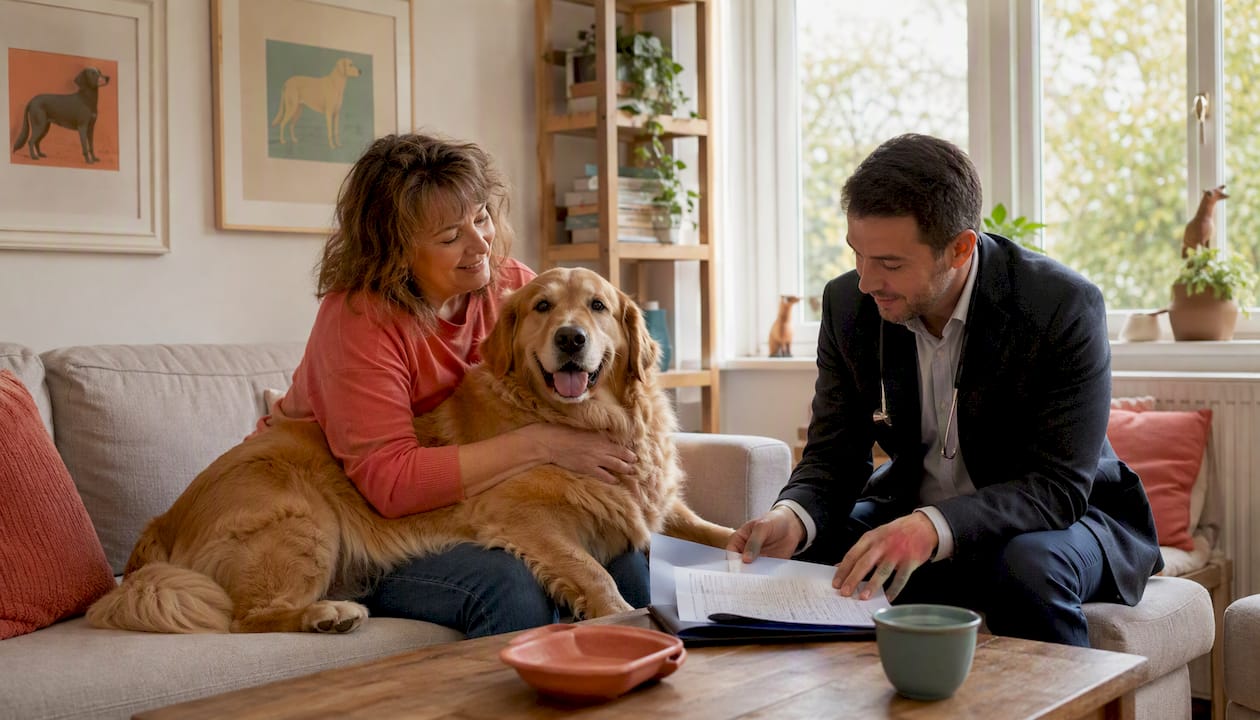
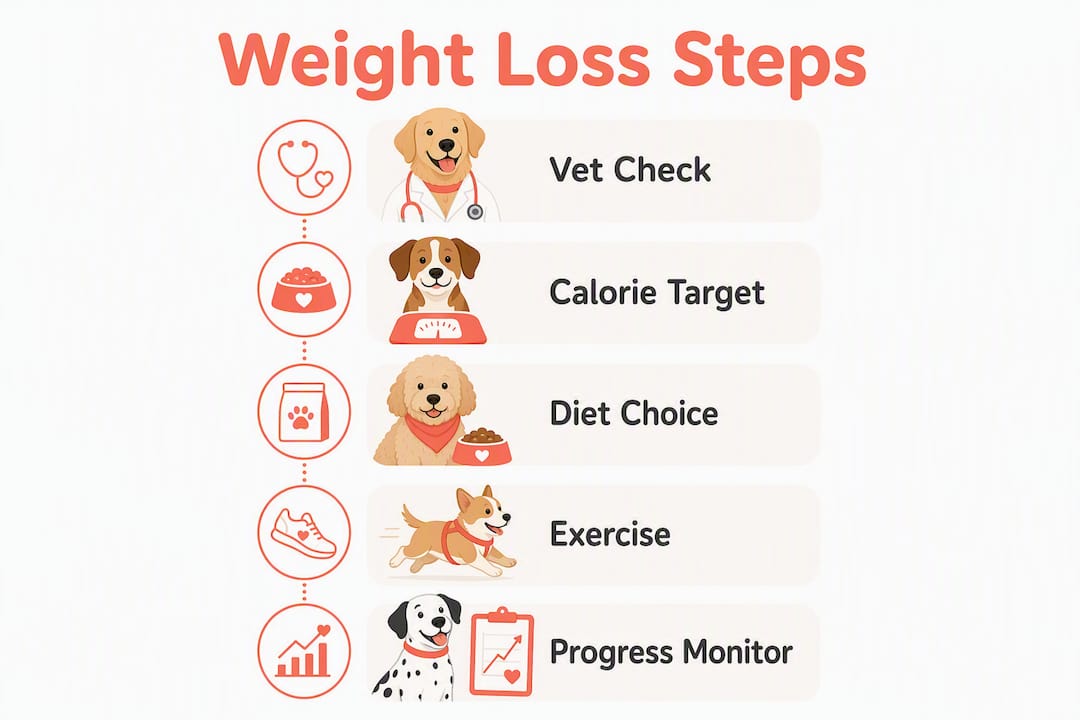
Start with a vet check, set a measured calorie target, switch to a balanced weight-loss diet, and weigh your dog every two weeks. That is the plan in one sentence, and everything below shows you how to do each step safely.
Here is what the first month looks like in practice:
- Book a vet appointment first. Ask for a body condition score (BCS), baseline weight, and basic blood tests. This rules out thyroid disease, Cushing’s syndrome, or arthritis before you change anything.
- Get a written calorie target. Your vet will calculate how many kilocalories (kcal) per day your dog needs to lose weight at a safe rate. Write it down and keep it somewhere visible.
- Measure every meal by weight, not volume. Use a kitchen scale. Cups and scoops vary enormously and are one of the most common causes of unintentional overfeeding.
- Set a treat policy from day one. Treats should make up no more than a small portion of your dog’s daily calorie allowance. Count dental chews, food used to give tablets, and any table scraps in that total.
- Weigh your dog fortnightly. Record the number, take a photo, and measure girth at the widest point. Bring these records to every vet recheck.
Pro Tip: Use a portion of your dog’s daily kibble ration as training treats rather than buying separate snacks. The calories are already counted, and your dog gets mental stimulation as a bonus.
Table of Contents
- How to tell if your dog is overweight
- Why dogs gain weight: the most common causes
- What excess weight does to your dog’s health
- What your vet should check before you start a diet
- How to build a safe dog weight loss diet plan
- Practical feeding tactics that keep the plan on track
- Safe exercise to support weight loss
- Managing feeding in a multi-dog household
- How to monitor progress and handle plateaux
- Practical tools that make a weight-loss plan easier
- Key takeaways
- Why steady, vet-led change is the only plan worth trusting
- Giddypets has the tools to make your dog’s plan stick
- Useful sources and further reading
How to tell if your dog is overweight
The body condition score (BCS) is the standard tool vets use, and you can apply a simplified version at home. On a 1–9 scale, a dog at ideal weight scores 4–5: you can feel the ribs easily without pressing hard, there is a visible waist when you look down from above, and the belly tucks upward when viewed from the side. A score of 6–7 means the dog is overweight; 8–9 is obese.
Three quick checks you can do right now:
- Rib check. Run your fingers along the side of the chest. You should feel each rib with light pressure, the way you feel your knuckles when your hand is flat. If you have to press firmly or cannot feel them at all, there is likely excess fat cover.
- Waist check (from above). Stand over your dog and look straight down. There should be a visible narrowing behind the ribs. A straight or barrel-shaped outline suggests excess weight.
- Abdominal tuck (from the side). The belly should rise from the chest toward the hind legs. A sagging or level underline is a sign of fat accumulation.
These checks are a starting point, not a diagnosis. Bring your dog to the vet if you are unsure, if the dog is older than seven years, if weight has increased rapidly over a few weeks, or if other symptoms are present (lethargy, increased thirst, hair loss). Vets also assess muscle condition score alongside BCS, because a dog can appear a normal weight while carrying too little muscle and too much fat.
Pro Tip: At every weigh-in, photograph your dog from above and from the side, and measure girth with a soft tape measure just behind the last rib. Numbers on a scale tell you how much; photos and measurements tell you where.

Why dogs gain weight: the most common causes
Excess body fat builds up when a dog consumes more calories than it burns. That sounds simple, but the contributors are often invisible until you look closely.
- Treats and table scraps — A single biscuit for a small dog can represent 10% of its daily calorie allowance. Multiple family members each giving “just one” treat compounds the problem fast.
- Specific medications — Corticosteroids, phenobarbital, and some other drugs increase appetite or alter metabolism. If your dog is on long-term medication, ask your vet whether it affects weight.
The practical takeaway is that a diet plan built without a vet check can miss a treatable medical cause and leave you frustrated when the weight does not shift.
What excess weight does to your dog’s health
Carrying extra body fat shortens a dog’s life and reduces its quality in measurable ways. The risks are not theoretical.
- Osteoarthritis. Excess weight loads joints that were not designed for it. Dogs with arthritis that lose even a modest amount of weight show significant improvements in mobility and pain scores.
- Type 2 diabetes mellitus. Obesity drives insulin resistance in dogs, increasing the risk of diabetes, which then requires lifelong management.
- Cardiorespiratory strain. Fat deposits around the chest and abdomen restrict breathing and force the heart to work harder, particularly in brachycephalic breeds (Bulldogs, French Bulldogs, Pugs).
- Surgical and anaesthetic risk. Obese dogs are harder to intubate, have reduced lung capacity under anaesthesia, and take longer to recover from procedures.
- Reduced lifespan. Studies in dogs suggest that maintaining a lean body condition throughout life is associated with a meaningfully longer lifespan compared with dogs that are overweight.
- Heat intolerance. Fat is an insulator. Overweight dogs overheat faster on warm days and during exercise, increasing the risk of heat-related illness.
A supervised weight-loss programme can produce around 8–11% body-weight loss over 12 weeks when a therapeutic diet and regular monitoring are used together. (This matches typical published study outcomes for clinical weight-loss protocols.)
The good news is that many of these risks are reversible. Dogs that return to a healthy weight often show improved mobility, better energy, and reduced medication requirements for conditions like arthritis and diabetes.
What your vet should check before you start a diet
A comprehensive veterinary assessment is the non-negotiable first step. Without it, you risk dieting a dog that has an underlying condition driving the weight gain, or setting a calorie target that is unsafe for its age and health status.
A thorough pre-diet vet visit typically covers:
- Full history. Current diet, portion sizes, treats, medications, activity level, and how long the weight has been increasing.
- Physical examination. BCS, muscle condition score, body weight, and a check for signs of pain, joint disease, or hormonal changes (skin and coat changes, pot-bellied appearance).
- Baseline blood tests. A full biochemistry panel and complete blood count, including thyroid hormone (T4) to screen for hypothyroidism and glucose to check for diabetes.
- Orthopaedic assessment. Because diet is the primary driver of weight loss and exercise must be matched to the dog’s joint status, identifying pain or mobility limitations at the outset shapes the whole plan.
- Medication review. Any drug that affects appetite or metabolism needs to be factored into the plan.
Once these checks are complete, your vet can set a safe calorie target, recommend the right type of diet, and schedule rechecks.
Pro Tip: Ask your vet to write down the calorie target, the recheck timetable, and the target weight. A verbal plan is easy to misremember; a written one keeps everyone in the household on the same page.
How to build a safe dog weight loss diet plan
The clinical starting point is to calculate calories for your dog’s target weight, not its current weight, and feed that amount using a nutritionally complete diet. This creates a calorie deficit without the risk of nutrient shortfalls.
The RER formula
Resting energy requirement (RER) is calculated as:
RER (kcal/day) = 70 × (target weight in kg)^0.75
From there, vets apply a multiplier based on the dog’s life stage and neuter status. For a neutered adult dog on a weight-loss programme, a multiplier of around 1.0× RER is a common starting point, though your vet will adjust this based on the dog’s individual response.
Worked example: A neutered Labrador currently weighing 38 kg with a target weight of 30 kg.
- RER at target weight: 70 × (30)^0.75 = 70 × 12.8 ≈ 896 kcal/day
- If the chosen diet provides 300 kcal per 100 g, the daily portion is approximately 299 g per day, split across two meals (roughly 150 g per meal).
Always confirm this calculation with your vet. The RER formula and target-weight feeding create an initial deficit of 20–40% depending on how overweight the dog is; the plan is then adjusted after four weeks based on measured progress.
Choosing the right diet
| Situation | Diet type | Why |
|---|---|---|
| Dog is 10–15% or more above ideal weight | Veterinary prescription therapeutic diet | Higher protein, higher fibre, lower energy density; nutrients concentrated so the dog meets requirements on fewer calories |
| Dog is mildly overweight, no medical issues | Moderated maintenance or light diet | Portion reduction with a balanced complete food; monitor closely for nutrient adequacy |
| Safe daily calorie floor | Do not feed below 60% of RER target | Below this threshold, nutrient deficiencies and muscle loss become a real risk without veterinary supervision |
| Typical therapeutic diet energy density | Around 300 kcal per 100 g (varies by product) | Allows a larger meal volume for the same calories, improving satiety |
Therapeutic weight-loss diets are formulated with higher protein to protect lean muscle and higher fibre to maintain satiety. Simply cutting a maintenance diet by a large percentage is not the same thing: maintenance formulations can leave nutrient shortfalls when dramatically reduced, because the micronutrient levels were designed for a full-sized portion.
Practical feeding tactics that keep the plan on track
Measure precisely, account for every calorie, and keep treats to no more than 10% of the daily allowance. Those three rules prevent the most common reasons weight-loss plans stall.
Everyday tactics:
- Weigh food in grams using a kitchen scale at every meal. Do not rely on the cup measure that comes with the bag.
- Split the daily ration into two or three smaller meals. More frequent feeding reduces hunger between meals and slows eating pace.
- Set a fixed daily treat allowance in grams or kcal and stick to it. If a treat is given, reduce the main meal by the equivalent calories.
- Use a portion of the daily kibble ration as training rewards. The calories are already counted, and the dog gets mental stimulation.
- Offer low-calorie vegetables as occasional rewards: plain cooked green beans, carrot sticks, and cucumber slices are safe for most dogs and very low in calories.
Pro Tip: Keep a three-day food diary before your first vet appointment. Write down every meal, every treat, every dental chew, and any food used to give tablets. Food diaries expose hidden extras and allow the vet to set a starting calorie goal based on what the dog is actually eating, not what you think it is eating.
Auditing hidden calories:
- Dental chews vary from 40 to over 150 kcal each. Check the packaging and count them in the daily total.
- Supplements mixed into food (fish oil, joint supplements) add calories. A standard fish oil capsule can add 40–50 kcal.
- Food used to give tablets (peanut butter, cream cheese, bread) is often overlooked. Switch to a tiny amount of the dog’s own wet food or a purpose-made low-calorie pill pocket.
- Treats, dental chews and medication food frequently sabotage plans; count them all into the 10% allowance or substitute safe low-calorie items like peas or green beans.
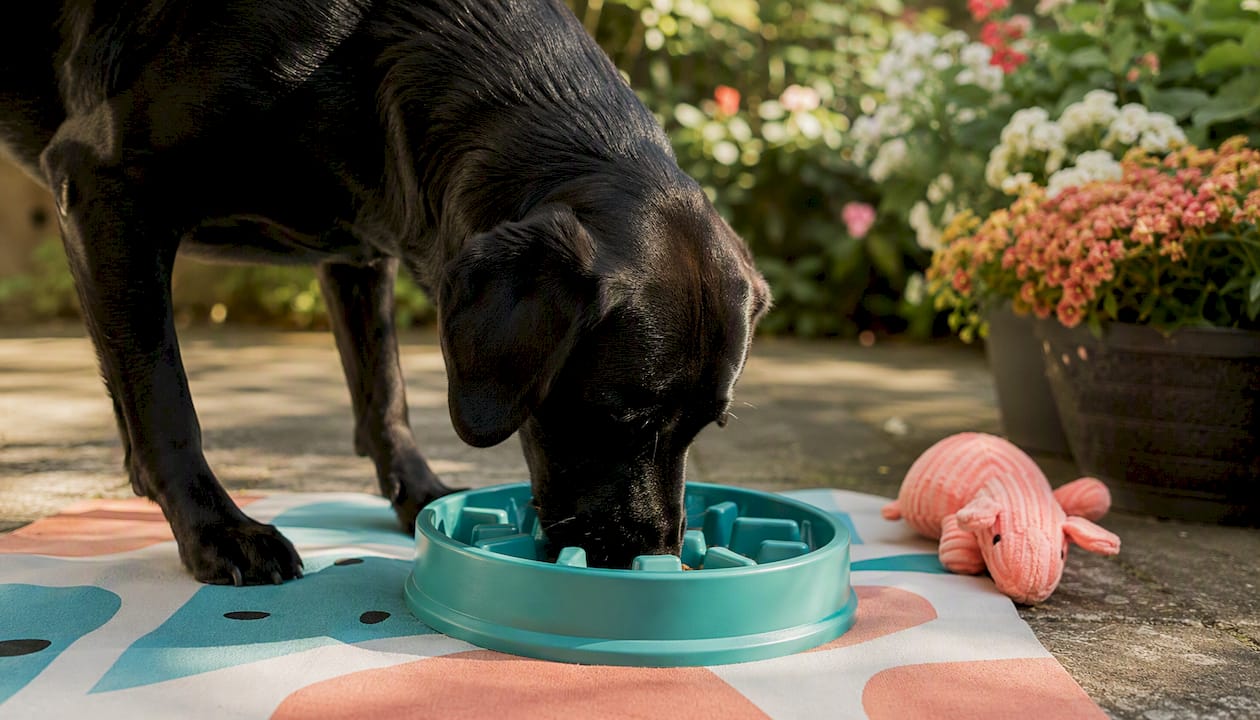
Helpful product types: Slow feeder dog bowls extend meal time for dogs that gulp food, which improves satiety signals. Measured dispensers and automatic feeders remove the guesswork from portion sizes and prevent opportunistic extra feeds. A treat pouch keeps the daily allowance visible and contained.
Safe exercise to support weight loss
Start slowly, match activity to your dog’s current condition, and add consistent low-impact movement as tolerated. Diet does the heavy lifting for weight loss; exercise protects muscle, improves mobility, and supports mental wellbeing.
Graduated activity by starting condition:
- Dog with arthritis or mobility limitations: — Hydrotherapy (underwater treadmill or swimming) is often the best option. The water supports body weight while allowing full muscle engagement. Ask your vet for a referral to a canine physiotherapist or hydrotherapy centre.
Pro Tip: Track exercise by time or step count rather than estimating calories burned. Calorie-burn estimates for dogs are unreliable. A consistent daily time target is easier to measure and adjust.
Managing feeding in a multi-dog household
Separate mealtimes or gated feeding areas are the most reliable way to ensure each dog receives its prescribed ration without interference. In a multi-dog home, the slimming dog’s plan can be undermined in minutes if feeding is unsupervised.
Practical separation tactics:
- Feed dogs in separate rooms and close the door until every bowl is clean.
- Use a baby gate or puppy pen to create a dedicated feeding zone for the dog on a diet.
- Microchip-activated feeders open only for the registered dog, making separation automatic even when you are not watching.
- Timed programmable feeders dispense a set portion at a set time, removing the temptation to top up “just a little.”
Behavioural and household consistency:
- Brief every person in the household on the plan. One family member giving extras can undo a week of careful feeding.
- Remove food bowls immediately after meals. Leaving a bowl down invites the other dog to finish any leftovers.
- Keep treats in a single, designated container so the daily allowance is visible and finite. When the container is empty, treats stop for the day.
- If one dog finishes first and tries to push the other away, supervise actively or use physical barriers until the slower eater is done.
How to monitor progress and handle plateaux
Weigh your dog fortnightly, reassess BCS and muscle condition at each recheck, and review everything the dog has eaten since the last visit. Progress is rarely perfectly linear, and knowing what to expect prevents panic and premature plan changes.
Monitoring schedule:
- Week 1: First weight check after starting the new diet. Confirms the dog is eating the new food and gives an early baseline.
- Every 2 weeks: Weigh, photograph, measure girth, and review the food diary. Compare to the previous record.
- Once at target weight: Monthly weigh-ins to confirm maintenance.
What to measure at each check:
- Body weight (to the nearest 0.1 kg on a reliable scale)
- BCS (reassess using the 1–9 scale)
- Girth measurement behind the last rib
- Photograph from above and from the side
Expected rates and what they mean:
- Safe weight loss is around 1–2% of starting body weight per week.
- Loss faster than 2% per week risks muscle loss and metabolic problems. Contact your vet if this happens.
- No loss after two consecutive fortnightly checks is a plateau. The first step is to audit the food diary for unaccounted calories before reducing intake further.
Timeline examples by starting BCS:
- BCS 6 (mildly overweight, ~10–15% above ideal): Expect to reach target in 8–12 weeks with consistent adherence, which aligns with the published typical rate of 8–11% weight loss over 12 weeks.
- BCS 7 (moderately overweight, ~20–30% above ideal): Allow 16–24 weeks. Expect at least one plateau; a small calorie adjustment of around 10% is the right response, not a drastic cut.
- BCS 8–9 (obese, 30%+ above ideal): Six months or longer is realistic. A veterinary prescription therapeutic diet is strongly recommended. Recheck every two weeks throughout.
When a plateau occurs, the right clinical response is a small, staged calorie adjustment combined with repeat body condition scoring, not a sudden drastic cut. Practitioners typically adjust feeding by around 10% at a time to avoid muscle loss and hunger spikes.
Practical tools that make a weight-loss plan easier
The right equipment reduces accidental overfeeding and adds enrichment without extra calories. Each product type below solves a specific problem that commonly derails a weight-loss plan.
Tools and what they solve:
- Slow feeder bowls: Designed with ridges or mazes that force dogs to eat around obstacles. Slower eating improves satiety signalling and reduces the risk of bloat in large breeds.
- Puzzle feeders and enrichment toys: Replace food-based boredom relief with mental stimulation. A dog working for its kibble through a puzzle toy takes longer to eat and feels more satisfied.
- Stuffable toys: Fill with a measured portion of wet food or a small amount of low-calorie paste. These extend meal time and provide enrichment, particularly useful for dogs that finish meals in seconds and then beg.
- Automatic feeders: Dispense a pre-set portion at a scheduled time. Useful for households where feeding times vary, or in multi-dog homes where separation is needed.
- Treat pouches: Keep the daily treat allowance in one place during training sessions. When the pouch is empty, the allowance is spent.
- Dog food storage containers: Airtight containers keep measured daily portions fresh and make it easy to pre-portion a week’s worth of food in advance, reducing the chance of overpouring at mealtimes.
Pro Tip: Pre-portion the entire day’s food into a single container each morning. Everything that comes out of that container, including training treats and meal kibble, is the dog’s total daily allowance. Nothing else gets added.
Key takeaways
A safe dog weight loss diet requires a vet assessment, a measured calorie target based on the dog’s ideal weight, a nutritionally complete diet, strict treat accounting, and fortnightly weigh-ins to track progress.
| Point | Details |
|---|---|
| Vet check first | Baseline BCS, blood tests, and a written calorie target before changing anything. |
| Calorie target from ideal weight | Use RER at target weight; do not feed below 60% of RER without vet supervision. |
| Treats at 10% or under | Count dental chews, supplements, and medication food in the daily total. |
| Weigh fortnightly | Safe loss is 1–2% of starting body weight per week; adjust calorie intake by about 10% if progress stalls. |
| Giddypets tools | Slow feeders, puzzle toys, automatic feeders, and treat pouches from Giddypets support measured, consistent feeding at home. |
Call your vet immediately if your dog loses weight faster than 2% per week, vomits repeatedly, becomes markedly lethargic, or shows no progress despite strict adherence.
Why steady, vet-led change is the only plan worth trusting
Quick fixes are tempting when you can see your dog struggling to move or panting after a short walk. But crash diets for dogs carry real risks: rapid fat loss without adequate protein causes muscle wasting, and a dog that loses muscle becomes weaker and more prone to injury, not healthier. The metabolic adaptation that follows rapid restriction can also make subsequent weight loss harder, not easier.
What actually works is the opposite of dramatic. A modest, consistent calorie deficit, a diet formulated to protect lean tissue, and a recheck schedule that catches problems early. The owner’s role is mostly about consistency: measuring every meal, counting every treat, and showing up to the fortnightly weigh-in even when progress feels slow.
The behavioural traps are predictable. Owners feel sorry for a dog that seems hungry and add “just a little extra.” Family members give treats without telling each other. The food diary gets abandoned after the first week. These are not failures of willpower; they are failures of system. The solution is to build the system before the feelings kick in: pre-portion the food, brief the household, and keep the treat container visible and finite.
A team approach, owner plus vet, consistently outperforms solo attempts. Your vet can adjust the plan based on real data rather than guesswork, and that matters more than any particular diet brand or feeding gadget.
Giddypets has the tools to make your dog’s plan stick
Getting the diet right is one half of the equation. The other half is having the right equipment at home so that measured feeding becomes a habit rather than a chore.
Giddypets stocks the product categories that vets and behaviourists recommend for weight-management plans: slow feeder bowls to extend meal time and improve satiety, puzzle feeders and enrichment toys to replace food-based boredom relief, stuffable toys to turn a measured portion into a ten-minute activity, and automatic feeders to keep portions consistent even on busy days. Treat pouches help you manage the daily allowance during training without losing track of what has been given. Every product ships quickly to UK addresses, and the site’s vet-approved guides sit alongside the shop so you can read and buy in one place.
Browse the food and treats section to find low-calorie options that fit your dog’s daily allowance, or head to the main shop to explore the full range of feeding and enrichment tools. Your dog’s plan starts with your vet; Giddypets helps you carry it out every day.
Useful sources and further reading
These sources underpin the guidance in this article. Take them to your vet if you want a printed reference or a second opinion on any of the figures cited.
- Obesity and weight loss in dogs, Cornell University College of Veterinary Medicine — Covers safe loss rates, therapeutic diet formulation, and the risks of nutrient shortfalls when cutting maintenance diets.
- Effects of a therapeutic weight loss diet on weight loss and metabolic health in overweight and obese dogs, PMC/NIH — Randomised clinical trial reporting weight-loss outcomes under supervised therapeutic diet protocols.
- PMC/NIH: canine obesity research index — Peer-reviewed research on canine obesity, metabolic health, and the clinical outcomes of weight-loss interventions.