






6–8 Hour Vet Aligned Home Steps for Dog Diarrhoea, UK Owners
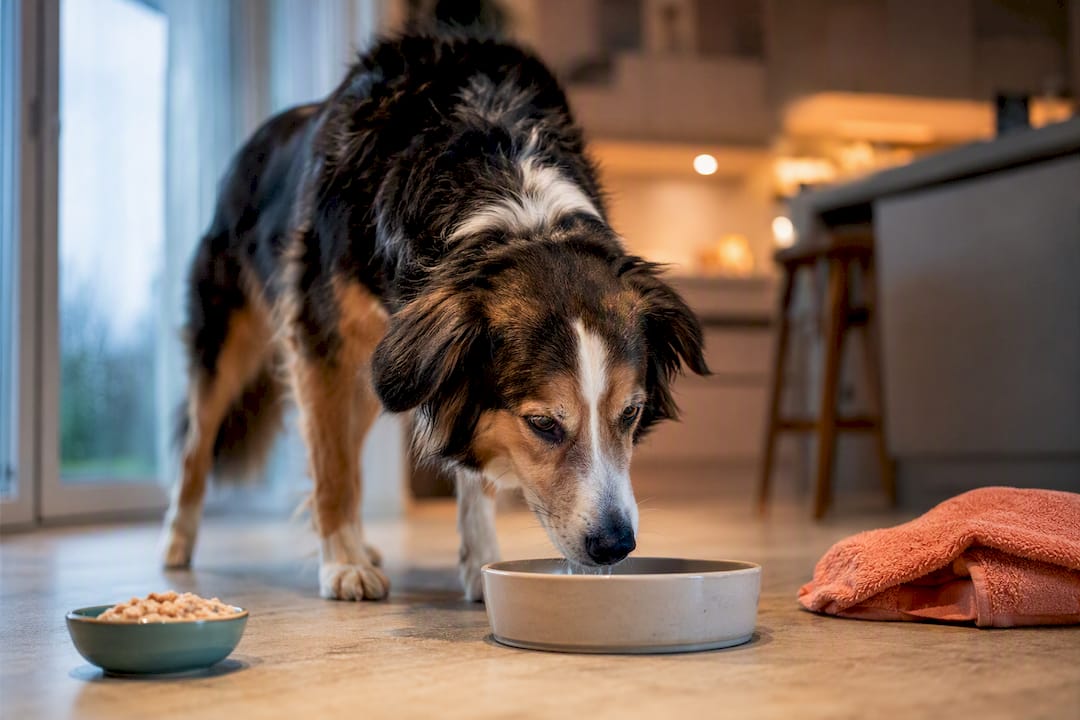
Most mild cases settle within a few days using a bland diet of boiled chicken and rice, small amounts of pure pumpkin for fibre, a veterinary-formulated probiotic, and constant access to fresh water. This works only when your dog is alert, eating, and showing no blood in the stool. If you see blood, black tarry stools, repeated vomiting, or lethargy, call your vet promptly rather than waiting it out.
TL;DR:
- The main focus should be on a strict bland diet, consisting of chicken and rice, with added pumpkin and veterinary probiotics, for at least three to five days.
- Maintaining constant access to fresh water and avoiding treats, chews, or fatty foods are crucial until stools return to normal.
- Signs like blood in stool, persistent vomiting, lethargy, or refusal to drink require immediate veterinary consultation, especially within 24 hours.
- Reintroduce normal food gradually over a week, starting with small, frequent meals and monitoring stool consistency each day.
- Stress, dehydration, and improper transition to regular diet can prolong recovery or worsen the condition, so close attention to hydration and environment is essential.
Table of Contents
- What are the best dog diarrhoea home remedies to try now?
- How do you make a bland diet for a dog with diarrhoea?
- How much water does a dog with diarrhoea need?
- Do probiotics actually help dog diarrhoea?
- When should you call the vet about dog diarrhoea?
- How do you transition a dog back to normal food after diarrhoea?
- Can herbal remedies like chamomile help settle a dog’s stomach?
- Does stress make dog diarrhoea worse?
- How do you spot dehydration in a dog with diarrhoea early?
- Giddy Pets’ view: balancing safe home care with vet oversight
- What Giddy Pets stocks to support your dog’s recovery at home
- Where else can you check reliable advice on dog diarrhoea?
- Sources
- FAQ
What are the best dog diarrhoea home remedies to try now?
Start with these, in order, and watch how your dog responds over the first six to eight hours.
- Switch to a bland diet immediately. Boiled skinless chicken and plain white rice settle the gut better than your dog’s usual food while things calm down, according to Cornell University’s veterinary guidance.
- Add plain pumpkin for soluble fibre. A small dog might need a teaspoon, a larger dog a tablespoon or two, adjusted by weight, and this can help firm up loose stool.
- Introduce a veterinary probiotic, not a human one, ideally with a named strain on the label.
- Keep water topped up constantly and offer small amounts of low-sodium broth if your dog is reluctant to drink plain water.
- Hold off on treats, chews, and rich food until stools are back to normal for at least a day.
Skip home treatment altogether for puppies under four months, seniors with existing health conditions, dogs recovering from recent surgery, or any dog on long-term medication. Their reserves run out faster, and what looks like a mild wobble can turn serious within hours.
Pro Tip: Keep a simple log on your phone: time of each stool, its consistency, and what your dog has eaten. If you do need to call the vet, this timeline saves precious minutes on the phone.
How do you make a bland diet for a dog with diarrhoea?
The classic ratio is one part lean protein to two parts white rice, cooked with nothing added. No salt, no stock cubes, no butter.
The recipe:
- Boil skinless, boneless chicken breast until fully cooked, then shred it finely.
- Cook plain white rice in unsalted water until soft.
- Mix one part chicken to two parts rice by volume.
- Serve lukewarm, never straight from the fridge.
For a medium dog around 15 to 20kg, start with roughly a quarter of their normal daily food volume, split into four to six small meals every six to eight hours rather than the usual one or two large ones, following the feeding pattern outlined by Vetstreet’s vet-reviewed guidance. Most dogs stay on this bland mix for three to five days before beginning the return to normal food.
If chicken doesn’t agree with your dog, or you suspect a chicken allergy, plain boiled potato (skin off), plain pasta, or a small amount of scrambled egg without butter or milk are all reasonable swaps. Egg is gentle on the stomach and a genuinely useful option if your dog turns their nose up at chicken and rice for the third meal running.
Strictly avoid these while your dog is recovering:
- Onions and garlic, including in gravy or stock
- Xylitol, found in some peanut butters and baked goods
- Fatty scraps, bacon, or anything from your own plate
- Cooked bones of any kind
- Seasoned or salted broths
Check Giddy Pets’ list of foods toxic to UK dogs if you’re ever unsure what’s lurking in a leftover.
How much water does a dog with diarrhoea need?
Dehydration is the real danger here, not the diarrhoea itself. Fluid loss through repeated loose stools can tip a dog from “under the weather” to genuinely unwell faster than most owners expect, which is why fresh water needs to be available at all times, as Cornell’s veterinary team stresses.
Offer water in a shallow, easy-to-reach bowl and refresh it often. If your dog is turning up their nose at plain water, a splash of unseasoned, low-sodium meat broth can tempt them, or a vet-recommended electrolyte solution if things are dragging on. Wetting their bland food slightly also helps sneak in extra fluid.
One caution: if your dog is also vomiting, don’t let them gulp large amounts in one go, as this can trigger another bout. Small, frequent sips work better than one big bowlful.
A quick way to check hydration at home: gently pinch the skin at the scruff of the neck and let go. In a well-hydrated dog, it springs back almost instantly. Dogs typically need urgent veterinary attention when that skin takes several seconds to settle, alongside dry gums or sunken eyes, per PDSA’s owner guidance.
Do probiotics actually help dog diarrhoea?
Yes, but the type matters more than most owners realise. Veterinary-formulated probiotics with a named, studied strain, such as Enterococcus faecium, are preferred over anything pulled from a human supplement shelf, because the strains and doses used in products like Purina FortiFlora have actually been studied in dogs. Human probiotic capsules are formulated for a different gut entirely and simply aren’t equivalent.
- Plain, unsweetened natural yoghurt in small amounts is generally fine as an occasional addition, but it’s not a substitute for a proper veterinary probiotic if diarrhoea is ongoing.
- Pumpkin remains one of the simplest fibre boosts: a teaspoon for a small dog, up to two tablespoons for a large breed, adjusted for body weight.
- Never reach for Imodium, Pepto-Bismol, or any other human over-the-counter remedy without checking with your vet first. Some breeds react badly to these, and they can mask the very symptoms your vet needs to see to diagnose what’s actually wrong, a caution echoed by VCA’s clinical guidance.
Pro Tip: If your dog needs probiotic support for longer than a couple of weeks, that’s worth flagging to your vet rather than continuing indefinitely on your own judgement.
When should you call the vet about dog diarrhoea?
Certain signs mean the phone comes out immediately, not tomorrow.
- Call now if you see blood in the stool, black or tarry motions, repeated vomiting, marked lethargy, or your dog refusing all water.
- Call within 24 hours if vomiting accompanies the diarrhoea even mildly, or your dog is a puppy, senior, or has an existing health condition.
- Call after 48 to 72 hours if diarrhoea simply isn’t improving despite bland feeding, which lines up with PDSA’s own guidance on timing.
Before you dial, have a few details ready: roughly when it started, what the stool actually looks like (colour, consistency, frequency), any recent food changes or bin-raiding, whether your dog could have reached anything toxic, and their current vaccination and worming status. This saves the vet time and gets your dog seen faster.
How do you transition a dog back to normal food after diarrhoea?
Rushing this step is the single most common reason diarrhoea comes straight back. A gradual mix over five to seven days gives the gut time to readjust, following the pattern recommended by Vetstreet’s veterinary team.
- Days 1 to 2: 75% bland diet, 25% regular food
- Days 3 to 4: 50/50 split
- Days 5 to 6: 25% bland diet, 75% regular food
- Day 7 onwards: back to full regular food
Only move to the next stage once your dog has produced one fully normal, formed stool, plus a further day symptom-free. If loose stools return partway through, don’t push on. Slide back to the bland diet for another day or two and slow the whole schedule down.
Repeated relapses during reintroduction are a signal worth listening to. At that point, a gradual food-switching schedule or a proper vet review makes more sense than another attempt at home.
Can herbal remedies like chamomile help settle a dog’s stomach?
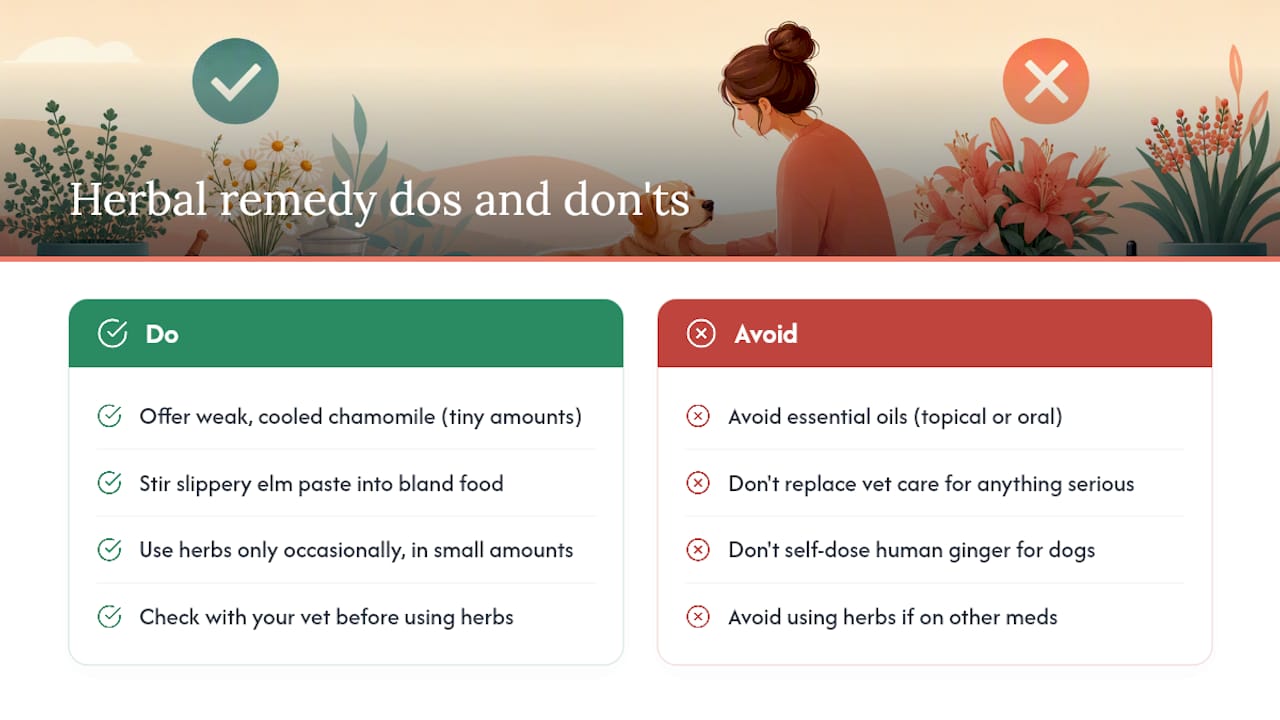
Some gentle herbal options have a long history of calming an upset gut, though none replace veterinary care for anything beyond mild, short-lived symptoms. Chamomile, brewed as a weak, cooled tea and offered in tiny amounts (a few teaspoons for a small dog), has a mild soothing reputation for digestive discomfort. Slippery elm bark, sold as a powder, forms a gentle coating along the digestive tract when mixed with water into a thin paste, and some owners find it useful stirred into the bland diet.
Both should only be used in small, occasional amounts, and always check with your vet first if your dog is on any other medication, since herbal ingredients can interact with drugs in ways that aren’t always obvious. Never use essential oils, either topically or by mouth. What’s calming to a human system can be genuinely toxic to a dog, even in what looks like a tiny amount.
Treat herbal support as a complement to the bland diet and hydration steps already covered, not a replacement for them. If you’re tempted to reach for something from your own cupboard because it “settles your own stomach,” pause first. Ginger, for instance, is sometimes suggested for dogs, but doses that are safe for humans can be far too concentrated for a small breed, and it’s easy to get this wrong without proper guidance. When in doubt, stick to the plainer, better-studied options: bland food, pumpkin, and a proper veterinary probiotic.
Does stress make dog diarrhoea worse?
Stress hormones affect gut motility in dogs just as they do in humans, and a dog already fighting an upset stomach has less resilience to cope with extra excitement or anxiety on top. A house full of visitors, a boisterous walk, or even an over-enthusiastic play session can prolong recovery that would otherwise settle within a day or two.
Give your dog a quiet, comfortable space away from household noise and other pets while they recover. A crate, a favourite corner, or their usual bed in a calm room all work, provided it’s somewhere they already associate with rest rather than confinement.
Keep walks short and low-key rather than skipping them entirely. Gentle movement still matters, but a five-minute toilet break is enough. Long walks or vigorous play can worsen dehydration and slow healing, particularly if your dog is already feeling under the weather.
Watch your own energy too. Dogs pick up on tension, and a fretful owner hovering anxiously can wind up an already unsettled dog further. Speak in a calm, ordinary voice, keep your usual routine where possible, and resist the urge to make a huge fuss every time they go outside. A settled environment, alongside the dietary steps already covered, gives the gut the best chance to recover without added strain.
How do you spot dehydration in a dog with diarrhoea early?
Catching dehydration early is the difference between a home remedy working and a trip to the emergency vet. Check your dog two or three times a day while symptoms last, not just once in the morning.
The skin-pinch test remains the quickest home check: lift a fold of skin at the scruff and watch how fast it settles back. Instant recovery is reassuring; anything slow or tented needs attention. Alongside that, look at the gums. They should be pink and moist to the touch, not sticky, pale, or tacky. Sunken-looking eyes and unusually dry, cool paw pads are both worth noting too.
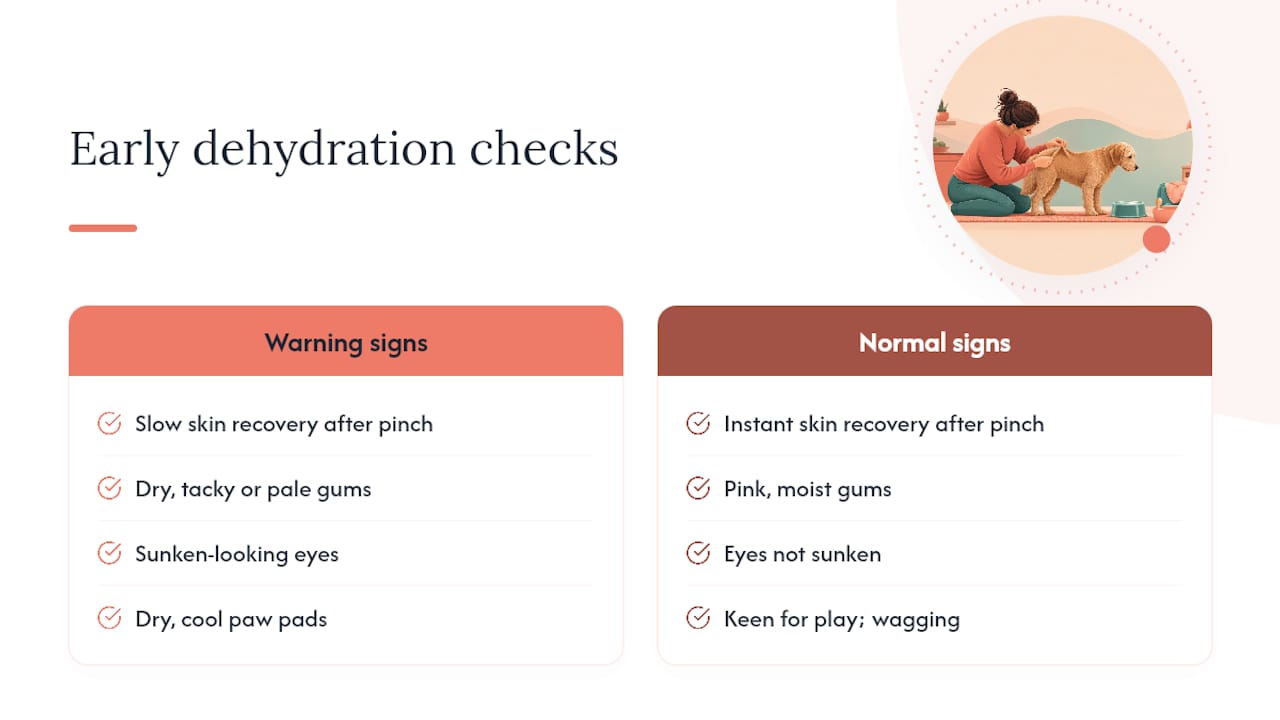
Behaviour tells its own story. A dehydrated dog often seems flat, disinterested in toys or walks, and may seek out cool floors to lie on. If your dog is still keen for a game and wagging at the door, that’s a genuinely good sign. Track how much water they’re actually drinking, not just how often you refill the bowl. A dog visiting the water bowl but barely lapping is different from one drinking normally.
If you’re seeing more than one warning sign together, particularly slow skin recovery combined with lethargy or dry gums, don’t wait for things to worsen overnight. That combination is exactly the point at which home care needs to hand over to veterinary fluid therapy, whether that’s a subcutaneous fluid top-up at the practice or, in more serious cases, an intravenous drip.
Giddy Pets’ view: balancing safe home care with vet oversight
Home remedies work best as a bridge, not a substitute for proper diagnosis. This approach pairs curated, quality supplies with vet-approved advice, because the two genuinely work better together than either alone. Bland diets, pumpkin, and veterinary probiotics deserve their reputation, but they only earn trust when paired with honest limits. Don’t treat “improving” and “improved” as the same thing. If you’re ever unsure, our vet-finder tool and related guides are there to help you make that call with confidence.
— Giddy
What Giddy Pets stocks to support your dog’s recovery at home
Once your dog is on the mend, the right kit makes the whole recovery smoother, not the cure itself, but genuinely useful support. Dog wipes make cleanup after a messy episode far less unpleasant for both of you, particularly for longer-coated breeds where mess tends to linger.
A slow feeder bowl is worth considering once you reach the food transition stage, since dogs who gulp their meals down too fast are more prone to the kind of digestive upset that started this whole episode in the first place. Easy-clean, shallow bowls also make it simpler to keep fresh water constantly available, which matters more than almost anything else during recovery.
None of these products replace a vet’s diagnosis, and we’d never suggest otherwise. If your dog’s sensitive stomach keeps flaring up beyond the odd off day, our dog sensitive stomach diet guide walks through longer-term dietary options, and our food-switching schedule is worth bookmarking for the next transition. Browse the full range at Giddy Pets and pick out what suits your dog’s recovery kit today.
Where else can you check reliable advice on dog diarrhoea?
- Cornell University College of Veterinary Medicine on diarrhoea causes and recovery diets
- PetMD’s clinical guidance on feeding and probiotics
- PDSA’s owner symptom checklist for UK dog owners
- PAW Vet Practice on natural, at-home supportive care
Sources
- Diarrhea | Cornell University College of Veterinary Medicine
- Bland food for dog diarrhea: Vet-reviewed recipe + timeline | Vetstreet
- What to feed a dog with diarrhea | PetMD
- Eight home remedies for diarrhea and two that could be dangerous | VCA
- Dog diarrhoea | PDSA
FAQ
What can I give my dog to stop his diarrhoea?
A short course of bland chicken and rice, a small amount of plain pumpkin for fibre, and a veterinary-formulated probiotic are the safest first steps, alongside constant access to fresh water.
Is scrambled egg good for dogs with diarrhoea?
Plain scrambled egg, cooked without butter or milk, is a gentle, easily digested alternative to chicken and rice, and works well if your dog is reluctant to eat the usual bland mix.
How do I firm up runny dog poo at home?
Pumpkin’s soluble fibre is the most reliable at-home fix, alongside a bland diet fed in small, frequent portions rather than one or two large meals.
What if my dog has diarrhoea for 3 days but is acting normal?
Diarrhoea lasting beyond 48 to 72 hours needs a vet check even if your dog seems otherwise fine, since it can point to something bland feeding alone won’t resolve.
When does dog diarrhoea need emergency care rather than home treatment?
Blood in the stool, black tarry motions, repeated vomiting, marked lethargy, or refusal to drink all mean you should contact your vet promptly rather than continuing home care.