






4 Vet Backed Dog Chew Safety Checks UK Owners Can Use
4 Vet Backed Dog Chew Safety Checks UK Owners Can Use
Choose chews that match your dog’s chewing style and size, avoid excessively hard, non-digestible chews for power chewers, and supervise every session — that single approach prevents most chew-related emergencies. Check the chew fits your dog’s mouth properly, and remove it the moment it wears down, splinters, or turns swallowable. Bodies like AAHA and the VOHC exist precisely because “natural” and “long-lasting” don’t mean “safe.”
TL;DR:
- Chews should be appropriately sized, softer than tooth enamel, and fully digestible or indestructible, with clear labeling and VOHC approval for safety.
- Power chewers and gulpers face higher risks of broken teeth, choking, or blockages, requiring supervision and prompt removal of small or damaged chews.
- Reusable toys need regular cleaning and inspection to prevent bacteria buildup, with non-scented, mild cleaning methods to avoid harmful residues.
- Natural, long-lasting chews like antlers and cooked bones pose significant dental and gastrointestinal risks and should be avoided or supervised closely.
- Matching your dog’s chewing style with the right product and routine veterinary care minimizes risks and enhances safety during chew sessions.
Table of Contents
- Know your dog: chewing styles and how they change risk
- What to look for in a safe chew: size, hardness, digestibility and labelling
- Common chew types and practical safety notes
- How to introduce, supervise and retire chews safely
- Veterinary risks and when to seek urgent care
- Giddy Pets’ practical options and proof points for safer chews
- Cleaning and maintenance tips for reusable chew toys
- Author perspective: prioritising safety over novelty or longevity
- Where to buy safer chews for your dog
- Sources
Know your dog: chewing styles and how they change risk
Not every dog chews the same way, and dog chew safety starts with working out which category yours falls into. A gnawer licks and gently works a chew over long sessions without much force. A chewer applies steady pressure and slowly reduces a chew over days. A power chewer clamps down hard, snaps pieces off quickly, and can turn a tough toy into fragments within minutes. A gulper swallows chunks with barely any inspection, and this group carries a particularly high choking and obstruction risk, according to Today’s Veterinary Practice.
Breed, jaw structure and bite force all shift these categories. A terrier with a strong prey drive often chews like a power chewer regardless of size, while a laid-back spaniel might gnaw happily for an hour without doing much damage.
Before trusting any new chew, run this quick test:
- Hand it over in a calm, quiet space.
- Watch closely for the first 10 to 15 minutes without walking away.
- Check for fragments, sharp edges, or pieces small enough to swallow whole.
- Only leave your dog unsupervised with a chew once you’ve seen several safe sessions.
What to look for in a safe chew: size, hardness, digestibility and labelling
A reliable chew has to pass four checks before it earns a place in your dog’s toy box.
- Size. The chew should be larger than your dog’s snout and wider than their mouth can comfortably close around, following AAHA’s sizing guidance for preventing choking.
- Hardness. Anything harder than tooth enamel is generally considered a fracture risk, especially for power chewers. Pliable rubber or purpose-made dental chews are often a safer choice than very hard natural items.
- Digestibility. A chew that digests slowly but breaks into brittle chunks is still dangerous. The goal is either fully digestible in reasonable pieces, or genuinely indestructible with no swallowable fragments.
FEDIAF guidance backs the same principle: avoid excessively hard chews and supervise regardless of how sturdy a product looks on the shelf.
Pro Tip: Press your thumbnail into a chew before buying it. If you can’t dent it at all, assume it’s hard enough to crack a tooth.
Common chew types and practical safety notes
Every chew category carries its own trade-off between longevity and risk. Dog chew safety depends on matching the type to your dog rather than picking whatever lasts the longest on the shelf.
- Rawhide softens with saliva and can swell in the stomach; large swallowed pieces are a genuine choking and obstruction risk, so stick to sizes well beyond your dog’s mouth width and watch for softened chunks being gulped.
- Bully sticks and compressed edible chews are more digestible than rawhide but still pose a chunking risk once they shrink to a swallowable stub. ASPCA guidance recommends matching thickness to your dog’s size and taking sticks away once they get small.
- Antlers and very hard bones carry a well-documented tooth-fracture risk. The AKC notes antlers are often harder than tooth enamel and can splinter, and most vets advise avoiding them for power chewers entirely.
- Cooked bones splinter easily and should be avoided outright; raw bones carry lower splintering risk but still fracture teeth and can carry bacteria.
- VOHC-approved dental chews are formulated to reduce plaque without the fracture risk of natural hard chews, making them a solid fit for moderate chewers.
- Rubber and indestructible toys offer strong enrichment value for power chewers, but even “indestructible” claims need regular inspection for thin, worn sections.
- Plush and rope toys suit gentle chewers only, and always under supervision, since stuffing and fibres are easy to swallow.
Owners consistently overestimate how safe “natural” chews are. Vet reviews link hard natural chews like bones and antlers to dental trauma and gastrointestinal risk far more often than owners expect. Explore Giddy Pets’ indestructible dog toys if your dog fits the power chewer profile, or browse natural dog chews for gentler chewers.
How to introduce, supervise and retire chews safely
New chews deserve the same careful start every time, regardless of how trustworthy the product looks.
- Offer the chew in a quiet space, away from other pets, so your dog isn’t rushing.
- Watch the first 10 to 15 minutes closely and check whether it’s fragmenting, softening, or splintering.
- Look out for rapid destruction, swallowing without chewing, coughing, gagging, or pawing at the mouth. Any of these mean the chew comes away immediately.
- Retire the chew the moment it’s small enough to swallow whole, has sharp edges, or shows heavy wear. Don’t wait for “just one more session.”
Store chews somewhere your dog can’t self-serve, and count edible chews towards their daily calorie allowance rather than treating them as extras.
Pro Tip: Photograph a new chew on day one. Comparing it against that photo each week makes worn-down sections far easier to spot.
Veterinary risks and when to seek urgent care
Three risks sit behind almost every chew-related vet visit: tooth fracture, choking, and gastrointestinal obstruction.
A fractured tooth often shows as reluctance to chew on one side, pawing at the face, or visible chips. Choking presents as retching, pawing at the mouth, or distress without a normal cough. If your dog is conscious and coughing, let them try to clear it themselves first; only attempt manual removal if you can see the object and it’s not a full obstruction, and call an emergency vet immediately if breathing is compromised.
- Vomiting, abdominal pain, or lethargy after chewing can signal a swallowed fragment lodged in the gut, and this needs urgent veterinary assessment.
- Ideal chews are, per veterinary dental literature, not excessively hard, hold interest without causing trauma, and carry low toxicity and obstruction risk.
- VOHC-accepted products can help reduce plaque, but daily toothbrushing remains the strongest tool for dental health, chews included.
Giddy Pets’ practical options and proof points for safer chews
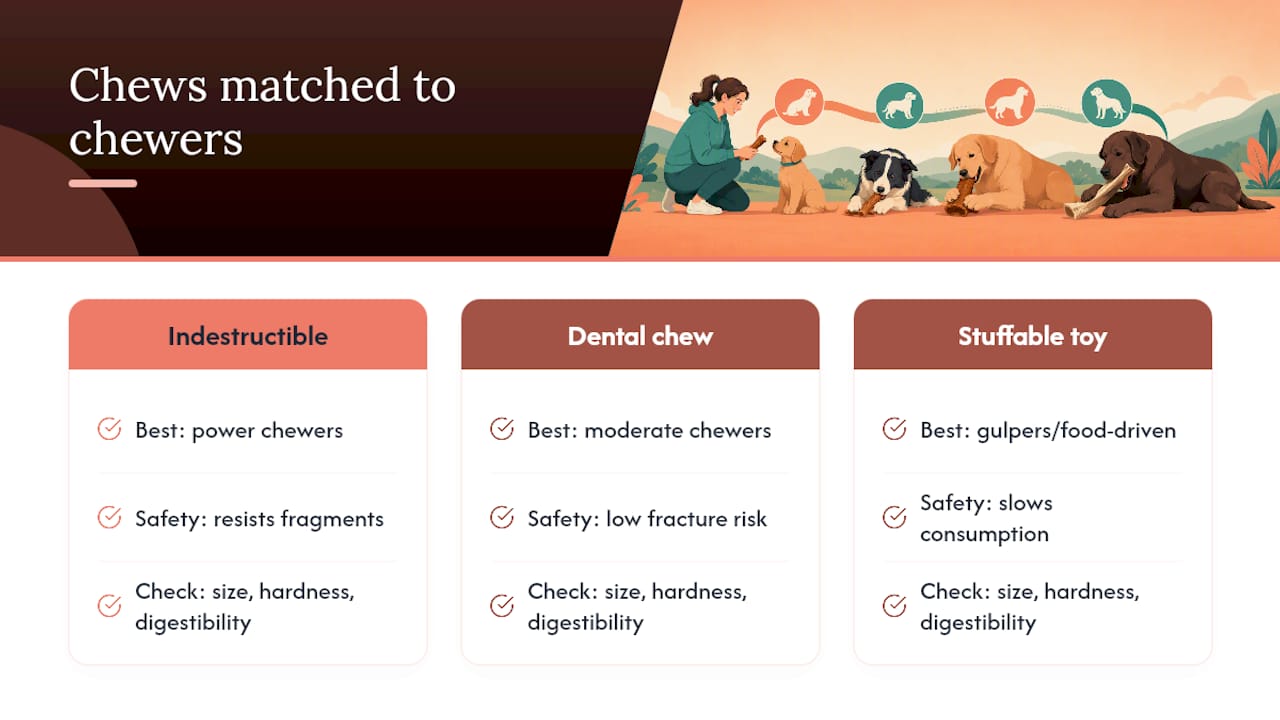
Once you know your dog’s chewing style, matching it to the right category becomes straightforward. Power chewers do best with indestructible dog toys built to resist heavy bite force without shedding fragments. Moderate chewers suit dental chews formulated to reduce plaque without the fracture risk of natural hard chews. Gulpers and food-driven dogs benefit most from stuffable toys, which slow consumption and remove the choking risk that loose treats carry. Each category is chosen against the same criteria covered above: size, hardness, and digestibility, not just how long a product claims to last.
Cleaning and maintenance tips for reusable chew toys
Reusable chews and toys collect saliva, food residue, and bacteria fast, and a grubby toy undoes a lot of the safety work you’ve put in elsewhere.
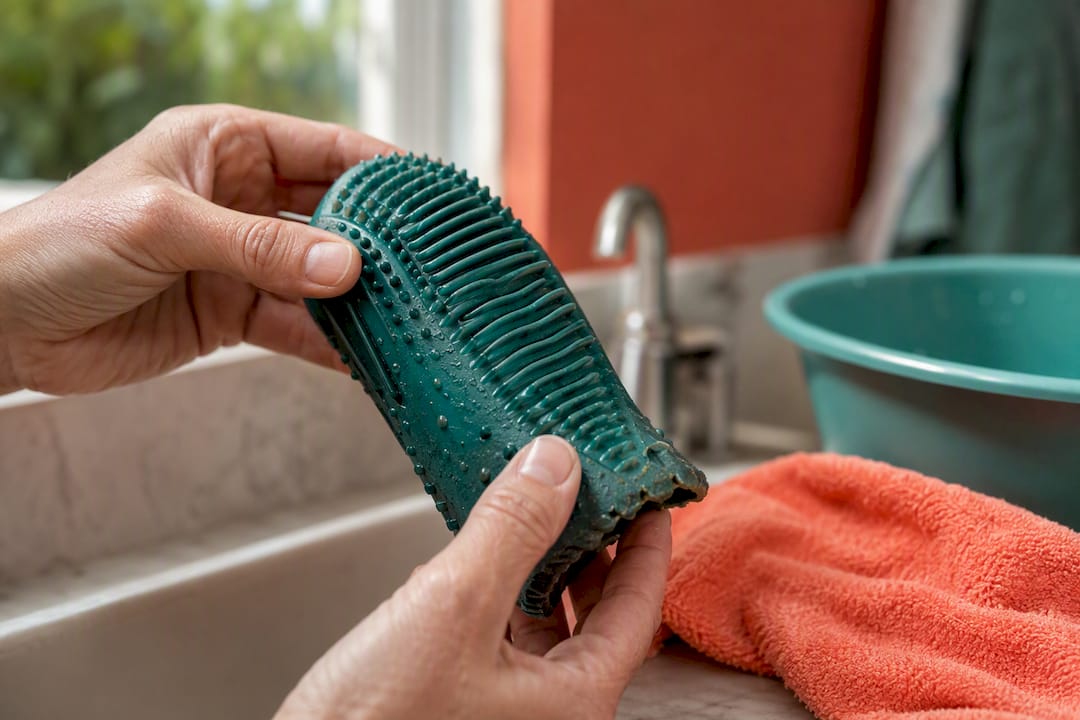
Rubber and rope toys need a wash roughly once a week for dogs who chew daily, sooner if the toy has been outside or dropped in mud. Most rubber toys tolerate warm water with a mild, unscented washing-up liquid; a soft brush gets into grooves where bacteria tend to build up. Rope toys can usually go through a washing machine on a gentle cycle inside a mesh bag, then air-dry fully before going back into rotation, since damp rope encourages mould.
Stuffable toys need extra attention around the filling holes, where food paste hardens over time. Rinse them out after every use if they’ve held wet food or paste treats, and let them dry completely before refilling.
Skip harsh disinfectants, bleach, or anything with a strong scent. Residue left on a toy ends up in your dog’s mouth, and strong smells can put some dogs off a toy entirely. Inspect every toy while you clean it. That’s the easiest moment to spot the thin, worn patches that mean it’s time to retire rather than rinse.
Author perspective: prioritising safety over novelty or longevity
Natural or long-lasting doesn’t mean safe, and the evidence on antlers and hard bones makes that plain. Choose chews the way a vet would: matched to the dog in front of you, backed by supervision, and paired with routine dental care rather than left to do the job alone.
— Giddy
Where to buy safer chews for your dog
Giddy Pets stocks the categories this guide points towards: indestructible toys for power chewers, dental chews for everyday plaque control, and stuffable toys for dogs who gulp rather than gnaw.
Rather than gambling on a “long-lasting” chew with no size class or dental approval listed, you can filter by chewing style and get a product built for it. If your dog is teething or newly arrived, the puppy teething toys range is worth a look too, and for dogs who chew through everything in sight, breeders at Lakewood Ranch Doodles offer useful behavioural context on why destructive chewing happens in the first place. Head to the dog toys shop to match a chew to your dog’s style today.