






Trim cat claws every 2–4 weeks with vet backed UK starter kit
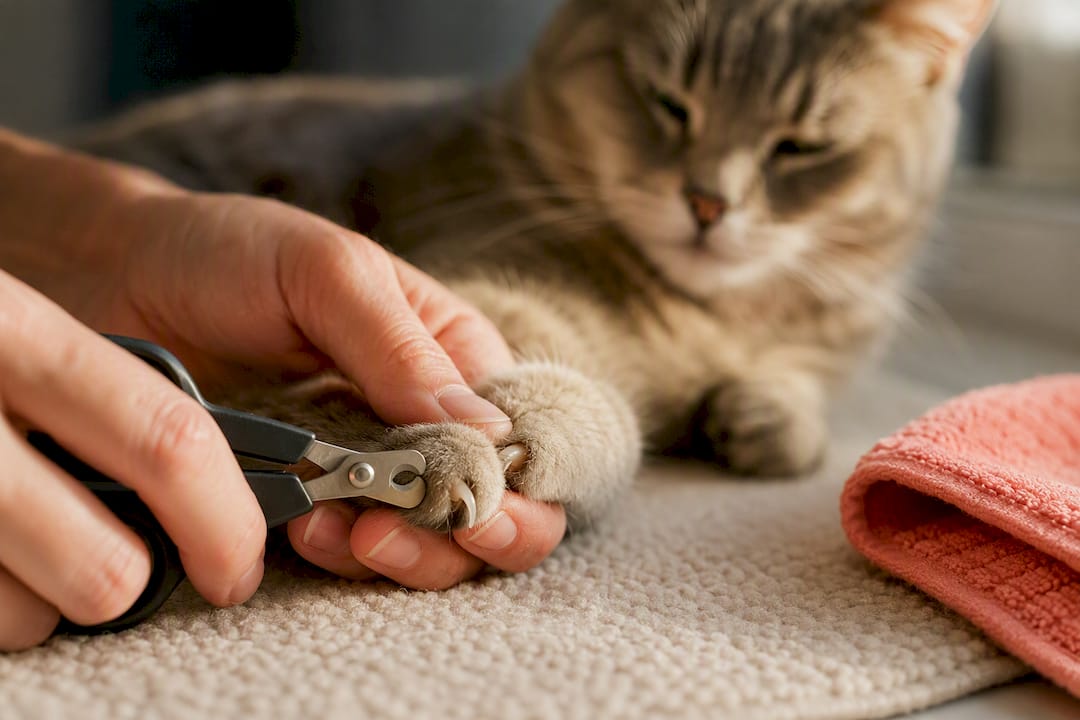
Most owners can trim their cat’s claws safely at home, provided they follow one non-negotiable rule: only ever cut the translucent white tip, never the pink quick underneath. Indoor cats typically need regular trims every few weeks. If your cat is in pain, has an infected nail, or fights hard enough that you can’t safely hold a paw, a vet or professional groomer is the right call, not a battle of wills.
TL;DR:
- Only ever cut the translucent white tip of the claw and avoid the pink quick to prevent pain and bleeding during trimming.
- Use sharp, controlled cat-specific clippers with good grip, and consider front paw trims over two sessions if your cat resists.
- Gradually train your cat with short, daily paw handling and treats to reduce stress and build trimming acceptance over time.
- In case of bleeding, apply styptic powder or flour and seek veterinary help if bleeding persists or signs of infection appear.
- Regular trimming every two to four weeks is recommended for indoor cats to prevent claw growth into the paw pad and reduce discomfort.
Table of Contents
- How to trim your cat’s claws step by step
- Which cat nail clippers actually work best?
- How do you train a cat to accept nail trims?
- What if you cut the quick or spot a problem?
- What does Giddy pets recommend for a starter kit?
- Building the habit without forcing it
- Where to find grooming supplies for your cat
- Sources
- FAQ
How to trim your cat’s claws step by step
Timing matters more than most owners realise. A cat fresh from a nap or a play session is loose-limbed and mellow, which makes the whole job easier. Pick a quiet room with good light, away from the vacuum cleaner, the doorbell, and anything else that might send your cat bolting mid-trim.
You don’t need to pin your cat down. Try whichever position feels natural: on your lap facing away from you, tucked gently between your knees, or settled on a flat table with a non-slip mat underneath. The goal is light contact, not a wrestling match.
- Settle your cat in a calm position and speak in a low, steady voice.
- Expose the claw by pressing gently in the middle of the paw pad; the claw will extend on its own.
- Check the nail. On pale claws, you’ll see a pink area near the base, the quick, surrounded by a white tip. Dark nails hide the quick, so look for the natural curve of the claw and cut just before it.
- Cut only the white tip, or the very end of the curve on dark nails, using small, controlled snips rather than one big cut. Cats Protection recommends this cautious, bit-by-bit approach over trying to take off length in one go.
- Move to the next claw, keeping the blade angled so it cuts cleanly rather than crushing the nail.
- Stop early if your cat pulls away, tenses, or tries to leave. Two or three nails done well beats ten done in a struggle.
- Reward immediately with a treat or a favourite game, every single time, even if you only managed one paw.
Pro Tip: Do the front paws over two sessions if needed. Back claws are usually blunter from walking and can wait for another day without any harm.
Which cat nail clippers actually work best?
The right tool changes everything about how a trim feels for both of you. Scissor and plier-style clippers tend to suit cats better than guillotine models, since they let you see the claw clearly and squeeze with more control in a tight space. Purina notes that blade quality matters more than style, though: dull blades crush and split the nail instead of cutting it cleanly, which hurts and puts your cat off the whole process.
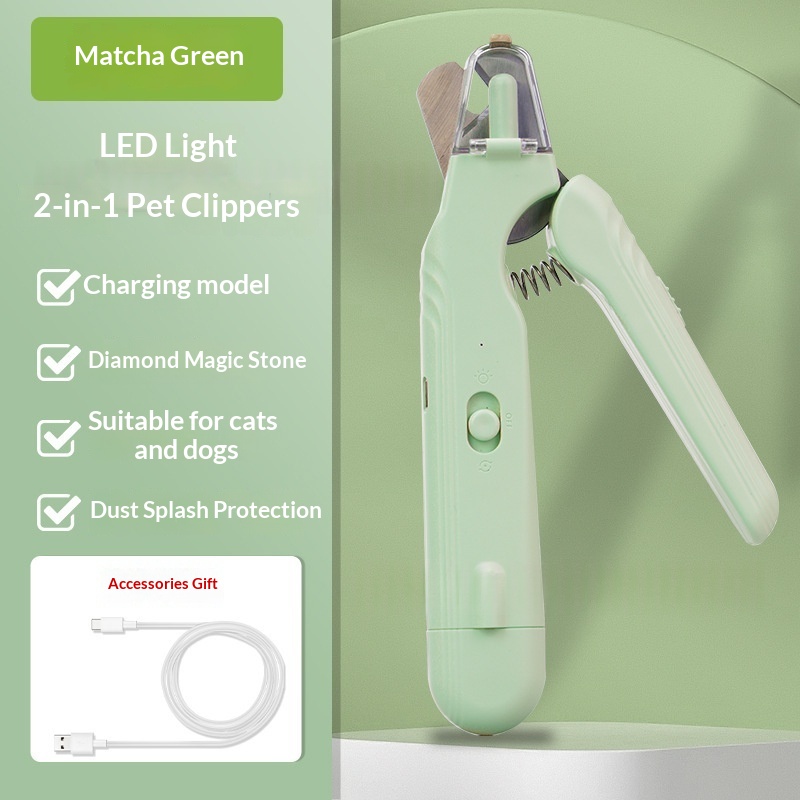
Grinders exist too, but many cats dislike the noise and vibration against their paw, so they’re better suited to patient cats already used to handling. Human nail clippers are not a substitute; they’re the wrong shape and tend to squash rather than slice a cat’s narrow claw.
Before you start, gather:
- Cat-specific nail clippers with sharp, clean blades
- Styptic powder, in case of an accidental nick
- Soft treats for immediate reward
- A towel for wrapping or steadying a wriggly cat
- A flat, non-slip surface to work on
How do you train a cat to accept nail trims?
Trimming gets easier with repetition, and repetition works best in small, boring doses rather than occasional marathon sessions. Handling paws daily for a few seconds each, two or three short sessions rather than one long one, teaches your cat that touch doesn’t mean danger.
- Touch and reward. Hold a paw for a second or two, then give a treat. Repeat daily until your cat barely notices.
- Introduce the clippers cold. Let your cat sniff them with no pressure attached, then reward.
- Practise on spaghetti. Clipping a strand of cooked spaghetti near your cat lets them get used to the sound without any real stakes, and you reward after each snip.
- Wrap if needed. A loose towel “burrito,” or a second person steadying the body, can help with an initial trim. Avoid forceful scruffing; it tends to raise stress rather than lower it.
- Bring in calming aids such as a Feliway diffuser, or ask your vet or a groomer to demonstrate the technique on your own cat.
Building the habit gently, a couple of paw holds a day, reduces fear far more reliably than trying to power through one long session.
What if you cut the quick or spot a problem?
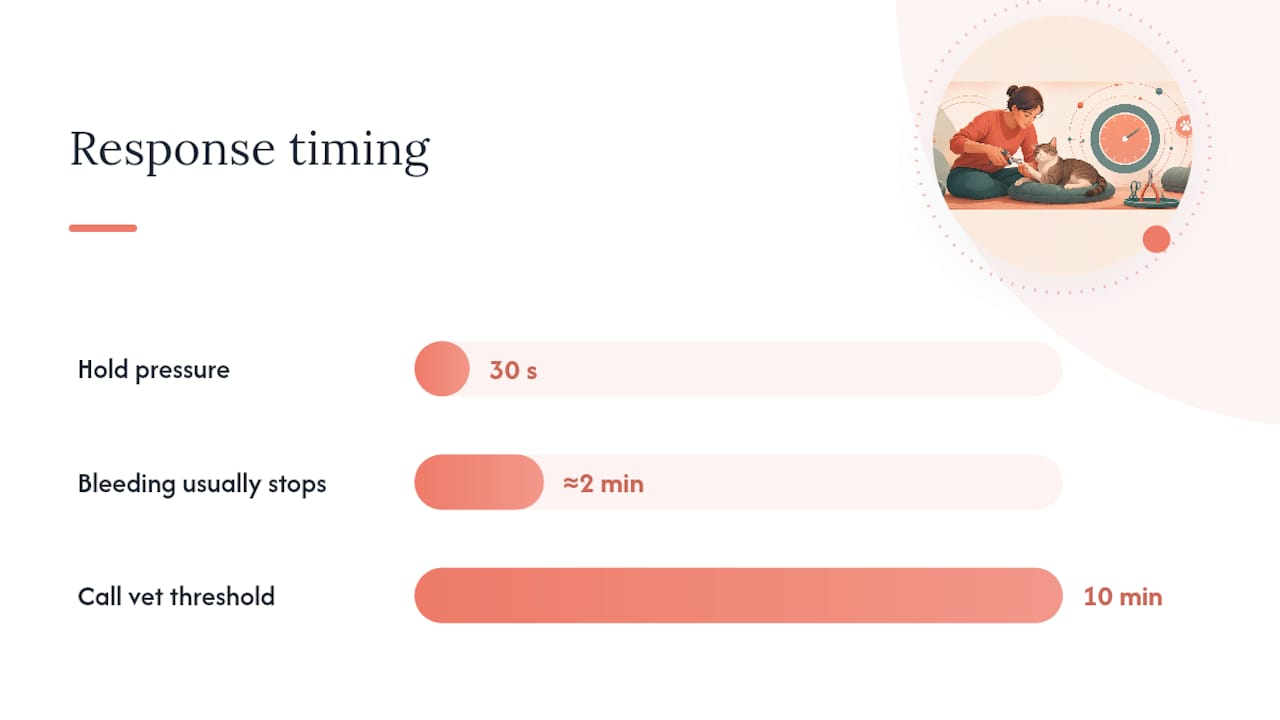
A nicked quick bleeds more than you’d expect for something so small, but it looks worse than it is. Press a pinch of styptic powder onto the tip and hold gentle, steady pressure for around thirty seconds. VCA Animal Hospitals notes that plain cornflour or flour works as a backup if you’re out of powder. Bleeding from a nicked quick usually stops within a couple of minutes.
Call your vet if:
- Bleeding continues past ten minutes despite pressure
- The paw looks swollen, hot, or your cat starts limping
- You notice discharge, a strong smell, or the cat won’t let you near the paw at all
Left untrimmed for too long, a claw can curl and grow directly into the paw pad, and VCA Animal Hospitals flags older or less active cats as particularly at risk, since they wear their nails down less through movement. If your cat becomes genuinely aggressive during trims, a professional groomer or a vet clip, occasionally under light sedation for extreme cases, is a sensible option rather than a failure on your part.
What does Giddy pets recommend for a starter kit?
Some grooming advice combines vet-aligned guidance with curated tool selections to help owners choose clippers that suit a cat’s claw shape. A sensible starter kit covers the basics without overcomplicating things:
- A pair of sharp, cat-specific clippers
- Styptic powder for peace of mind
- Soft, high-value treats kept aside just for trims
- A towel for gentle wrapping if your cat needs it
When choosing clippers, fit in your hand and blade sharpness matter more than price or branding. A comfortable grip means cleaner, faster cuts, which means less time your cat spends being handled.
Building the habit without forcing it
Progress with nail trims tends to come in small, unglamorous steps rather than one breakthrough session. Celebrate the cat who tolerates one paw today, even if yesterday it was none. Plenty of owners lean on a vet or groomer for the first few trims while they build confidence, and there’s nothing wrong with that; it’s a normal, sensible part of the learning curve, not a shortcut. What matters most is that your cat’s comfort sets the pace, not the calendar.
— Giddy
Where to find grooming supplies for your cat
There are other routes to sorted claws, a mobile groomer, a vet nurse clinic, even a friend with steady hands, but if you’d rather have the right tool in the house before you start, Giddy pets keeps a curated range of cat nail clippers chosen for blade sharpness and grip rather than flashy packaging.

Some product listings include vet-aligned guidance to assist in selecting clippers suited to a cat’s temperament. If your cat is a determined chewer between trims, a set of cat trees and scratching posts helps wear claws down naturally between sessions, and if claw caps feel like a gentler starting point, Kiblco’s guide to cat nail caps walks through how they work as a humane alternative to clipping. For anything that needs a food-related distraction mid-groom, a cat slow feeder can double as a reward station once the trim’s done. Fast UK delivery options enable timely receipt of items such as clippers for pet grooming.
Sources
Cats Protection covers cutting technique; International Cat Care covers vet referral signs; VCA covers frequency and first aid; Consumer Reports covers low-stress technique.
FAQ
Are you supposed to trim a cat’s claws?
Yes, most cats benefit from regular trims, particularly indoor cats who don’t wear their claws down on rough surfaces outside. Left too long, a nail can curl and grow into the paw pad, which VCA Animal Hospitals notes is a particular risk for older or less active cats.
How much do vets charge for cat nail clipping in the UK?
Prices vary by practice and region, so it’s worth ringing your local vet or veterinary nurse clinic for a current quote rather than relying on a fixed figure. Many practices offer a quick nurse-led clipping appointment that costs far less than a full consultation.
Do cats feel better after getting their nails clipped?
Most cats move more comfortably once overly long claws are trimmed, especially if the nails had started catching on carpet or furniture. A calm, well-paced trim using Cats Protection’s technique tends to cause far less stress than letting claws get long enough to cause real discomfort.
How can you dull a cat’s nails without clipping?
Scratching posts and cat trees wear claws down naturally through normal use, and encouraging that behaviour with a post like the ones in Giddy pets’ scratching range can reduce how often you need to reach for the clippers. Nail caps are another option some owners use between trims, applied over the existing claw as a temporary, humane cover.
How often should I trim my cat’s claws?
Most indoor cats need a trim roughly every two to four weeks, according to VCA Animal Hospitals. Outdoor cats generally need trims far less often, since rough surfaces wear the claws down naturally.