


Which cat litter type is actually right for your cat?
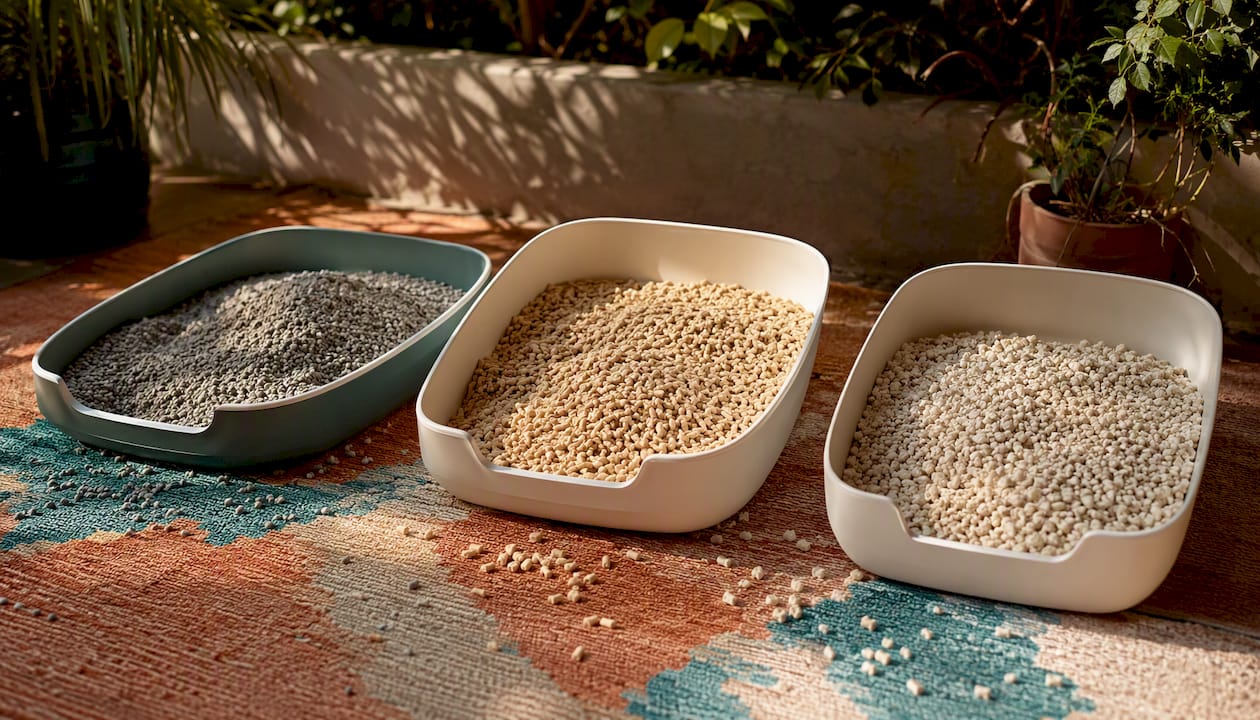
Which cat litter type is actually right for your cat?
For most cats and households, an unscented clumping clay litter is the safest starting point. It matches feline digging instincts, controls odour well, and gives you a clear daily read on your cat’s bathroom habits. That said, “most cats” isn’t every cat, and your home, budget, and any health concerns matter just as much as what science says works best on average.
Here’s a quick shortlist based on common situations:
- Multi-cat households: unscented clumping clay, but budget for one tray per cat plus one extra, and scoop at least twice daily.
- Kittens or post-surgical cats: paper pellets or non-clumping options, since clumping clay can be ingested during grooming or licking at healing incisions.
- Asthma, allergies, or respiratory sensitivity in the home: low-dust silica, paper, or wood pellets, avoiding fine clay dust entirely.
- Eco-minded owners: wood, tofu, or walnut-based litters, weighed against their higher cost and different clumping behaviour.
Pick one option from that list, then follow the gradual switching plan later in this guide. Rushing a litter change is the single most common reason cats start avoiding the tray altogether.
Key Takeaways
Unscented clumping clay litter suits most households best, but respiratory sensitivity, kittens, and eco priorities each justify a different first choice.
| Point | Details |
|---|---|
| Default recommendation | Unscented clumping clay works for most cats and matches natural digging instincts. |
| Match litter to situation | Choose paper pellets for kittens or post-op cats, low-dust silica for allergy households. |
| Switch gradually | Mix old and new litter over roughly a week to avoid tray avoidance. |
| Never flush most litters | Clumping clay and silica can block pipes; check packaging before flushing anything. |
| Start with Giddy Pets hygiene range | Giddy Pets’ cleaning and hygiene category stocks litters and accessories to trial a switch in one order. |
Table of Contents
- What are the main cat litter types and how do they compare?
- How do you choose the right litter for your cat and home?
- How do you switch cat litter safely without upsetting your cat?
- What do vets and studies actually say about litter safety?
- Which litters are biodegradable, and what’s safe to dispose of?
- Cat litter types compared: dust, odour and clumping at a glance
- How often should you scoop, top up, and fully change the litter?
- Why we take litter recommendations seriously at Giddy Pets
- What should you buy first if you’re switching litter?
- Sources
What are the main cat litter types and how do they compare?
Nearly every litter on the market falls into one of eight material categories, and each behaves completely differently in the tray. Understanding the raw material, not just the marketing on the bag, is what actually helps you predict how it’ll perform in your home.
Clumping clay (bentonite). This is the industry standard, made from sodium bentonite clay that swells and forms a solid mass on contact with liquid. Granules are fine and sandy, which cats tend to prefer because it mimics natural ground. Veterinary guidance consistently flags clumping clay as widely recommended because it’s highly absorbent and simplifies scooping. The trade-off is dust: the fine texture that makes it comfortable underfoot also makes it the dustiest common option, and it isn’t biodegradable.
Non-clumping clay. An older, coarser formulation that absorbs moisture without forming solid clumps. It’s cheaper upfront, but you’re stuck scooping visible waste and doing full tray changes far more often, since urine simply pools at the bottom rather than sealing away. Catster’s breakdown of clumping versus non-clumping notes that non-clumping formulas also tend to trap odour longer between changes.
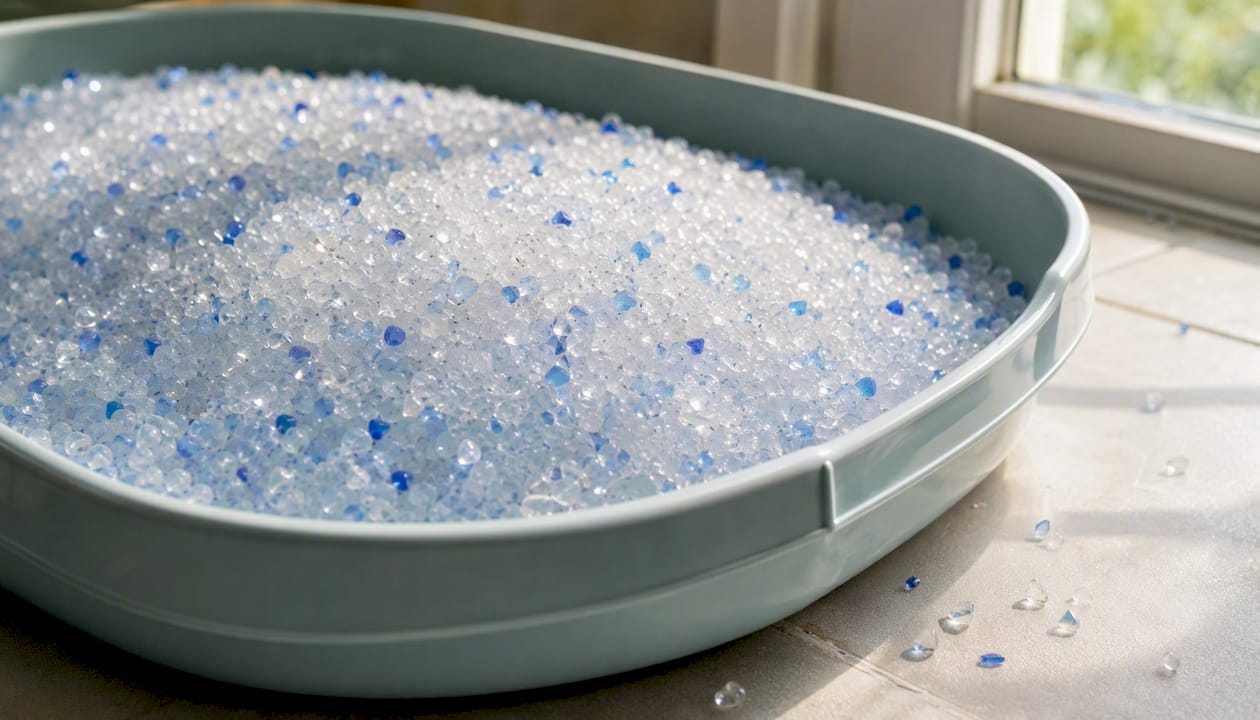
Silica gel (crystal) litter. Made from silica beads that absorb liquid into their structure rather than clumping it. It’s genuinely excellent at odour control and lasts weeks per tray, but the dust from crystal breakdown is a real respiratory concern. NHS guidance on silicosis confirms that repeated exposure to fine silica particles carries lung health risks, which is worth taking seriously in a small, poorly ventilated bathroom.
Paper pellets. Recycled paper compressed into soft pellets. Virtually dust-free, gentle on paws, and safe if ingested, making it the default choice for kittens and post-surgical cats. Odour control is weaker than clay, so you’ll be topping up and changing trays more frequently.
Wood or pine pellets. Compressed sawdust pellets that break down into a sawdust-like consistency once wet, working on a similar sifting principle to paper. Natural pine oils mask ammonia smell reasonably well, though the coarse pellet texture is where things get tricky, which we’ll come back to.
Tofu litter. Made from soybean pulp, a byproduct of tofu production. It clumps, flushes in small amounts, and is genuinely biodegradable, but Wired’s testing of newer litter types found it expands significantly when wet and can be pricier per bag than clay.
Walnut shell litter. Ground walnut shells that clump moderately and control odour via natural tannins. It’s dark in colour, which makes it harder to spot urine clumps quickly, and it’s one of the pricier plant-based options.
Corn and other plant-based litters. Made from ground corn cob or similar recycled plant material. These clump reasonably well and are compostable in some cases, but corn-based litters carry a specific caution: in damp, warm conditions, corn products can develop mould that produces aflatoxins, a toxin risk if a cat ingests contaminated litter.
Pro Tip: If your cat is a “litter eater” (some kittens and anxious cats do this), skip clumping clay and corn litters entirely. Paper pellets are non-toxic if swallowed and won’t swell inside the gut the way clumping clay can.
Independent Consumer Reports lab testing of odour masking, dust, and clump firmness found real trade-offs across every category: the litters that controlled odour best often produced more airborne dust, and vice versa. There’s no single litter that wins on every axis at once.
How do you choose the right litter for your cat and home?
Start with your cat’s preferences before your own. Cats are famously particular about substrate, and a litter you love on paper can sit untouched in the tray if the texture feels wrong underfoot.
Run through these criteria before buying a large bag of anything:
- Texture and granule size: finer particles generally feel more natural to cats but track further and create more dust.
- Dust level: critical if anyone in the house has asthma or allergies, or if your cat is older with any respiratory sensitivity.
- Clumping versus scooping effort: clumping litters mean less frequent full changes but usually cost more per bag.
- Scent: unscented is the safer default. Cats have a far more sensitive sense of smell than we do, and heavy perfumes can put them off the tray entirely.
- Tracking tendency: heavier pellet litters track less than fine clay or crystal granules.
- Biodegradability: matters if you’re disposal-conscious, though see the environmental section below before assuming any litter is compostable.
- Box compatibility: pellet litters generally need a sifting or two-part tray to work properly; clumping clay works in any standard box.
- Cost over time: the cheapest bag isn’t always the cheapest habit. As Preventive Vet’s guidance notes, clumping litters can work out more economical long-term because you’re discarding soiled clumps rather than replacing the whole tray as often.
Ask yourself a few practical questions too: how many cats share this house, does anyone have breathing issues, and realistically, how often can you commit to scooping? A single-cat flat with no respiratory concerns has far more flexibility than a three-cat household where one person has asthma.
Watch for red flags that a litter isn’t working, regardless of what the reviews say. A cat that hesitates at the tray edge, digs less than usual, or starts eliminating just outside the box is telling you something concrete, not being fussy for no reason.
Practical household factors, including dust, tracking, scent sensitivity and how well a litter suits your particular tray, tend to determine whether an owner is satisfied far more than any headline odour-control claim on the packaging.
If you want to trial two options, do it one at a time and never simultaneously in the same tray. Give each litter a genuine week’s trial in its own box before judging it, and keep a spare tray with the old litter available throughout so your cat always has a fallback option.
How do you switch cat litter safely without upsetting your cat?
A litter switch done too fast is the single most common cause of tray avoidance, so patience here pays off. Cats form strong associations with the texture and smell of their tray, and a sudden change reads as a threat rather than an upgrade.
- Days 1 to 2: mix roughly 25% new litter into the existing litter, keeping the tray, location, and scooping schedule completely unchanged.
- Days 3 to 4: increase to a 50/50 mix, watching for any hesitation at the tray edge.
- Days 5 to 6: move to about 75% new litter, 25% old.
- Day 7 onwards: switch fully to the new litter, but keep the old bag on hand for another week in case you need to step back.
Throughout the process, watch for behavioural signs that the switch isn’t going well: hesitating before stepping in, digging less than usual, or shortened visits where the cat leaves before finishing. Any of these is a cue to slow down, not push through.
Pro Tip: If your cat refuses the new litter outright at any stage, don’t force it. Go back a step, wait three or four days, and try the mix again slightly slower. Cats that are punished or forced during a switch can develop a lasting aversion to the entire tray, not just the new litter.
Keep everything else constant while you’re mid-switch: same tray, same room, same number of boxes, same scooping frequency. Changing more than one variable at once makes it impossible to know what, if anything, actually caused a problem.
What do vets and studies actually say about litter safety?
The strongest piece of behavioural evidence in this space comes from a controlled preference study, and the result is stark. When cats were offered a genuine choice between litter substrates, only 1 in 18 chose wood-based pellets over clumping clay. That’s not a small margin. It suggests the fine, sand-like texture of clay genuinely matters to feline comfort, not just to how the litter performs on a lab bench.
Vet guidance on dust and ingestion risk is more nuanced than a simple “avoid this, choose that” rule. Clumping clay’s main safety concern isn’t the clumping itself but the fine dust released when it’s poured or scooped, which is why NHS guidance on silicosis and general respiratory research inform caution for silica litters specifically, and why low-dust clay formulations exist as a middle ground.
Only 1 in 18 cats chose wood-based pellets when given a free choice against clumping clay in a controlled preference study, one of the clearest behavioural signals in feline litter research.
Ingestion risk isn’t limited to one material. Clumping clay can theoretically expand inside the gut if a cat licks a significant amount off its paws, though this is rare in practice. Corn-based litters carry the added, separate concern of aflatoxin development if the product gets damp and mould takes hold. Peer-reviewed literature on dust and particle exposure provides useful technical background here, though direct research specifically on cat litter dust and long-term feline respiratory outcomes remains limited.
Take three concrete actions from this evidence. Choose low-dust formulations if anyone in the household, human or feline, has asthma or a lung condition. Avoid corn-based litter for cats prone to eating litter, and never leave a damp bag sitting in humid storage. Never flush litter unless the packaging explicitly states it’s flushable, since even “flushable” claims vary by local plumbing and water authority.
Which litters are biodegradable, and what’s safe to dispose of?
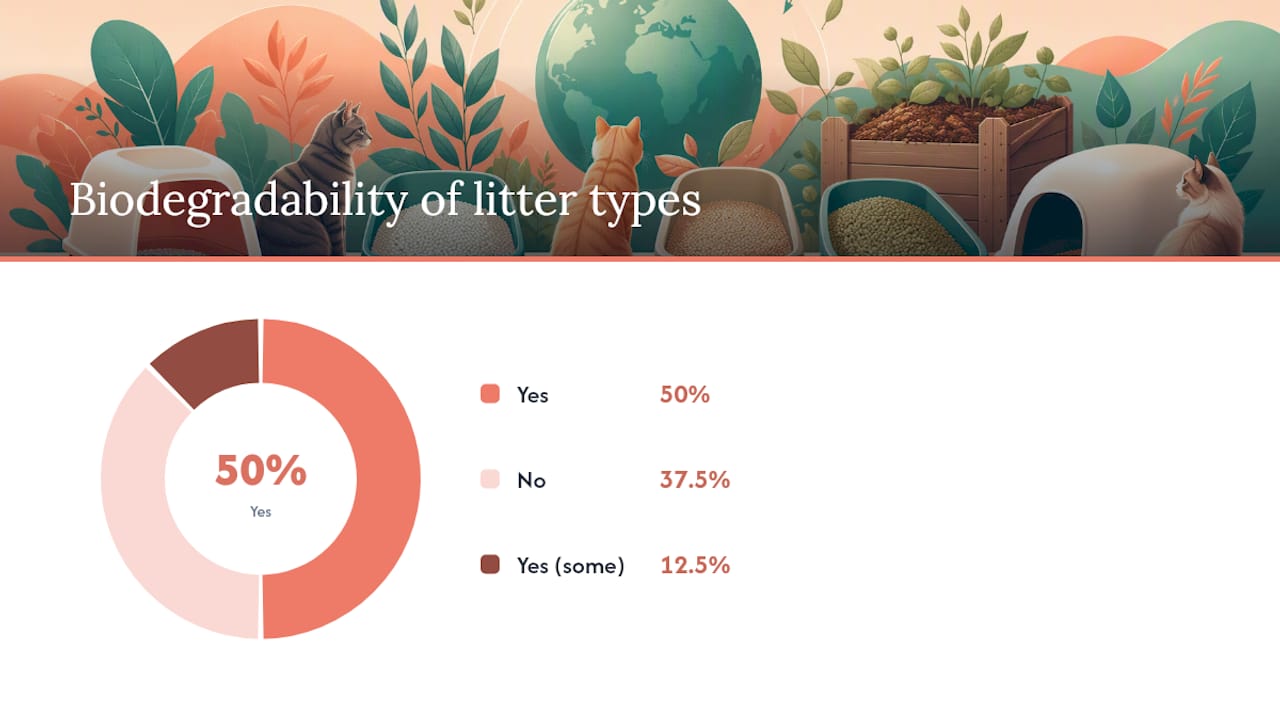
Paper, wood, tofu, and most plant-based litters (corn, walnut) are genuinely biodegradable, breaking down over time in the right conditions. Clumping clay and silica gel are not; bentonite is a mined mineral and silica beads are manufactured, so neither breaks down in any meaningful timeframe once used.
Composting cat waste comes with a serious caveat, though, regardless of which biodegradable litter you use. Cat faeces can carry Toxoplasma gondii, a parasite that survives standard home composting temperatures. That means even fully biodegradable litter should never go into a compost heap destined for food-growing beds. Some local council green waste schemes accept it separately, but check your specific council’s guidance rather than assuming.
Flushing deserves its own warning, separate from composting. Most litters, including many marketed as “flushable,” should not go down a household toilet:
- Clumping clay swells on contact with water and can block pipes, sometimes far down the line where it’s expensive to clear.
- Silica gel doesn’t break down at all and will simply sit in the system.
- Even genuinely flushable paper or tofu litters can overwhelm older or narrower UK plumbing, and most water companies advise against flushing any cat waste due to parasite contamination of waterways.
For everyday disposal, bag soiled litter in a sealed liner before it goes in your general waste bin, which cuts down on smell and keeps the tray area more hygienic between changes. A litter scoop with an odour-sealed disposal system makes this daily task considerably less unpleasant and reduces how often the whole tray needs emptying into a single large bag.
Cat litter types compared: dust, odour and clumping at a glance
| Litter type | Clumping ability | Odour control | Dust level | Tracking | Biodegradable |
|---|---|---|---|---|---|
| Clumping clay | High | High | High | Medium | No |
| Non-clumping clay | None | Medium | Medium | Low | No |
| Silica/crystal | Low | High | Medium | Low | No |
| Paper pellets | Low to medium | Low to medium | Very low | Low | Yes |
| Wood/pine pellets | Low (sawdust breakdown) | Medium | Low | Medium | Yes |
| Tofu | High | Medium | Low | Low to medium | Yes |
| Walnut shell | Medium | Medium to high | Low to medium | Medium | Yes |
| Corn/plant-based | Medium | Medium | Low to medium | Medium | Yes (some) |
How often should you scoop, top up, and fully change the litter?
Scooping frequency depends entirely on material and how many cats share the tray. For clumping clay, scoop at least once daily in a single-cat home and twice daily where you have two or more cats sharing trays, removing solid waste and clumps as soon as you spot them. Non-clumping litters need scooping just as often for visible solid waste, but since liquid simply pools rather than sealing off, the whole tray needs replacing far more frequently.
- Clumping clay: scoop daily, top up every few days, fully change and wash the tray every two to three weeks.
- Non-clumping clay or pellets: scoop solids daily, but expect a full change every one to two weeks, since liquid isn’t isolated into removable clumps.
- Silica/crystal: scoop solids daily, but the crystals themselves can often last two to four weeks before a full change, since they absorb rather than saturate.
- Multi-cat households: the rule of thumb is one tray per cat plus one spare, scooped at minimum twice daily regardless of material.
Full tray changes are also a chance to properly clean the box itself. Wash with mild, unscented soap and warm water rather than strong perfumed cleaners or bleach, since harsh scents can linger and put your cat off using the tray at all. Let the tray dry completely before adding fresh litter, as residual damp encourages odour and, with plant-based litters, mould.
A few accessories genuinely earn their keep here. A litter mat placed at the tray entrance catches loose granules on your cat’s paws before they spread across the floor, and a hooded or high-sided tray helps contain kicked litter in cats that dig enthusiastically. For pellet-style non-clumping litters specifically, a sifting two-part tray is close to essential; practical guides on non-clumping systems note that sifting boxes prevent the pellets from over-saturating into a soggy mass and keep usable, dry pellets separate from soiled ones.
Why we take litter recommendations seriously at Giddy Pets
We built our advice around what actually happens in real litter trays, not just what sounds good on packaging. Every recommendation on this page draws on veterinary behaviour research and lab testing rather than guesswork, because the wrong litter doesn’t just annoy you, it can genuinely stress your cat and lead to tray avoidance that’s hard to reverse.
Our product range reflects that same thinking, curated by people who understand that the “best” litter is the one your specific cat will actually use, consistently and without complaint. [Author credentials and case study details to be added.]
What should you buy first if you’re switching litter?
There’s no need to overhaul your whole set-up to get started. Giddy Pets stocks a full range of litters, trays, and hygiene accessories in our pet cleaning and hygiene category, so you can pick up everything for a gradual switch in one order.
If you’re not sure where to begin, a low-dust, unscented clumping clay is the sensible first purchase for most households, backed by the behavioural research above showing how strongly cats favour it. Pair it with a litter scoop with sealed disposal to make the daily routine less of a chore, and if tracking is already a problem in your home, add a litter mat at the same time. For readers drawn to plant-based options, third-party makers such as The Meow Picks’ cassava and corn clumping litter offer a useful eco-friendly alternative worth comparing against clay. Browse the hygiene range, pick your starting litter, and follow the gradual switching plan above to introduce it properly.
Sources
- Evaluating litter substrate preferences in a population of cats
- Litter box 101: the best litter for your cat | Preventive Vet
- Best cat litter (Consumer Reports)
- PubMed reference (related paper)
- Silicosis | NHS
What is the healthiest cat litter type overall? There’s no single “healthiest” litter for every cat, but low-dust clumping clay balances feline preference with manageable respiratory risk for most households. If anyone in the home has asthma or a lung condition, paper pellets or low-dust silica are safer choices, since they avoid the fine airborne particles that clay and standard silica can produce.
Is clumping or non-clumping litter better for cats? Clumping litter is generally better for most households because it isolates waste into removable clumps, reducing odour and often working out cheaper over time despite a higher upfront cost. Non-clumping litter suits situations where dust or ingestion risk is a bigger concern than convenience, such as with kittens.
Is silica litter safer than clay litter for cats? Silica litter controls odour very well and produces less tracking, but it isn’t automatically “safer” than clay. Both release dust, and NHS guidance on silica dust exposure supports caution with either material in poorly ventilated rooms or for households with respiratory conditions.
Can you flush any type of cat litter? Only litter explicitly labelled “flushable” on the packaging should ever go down a toilet, and even then, many UK water companies advise against it due to plumbing strain and parasite contamination risk in waterways. Clumping clay and silica should never be flushed under any circumstances.
How long does it take to switch a cat to a new litter safely? A full switch typically takes about a week using a gradual mixing approach, moving from 25% new litter to 100% over several days. Cats showing hesitation or avoidance during the process may need an extra few days at each stage before moving on.