


Cat brush types: the complete guide for every coat
Cat brush types: the complete guide for every coat
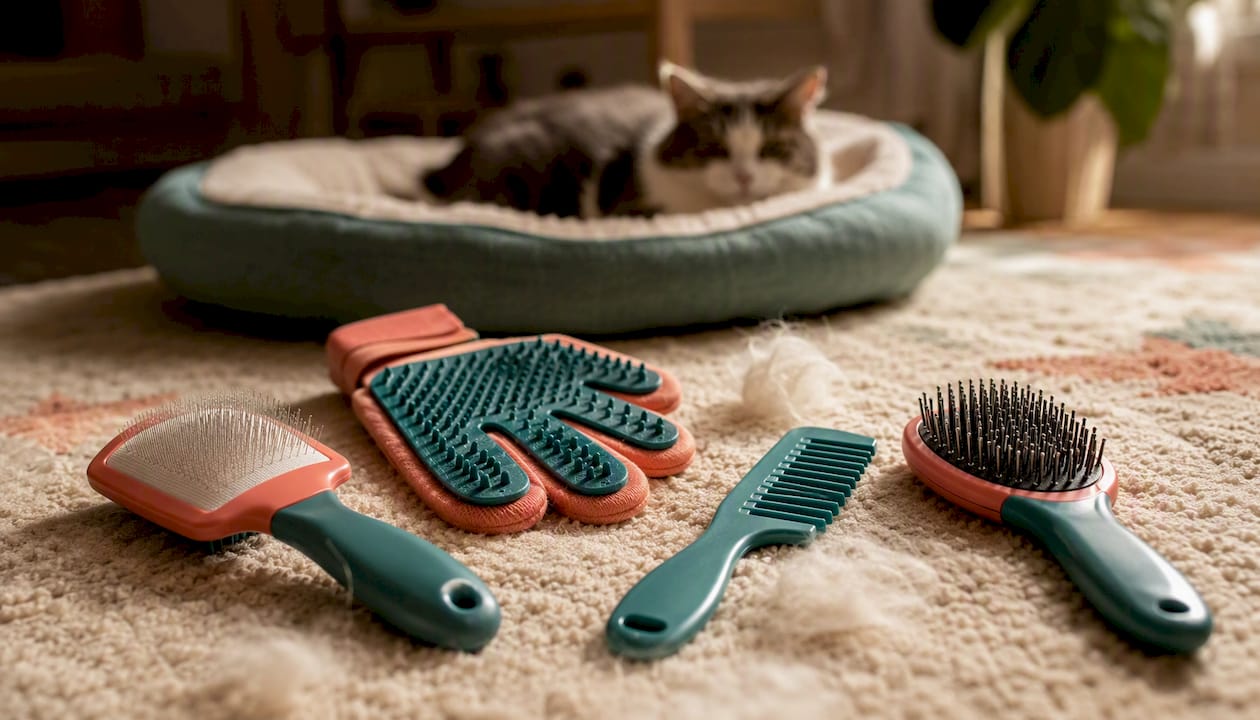
The best brush for your cat depends entirely on coat length and texture. For most short-haired cats, a rubber grooming glove or soft bristle brush does the job well. Long-haired and double-coated cats need a slicker brush plus an undercoat rake or wide-tooth comb. Curly-coated breeds such as the Devon Rex do best with a soft pin brush used very gently, while hairless cats like the Sphynx rarely need brushing at all, though a damp grooming glove removes surface oils. As The Vet Desk explains, coat length and texture determine the right tool, and long or medium coats may need daily attention whereas short coats usually need brushing once or twice a week.
Here is a quick coat-to-brush summary you can act on right now:
- Short coat: rubber grooming glove or soft bristle brush, a few times per week
- Medium coat: slicker brush or pin brush, several times a week
- Long coat: slicker brush plus undercoat rake or wide-tooth comb, daily
- Curly coat: soft pin brush, gentle and brief, 2–3 times weekly
- Hairless: damp grooming glove to remove oils, weekly
The ASPCA recommends using gentle strokes and stopping immediately if your cat resists. Giddypets stocks a range of cat grooming brushes and grooming gloves suited to all of these coat types, so you can find the right tool without guesswork.
Key takeaways
Coat length and texture are the single most reliable guide to choosing the right cat grooming tool, and pairing one daily brush with one weekly deep-clean tool covers most cats well.
| Point | Details |
|---|---|
| Match brush to coat first | Short coats need rubber or bristle; long coats need a slicker plus an undercoat rake or comb. |
| Pair two tools for best results | One daily brush and one weekly deep-clean tool (rake or deshedder) suits most coat types. |
| Frequency matters as much as tool choice | Long coats need daily brushing; short coats need regular sessions per week to stay tangle-free. |
| Technique protects skin and trust | Light pressure, short strokes, and stopping when your cat resists prevents aversion and skin damage. |
| Giddypets for UK shoppers | Browse cat grooming brushes and grooming gloves at giddypets.co.uk for vet-informed options. |
Table of Contents
- How do the main cat brush types compare?
- Which brush should you choose for your cat’s coat?
- What each brush type does and how to use it safely
- How to brush your cat safely and keep sessions calm
- How to clean and maintain your grooming tools
- When mats, skin problems or behaviour need a groomer or vet
- Vet-backed benefits of regular brushing
- Giddy’s perspective on choosing the right grooming tool
- Giddypets grooming tools for UK cat owners
- Sources
How do the main cat brush types compare?
| Brush type | Best for | Main caution |
|---|---|---|
| Slicker brush | Long, medium, and double coats; removing tangles | Use light pressure; over-brushing causes “slicker burn” on skin |
| Bristle brush | Short, smooth coats; finishing and shine | Less effective on thick undercoats |
| Pin brush | Medium to long coats; general detangling | Bent or sharp pins can scratch skin; check regularly |
| Rubber / grooming glove | Short coats; fearful or sensitive cats | Limited reach into dense undercoats |
| Undercoat rake | Dense double coats; heavy shedders | Do not drag through mats; work section by section |
| Deshedding tool | Heavy seasonal shedders, all coat lengths | Overuse can damage the topcoat; use sparingly |
| Wide-tooth comb | Long coats; post-brush finishing | Not suitable for removing tight mats |
| Fine-tooth / flea comb | Checking for fleas and flea dirt | Pulls on tangles; never force through knots |
| Dematting tool | Established mats in medium/long coats | Requires care near skin; deep mats need a professional |
| Self-grooming wall brush | Enrichment; cats that resist handling | Supplements but does not replace active brushing |
Each of these tools solves a different problem. A slicker brush lifts loose fur and light tangles from the surface, while an undercoat rake reaches the dense layer beneath. A flea comb is not really a grooming tool in the traditional sense; it is a diagnostic one. Knowing the difference saves you money and keeps your cat comfortable.
Which brush should you choose for your cat’s coat?
Practical testing across many brushes confirms that no single tool suits every cat, and that combination approaches consistently outperform single-brush routines. Here is how to match tool to coat:
Short coat (e.g. British Shorthair, Siamese)
- Primary: rubber grooming glove or soft bristle brush
- Optional: fine-tooth comb for flea checks
- Frequency: 1–2 times weekly
Medium coat (e.g. Maine Coon kitten, Ragdoll)
- Primary: slicker brush or pin brush
- Secondary: wide-tooth comb to finish
- Frequency: 3–4 times weekly
Long coat (e.g. Persian, Norwegian Forest Cat)
- Primary: slicker brush
- Secondary: undercoat rake or wide-tooth comb
- Frequency: daily, or mats will form within days
Double coat / heavy seasonal shedder (e.g. Siberian, British Shorthair in moult)
- Primary: undercoat rake or deshedding tool
- Secondary: slicker brush to finish
- Frequency: daily during moult, 2–3 times weekly otherwise
Curly coat (e.g. Devon Rex, Cornish Rex)
- Primary: soft pin brush, very light pressure
- Frequency: 2–3 times weekly; these coats are fragile
Hairless (e.g. Sphynx)
- Primary: damp grooming glove to lift oils and dander
- Frequency: weekly; focus on skin folds
Special cases to keep in mind:
- Kittens: start with a soft grooming glove to build positive associations before introducing a brush
- Elderly cats: their skin is thinner and more sensitive; use the softest tool available and keep sessions short
- Cats with health issues: always check with your vet before changing grooming routines, as some conditions affect coat fragility
Three quick decision rules:
- Does your cat have a dense undercoat? If yes, add a rake or deshedding tool to your kit.
- Is the fur longer than 5 cm? If yes, a slicker brush is your daily essential.
- Does your cat resist handling? Start with a grooming glove and build from there.
Pro Tip: A vet-guided decision guide recommends pairing one daily brush with one weekly deep-clean tool for most cats. That two-tool approach covers the vast majority of coat types without overcomplicating your kit.
What each brush type does and how to use it safely
Slicker brush
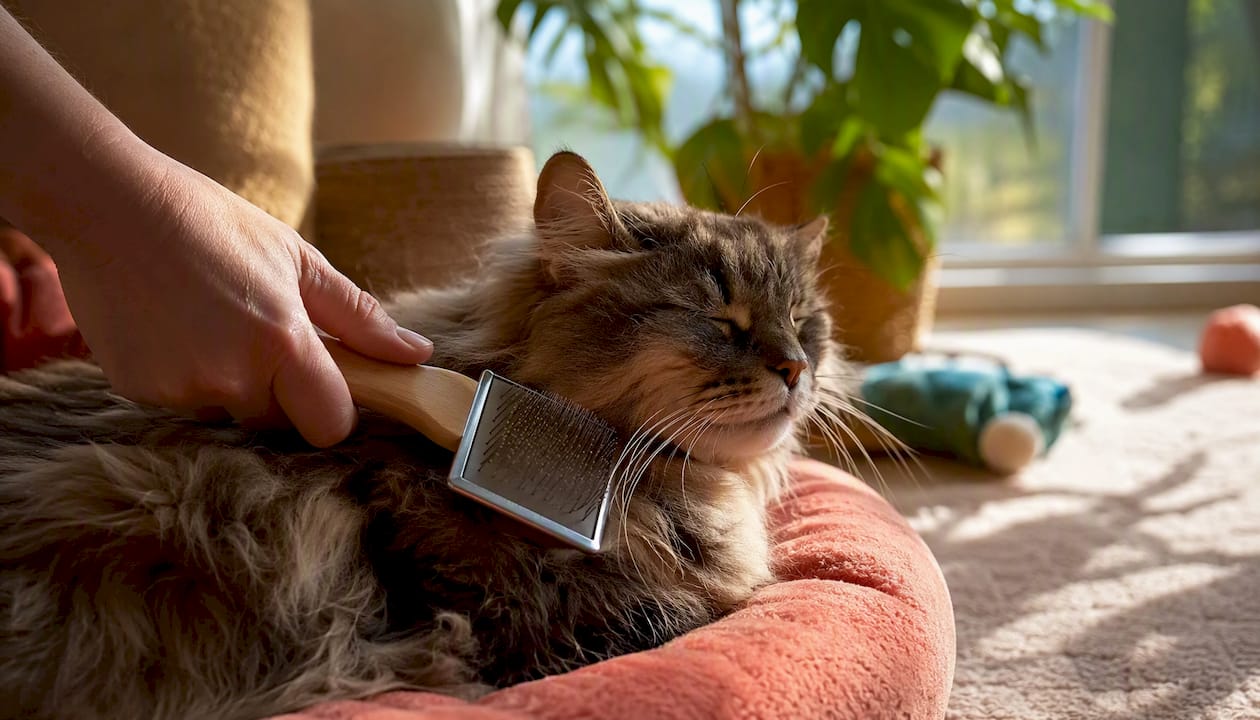
A slicker brush has a flat or slightly curved pad covered in fine, short wire pins set at an angle. It lifts loose fur, removes light tangles, and smooths the topcoat. For long-haired cats, it is the workhorse of any grooming kit.
How to use:
- Work in the direction of hair growth using short, light strokes
- Lift the fur in sections rather than dragging across the whole coat at once
- Spend no more than 2–3 minutes on any one area per session
- Clear the pad of collected fur every few strokes
Key risk: Pressing too hard or going over the same patch repeatedly causes “slicker burn,” a mild abrasion that makes the skin red and sore. Let the pins do the work; you should not need to press.
Bristle brush
Bristle brushes use natural or synthetic bristles packed closely together. They are excellent for short, smooth coats and for adding a finishing shine after a slicker or rake session on longer fur.
How to use:
- Long, sweeping strokes following the coat direction
- Ideal for the final pass after detangling is complete
They do not penetrate dense undercoats, so for double-coated cats, a bristle brush is a finishing tool rather than a primary one.
Pin brush
Pin brushes look similar to a human hairbrush, with widely spaced metal pins set in a rubber cushion. They work well on medium to long coats for general detangling and are gentler than slicker brushes on sensitive cats.
How to use:
- Use light, sweeping strokes through the length of the coat
- Check pins regularly; bent or blunt-tipped pins can scratch skin
Rubber grooming glove
A grooming glove fits over your hand and uses rubber nubs to lift loose fur through a petting motion. For cats that resist traditional brushes, this is often the best starting point because it mimics the sensation of being stroked.
How to use:
- Simply pet your cat as you normally would
- Work from neck to tail in long strokes
- Particularly effective on short, smooth coats
The limitation is reach: rubber gloves do not penetrate thick undercoats effectively. For heavy shedders, they work best as a warm-up or finishing tool rather than the main event. Giddypets’ grooming gloves are a popular starting point for owners whose cats are nervous about brushes.
Undercoat rake
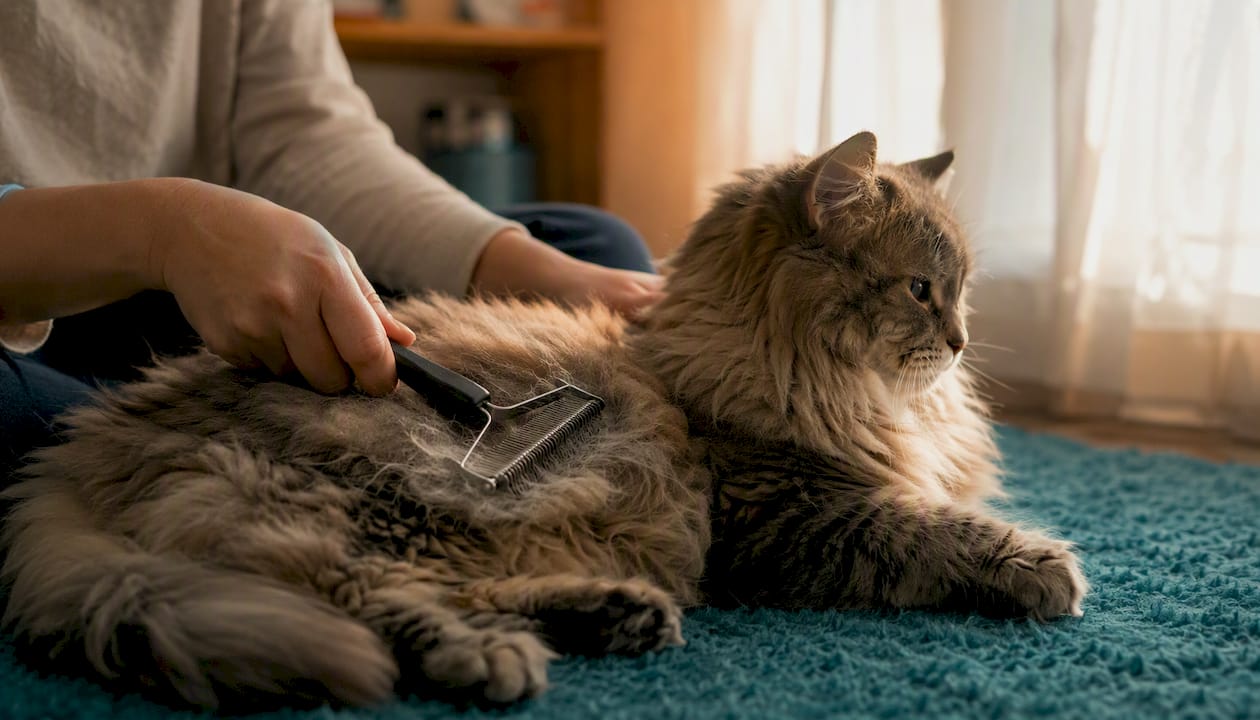
An undercoat rake has widely spaced, rounded teeth designed to reach through the topcoat and pull out loose fur from the dense layer beneath. It is the most effective tool for preventing the seasonal shedding explosions that long-haired and double-coated cats produce.
How to use:
- Work in sections, using short strokes in the direction of growth
- Never drag the rake through a mat; work around it or use a dematting tool first
- Use 2–3 times weekly during heavy moult periods
Deshedding tool
Deshedding tools use a fine-toothed edge to remove loose undercoat fur efficiently. They are highly effective but carry a real caution: overuse can damage the topcoat and irritate skin, so follow manufacturer guidance and limit sessions to once a week at most. Giddypets’ deshedding brushes are designed with this balance in mind.
Wide-tooth and fine-tooth combs
A wide-tooth comb is the finishing tool for long coats, checking that no tangles remain after brushing. A fine-tooth or flea comb is narrower and serves a diagnostic purpose: running it close to the skin reveals flea dirt (small dark specks) or live fleas. Neither comb should be forced through a knot.
Dematting tool
Dematting tools have curved, serrated blades designed to split mats rather than pull them. They require a careful technique: hold the base of the mat close to the skin with your fingers to protect the skin, then work the tool through the mat in short strokes from the outside edge inward.
Important: Never attempt to cut a mat with scissors unless you are trained to do so. The skin beneath a mat is often folded into it, and accidental cuts are a common and serious injury. If a mat is tight against the skin, take your cat to a professional groomer or vet.
Self-grooming wall brush
Self-grooming brushes attach to a wall corner or furniture leg and allow cats to rub against them at will. They provide enrichment and remove some loose fur, but they do not replace active brushing. Think of them as a supplement, particularly useful for cats that enjoy rubbing but resist being handled.
Pro Tip: For cats that fear brushes, the ASPCA recommends a stepwise desensitisation approach: let the cat sniff and investigate the tool first, reward calm behaviour with a treat, then begin with very short strokes using a grooming glove before gradually introducing a brush over multiple sessions.
How to brush your cat safely and keep sessions calm
Step-by-step brushing technique
- Choose a calm moment. Brush when your cat is relaxed, not just after play or a meal. A sleepy cat is a cooperative cat.
- Inspect the coat first. Run your fingers through the fur to locate any mats, sore patches, or unusual lumps before the brush touches the skin.
- Start at the neck and work back. Short strokes in the direction of hair growth, moving from neck to tail and then down the sides.
- Approach the belly and legs carefully. Many cats are sensitive here. Use a lighter touch, keep strokes short, and watch for tail-flicking or skin twitching, which signal discomfort.
- Keep sessions short. Five to ten minutes is enough for most cats. Long-haired cats may need slightly longer, but several short sessions are better than one lengthy one.
- Finish with a reward. A small treat or a play session with an interactive toy after grooming builds a positive association over time.
Frequency by coat type
- Long coat: daily brushing prevents mats from forming
- Medium coat: 3–4 times weekly keeps tangles at bay
- Short coat: 1–2 times weekly removes loose fur and dander
- Heavy shedders during seasonal moult: increase to daily regardless of coat length
Keeping grooming positive
- Stop the moment your cat shows stress signals: flattened ears, a lashing tail, skin rippling, or vocalising
- Never restrain a cat forcibly; this creates lasting aversion
- Use cat treats as rewards throughout the session, not just at the end
- If your cat tolerates only 30 seconds today, that is fine; build duration gradually over weeks
Safety reminders:
- Never pull through a tangle; work it out gently from the tip downward
- Check the skin beneath the coat for redness, sores, or parasites at every session
- Brush cats when dry; wet brushing is only appropriate during bathing or specific detangling tasks using wet-safe tools
How to clean and maintain your grooming tools
Clean tools last longer and are safer for your cat’s skin. A brush clogged with old fur and dander can harbour bacteria and transfer it back to your cat’s coat.
After every session:
- Remove collected fur from the brush pad or teeth by hand or with a fine comb
- For rubber gloves and rubber-tipped tools, rinse under warm water and leave to dry fully before storing
- For metal combs and rakes, wipe with a damp cloth; disinfect with a diluted pet-safe solution once a week, then dry thoroughly to prevent rust
Regular maintenance checklist:
- Inspect slicker brush pins monthly; bent or missing pins mean the brush needs replacing
- Check dematting blades for dullness; a blade that drags rather than cuts is doing more harm than good
- For self-cleaning slicker brushes, test the retraction mechanism regularly and clear any fur caught in the mechanism
- Store all tools in a dry place away from direct heat, which can warp rubber components and loosen pin cushions
When to replace a tool:
- Pins are bent, broken, or have lost their protective tips
- Rubber components are cracked or perished
- The brush no longer removes fur effectively despite being clean
A basic grooming kit, as Kingstowne Cat Clinic notes, should include a brush, a comb, a deshedding tool, and a mat splitter for persistent tangles. Start simple and add specialist tools only when your cat’s coat genuinely requires them.
When mats, skin problems or behaviour need a groomer or vet
Some situations go beyond what home grooming can safely address. Knowing when to stop and seek professional help protects both you and your cat.
Seek a professional groomer or vet when you notice:
- Mats that are tight against the skin and cannot be gently worked free
- Any bleeding, open sores, or broken skin beneath or near the coat
- Signs of parasites such as flea dirt, ticks, or skin mites
- Persistent skin lesions, scabs, or areas of hair loss
- A sudden change in coat condition (dull, greasy, or patchy) that has no obvious cause
- Severe grooming aversion where your cat becomes aggressive or distressed despite gradual desensitisation
Before the appointment:
- Do not attempt to cut mats at home with scissors; the skin beneath is often folded into the mat and accidental cuts are a genuine risk
- Note when the mat or skin issue first appeared and whether anything changed in the cat’s diet, environment, or health
- Tell the groomer or vet about any tools you have already used and how the cat responded
When consistent resistance makes home grooming impossible, forcing the session increases aversion. A vet can advise on whether short-term sedation is appropriate for a grooming appointment, or refer you to a groomer experienced with anxious cats.
Pro Tip: Ask your vet specifically for a groomer who is experienced with cats rather than dogs. Cat-specialist groomers use different handling techniques and environments that significantly reduce stress for feline patients.
Vet-backed benefits of regular brushing
Regular brushing does more than keep your cat looking tidy. The Refined Feline reports that many cats feel noticeably better after being brushed because grooming removes loose fur and reduces itching, and that the physical contact involved acts as social bonding between cat and owner.
The ASPCA confirms that brushing removes loose hair, dander, and dirt, stimulates circulation, and often makes cats feel more relaxed. These benefits compound over time: a cat that is brushed regularly develops a cleaner, healthier coat, produces fewer hairballs (because less loose fur is ingested during self-grooming), and tends to be calmer about handling generally.
Regular brushing reduces the loose fur your cat swallows during self-grooming, which directly lowers the frequency of hairballs. For long-haired cats, this is one of the most practical welfare benefits of a consistent grooming routine.
The caveat is technique. Incorrect tools or forceful brushing can cause aversion and skin damage, undoing the welfare benefits entirely. Giddypets’ cat grooming brushes are selected with coat safety in mind, and the vet-approved guidance on each product page helps you choose the right level of firmness for your cat’s specific coat.
Giddy’s perspective on choosing the right grooming tool
Most cat owners buy one brush and hope for the best. The problem is that a slicker brush on a short-coated cat is overkill, and a rubber glove on a Persian is barely touching the surface. The coat-first approach this guide recommends is not just a framework; it is the difference between a cat that tolerates grooming and one that genuinely enjoys it.
The thing people underestimate most is the role of temperament alongside coat type. A long-haired cat that is anxious about handling needs a different starting point than a long-haired cat that rolls over for a belly rub. The coat tells you which tools to buy; the cat’s personality tells you which one to reach for first. A grooming glove is not a lesser tool; for a nervous cat, it is often the smarter one.
Two tools cover most cats well: one daily or regular brush matched to coat length, and one weekly deep-clean tool for the undercoat or seasonal shedding. That is the combination vet-reviewed guidance consistently recommends, and it is the starting point Giddypets builds its grooming range around.
Giddypets grooming tools for UK cat owners
Getting the right brush does not need to be complicated. Giddypets stocks a carefully chosen range of cat grooming brushes and grooming gloves for every coat type, from self-cleaning slickers for long-haired cats to gentle rubber mitts for cats that are new to grooming.

Every product on the Giddypets site is selected with cat welfare in mind, and the product pages include practical guidance on which coat types each tool suits. Whether you are building a first grooming kit for a new kitten or upgrading to a deshedding brush for a seasonal shedder, you will find the right option without having to wade through dozens of unsuitable choices.
This page is published by Giddypets. All links point to the Giddypets store at giddypets.co.uk.
Browse the full grooming brushes range and find the right tool for your cat today.
Sources
The sources below informed this guide and are worth bookmarking for deeper reading or vet advice:
- 7 Types of Cat Brushes: An Overview (With Pictures) | The Vet Desk
- Cat Grooming Tips | ASPCA
- The best cat brushes we tested for every coat type - Business Insider
- Best cat brush 2026 – Vet top picks | AvailPet
- 5 benefits of brushing your cat | The Refined Feline
For product purchases and additional detail on individual tools, visit Giddypets’ cat grooming range.