


Butternut Box alternatives for UK dog owners (2026)

Butternut Box alternatives for UK dog owners (2026)
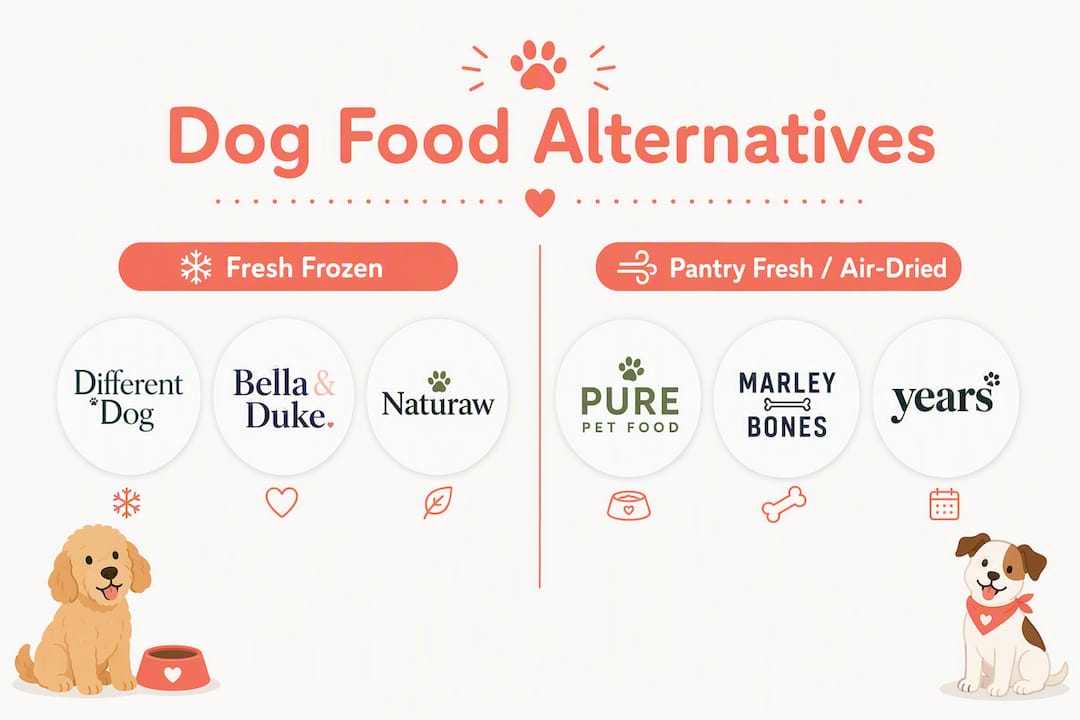
The best cost-effective alternatives to Butternut Box are Pure Pet Food (air-dried, no freezer needed), Marleybones and Years (pantry-fresh, ideal for smaller homes), Different Dog (gently cooked with strong ingredient transparency), and Bella & Duke (raw, high-protein, competitively priced). Each suits a different household depending on your freezer space, budget, and your dog’s dietary needs.
Here is the quick shortlist at a glance:
- Pure Pet Food — air-dried nuggets, shelf-stable, often the lowest daily cost for a medium dog; suits owners with no spare freezer drawer
- Different Dog — gently cooked, clearly declared ingredient percentages, good for dogs with sensitivities; requires freezer space
- Bella & Duke — raw frozen meals, high meat content, strong Trustpilot ratings; freezer required, but pricing is competitive for larger dogs
- Marleybones — pantry-stored, air-dried format, no insulated delivery box; great for flat dwellers or frequent travellers
- Years — another cupboard-friendly option flagged by independent reviewers for limited-freezer households
- Forthglade — wet complete trays, widely available, no subscription lock-in; suits owners who want flexibility without a plan
- Naturaw — raw specialist with a loyal following; best for owners already comfortable handling raw food
- Tails — tailored dry and mixed plans, lower price point, no freezer needed; suits owners prioritising convenience over fresh-food purity
Giddypets stocks a range of food storage containers and accessories that make whichever format you choose more practical at home.
Table of Contents
- How do the main Butternut Box alternatives compare?
- Which brand is right for your dog? In-depth reviews
- Raw vs cooked vs air-dried vs kibble: which format suits your home?
- How to pick the right alternative for your dog
- How to switch your dog safely over 7–14 days
- How we compared brands: pricing assumptions and trust signals
- Subscription and cancellation policies: what to check
- Delivery options, frequency, and customer service
- Recipe variety, allergen support, and breed-specific options
- Key takeaways
- The honest truth about switching from Butternut Box
- Giddypets: practical kit to make your new food choice work
- Useful sources and further reading
How do the main Butternut Box alternatives compare?
The table below uses a 15 kg adult dog fed 100% on the subscription as the pricing baseline. Actual costs vary by dog size, recipe, and any active discount.

| Brand | Typical daily cost (15 kg dog) | Meal type | Freezer needed? | Customisation | Trial / discount | Ingredient transparency |
|---|---|---|---|---|---|---|
| Pure Pet Food | Low | Air-dried | No | Yes (weight, allergies) | Yes | High (percentages published) |
| Different Dog | Mid | Gently cooked | Yes | Yes (allergies, breed) | Yes | High (offal % declared) |
| Bella & Duke | Mid | Raw frozen | Yes | Yes (weight, life stage) | Yes | High |
| Forthglade | Low–mid | Wet complete trays | No | Limited | No subscription required | Medium |
| Naturaw | Mid | Raw frozen | Yes | Yes | Yes | Medium–high |
| Tails | Low–mid | Dry / mixed | No | Yes (tailored plan) | Yes | Medium |
| Marleybones | Low–mid | Air-dried / pantry | No | Limited | Yes | Medium |
| Years | Low–mid | Pantry-fresh | No | Limited | Yes | Medium |
| Butternut Box | Higher | Gently cooked frozen | Yes | Yes | Yes | High |
A few things stand out. Pure Pet Food and the pantry-fresh brands (Marleybones, Years) remove freezer cost entirely, which matters more than most owners realise: a supply lasting around two weeks for a medium dog can fill an entire freezer drawer, as independent testing notes. Bella & Duke and Naturaw offer raw frozen meals at a price per kilogram that often undercuts Butternut Box, though you need the same freezer commitment. Forthglade sits in a different category altogether — wet complete trays you can buy from supermarkets or online without any subscription, which gives you maximum flexibility.
Which brand is right for your dog? In-depth reviews
These eight brands were selected on four criteria: price competitiveness versus Butternut Box, storage practicality for UK homes, ingredient transparency, and the availability of a trial or introductory offer. Butternut Box itself is included briefly for context.
Different Dog

Different Dog produces gently cooked, human-grade meals delivered frozen. What sets it apart from most competitors is ingredient transparency: the brand declares offal percentages alongside meat and vegetable ratios, which is a meaningful trust signal when you are comparing labels. Recipes are tailored by weight and allergy profile, and the brand caters well to dogs with chicken or grain sensitivities.
Approximate daily cost (15 kg dog): mid-range, typically below Butternut Box on a like-for-like recipe.
Pros: declared ingredient percentages; strong allergy-recipe range; vet-nutrition input in formulation. Cons: freezer required; insulated delivery adds to the environmental footprint.
Pure Pet Food
Pure is the standout choice for owners without freezer space. Its air-dried nuggets rehydrate with water before serving, delivering a nutritionally complete meal from a bag that sits in your kitchen cupboard. Comparative reviews consistently flag Pure as one of the lowest daily-cost options in the fresh-food category, partly because air-drying removes the insulated packaging and frozen-logistics costs that inflate Butternut Box’s price.
Approximate daily cost (15 kg dog): low end of the fresh/premium segment.
Pros: no freezer; low daily cost; customisable by weight and allergy; long shelf life once opened (sealed correctly). Cons: rehydration step adds prep time; texture differs from wet or cooked food, so fussy dogs may need a longer transition.
Bella & Duke
Bella & Duke is a raw frozen specialist with one of the strongest independent review profiles in the UK market. Its Trustpilot score reflects a loyal customer base, and the brand offers a starter box to test palatability before committing to a full plan. Meals are high in meat content, grain-free, and available in a range of proteins including duck, venison, and salmon — useful for dogs with common protein sensitivities.
Approximate daily cost (15 kg dog): mid-range, often cheaper per kilogram than Butternut Box.
Pros: high meat percentage; wide protein variety; strong trial offer. Cons: raw handling requires care (hygiene, thawing); freezer space is non-negotiable.
Forthglade
Forthglade takes a different approach entirely. Its wet complete trays are available without a subscription through multiple UK retailers, which means no cancellation headaches and no minimum order. The brand uses named British and Irish meats, and the complete range meets nutritional requirements without supplementation. It suits owners who want a step up from standard wet food without the commitment of a fresh-food plan.
Approximate daily cost (15 kg dog): low to mid, depending on retailer.
Pros: no subscription required; widely available; simple storage (cupboard until opened). Cons: lower customisation than tailored plans; ingredient transparency is moderate compared to air-dried or raw specialists.
Naturaw
Naturaw is a raw specialist that has built a following among owners who are already comfortable with raw feeding. Meals are frozen, portioned, and available in a range of proteins. The brand’s formulations are designed to meet nutritional completeness standards, and it offers a starter pack for first-time raw feeders.
Approximate daily cost (15 kg dog): mid-range.
Pros: good protein variety; starter pack available; nutritionally complete formulations. Cons: freezer required; raw feeding is not suitable for all households (immunocompromised family members, young children).
Tails
Tails builds a personalised plan using a questionnaire covering your dog’s breed, age, weight, and health conditions, then delivers a dry or mixed (dry plus wet) food on a rolling subscription. The price point is noticeably lower than fresh-frozen alternatives, and no freezer is needed. It suits owners who want tailored nutrition without the storage or handling demands of raw or cooked fresh food.
Approximate daily cost (15 kg dog): low to mid.
Pros: highly tailored; no freezer; lower price point; easy to adjust portions online. Cons: dry-food base means lower moisture content than fresh alternatives; ingredient quality varies by recipe tier.
Marleybones
Marleybones produces air-dried, pantry-stored meals that independent reviewers highlight specifically for owners with limited freezer space. Delivery arrives in standard packaging with no insulated box, which reduces both cost and waste. The range is more limited than larger brands, but the core recipes are nutritionally complete.
Approximate daily cost (15 kg dog): low to mid.
Pros: no freezer; no insulated delivery; compact storage; good for travel. Cons: smaller recipe range; limited customisation compared to tailored-plan providers.
Years
Years is another pantry-fresh brand suited to flat dwellers or anyone whose freezer is already spoken for. Like Marleybones, it ships in standard packaging and stores at room temperature. The brand is newer and has a smaller recipe library, but it fills a genuine gap for owners who want a step above kibble without the freezer commitment.
Approximate daily cost (15 kg dog): low to mid.
Pros: no freezer; standard delivery packaging; accessible price. Cons: limited recipe variety; newer brand with a shorter track record.
Butternut Box (for context)
Butternut Box remains a strong product. Its gently cooked meals are nutritionally complete, ingredient lists are transparent, and the subscription is easy to manage. The reason owners look for alternatives is primarily cost: market reviews note that Butternut Box sits at the higher end of the fresh-food price range, and for larger dogs especially, the monthly bill adds up quickly. If budget is not a constraint and you have freezer space, it is a perfectly sound choice. For most owners reading this, though, one of the alternatives above will deliver comparable nutrition at a lower cost.
Raw vs cooked vs air-dried vs kibble: which format suits your home?
Meal format is the single biggest practical decision you will make, and it affects cost, storage, and your daily routine more than any individual brand choice.
Fresh frozen (gently cooked or raw)
Gently cooked brands like Different Dog and Butternut Box, and raw brands like Bella & Duke and Naturaw, all require freezer storage. The nutritional case for both formats is strong: cooking at low temperatures preserves more nutrients than high-heat processing, while raw feeding maintains natural enzyme activity. A peer-reviewed study on raw food rations found that mineral and vitamin intake in bone-and-raw diets can vary significantly depending on formulation, which underlines why nutritional completeness statements matter. The practical downside is freezer space: testing confirms that a fortnight’s supply for a medium dog can occupy a full drawer.
Best for: owners with a dedicated chest freezer or spare fridge-freezer space who prioritise palatability and variety.
Air-dried
Air-drying removes moisture slowly at low temperatures, concentrating nutrients without the high heat of kibble production. The result is a shelf-stable product that stores in a cupboard, ships without insulation, and typically costs less per day than frozen fresh. Pure Pet Food and Marleybones both use this format. The texture is denser than wet food, so dogs accustomed to Butternut Box may need a gradual introduction.
Best for: owners in flats or smaller homes, frequent travellers, or anyone whose freezer is already full.
Wet complete (tray or pouch)
Brands like Forthglade produce wet complete meals in trays that store in the cupboard until opened. Moisture content is high, which suits dogs who do not drink enough water. No subscription is required, and you can buy as needed from multiple retailers.
Best for: owners who want flexibility without a plan, or as a complement to dry food.
Dry kibble (tailored)
Tailored dry plans like Tails sit at the lower end of the cost range. Kibble is the most storage-friendly format and the easiest to portion accurately. The trade-off is moisture content and, in some recipes, a higher proportion of plant-based fillers. For owners managing weight or specific health conditions, a well-formulated tailored dry plan can be a practical and affordable foundation.
Best for: budget-conscious owners, multi-dog households, or owners whose dogs do well on dry food.
Pro Tip: If you want the benefits of fresh food but cannot commit to a full freezer, try a hybrid approach: use an air-dried or tailored dry food as the daily base and add a wet complete tray two or three times a week. You get variety and palatability without the storage demands of a full frozen subscription.
How to pick the right alternative for your dog
Work through this checklist before you order anything.
- Check your freezer space. Measure the available drawer space and compare it to the brand’s stated delivery box size. If you cannot fit a two-week supply, rule out frozen fresh and focus on air-dried or pantry options.
- Calculate your true monthly budget. Multiply the brand’s stated daily cost by 30, then add any delivery charges. For a 15 kg dog on a mid-range fresh plan, budget roughly £60–£100 per month depending on format and brand.
- List your dog’s dietary needs. Note any confirmed allergies, intolerances, or life-stage requirements (puppy, senior, weight management). If your dog has a known protein sensitivity, check the brand’s allergen-free recipe range before ordering. Giddypets has a detailed guide on hydrolysed protein diets if you are managing a more complex intolerance.
- Ask the provider three questions before subscribing: Does the food meet FEDIAF nutritional guidelines or carry a formulation statement? Are ingredient percentages (including offal) declared on the label or website? What is the cancellation policy and minimum notice period?
- Watch for red flags. Vague ingredient descriptions (“meat and animal derivatives” with no species or percentage), no nutrition completeness statement, and inflexible cancellation terms are all reasons to pause. Vets generally advocate for complete, balanced diets rather than endorsing a single brand, so a brand claiming exclusive vet approval should be treated with scepticism.
Worked example (15 kg dog, switching to Pure Pet Food air-dried):
- Daily cost: approximately £2.00–£2.50 (based on published portion guides for a 15 kg adult dog)
- Monthly food cost: approximately £60–£75
- Storage cost: nil (cupboard storage, no additional freezer energy)
- Delivery: standard packaging, no insulated box surcharge
- Total monthly estimate: £60–£75, compared to a higher figure for a frozen fresh subscription at the same weight
How to switch your dog safely over 7–14 days
A gradual transition reduces digestive upset and gives you a fair palatability test before you commit to a larger order. Owner guides consistently recommend a 7–14 day window when moving between complete diets.
- Days 1–3: 75% current food, 25% new food. Watch for loose stools or reduced appetite.
- Days 4–6: 50/50 mix. Note energy levels and stool consistency.
- Days 7–9: 25% current food, 75% new food. If stools are firm and appetite is good, continue.
- Days 10–14: 100% new food. Monitor coat condition and energy over the following two weeks.
What to monitor throughout:
- Stool texture (firm is good; very loose or mucousy stools suggest slowing the transition)
- Appetite (a day of reduced interest is normal; two or more days warrants a pause)
- Energy and behaviour
- Skin and coat condition (changes often appear 2–3 weeks after a diet shift)
Use introductory offers strategically. Most providers offer a discounted first box or trial pack. Order the trial, run the transition, and only subscribe to a full plan once you know your dog accepts the protein and texture. This approach avoids the common mistake of buying a month’s supply of a food your dog then refuses.
Pro Tip: If you are switching to an air-dried format, use an airtight dog food storage container from day one. Air-dried food loses palatability quickly once exposed to humidity, and a proper seal extends freshness significantly.
How we compared brands: pricing assumptions and trust signals
Every brand in this comparison was assessed against the same baseline: a 15 kg adult dog fed 100% on the subscription, using standard portion sizes from each brand’s published feeding guide. Subscription pricing was used where available; one-off pricing was noted separately.
Trust signals checked for each brand:
- Nutritional completeness: does the brand carry a FEDIAF-compliant formulation statement or equivalent declaration?
- Ingredient transparency: are meat, offal, and vegetable percentages declared? Brands that publish percentages score higher for transparency and give you a clearer picture of what you are actually feeding.
- Vet or nutrition input: is there evidence of qualified nutritional oversight in formulation?
- Trial availability: does the brand offer a first-order discount or trial box?
- Delivery footprint: does the brand deliver across the UK, including Scotland and Northern Ireland?
Limitations to note: prices change with promotions and recipe reformulations. Seasonal recipes can affect cost per kilogram. This comparison reflects publicly available pricing and does not constitute a controlled feeding trial. Independent nutritional rating systems such as AADF-style band scoring are useful supplementary tools when comparing nutritional density across brands.
Subscription and cancellation policies: what to check
Subscription flexibility varies considerably across these brands, and it is worth reading the small print before you commit.
Most fresh-food providers operate on a rolling subscription with a minimum notice period for cancellation, typically 48–72 hours before the next scheduled delivery. Some require you to cancel through an online account portal; others accept cancellation by email or phone. Forthglade is the outlier here: because its trays are available through retailers without a subscription, there is nothing to cancel.
Tails allows you to pause, adjust, or cancel your plan through your online account with reasonable notice. Pure Pet Food and Bella & Duke both offer account management portals where you can skip deliveries or cancel. Different Dog and Naturaw have similar self-service options, though it is worth confirming the notice window before your first order.
The key question to ask any provider: “How many days’ notice do I need to give to avoid being charged for the next delivery?” If the answer is more than five days, factor that into your trial plan so you are not caught by an unwanted charge while you are still testing palatability.
Delivery options, frequency, and customer service
All eight brands deliver across mainland UK. Coverage to Scottish Highlands, Northern Ireland, and the Channel Islands varies, and some providers charge a surcharge for remote postcodes. Check your postcode on the brand’s website before ordering if you are outside a major urban area.
Delivery frequency is typically every two, three, or four weeks depending on your dog’s portion size and the storage format. Frozen fresh brands tend to deliver every two to four weeks in larger boxes; air-dried and pantry brands can deliver less frequently because the longer shelf life means you can hold more stock without waste.
Customer service quality across the market is generally good for the established brands. Bella & Duke’s Trustpilot reviews highlight responsive support. Pure Pet Food and Tails both offer online account management that reduces the need to contact support at all. For newer brands like Years, customer service infrastructure is less proven, which is a reasonable caveat for early adopters.
Recipe variety, allergen support, and breed-specific options
The range of proteins and recipes available differs significantly between brands, and it matters most for dogs with confirmed food sensitivities.
Different Dog and Bella & Duke both offer a meaningful range of novel proteins (duck, venison, salmon, turkey) alongside the standard chicken and beef options. This is particularly useful for dogs with chicken sensitivity, which is one of the more common protein intolerances in UK dogs. Different Dog’s allergy-specific recipes are clearly labelled, and the brand’s ingredient transparency makes it easier to cross-check against your dog’s known triggers.
Pure Pet Food offers a range of recipes across its air-dried range, including fish-based and grain-free options. Tails tailors its plan to your dog’s profile, including health conditions and sensitivities, though its dry-food base means the ingredient profile differs from fresh alternatives.
Forthglade produces a grain-free range and a natural range, with recipes suited to puppies, adults, and seniors. It does not offer breed-specific formulations, but its complete range covers the main life stages.
For owners managing more complex dietary needs, Giddypets has a practical guide on vegetarian dog diets that covers the nutritional considerations worth discussing with your vet before making any significant change.
Key takeaways
The most cost-effective Butternut Box alternative for owners with limited freezer space is Pure Pet Food, with air-dried formats removing both storage demands and insulated delivery costs while maintaining nutritional completeness.
| Point | Details |
|---|---|
| Freezer space is the first decision | If you cannot store a two-week supply, choose air-dried (Pure, Marleybones, Years) over frozen fresh. |
| Ingredient transparency matters | Prioritise brands that declare meat, offal, and vegetable percentages; Different Dog and Bella & Duke both do this clearly. |
| Use trial offers before subscribing | Order a trial box first to test palatability; only commit to a full plan once your dog accepts the food. |
| Transition over 7–14 days | A gradual mix reduces digestive upset and gives a fair test of the new food. |
| Giddypets supports your switch | Food storage containers and slow feeders from Giddypets help make any new format practical at home. |
The honest truth about switching from Butternut Box
The conversation around Butternut Box alternatives tends to focus on price, which is fair. But the detail that catches most owners off guard is not the food itself — it is the storage. Switching to a cheaper frozen brand and then discovering you have no room in your freezer is a frustrating and wasteful experience. The brands that genuinely solve the cost problem for most UK households are the ones that remove the freezer requirement entirely.
What surprised me most when looking closely at this market is how strong the air-dried category has become. Pure Pet Food in particular has closed the palatability gap with gently cooked food considerably, and the daily cost saving is real. The caveat is texture: dogs who have been on Butternut Box for years may need a longer transition, and some never fully take to the denser, drier format. That is not a failure of the food; it is just a palatability preference, and it is exactly why trial boxes exist.
The other thing worth saying plainly: no single brand is universally best. Vets emphasise balanced, complete nutrition over brand loyalty, and the right choice depends on your dog’s size, sensitivities, and your household’s practical constraints. A well-formulated air-dried food fed consistently is better than an expensive frozen plan you cancel after two months because the cost is unsustainable.
Giddypets: practical kit to make your new food choice work
Choosing a cheaper alternative to Butternut Box is the easy part. Making it work day-to-day — keeping air-dried food fresh, portioning accurately, and managing the transition without waste — is where the right kit makes a genuine difference.
Giddypets stocks airtight dog food storage containers that keep air-dried and pantry-fresh food at its best between deliveries, preventing the humidity exposure that dulls palatability. If you are switching formats and want to slow your dog’s eating speed during the adjustment period, slow feeder bowls reduce gulping and the bloat risk that can come with a new food texture. For owners trialling multiple proteins, treat pouches make it easy to use small portions as rewards during the transition without disrupting the feeding plan.
Browse the full food and treats range at Giddypets and find the storage and feeding accessories that suit your new routine.
Useful sources and further reading
- The best alternative to Butternut Box — Life with Klee Kai: owner-experience account covering transition timelines and palatability testing.
- Intake of minerals in bone and raw food rations in adult dogs — Cambridge University Press: peer-reviewed study on nutritional completeness in raw diets; useful context for evaluating raw feeding claims.
- WSAVA Global Nutrition Guidelines: the international veterinary standard for assessing pet food quality and nutritional adequacy.
- Giddypets Knowledge Hub: practical pet-care guides covering diet, storage, and health topics for UK dog owners.