
60–80% Pellets: Budgie Safe Foods for UK Owners
60–80% Pellets: Budgie Safe Foods for UK Owners
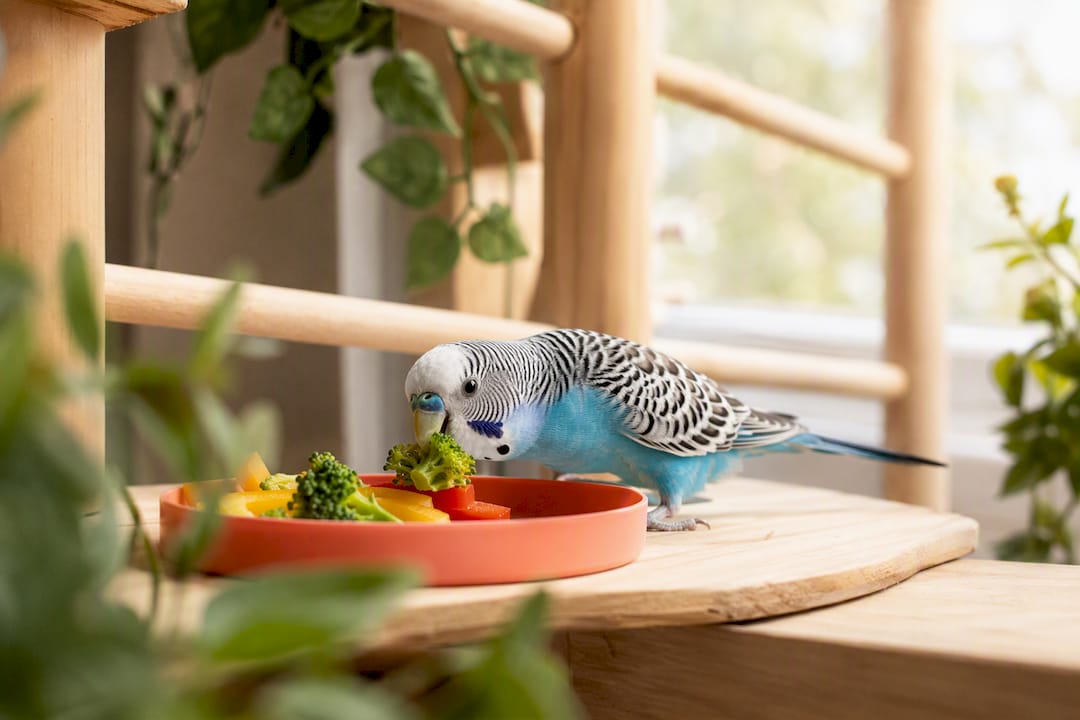
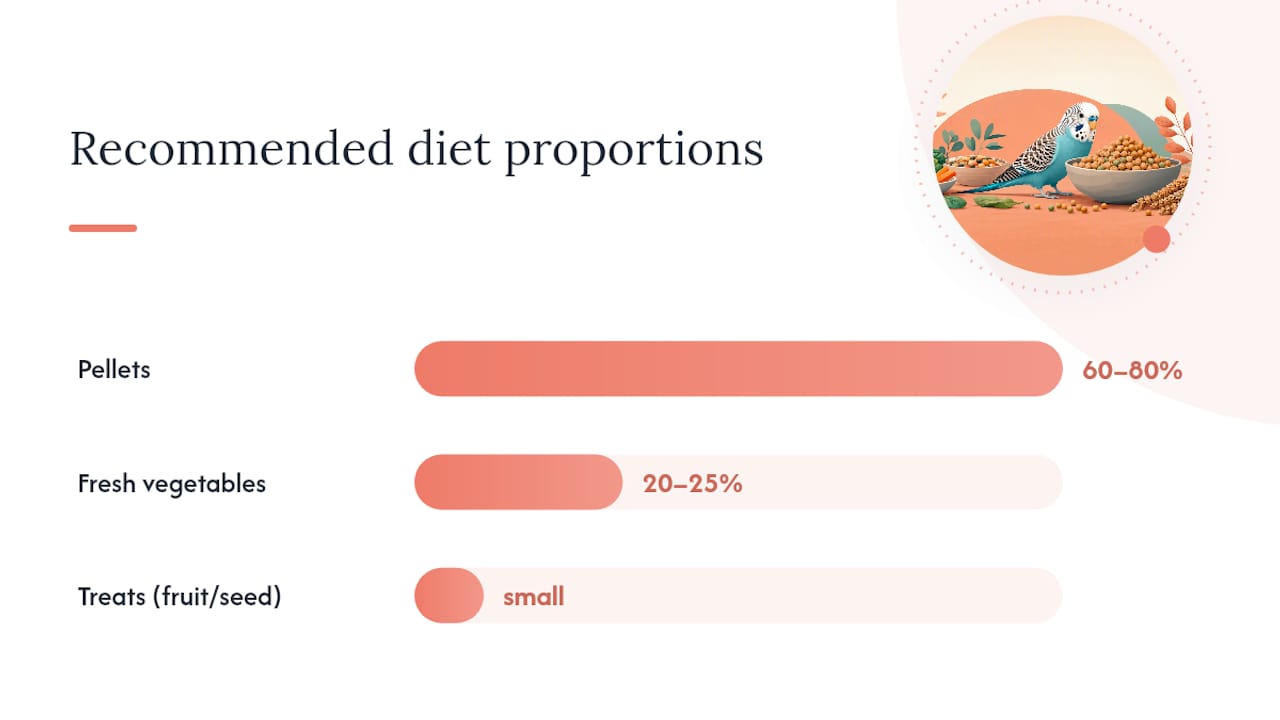
Feed your budgie a diet built mostly from pellets, topped up daily with fresh vegetables and the occasional bit of fruit, and you’ll cover most of what it needs. Never offer avocado, chocolate, caffeine, alcohol, onion, garlic, fruit pips or stones, or xylitol. As a rough rule, pellets should make up 60–80% of the diet, fresh veg around 20–25%, and fruit and treats stay occasional. If your budgie has a health condition or is very young or elderly, check with an avian vet before making changes.
TL;DR:
- Pellets should constitute 60 to 80 percent of a budgie’s diet to prevent obesity and nutrient deficiencies linked to seed-only feeding.
- Fresh vegetables, such as carrots, broccoli, and bell peppers, should make up about 20 to 25 percent of daily intake and be offered daily.
- Fruits like apple, pear, and berries can be given occasionally in small slices, but high-sugar fruits like grapes and dried fruit should be limited to treats.
- Avoid all toxic foods including avocado, chocolate, caffeine, onion, garlic, xylitol, and fruit stones, and seek immediate veterinary advice if ingestion occurs.
- Transition to pellet diets gradually over several weeks with close monitoring, as sudden changes can cause stress and reduced food intake.
Table of Contents
- Budgie safe foods: your quick-reference list
- Safe vegetables and greens: what to offer and how they help
- Safe fruits: sugar caution and how to prepare them
- Protein, eggs, nuts, and sprouted seeds: occasional boosts
- Pellets versus seeds: the ratio that actually matters
- Foods to never give your budgie, and what to do if it happens
- Preparing and introducing fresh food without the fuss
- Signs of food-related illness and when to call the vet
- Why Giddy pets backs every feeding claim with vet-sourced guidance
- Our take: stop treating seed mix as the default
- Ready to build out your budgie’s daily menu?
- Sources
Budgie safe foods: your quick-reference list
Print this out, stick it on the fridge, and you’ll never have to guess again while chopping vegetables at 7am.
Safe vegetables (daily):
- Carrot, grated or in thin batons
- Broccoli florets, raw or lightly steamed
- Bell pepper, any colour, seeds removed
- Kale, romaine lettuce, dandelion leaves
- Courgette, cucumber, peas
Safe fruits (occasional, small portions):
- Apple, seeds and core removed
- Pear, banana, melon
- Blueberries, strawberries
- Mango, papaya
Safe proteins and treats (treat frequency):
- Boiled egg, plain, tiny piece
- Cooked, unseasoned beans and pulses
- Unsalted nuts, crushed or in small pieces
- Sprouted seed mix
Never feed, under any circumstances:
- Avocado, chocolate, caffeine, alcohol
- Onion, garlic, xylitol
- Apple pips, cherry or peach stones
- Raw kidney beans, salted or mouldy food
Pro Tip: Use your thumbnail as the measuring guide. A portion of fresh food roughly the size of your thumbnail per item is plenty for one budgie in a sitting, and it stops you overloading the food bowl with things that will spoil. Anything left uneaten after two hours should come straight out, before bacteria get a foothold.
These lists cover the everyday essentials, but the reasoning behind them, and the exceptions worth knowing, matter just as much as the list itself. If your budgie has an existing condition or you’re unsure about a specific food, an avian vet is always the better call than a forum post.
Safe vegetables and greens: what to offer and how they help
Vegetables are where budgies get most of their vitamins, and not all veg pulls the same weight nutritionally. Carrot is worth including regularly for its beta-carotene content, which your budgie’s body converts into vitamin A, a nutrient seed-heavy diets are chronically short on. Broccoli florets bring vitamin C and calcium, both useful for bone health and immune function. Bell pepper, in any colour, is another strong vitamin C source and budgies tend to enjoy the crunch.
Leafy greens deserve a regular slot too. Kale, romaine lettuce, and dandelion leaves (unsprayed, from a safe patch of garden) all offer a good spread of micronutrients. Spinach is fine only occasionally: it contains oxalates, compounds that can interfere with calcium absorption if fed too often. Iceberg lettuce, by contrast, is mostly water and offers almost nothing nutritionally, so it’s not worth bothering with even though it’s harmless.
Preparation is straightforward but matters more than owners often assume. Wash all fresh produce thoroughly to remove pesticide residue and surface bacteria, then chop everything into bird-sized pieces your budgie can grip and manage. Some vegetables, like broccoli, can be offered raw or lightly blanched, whichever your bird takes to more readily. Never add salt, oil, butter, or seasoning of any kind. Budgies have no need for any of it, and salt in particular can throw off their fluid balance quickly given how small they are.
Fresh vegetables should form roughly 20 to 25% of the daily diet, offered fresh every day rather than saved for occasional treat days. That’s a meaningful chunk of what your bird eats, not a garnish. The trick to keeping it interesting is rotation: swap colours and textures through the week rather than serving the same chopped carrot on repeat. Budgies notice variety, and offering different veg regularly reduces the risk of them fixating on one food and refusing everything else, a habit that’s surprisingly common and genuinely inconvenient once it sets in.
Pro Tip: If your budgie ignores a new vegetable at first, don’t remove it after five minutes. Leave it in the bowl (within the two-hour spoilage window) alongside a favourite food. Budgies are naturally cautious about new items and often need several exposures before they’ll try something unfamiliar.
Safe fruits: sugar caution and how to prepare them
Fruit is a smaller, more occasional part of a budgie’s diet than vegetables, largely because of sugar content. Apple (with seeds and core removed), pear, banana, melon, blueberries, strawberries, mango, and papaya are all safe in modest amounts and offer vitamins and hydration alongside natural sweetness your budgie will genuinely enjoy.
The caution lies with fruits carrying particularly high sugar loads. Grapes and especially dried fruit fall into this category. Dried fruit concentrates sugar dramatically once the water is removed, and regular high-sugar intake contributes to weight gain and raises the risk of fatty liver disease in budgies over time, a condition that’s genuinely serious and not easily reversed. Treat these as an occasional garnish rather than a regular feature.
There’s a sharper hazard worth understanding properly: pips and stones. Apple seeds contain amygdalin, which releases cyanide compounds when broken down, and cherry, peach, and plum stones carry similar cyanogenic compounds. A budgie’s small body size means even a small exposure carries disproportionate risk, so every pip and stone needs removing before the fruit goes anywhere near the food bowl. This isn’t a “wash it well and it’s probably fine” situation. Cut around the core, discard it properly, and check the flesh again before serving.
Serve fruit in thin slices or small diced pieces, and apply the same two-hour rule you’d use for vegetables. Fruit spoils faster than most veg thanks to its higher sugar content, and a warm room speeds that process along considerably.
Protein, eggs, nuts, and sprouted seeds: occasional boosts
Budgies don’t need protein-heavy meals the way some pets do, but a few protein sources earn a place in the rotation, particularly during breeding or moulting, when the body’s demands rise noticeably.
Boiled egg is the standout option here. Offered plain, with no salt or oil, in a genuinely tiny portion, it gives breeding hens and moulting birds a useful protein and calcium boost exactly when their bodies need it most. This isn’t a daily food; think once or twice a week during those higher-demand periods, and skip it otherwise.
Cooked beans and pulses are safe as long as they’re fully cooked and completely unseasoned. This distinction matters more than it sounds: raw or undercooked kidney beans contain a toxin called phytohaemagglutinin that survives insufficient cooking and can make a bird seriously unwell. Only ever offer beans that have been properly boiled through, cooled, and served plain.
Nuts work well as an occasional enrichment food. Unsalted, offered in small crushed pieces rather than whole, they’re high in fat, which makes them a treat rather than a staple. A budgie doesn’t need much fat given its size and activity level, so keep nuts to once or twice weekly at most.
Sprouted seeds deserve a special mention because they sit in a nutritional sweet spot most owners overlook. The sprouting process increases the availability of B vitamins and amino acids compared to dry seed, making them considerably more useful than the seed mix most budgies are used to. To sprout safely, soak seeds in clean water for several hours, rinse thoroughly two or three times a day, and discard anything that smells off or grows mould rather than sprouts. Serve fresh, and remove any uneaten portion promptly, since sprouted seed spoils faster than dry.
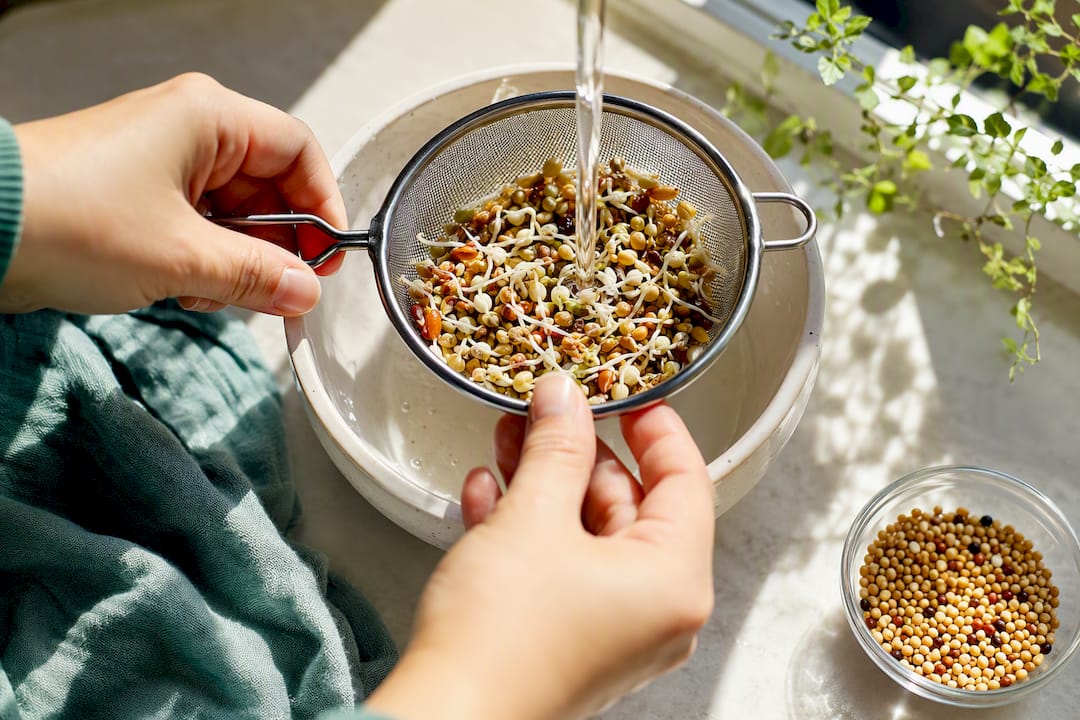
Pro Tip: Sprouted seeds are also one of the easiest bridges from a seed-heavy diet to a pellet-based one, since your budgie already recognises the shape and texture but gets far better nutrition from it.
Pellets versus seeds: the ratio that actually matters
This is the single most important nutritional decision you’ll make for your budgie, and it’s the one most new owners get wrong simply because seed mix is what every pet shop shelf pushes at eye level.
Pellets should form 60 to 80% of a budgie’s diet, with fresh vegetables covering much of the remainder and fruit or seed treats limited to a small occasional share. Seed mixes are not inherently poisonous, but they’re nutritionally lopsided: high in fat, low in vitamins A and D3, low in calcium, and structured in a way that lets budgies pick out their favourite seeds and leave the rest, which defeats whatever balance the mix was designed to have in the first place.
Why this matters more than owners expect: a seed-only diet is a leading contributor to obesity, iodine deficiency, and fatty liver disease in pet budgies, conditions that develop slowly and often go unnoticed until they’re advanced. A bird can look perfectly healthy on seed alone for a long time before problems surface.
Switching an established seed-eater to pellets rarely happens overnight, and trying to force it usually backfires. A gradual approach works far better:
- Start by mixing a small proportion of pellets into the existing seed bowl, roughly 10 to 15%, so your budgie encounters the new food without it dominating the bowl.
- Increase the pellet ratio slowly over two to four weeks, watching that your bird is still eating enough overall and not losing weight.
- Use sprouted seeds or foraging toys stuffed with pellets to make the new food feel like a discovery rather than an imposition.
- Reduce seed access gradually rather than removing it in one go, since sudden restriction can cause stress and reduced eating in a bird that hasn’t adjusted yet.
- Weigh your bird weekly during the transition, since gradual conversion under some monitoring is the approach avian vets tend to recommend precisely because it protects against the bird eating too little while adjusting.
Patience pays off here. Owners who succeed with pellet conversion tend to make very small changes day to day rather than dramatic swaps, and they stick with it for several weeks rather than giving up after a few days of a fussy bird turning its beak up.
Foods to never give your budgie, and what to do if it happens
Some foods aren’t a matter of moderation. They’re a hard no, every time, regardless of quantity.
- Avocado contains persin, a compound linked to heart and respiratory problems in birds, sometimes fatal even in small amounts.
- Chocolate and caffeine contain theobromine and caffeine, both toxic to a budgie’s small system and capable of causing rapid heartbeat, tremors, and seizures.
- Alcohol in any form causes disproportionate effects on a bird’s tiny body, affecting coordination and organ function fast.
- Onion and garlic contain compounds that damage red blood cells and can trigger haemolytic anaemia.
- Xylitol, the sweetener found in sugar-free gum and some baked goods, is dangerous even in trace amounts.
- Fruit pips and stones (apple seeds, cherry, peach, plum stones) release cyanide compounds when broken down.
- Raw or undercooked kidney beans contain a toxin destroyed only by thorough cooking.
- Mouldy or spoiled food of any kind, which can carry mycotoxins dangerous well beyond the digestive upset it might cause.
- Salt and heavily processed or fatty snacks, which overload a bird’s fluid balance and offer no nutritional value in return.
Household items like avocado, chocolate, caffeine, alcohol, and onion or garlic are explicitly listed as toxic to budgies by avian sources, and the mechanism differs by food. Avocado’s persin affects the heart and lungs; theobromine in chocolate overstimulates the nervous system; onion and garlic compounds attack red blood cells directly.
If your budgie has eaten something on this list, act quickly but calmly. Secure the bird somewhere warm and quiet, note exactly what was eaten, roughly how much, and when, then contact an avian vet or emergency clinic immediately rather than waiting to see if symptoms appear. Don’t attempt to induce vomiting or give home remedies unless a vet specifically instructs you to; birds can’t vomit the way mammals do, and the wrong home treatment can do more harm than the food itself.
It’s also worth remembering that seed and honey treat sticks, though marketed as bird treats, offer little nutritional value and contribute to obesity when fed regularly. They’re not toxic, but they’re worth treating with the same caution as any sugary snack: fine occasionally, not a daily fixture.
Preparing and introducing fresh food without the fuss
Getting fresh food right isn’t complicated, but skipping a step or two is how spoilage, rejection, or accidental toxin exposure creeps in.
- Wash everything first, even organic produce, to remove pesticide residue and surface bacteria before it goes anywhere near the food bowl.
- Remove pips, stones, and cores completely, checking the flesh around them rather than assuming a quick cut is enough.
- Chop to thumbnail size, small enough for your budgie to grip and manage without struggling or wasting most of it on the cage floor.
- Present it in a familiar bowl in the usual spot, since budgies are creatures of routine and a new food in a new container often gets ignored on principle.
- Offer a small portion and remove anything uneaten within two hours, particularly in a warm room where bacteria multiply faster.
Skip oils, salt, sugar, and any seasoning entirely, they add nothing your budgie needs and some genuinely work against it. Never feed raw kidney beans or anything showing signs of mould, however minor it looks.
Pro Tip: Mix a new food in with something your budgie already loves, rather than serving it alone. A cautious bird is far more likely to sample an unfamiliar vegetable sitting next to a trusted favourite than one presented on its own in an empty bowl. Foraging toys work the same trick: hiding new food inside one taps into natural curiosity rather than asking your budgie to trust something unfamiliar on sight.
Signs of food-related illness and when to call the vet
Most budgies handle the odd dietary slip without drama, but certain signs mean you shouldn’t wait to see if things improve on their own.
Watch for sudden lethargy, laboured or noisy breathing, tremors or convulsions, diarrhoea or unusually discoloured droppings, dramatic and sudden appetite loss, or any swelling that appears shortly after eating. Budgies are small enough that deterioration can happen fast, sometimes within hours of exposure to something toxic.
Before you call, gather what information you can: what was eaten, roughly how much, when it happened, your bird’s approximate weight and age, and exactly what symptoms you’ve observed and when they started. This turns a panicked phone call into a useful one and helps the vet act faster once you’re through the door.
Don’t reach for home remedies or try to make your bird vomit. Keep it warm, quiet, and as stress-free as possible while you arrange transport, and get to an avian vet or emergency clinic as quickly as you reasonably can. Speed matters more than almost anything else here.
Why Giddy pets backs every feeding claim with vet-sourced guidance
Every recommendation in this guide traces back to established avian veterinary guidance rather than anecdote or forum consensus, because a bird this small has almost no margin for guesswork on what goes in its food bowl. Giddy pets builds its pet care content the same way it builds its product range: starting from what actually keeps an animal healthy, then working outwards to what’s practical for a real household to manage day to day.
If you’re still building out your budgie’s kitchen essentials, a few things are worth having on hand:
- A dedicated set of pet bowls and feeders sized appropriately for a small bird, kept separate from any other pet’s dishes
- Proper storage for dry pellets and seed to keep them fresh and free from pantry pests
- A feeding routine written down somewhere visible, similar in principle to the structured approach in our cat feeding schedule guide, so pellet-to-veg ratios don’t drift over time
If you’re unsure whether a specific food or feeding routine suits your particular bird, get in touch with Giddy pets, and our advice reflects vet-sourced guidance rather than guesswork dressed up as confidence.
Our take: stop treating seed mix as the default
The conventional wisdom that seed mix is a “normal” budgie diet has aged badly, and the evidence on obesity, iodine deficiency, and fatty liver disease bears that out clearly. Seed mix isn’t dangerous in small amounts, but treating it as a staple rather than a treat is where most avoidable health problems in pet budgies actually start.
What gets underestimated is the vegetable quota. Toxic foods are rare accidents. Chronic nutrient gaps from an unbalanced daily diet are slow, common, and far harder to spot until a vet visit reveals the damage.
If you take one thing from this guide, make it the pellet conversion. It’s the single change with the biggest long-term payoff, and it’s also the one owners procrastinate on longest because a fussy bird during week one feels like failure. It isn’t. It’s just week one.
— Giddy
Ready to build out your budgie’s daily menu?
Once you know the ratios, the next step is simply having the right food and equipment on hand so the good habits stick. There is a curated range of pet foods built around vet-backed proportions rather than seed-heavy mixes.
Browse our pet food and treats range for pellet options and sprouting seed mixes suited to a gradual conversion plan, and pair them with properly sized bowls and feeders so fresh veg and pellets stay separated and easy to monitor. If you’re transitioning a fussy eater and want advice on quantities or timing, consider consulting with a qualified pet care expert. Start with a small pellet order this week and watch how your budgie responds over the first fortnight.