


British shorthair care: a starter plan for new owners
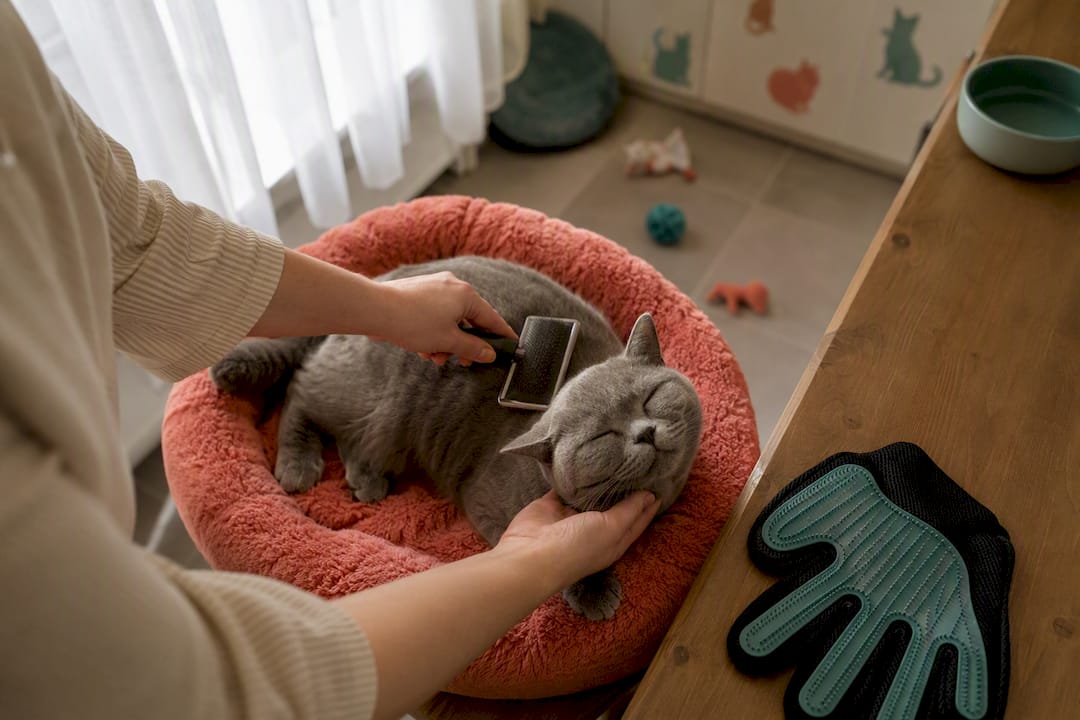
British shorthair care: a starter plan for new owners
Three things matter more than anything else in the first month with a British Shorthair: portion-controlled feeding, a weekly grooming routine, and a vet check that includes a conversation about cardiac screening. Get those three right and you have covered most of what this breed needs to thrive. British Shorthairs are calm, food-loving, and prone to putting on weight quietly, so measured meals from day one help manage their weight effectively.
This week, aim to do three things:
- Buy a proper set of feeding scales or a portion cup so meals are measured, not guessed.
- Set a fixed grooming slot, even just ten minutes, twice this week, to get your cat used to being handled.
- Book a vet appointment for a full health check and ask specifically about breed screening for hypertrophic cardiomyopathy (HCM).
Worth knowing: the PDSA lists British Shorthairs as typically long-lived, with an average lifespan often reported in the mid-teens, and lifetime care costs can be substantial. Budgeting early, rather than reacting to costs as they land, makes ownership far less stressful.
Key Takeaways
British Shorthair care succeeds when portion-controlled feeding, weekly grooming, and routine cardiac screening are treated as non-negotiable basics rather than optional extras.
| Point | Details |
|---|---|
| Feed measured meals | Two meals daily for adults, using scales rather than a scoop, to prevent breed-typical weight gain. |
| Groom weekly, more in moulting | Brush weekly year-round, rising to 2–3 times weekly during spring and autumn shedding. |
| Prioritise cardiac screening | Ask your vet about HCM screening by echocardiogram, especially from breeding or unknown lines. |
| Expect slow maturity | Full maturity takes 3–5 years, so playful energy in young cats is normal, not a training failure. |
| Budget for the long term | Lifespan often reaches 14–18 years, so plan for ongoing costs and consider insurance early. |
| Stock the right basics | Giddy pets’ grooming and feeding ranges are built around vet-backed routines like this one. |
Table of Contents
- British shorthair care essentials: your supplies and routine checklist
- Grooming a British Shorthair: coat, claws, ears and teeth
- British shorthair diet: feeding schedules and weight management
- Preventive veterinary care and health issues to watch for
- British shorthair temperament: behaviour, socialisation and training
- Setting up a home your British Shorthair will actually use
- Choosing a British Shorthair: breeders, rehoming and red flags
- What British shorthair ownership costs over a lifetime
- How Giddy Pets helps you put this routine into practice
- Frequently asked questions
- Sources
British shorthair care essentials: your supplies and routine checklist
Before your cat even arrives, get the basics sorted. A calm, well-equipped home makes the first few weeks smoother for both of you, and it means you are not scrambling to buy a carrier the morning of a vet visit.
Essential supplies:
- A large, uncovered litter tray (British Shorthairs are broad-bodied and dislike cramped trays)
- Unscented, clumping litter to start with, since sudden changes upset most cats
- A sturdy, well-ventilated carrier rated for a cat that can reach 4 to 8kg as an adult
- Ceramic or stainless steel bowls, wide enough that whiskers do not touch the sides
- A robust scratching post at least 70cm tall
- A washable bed in a quiet, draught-free spot
- A slicker brush and metal comb for the dense double coat
- Cat-specific nail clippers
- At least two water sources, positioned away from food bowls
A simple daily to monthly routine:
- Daily: two measured meals, two short play sessions, fresh water, a litter tray check.
- Weekly: a full brushing session, a quick nail check, and a look at ears and eyes.
- Monthly: weigh your cat if you have scales, check parasite prevention is up to date, and inspect the scratching post and toys for wear.
Buy the biggest carrier and scratching post you can comfortably fit, since British Shorthairs are a solidly built breed and will outgrow anything designed for a slim, average-sized cat within the first year. Giddy pets stocks cat supplies and accessories sized with sturdier breeds in mind, which saves you a second purchase later.
Grooming a British Shorthair: coat, claws, ears and teeth
Weekly brushing is usually sufficient for most of the year, increasing in frequency during shedding seasons such as spring and autumn. Each session should take five to ten minutes once your cat is used to it. The coat is dense, plush, and famously described as feeling like a teddy bear, but that density means loose hair mats quickly if it is left unbrushed for weeks at a time.
The right tools do most of the work:
- A slicker brush lifts loose undercoat without pulling on skin, provided you use light, short strokes rather than dragging it through knots.
- A metal comb catches anything the slicker misses, particularly around the neck ruff and hind legs where mats form first.
- Deshedding mitts are gentler for cats who dislike brushes and double as a bonding tool, since they feel more like stroking than grooming.
Avoid pressing hard or working against tangles with force. Skin trauma from over-enthusiastic brushing is a genuine risk with dense-coated breeds, and a cat that associates grooming with pain will fight you on it for years. PetMD confirms that weekly brushing is generally sufficient outside shedding season, with more frequent sessions needed as the coat blows.
Claws need trimming roughly every two to three weeks. Press gently on each paw pad to extend the claw, snip only the sharp white tip, and stop well clear of the pink quick. If your cat has dark claws and you cannot see the quick clearly, trim less at a time and go more often. Check ears weekly for wax build-up or odour, and eyes for discharge or redness. Anything beyond mild waxy residue, along with persistent scratching at the ears, head shaking, or visible redness, warrants a vet visit rather than a home remedy.
Dental care matters more than most new owners expect. Brushing your cat’s teeth two to three times a week meaningfully reduces the risk of dental disease later in life, according to guidance from Mr Pet Lover. Dental treats can support this between brushing sessions, though they do not replace it.
Pro Tip: Start grooming sessions with kittens as short, food-rewarded games rather than formal routines. A minute of brushing followed by a treat, repeated daily for the first few weeks, builds a cat who tolerates and even enjoys the brush as an adult.
Watch for matting behind the ears, under the front legs, and around the tail base. These are the areas owners miss most often, and a mat left too long can pull painfully on skin and require a vet to shave it out under sedation.
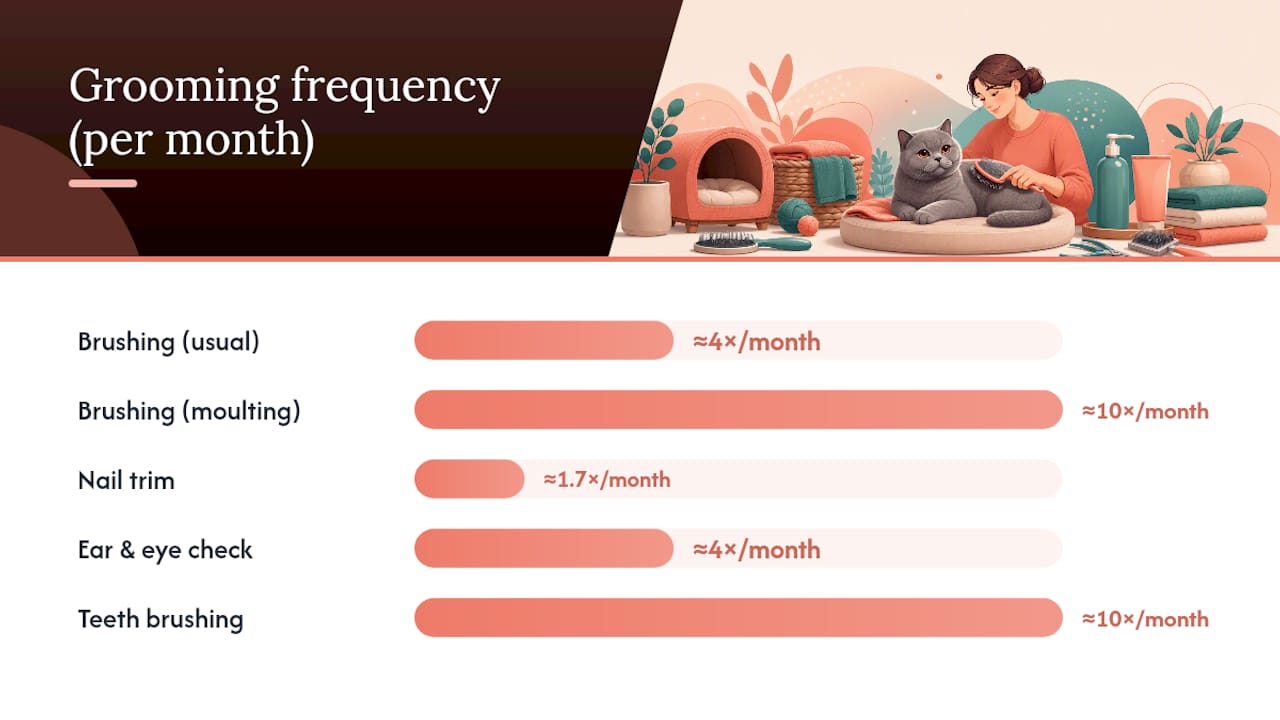
| Grooming task | Frequency |
|---|---|
| Full brushing | Weekly, rising to 2–3 times weekly during moulting |
| Nail trim | Every 2–3 weeks |
| Ear and eye check | Weekly |
| Teeth brushing | 2–3 times weekly |
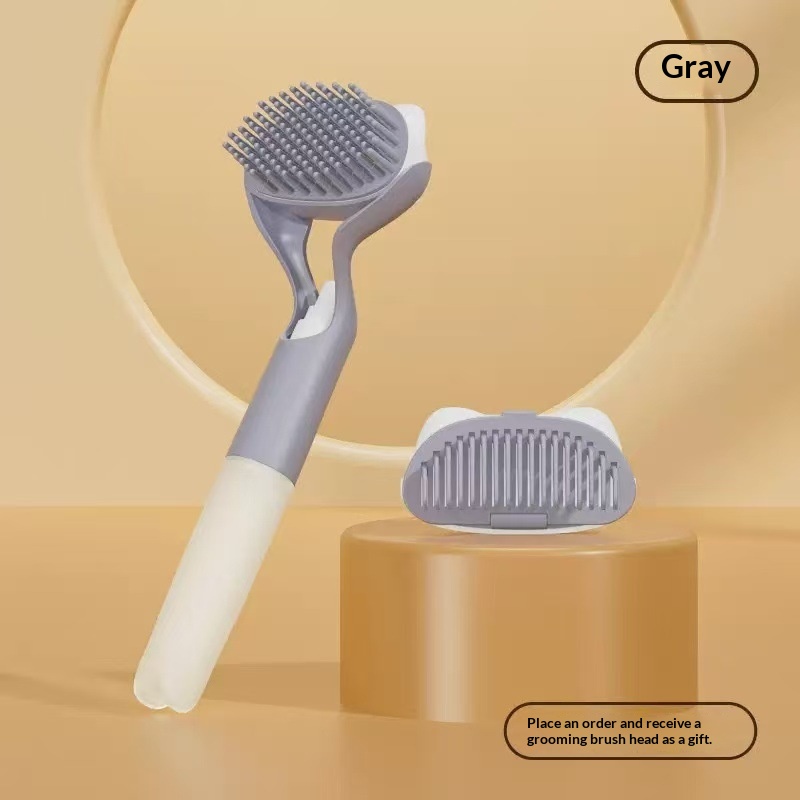
A deshedding brush is worth adding to your kit specifically for the spring and autumn coat blow, when a slicker alone can feel like it is barely making a dent.
British shorthair diet: feeding schedules and weight management
Measured meals, not free access to food, are the single most effective way to keep a British Shorthair at a healthy weight. This is a breed with a genuine, well-documented tendency to gain weight, and once excess weight goes on, it brings joint strain, diabetes risk, and reduced mobility with it.
Feeding by life stage:
- Kittens (up to 12 months): three to four small meals a day of a complete kitten formula, moving to two meals as they approach adulthood. Giddy pets’ guide to kitten food choices covers formula options in more depth.
- Adults (1 to 7 years): two measured meals a day. Mr Pet Lover estimates a typical adult needs somewhere in the region of 200 to 280 calories daily, though this varies with size, activity, and neuter status, so treat it as a starting point rather than a fixed rule and check the figure with your vet.
- Seniors (7 years and older): often the same two-meal pattern, but with a formula adjusted for lower activity and, where needed, joint or kidney support.
Free-feeding, leaving a bowl topped up all day, is one of the easiest habits to fall into and one of the hardest to undo. It removes any sense of portion control and encourages grazing out of boredom rather than hunger. A slow feeder or puzzle feeder solves two problems at once: it slows down a cat that eats too fast, and it adds mental stimulation to what would otherwise be a passive task.
Practical steps for weight management:
- Weigh food using kitchen scales rather than a scoop, since scoop sizes vary wildly between brands.
- Include wet food where possible; it supports hydration better than dry kibble alone.
- Weigh your cat monthly and log it, so gradual gain shows up before it becomes a problem.
- Adjust portions in small increments if weight trends upward, and speak to your vet before making large changes.
Mr Pet Lover’s obesity guidance is blunt about this: obesity is the most common preventable health problem in the breed, and the fix is almost always portion control paired with regular play rather than a special diet. A pet food and treats range built around portion guidance makes this easier to stick to than eyeballing a bowl each morning.
Preventive veterinary care and health issues to watch for
Annual wellness exams, a weight check at every visit, and breed-appropriate cardiac screening form the backbone of responsible British Shorthair health care. This is not a breed that shows illness obviously. Cats mask discomfort well, and a stocky build can hide weight gain or early cardiac changes for months before anything looks visibly wrong.
A rough vet visit timeline:
- Kittens: vaccinations from around 8 to 9 weeks, a second round a few weeks later, neutering typically discussed around 4 to 6 months, and initial parasite control.
- Adults: annual wellness exams, booster vaccinations, ongoing flea and worm treatment, and dental checks at every visit.
- Seniors (7 years and up): twice-yearly checks become sensible, alongside bloodwork and, where indicated, an echocardiogram to monitor heart health.
Hypertrophic cardiomyopathy, or HCM, is the condition to take most seriously with this breed. It is the most significant inherited heart disease in British Shorthairs, and routine cardiac screening by echocardiogram is considered the standard for catching it early, according to Vetsaglik. Echocardiography is genuinely the gold standard here, not just a recommended extra. Catching HCM before it becomes symptomatic can materially change how it is managed and how long a cat lives comfortably with it.
Other conditions worth knowing about:
- Polycystic kidney disease (PKD): an inherited condition affecting kidney function; DNA testing exists and is relevant if you are buying from a breeder.
- Obesity-related joint and metabolic problems: covered in the diet section above, but worth flagging again here as a preventive-care issue, not just a diet one.
- Dental disease: builds silently without regular brushing or checks.
- Feline lower urinary tract disease (FLUTD): watch for straining in the litter tray, frequent trips with little output, or blood in urine, all of which need same-day vet attention.
Warning signs that justify an urgent rather than routine vet visit include laboured breathing, sudden lethargy, loss of appetite lasting more than a day, or visible weight loss. Any of these, particularly breathing changes, could point to early heart disease and should not wait for the next scheduled check-up.
Cardiac screening and insurance are worth budgeting for early rather than after a diagnosis. Echocardiograms carry a real cost, and pet insurance taken out while your cat is young and healthy is usually far cheaper and less restrictive than trying to insure after a condition has already been flagged.
Pro Tip: Ask your vet whether your cat’s breeding line has any known HCM history. Reputable breeders keep screening records, and knowing this in advance helps your vet decide how often to recheck your cat’s heart.
British shorthair temperament: behaviour, socialisation and training
British Shorthairs are affectionate on their own terms. They tend to prefer proximity rather than constant physical contact, happily settling nearby rather than insisting on a lap, according to Petful. Understanding this early prevents a common disappointment: new owners sometimes expect a cuddly lap cat and feel rejected when their British Shorthair chooses the other end of the sofa instead. That is simply the breed’s normal way of showing they feel comfortable around you.
Practical training steps that work well with this temperament:
- Reinforce litter training gently in the first weeks, praising rather than scolding if accidents happen.
- Use short, reward-based sessions with a clicker or simple treat marker for basic cues like coming when called.
- Discourage table begging early and consistently. Once established, it is far harder to undo than to prevent.
- Handle paws, ears, and mouth gently and often from kittenhood, so grooming and vet visits stay low-stress.
Maturity is slow in this breed, typically taking three to five years to reach full physical and behavioural adulthood, per the Cat Fanciers’ Association. A kitten’s playful bursts of energy do not mean much about their adult temperament, and owners who expect a settled cat at one year old are often surprised when the same kitten-like enthusiasm continues into year two or three.
Consult a behaviourist if you notice sudden withdrawal, unexplained aggression, or new marking behaviour, particularly if it appears out of character. These shifts sometimes signal pain or illness rather than a purely behavioural issue, so a vet check should come first.
Setting up a home your British Shorthair will actually use
Vertical space, regular play, and the right scratching surfaces do more for a British Shorthair’s wellbeing than any amount of expensive toys left untouched in a box. This is a sturdy, ground-loving breed that still benefits from having somewhere high to survey the room from.
A quick environment checklist:
- Litter trays placed in quiet, low-traffic spots, away from food and water
- At least one secluded space your cat can retreat to when overwhelmed
- A sturdy cat tree or wall-mounted shelving for climbing, since British Shorthairs are heavier than many breeds and flimsy furniture will not hold up
- Multiple water stations around the home, particularly if you have more than one cat
Two short play sessions a day, around 10 to 15 minutes each, using wand toys or puzzle feeders, is a practical standard that keeps most British Shorthairs active without overstimulating a breed that is naturally more laid-back than most. Interactive toys that mimic hunting movement tend to hold their interest better than static ones.
If you allow outdoor access, supervise it or use an enclosed run rather than letting your cat roam freely. Microchipping and a collar with ID are worth having regardless, since a startled indoor-outdoor cat can travel further than owners expect.
Choosing a British Shorthair: breeders, rehoming and red flags
Choose a responsible breeder or a reputable rehoming centre, both of whom should offer health screening records and full transparency about the cat’s background. This single decision affects almost everything that follows, from genetic health risks to how well-socialised your new cat is from the start.
Questions worth asking before you commit:
- Have the parents been tested for HCM and PKD, and can you see the results?
- What is the kitten’s full vaccination history to date?
- How was the kitten socialised in its first weeks, and around what (children, other pets, noise)?
- Is there a return policy if health issues emerge shortly after purchase?
Genuine breeder-education resources are worth reading before you meet anyone, and this breeder’s guide to spotting scam listings applies just as well outside its named breed. Red flags include a breeder unwilling to show you the parents, no health testing paperwork at all, or pressure to collect a kitten immediately without proper documentation.
Once home, book a vet check within the first week, confirm vaccination status, verify the microchip is registered to you, and give your new cat a quiet, low-pressure settling-in period before introducing the rest of the household.
What British shorthair ownership costs over a lifetime
British Shorthairs are genuinely long-lived, with the PDSA reporting an average lifespan of 14 to 18 years. That longevity is worth celebrating, but it also means years of ongoing costs, plus the possibility of higher spending if cardiac screening flags an issue that needs managing.
| Cost type | Examples |
|---|---|
| Annual, ongoing | Food, parasite prevention, routine vet checks, insurance premiums |
| One-off, early | Neutering, microchipping, initial carrier and setup |
| Occasional, higher | Cardiac screening (echocardiogram), dental procedures, illness treatment |
- Insurance is widely recommended for this breed specifically because of the HCM risk, and premiums taken out young are typically far more affordable than trying to insure after a diagnosis.
- Food and litter form the bulk of routine annual spending, with parasite prevention and check-ups adding a predictable, smaller sum on top.
Vet‑recommended grooming and home‑care tools that genuinely help
Four tools cover almost everything a British Shorthair needs at home: a slicker brush for the undercoat, a metal comb for finishing and catching stray mats, a deshedding mitt for cats who dislike formal brushing, and proper cat nail clippers rather than human ones.
- The slicker and comb are inexpensive and last years with basic care.
- Deshedding mitts double as a bonding tool during shedding season.
- Nail clippers with a safety guard reduce the risk of cutting the quick.
Giddy pets stocks all four as part of its grooming brushes range, alongside grooming gloves suited to dense, plush coats like this breed’s.
Why Giddy recommends starting simple
We built our care guides around what vets actually tell owners, not what sells the most. Every product recommendation here reflects that: measured feeding tools, proper grooming kit, nothing you don’t need.
How Giddy Pets helps you put this routine into practice
Getting the essentials right is easier when you are not hunting across a dozen different shops for a decent slicker brush, a portion-controlled feeder, and food your vet would actually approve of. Giddy pets curates its range specifically around vet-backed advice like the routine above, so what you find in our grooming brushes and interactive toy collections is chosen with breeds like the British Shorthair in mind, not just whatever is popular.
If portion control feels like the hardest habit to build, an automatic pet feeder takes the guesswork out of meal timing and measured portions, which matters more for this breed than almost any other. Browse our pet food and treats range to find a formula suited to your cat’s life stage, and start building the routine your vet will actually recommend at your next check-up.
Frequently asked questions
How often should I groom a British Shorthair? Weekly brushing is enough for most of the year. Increase to two or three sessions a week during spring and autumn shedding, when the dense undercoat blows out.
Are British Shorthairs good for allergy sufferers? No cat is truly hypoallergenic, including British Shorthairs. Their dense coat sheds seasonally, and regular grooming helps reduce loose hair and dander in the home, but people with genuine cat allergies should spend time with the breed before committing.
How much should I feed my British Shorthair? Adult cats typically need somewhere around 200 to 280 calories daily, though this depends on size, activity, and neuter status. Measure meals rather than free-feeding, and confirm the right amount with your vet.
What health problems are British Shorthairs prone to? Hypertrophic cardiomyopathy (HCM) and polycystic kidney disease (PKD) are the two most significant inherited conditions, alongside a general tendency toward obesity if feeding is not controlled.
Do British Shorthairs like to be held? Generally not for long. They tend to prefer sitting nearby rather than being carried or held, which is normal for the breed rather than a sign of poor bonding.
How long do British Shorthairs live? Average lifespan is typically reported between 14 and 18 years, making early preventive care and insurance worthwhile investments.
Sources
- British Shorthair - PDSA
- British Shorthair Cat Breed Health and Care | PetMD
- British Shorthair Care Guide: Health, Diet & Grooming | Mr Pet Lover
- Common British Shorthair health problems (Vetsaglik)
- British Shorthair temperament (Petful)