Best Toys for Indoor Cats: A Buyer's Guide
A practical UK buyer's guide to the best toys for indoor cats, from wands and puzzle feeders to tunnels and catnip, and how to build a toy box that actually gets used.
The quick answer
A varied set works best: a wand teaser for human-led play, a couple of self-play motion toys, a puzzle or treat-dispensing toy, a tunnel, and a catnip toy. Covering several drives keeps an indoor cat fitter and less bored than one type of toy.
Mentioned in this guide

Retractable Cat Teaser Wand Set with Feather Refills
An interactive teaser wand set for indoor cats, with two extendable rods and a bundle of clip-on feather and worm attachments that jingle as they move. The retractable design makes it easy to vary the chase and tuck away after play.
£10.99

Multi-Level Cat Track Ball Tower Toy
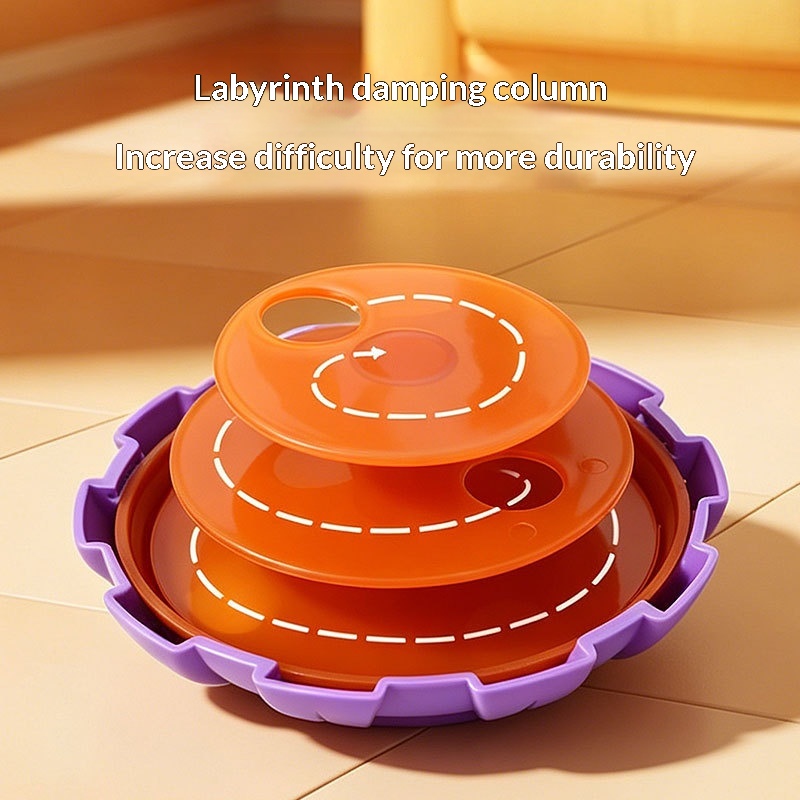
A tiered turntable toy with a winding labyrinth track that keeps balls spinning just out of reach. The layered design adds difficulty to challenge clever cats, encouraging batting, chasing and hours of independent play.
£11.99

Rechargeable Self-Rolling Cat Ball with Feather Tails
A rechargeable self-rolling ball toy with two interchangeable teaser tails and two speed settings. The erratic motion keeps indoor cats chasing, pouncing and active. Charges via USB-C.
£9.99
The best toys for indoor cats aren't a single product, they're a small, varied set that covers hunting, solo play and foraging, kept fresh by rotation. Indoor cats can't stalk real prey or patrol a garden, so toys are how they hunt, exercise and switch their brains on. Buy across a few categories rather than buying ten of the same thing.
If you would rather go straight to browsing, the interactive cat toys are the self-moving and wand-style ones covered below.
Our picks
A balanced indoor toy box needs shared chase play, a safe no-battery solo toy and something that moves when you are busy.

Best for interactive chase play
Retractable Cat Teaser Wand Set with Feather Refills
Why we picked it
The wand and replaceable lure set lets you vary speed, direction and texture instead of leaving the same toy on the floor. Finish with a successful catch, then put string and feathers away between supervised sessions.
- In stock
- Tracked delivery: 8–13 working days
Best no-battery solo toy
Multi-Level Cat Track Ball Tower Toy
Why we picked it
The balls stay captive in their tracks, so the cat can bat and chase without the toy disappearing under furniture in the first minute. It adds movement without batteries, loose cords or a charging routine.
- In stock
- Tracked delivery: 8–13 working days

Best rechargeable moving toy
Rechargeable Self-Rolling Cat Ball with Feather Tails
Why we picked it
Unpredictable rolling movement triggers pursuit when you cannot run a wand session, and rechargeable power avoids disposable batteries. Use it as one part of the routine rather than a replacement for play with you.
- In stock
- Tracked delivery: 8–13 working days
Why indoor cats need more than outdoor cats
An outdoor cat self-services a lot of its enrichment: climbing, hunting, exploring. An indoor cat relies on you to recreate that. Without it you tend to see boredom-driven behaviour, midnight zoomies, over-grooming, pestering, or weight gain. The fix is a toy box that hits the main feline drives: chase, pounce, bat, forage and hide. For the wider picture, our hub on keeping an indoor cat entertained all day is a good companion to this guide.
Wand and teaser toys: the cornerstone
Every indoor cat box should start with a wand teaser. It's the most effective way to deliver a proper, human-led hunt, and it keeps fingers safe. Choose a sturdy rod with a swappable lure so you can offer bird-style feathers one day and a ground-dragging "mouse" the next.
Wand toys sit within the broader category of interactive cat toys, which is where I'd send a new cat owner first. If you want the deeper detail on motion and electronic options, our interactive cat toys buyer's guide compares them properly.
The toy matters less than how you move it. Make the lure dart, freeze and hide like real prey and even a jaded cat usually can't resist.
Solo-play toys for time alone
Indoor cats spend hours unsupervised, so include things they can use without you:
- Motion or roller balls that move unpredictably.
- Springs and crinkle balls for batting around hard floors.
- Track-and-ball toys that reward pawing.
These won't replace human play, but they fill the gaps. Our guide to the best solo-play toys for cats home alone goes into which styles hold up best.
Puzzle and foraging toys
Food puzzles are some of the most underrated toys going. A treat-dispensing ball makes a cat work its brain and body for food, which is brilliant for slowing down fast eaters and for tiring out a bored indoor cat. Start easy so your cat succeeds quickly, then make it harder as they get the hang of it.
Tunnels and hideouts
A crinkle tunnel earns its place twice over: it's a solo toy a cat will dive into on a whim, and a fantastic prop for wand play, since cats love ambushing from cover. Collapsible tunnels also tuck away easily, which helps if space is tight.
Toys to be cautious with
Not every popular toy is a safe one, especially for unsupervised indoor cats:
- Loose string, ribbon, wool and tinsel are tempting but dangerous if swallowed, so keep string toys for supervised play only and pack them away after.
- Small parts like loose bells, googly eyes or thin plastic that can be chewed off and swallowed.
- Toys that have started to fall apart. Once stuffing or feathers come loose, retire them.
When in doubt, supervise. A good rule is that anything with string or small components is a together-toy, while solo toys should be chunky and tough enough to leave out safely.
Spending sensibly
You don't need to spend a fortune. Some of the most-used toys, a scrunched ball, a cardboard box, a feather on a stick, cost almost nothing, and many cats favour them over pricey gadgets. Put your money into one quality wand and one good puzzle feeder, then fill out the rest of the box with simpler, cheaper toys you can rotate and replace without a second thought. The aim is variety and freshness, not an expensive collection gathering dust.
Catnip and scent toys
Around two-thirds of cats respond to catnip, and for them a catnip toy can turn a quiet afternoon into a burst of rolling, kicking play. For the cats that don't react, silvervine is a popular alternative worth trying. Keep catnip toys put away between sessions so the effect stays strong.
Building the box and keeping it fresh
A solid starter set looks like this:
- One quality wand teaser, plus spare lures.
- One or two self-play motion toys.
- A puzzle or treat-dispensing toy.
- A tunnel or hideout.
- A catnip or scent toy to test the response.
The real secret is rotation. Keep most toys hidden and put out only a few at a time, swapping every few days so "old" toys feel new again. You'll get far more mileage from rotating ten toys than from leaving thirty out permanently.
When you're ready to assemble yours, browse the cat toys range and the broader indoor cat enrichment hub for ideas across every category.
Common questions
What toys are best for an indoor cat?
A varied set works best: a wand teaser for human-led play, a couple of self-play motion toys, a puzzle or treat-dispensing toy, a tunnel, and a catnip toy. Covering several drives keeps an indoor cat fitter and less bored than one type of toy.
How many toys does an indoor cat need?
It's about variety and rotation, not quantity. A handful spanning different play styles, with most kept out of sight and a few swapped in every few days, beats a big pile left out all the time.
Do all cats like catnip toys?
No. Roughly two-thirds of cats respond to catnip, and the trait is inherited. For non-responders, silvervine is a good alternative to try. Store catnip toys away between uses so the effect stays potent.
Are puzzle feeders worth it for indoor cats?
Yes. They make a cat work for food, which adds mental and physical exercise, slows fast eaters and eases boredom. Start with an easy version so your cat gets early wins, then increase the difficulty over time.
About the author
Matt Garnett — founder, Giddy Pets
Matt started Giddy Pets to make getting pets the good stuff simpler and fairer. Everything in these guides comes from real life with pets and a lot of trial and error — it's practical guidance, not veterinary advice. If a guide gets something wrong, tell him directly.
Advice & planning
Free tools & more guides
Practical calculators and trusted guides relevant to this product.