
How Much Does a Great Dane Cost? Buying & Lifetime Costs
What a Great Dane really costs — the price of a health-tested puppy, and the high lifetime running costs of feeding, equipping, insuring and treating a giant breed.
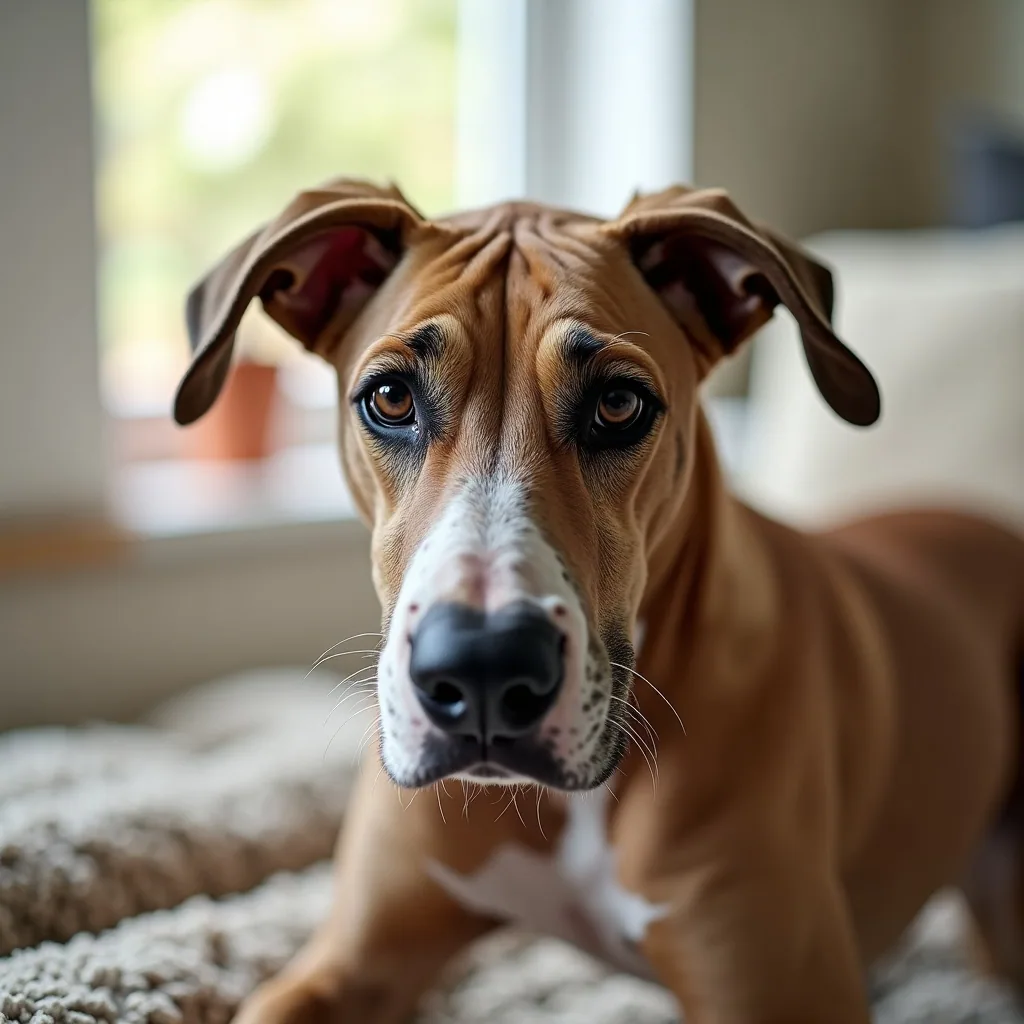
The quick answer
A well-bred, health-tested Great Dane puppy from a Kennel Club Assured Breeder in the UK usually costs several hundred to over a thousand pounds. The far bigger cost is keeping one: as a giant breed they eat a great deal, need large beds, harnesses and crates, and insurance and medication are dearer because doses are sized to body weight.
Great Danes are magnificent dogs, but they are also one of the most expensive breeds to own — not so much because of the purchase price, but because everything about keeping a giant dog costs more. Before you fall for those soulful eyes and that towering frame, it pays to understand the full cost of ownership. Here is an honest breakdown of what a Great Dane costs to buy and to keep.
How much does a Great Dane puppy cost?
The purchase price varies with the breeder, the puppy's lines, and whether it is sold as a pet or for showing. As a general guide, a well-bred, health-tested puppy from a Kennel Club Assured Breeder in the UK typically costs from several hundred pounds up to over a thousand pounds. Puppies advertised very cheaply should be treated with caution: a suspiciously low price often signals no health testing, poor early care, or a puppy farm. Equally, a high price alone is no guarantee of quality — what matters is the evidence of health testing and responsible rearing behind the puppy, not the headline figure.
Why a health-tested breeder is worth it
Great Danes are prone to several serious inherited conditions, so where you buy matters enormously. A responsible breeder will:
- Be a Kennel Club Assured Breeder or follow the same standards, and rear puppies in the home.
- Health-test the parents — including heart screening for dilated cardiomyopathy and hip scoring for hip dysplasia — and discuss the breed's risks honestly.
- Let you meet the mother and see the puppies with her.
- Provide microchipping, first vaccinations and worming records, and be happy to answer questions and stay in touch for the dog's life.
Paying for a properly bred, health-screened puppy can spare you heartache and very large vet bills later. Our honest guide to Great Dane health problems explains exactly what to ask about.
The real cost: keeping a giant dog
The purchase price is the small part. Across a Great Dane's life the running costs are substantial, and because everything is sized to a giant body, many of those costs run far higher than for an average dog.
- Food. This is the big one. A giant dog eats a great deal, so quality food is a major monthly bill — far more than for a medium-sized breed. Our pet calorie calculator helps you feed the right amount without waste.
- Insurance. Premiums for giant breeds are higher because they are predisposed to expensive conditions; lifelong cover is genuinely valuable (more below).
- Veterinary care and medication. Many drugs are dosed by body weight, so a Great Dane's worming, flea treatment, anaesthetics and medicines all cost more. Neutering and any surgery are bigger procedures too.
- Equipment. Extra-large beds, strong harnesses, sturdy leads, large crates and travel gear all cost more in giant sizes — see our walk and travel range.
- Boarding or dog-sitting, which is often charged more for very large dogs.
It is sensible to budget a meaningful monthly figure for food, insurance and sundries, with a healthy buffer for veterinary costs that, in this breed, can be considerable.
Why insurance really matters for a Great Dane
For a giant breed with a known risk of bloat (GDV), heart disease, joint problems, Wobbler syndrome and bone cancer, pet insurance is among the most worthwhile investments you can make. Emergency bloat surgery alone can be very expensive, and ongoing heart or cancer treatment more so. A lifetime policy taken out while your dog is young and healthy — before any condition is diagnosed and excluded as pre-existing — gives the broadest protection. You can get a rough idea with our pet insurance estimator and read the pet insurance guide for what to look for.
Avoiding scams and bad breeders
The breed's popularity attracts unscrupulous sellers. Be wary of puppies offered with no health testing, sellers who will not let you visit or meet the mother, pressure to pay deposits quickly, and prices that seem too good to be true. Take your time, ask for proof of health tests and registration, check the microchip is registered, and walk away if anything feels off. A good breeder will be as keen to vet you as you are to vet them.
The honest bottom line
A Great Dane is one of the costlier dogs to own. The purchase price of a properly bred, health-tested puppy is meaningful, but the lifetime cost — driven by huge food bills, weight-based medication, large equipment and a serious health profile — is what really sets the breed apart. Budget realistically, insure early, and buy from a reputable breeder, and you will give yourself the best chance of years of happy, manageable ownership. For more, see our guides on size and lifespan.
*This is general guidance. Costs vary by region, breeder and individual dog, and insurance terms differ between providers.*
Sources
- The Kennel Club — finding an Assured Breeder and buying a puppy (thekennelclub.org.uk).
- PDSA — the cost of owning a dog (pdsa.org.uk).
- Blue Cross — buying a puppy and avoiding scams (bluecross.org.uk).
- RSPCA — getting a dog responsibly (rspca.org.uk).
Common questions
How much does a Great Dane cost?
A well-bred, health-tested Great Dane puppy from a Kennel Club Assured Breeder in the UK usually costs several hundred to over a thousand pounds. The far bigger cost is keeping one: as a giant breed they eat a great deal, need large beds, harnesses and crates, and insurance and medication are dearer because doses are sized to body weight. Add a higher risk of serious conditions such as bloat and heart disease, and the lifetime cost of a Great Dane is among the highest of any breed.
Why is a Great Dane so expensive to keep?
Almost everything about a giant dog costs more. They eat a great deal, so food is a major monthly bill. Many medications — wormers, flea treatments, anaesthetics — are dosed by body weight, so they cost more per treatment. Equipment such as beds, harnesses, leads and crates is pricier in giant sizes, insurance premiums are higher because the breed is prone to expensive conditions, and boarding often costs more for very large dogs. Their serious health profile means vet bills can be considerable too.
Is pet insurance worth it for a Great Dane?
For a giant breed predisposed to bloat (GDV), heart disease, joint problems, Wobbler syndrome and bone cancer, insurance is among the most worthwhile investments you can make. Emergency bloat surgery alone can be very expensive, and ongoing heart or cancer treatment more so. A lifetime policy taken out while your dog is young and healthy gives the broadest cover, before any condition can be excluded as pre-existing. For this breed in particular, good insurance can make serious illness far more affordable to manage.
About the author
Matt Garnett — founder, Giddy Pets
Matt started Giddy Pets to make getting pets the good stuff simpler and fairer. Everything in these guides comes from real life with pets and a lot of trial and error — it's practical guidance, not veterinary advice. If a guide gets something wrong, tell him directly.
Free tools & more guides
Read next
How Long Do Great Danes Live? Lifespan & Health
An honest look at the Great Dane's short lifespan, why giant breeds live fewer years, the serious conditions they face, and how to help yours live as long and well as possible.
Great Dane Health Problems: An Honest Guide
An honest, factual guide to the serious conditions Great Danes face — bloat (GDV) and gastropexy, dilated cardiomyopathy, hip and elbow dysplasia, Wobbler syndrome and bone cancer.
Are Great Danes Good Family Dogs?
What Great Danes are really like to live with — their gentle-giant temperament, how they are with children, the practical cautions of a huge dog, and the families they suit best.
How Big Do Great Danes Get? Size & Growth
How big Great Danes really get — typical heights and weights, their slow giant-breed growth, and the joint-safe exercise that protects a growing Dane puppy.