
How Long Do Great Danes Live? Lifespan & Health
An honest look at the Great Dane's short lifespan, why giant breeds live fewer years, the serious conditions they face, and how to help yours live as long and well as possible.
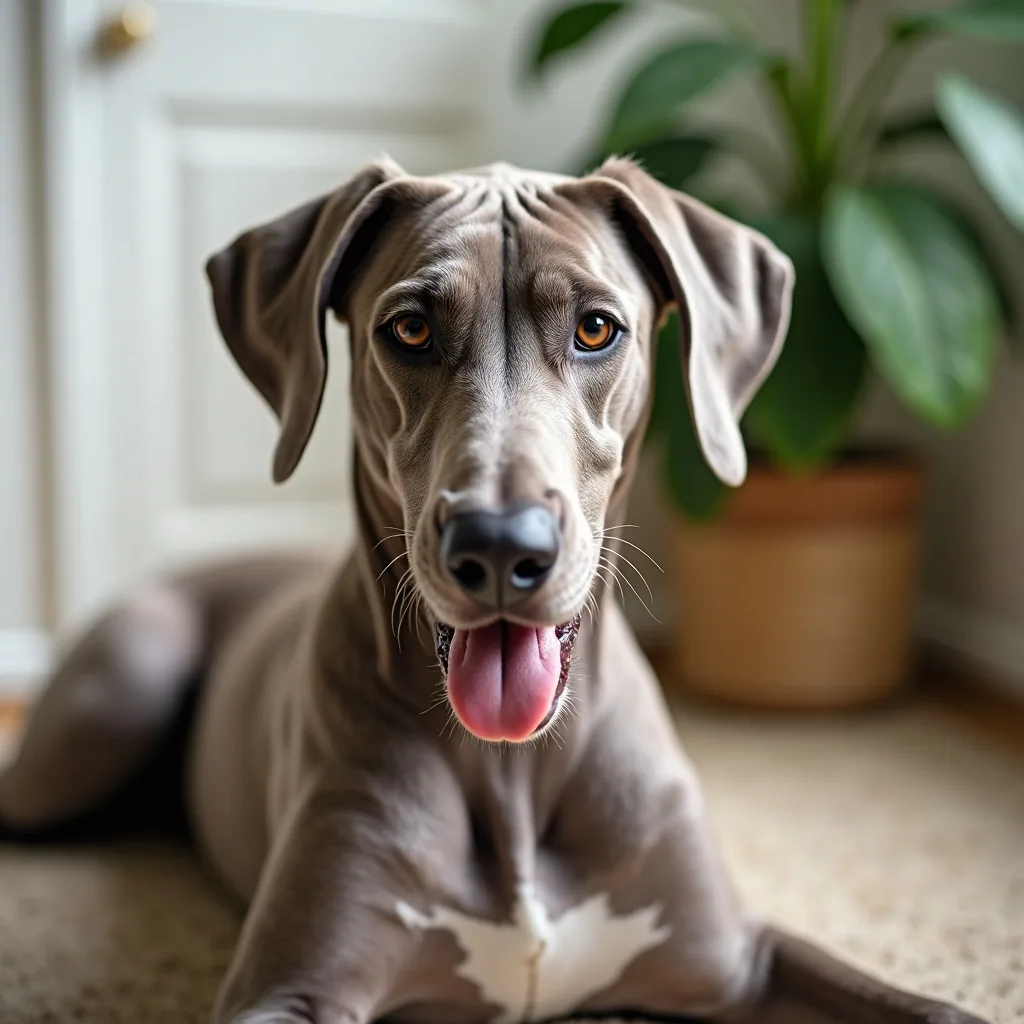
The quick answer
Great Danes are a giant breed, and giant breeds are sadly short-lived: most live only around 7 to 10 years, and many studies put the average closer to 7 or 8. Their huge size puts strain on the heart, joints and other organs, and they are prone to several serious conditions.
The Great Dane is one of the most striking dogs in the world — a towering, elegant, deeply affectionate breed often called the 'gentle giant'. If you are considering one, or already share your home with a Dane, one of the hardest truths to face up front is how short their lives tend to be. This is an honest guide to Great Dane lifespan, why giant breeds are so short-lived, and the practical things that genuinely help yours live as long and as well as possible.
How long do Great Danes live?
Great Danes are, sadly, a short-lived breed. Most live only around 7 to 10 years, and several studies place the average closer to 7 or 8 years. That is markedly shorter than a typical medium-sized dog, many of which reach 12 to 14. It is one of the most important things to understand before you take one on: a Great Dane is a giant whose years with you will likely be fewer than you would wish. Going in with honest expectations does not lessen the love — it simply helps you make the most of the time you have and plan properly for their care.
Why do giant breeds live such short lives?
It feels counter-intuitive — in the wild, bigger animals often live longer — but within dogs the pattern reverses: the largest breeds generally live the shortest lives. Researchers believe rapid early growth and large body size place greater lifelong strain on the heart, joints and other organs, and may speed up the biological processes of ageing. A Great Dane's body simply has more to do, and does it under more load, than a small dog's. This is not a reason to avoid the breed — it is a reason to care for them especially well and to never push them to grow bigger or faster than nature intends.
The conditions that affect lifespan
Several serious health problems are more common in Great Danes and have a direct bearing on how long they live. The most urgent is bloat, or gastric dilatation-volvulus (GDV) — a sudden, life-threatening emergency in which the stomach swells and can twist. Deep-chested giant breeds are particularly at risk, and many owners and breeders choose a preventive surgery called gastropexy to reduce the danger. Great Danes are also prone to dilated cardiomyopathy (DCM), a disease of the heart muscle; hip and elbow dysplasia; Wobbler syndrome, a condition of the neck and spinal cord; and bone cancer (osteosarcoma), which is seen more often in large and giant breeds. Our honest guide to Great Dane health problems covers each of these in detail.
Weight: protecting the years you have
After the inherited risks, the single biggest everyday factor in a Dane's health is body weight. Excess weight piles strain onto already heavily loaded joints and a hard-working heart, and shortens life. Because a Great Dane is so large, it can be hard to judge their condition by eye, so use body-condition scoring and your vet's guidance rather than the scales alone. You can check feeding amounts with our pet calorie calculator, and our advice on joint-safe exercise in the size and growth guide is especially important for puppies.
Feeding to reduce bloat risk
Because GDV is such a major cause of sudden death in the breed, how you feed matters enormously. Vets commonly advise feeding smaller, more frequent meals rather than one large one, avoiding vigorous exercise immediately before and after eating, and not letting a Dane gulp huge amounts of water at once. A slow feeder can help an enthusiastic eater slow down. Discuss your individual dog with your vet, and ask about preventive gastropexy, especially if you are already considering neutering surgery.
Helping your Great Dane live a long, healthy life
- Buy from health-tested parents — choose a breeder who screens for heart and hip problems (see our cost and buying guide).
- Keep your dog lean — measure meals and avoid overfeeding at every life stage.
- Feed carefully — smaller meals, calm eating, and a chat with your vet about bloat prevention.
- Protect growing joints — gentle, limited exercise for puppies; build up slowly as they mature.
- Know the emergency signs — especially of bloat, and have your nearest emergency vet to hand.
- Insure early — a giant breed with serious health risks makes lifelong cover genuinely valuable.
- See your vet regularly, moving towards twice-yearly checks as your dog ages, which for a Dane comes early.
You can get a rough sense of lifespan with our pet life expectancy tool, and find local and out-of-hours clinics through our vet finder.
*This is general guidance, not a substitute for advice from your own vet, who can assess your individual dog.*
Sources
- The Kennel Club — Great Dane breed information and health (thekennelclub.org.uk).
- RVC VetCompass — UK dog longevity and breed health research (rvc.ac.uk/vetcompass).
- PDSA — dog health, weight and preventive care (pdsa.org.uk).
- Blue Cross — caring for your dog (bluecross.org.uk).
- RSPCA — dog health and welfare (rspca.org.uk).
Common questions
How long do Great Danes live?
Great Danes are a giant breed, and giant breeds are sadly short-lived: most live only around 7 to 10 years, and many studies put the average closer to 7 or 8. Their huge size puts strain on the heart, joints and other organs, and they are prone to several serious conditions. Good breeding from health-tested parents, keeping your dog at a lean weight, careful feeding to reduce bloat risk, and regular veterinary care all help, but it is important to go in with honest expectations about a giant breed's lifespan.
Why do Great Danes have such short lives?
Within dogs, the largest breeds tend to live the shortest lives, and Great Danes are among the most extreme examples. Researchers believe rapid early growth and large body size place greater lifelong strain on the heart, joints and organs, and may accelerate ageing. A Great Dane's body has more to do, under more load, than a small dog's. It is not a reason to avoid the breed, but a reason to care for them especially well, keep them lean, and never push them to grow bigger or faster than nature intends.
How can I help my Great Dane live longer?
Start with a puppy from health-tested parents, then keep your dog lean throughout life, as excess weight strains an already hard-working heart and joints. Feed smaller, calmer meals and talk to your vet about reducing bloat risk, protect growing joints with gentle puppy exercise, learn the warning signs of emergencies like bloat, insure early, and see your vet regularly — moving to twice-yearly checks as your Dane ages, which happens early in a giant breed. None of this changes the genetics, but it gives your dog the best possible chance.
About the author
Matt Garnett — founder, Giddy Pets
Matt started Giddy Pets to make getting pets the good stuff simpler and fairer. Everything in these guides comes from real life with pets and a lot of trial and error — it's practical guidance, not veterinary advice. If a guide gets something wrong, tell him directly.
Free tools & more guides
Read next
Great Dane Health Problems: An Honest Guide
An honest, factual guide to the serious conditions Great Danes face — bloat (GDV) and gastropexy, dilated cardiomyopathy, hip and elbow dysplasia, Wobbler syndrome and bone cancer.
How Much Does a Great Dane Cost? Buying & Lifetime Costs
What a Great Dane really costs — the price of a health-tested puppy, and the high lifetime running costs of feeding, equipping, insuring and treating a giant breed.
How Big Do Great Danes Get? Size & Growth
How big Great Danes really get — typical heights and weights, their slow giant-breed growth, and the joint-safe exercise that protects a growing Dane puppy.
Are Great Danes Good Family Dogs?
What Great Danes are really like to live with — their gentle-giant temperament, how they are with children, the practical cautions of a huge dog, and the families they suit best.