
Adopting a Retired Racing Greyhound: What to Expect
What to expect when adopting a retired racing Greyhound in the UK — the kennel-to-home transition, muzzle culture, cats and recall, and how to help one settle.
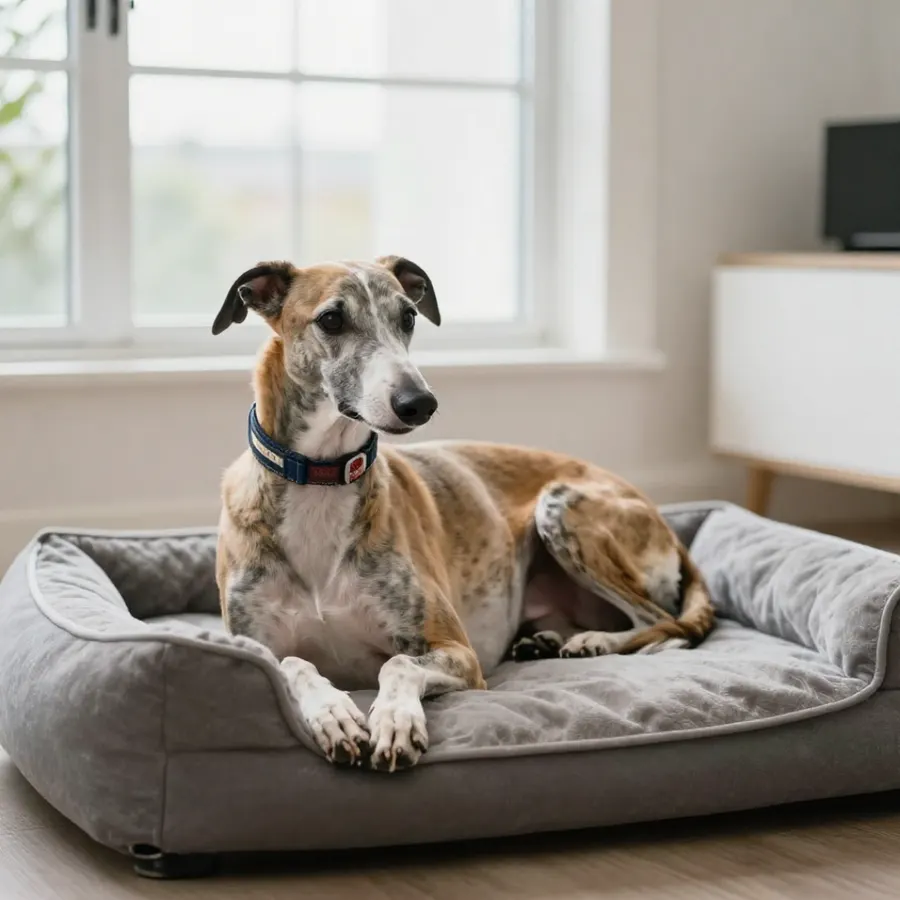
The quick answer
Yes, and it is one of the most common ways to own the breed in the UK. Thousands of Greyhounds retire from racing each year and need homes, and charities such as the Greyhound Trust (Greyhound Rescue) and many independent rescues rehome them.
Every year in the UK, thousands of Greyhounds retire from racing and need new homes, and adopting one is one of the most rewarding ways to welcome the breed. Retired racers are usually gentle, affectionate adults who adapt to home life with remarkable speed — but there are some breed-specific quirks worth understanding before you bring one home. Here is an honest guide to what to expect when adopting a retired racing Greyhound.
Where to adopt in the UK
Most retired racers are rehomed through dedicated charities. The Greyhound Trust (Greyhound Rescue) is the best-known national organisation, alongside many regional and independent Greyhound and lurcher rescues, as well as general charities such as the Blue Cross and RSPCA. A good rescue will assess each dog's temperament, including how it reacts to cats and small animals, and match you with a suitable dog rather than simply handing over the first available one. They will also usually have the dog vet-checked, vaccinated, microchipped and neutered before rehoming. Take their assessment seriously — they know the individual dog.
The kennel-to-home transition
Many retired racers have spent their lives in a kennel environment with a structured routine, which means ordinary household things can be completely new to them. A dog that raced beautifully may never have seen a staircase, a glass patio door, a mirror, a television, or a slippery wooden floor. Some have never been left alone in a house, climbed stairs, or experienced the everyday sounds of a home. None of this is a problem — it just means patience and gentle introductions. Most Greyhounds learn fast: stairs, doors and house manners usually click within days or weeks, and many are clean in the house very quickly thanks to their kennel routine.
Muzzle culture
Newcomers are sometimes surprised to see Greyhounds out and about in muzzles, but muzzling is part of normal Greyhound culture, not a sign of aggression. Racing Greyhounds wear a muzzle on the track, so many are entirely comfortable in one. A basket muzzle is often used as a sensible precaution during the settling-in period, around small animals, or in busy environments — it still lets the dog pant, drink and relax. Most Greyhounds are gentle, friendly dogs; the muzzle simply gives owners reassurance while a new dog finds its feet. Browse muzzles for a comfortable basket-style fit.
Cats, small animals and recall
Greyhounds are sighthounds bred to chase, and this is the single most important thing to get right. Some retired racers have a very strong prey drive and cannot safely live with cats or small pets; others are gentle and "cat-workable" with careful introductions. A reputable rescue will tell you honestly which category a dog falls into. The same instinct affects recall: a Greyhound in pursuit of something can be far away in seconds and is very hard to call back, so most owners only allow off-lead running in secure, fully enclosed spaces. Our guide on how much exercise a Greyhound needs covers safe exercise in detail.
Settling in: the first weeks
Give a new Greyhound time and space to decompress. A quiet, comfortable bed of their own in a calm spot is one of the most important things you can provide — Greyhounds love their sleep and a soft, supportive dog bed helps them feel secure. Keep the first days low-key, establish a gentle routine, and introduce new experiences gradually. Some retired racers experience separation-related issues at first, having rarely been alone, so build up alone-time slowly. Calm, reward-based handling suits these sensitive dogs far better than firmness.
Kit you'll need
Greyhounds have specific kit needs. Because their heads are narrower than their necks, a wide, padded sighthound or martingale collar that tightens safely is far more secure than an ordinary collar — see dog collars, and consider a harness and lead too. Their thin coat and low body fat mean a warm coat is a winter essential, not a luxury — browse dog coats. And don't forget dental care: many retired racers arrive with tartar build-up, so a dental care routine matters from day one.
Microchipping and ID
In the UK it is a legal requirement for all dogs over eight weeks to be microchipped and registered, and to wear a collar and ID tag in public. Retired racers are usually already microchipped and may carry an ear tattoo from their racing days, but always confirm the chip is registered to you when you adopt and keep your details up to date.
The rewards
Adopting a retired racing Greyhound is hugely rewarding. These gentle, quiet, affectionate dogs settle into pet life with surprising ease, ask for relatively little exercise, and repay a soft bed and a warm coat with years of devoted companionship. You also give a deserving dog a second life. For more on living with the breed, see our guides on whether Greyhounds make good family pets and health and care.
*This is general guidance. Always follow the advice of the rehoming charity and your vet for your individual dog.*
Sources
- The Kennel Club — Greyhound breed and rehoming information (thekennelclub.org.uk).
- Blue Cross — rehoming a dog and helping a new dog settle (bluecross.org.uk).
- RSPCA — rehoming, sighthounds and dog welfare (rspca.org.uk).
- PDSA — microchipping, settling a new dog and dog law (pdsa.org.uk).
Common questions
Can you adopt a retired racing Greyhound?
Yes, and it is one of the most common ways to own the breed in the UK. Thousands of Greyhounds retire from racing each year and need homes, and charities such as the Greyhound Trust (Greyhound Rescue) and many independent rescues rehome them. Retired racers are usually adults, often house-trained quickly and settle well, though home life — stairs, glass doors, mirrors and being left alone — can be unfamiliar at first. Most adapt remarkably fast with patience.
Why do Greyhounds wear muzzles?
Muzzling is part of normal Greyhound culture rather than a sign of aggression. Racing Greyhounds are muzzled on the track, so many are completely used to wearing one, and a basket muzzle can be a sensible precaution during the settling-in period or around small animals. Most Greyhounds are gentle, friendly dogs; a muzzle simply lets them pant, drink and relax while giving owners reassurance in new situations.
Do retired Greyhounds settle into home life easily?
Usually yes, often surprisingly quickly. Many have lived in kennels and may be new to stairs, glass doors, mirrors, slippery floors or being left alone, so the first days call for patience and gentle introductions. Thanks to their kennel routine, many are clean in the house fast. Give them a quiet bed, a calm routine and gradual exposure to new experiences, and most retired racers settle within days to weeks.
About the author
Matt Garnett — founder, Giddy Pets
Matt started Giddy Pets to make getting pets the good stuff simpler and fairer. Everything in these guides comes from real life with pets and a lot of trial and error — it's practical guidance, not veterinary advice. If a guide gets something wrong, tell him directly.
Free tools & more guides
Read next
Are Greyhounds Good Family Pets?
What Greyhounds are really like to live with — their gentle, quiet temperament, the famous 45mph couch potato nature, and the homes they suit best.
Greyhound Health & Care
How to care for a Greyhound — thin skin and lacerations, sensitivity to cold and anaesthetic, bloat, dental care, easy grooming, and why they need coats.
How Much Exercise Does a Greyhound Need?
Greyhounds need far less exercise than their athletic build suggests — why these sprinters are happy with short walks, and how to exercise one safely.
How Long Do Greyhounds Live? Lifespan & Health
How long Greyhounds live, the breed's generally good health, the conditions to watch for such as bloat and cold sensitivity, and how to help yours age well.