
Greyhound Health & Care
How to care for a Greyhound — thin skin and lacerations, sensitivity to cold and anaesthetic, bloat, dental care, easy grooming, and why they need coats.
The quick answer
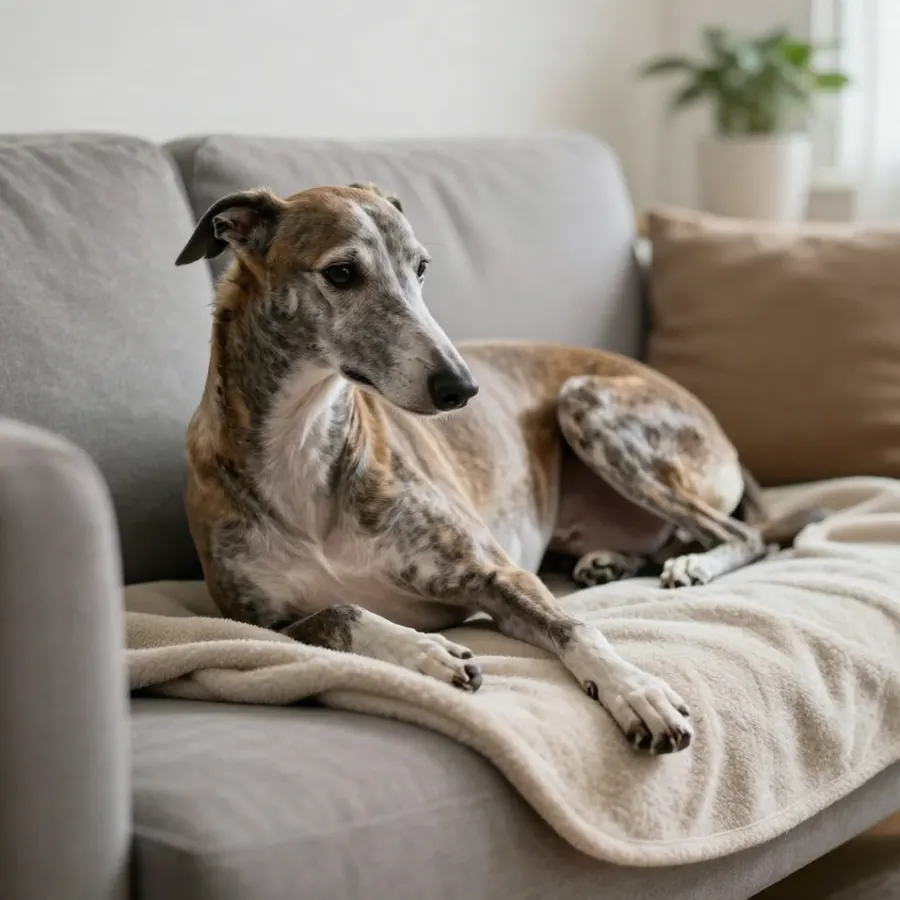
Greyhounds are bred to be lean, lightweight and aerodynamic, so they carry very little body fat and have notably thin, delicate skin. This makes them prone to cuts, grazes and tears that would barely mark a thicker-skinned dog, so owners need to be mindful of rough terrain, brambles and sharp edges.
Greyhounds are, on the whole, a healthy and easy breed to look after — their short coat needs little grooming and they are usually quiet, clean and undemanding at home. But the very features that make them such elegant athletes, particularly their leanness and thin coat, mean they have some specific care needs that set them apart from most dogs. Here is an honest, practical guide to keeping a Greyhound healthy and comfortable.
Thin skin and lacerations
Greyhounds carry very little body fat and have notably thin, delicate skin. This makes them prone to cuts, grazes and tears that would barely mark a thicker-skinned dog — a scrape on rough ground, a snag on a bramble, or a catch on a sharp edge can open a surprising wound. Many Greyhound owners become quite practised at first aid. To reduce the risk, be mindful of where your dog runs and plays, keep an eye out for hazards, and have a basic pet first-aid kit at home. Deeper cuts often need veterinary attention, including possible stitching, so don't hesitate to call your vet for anything more than a minor graze.
Sensitivity to cold
With so little body fat and a thin, single coat that has no insulating undercoat, Greyhounds genuinely feel the cold. In a British winter, on wet days, and especially as they get older, many need a warm, well-fitted coat for walks — this is a real welfare measure, not a fashion statement. Indoors, they appreciate a draught-free spot and a soft, supportive bed; you will often see a Greyhound seeking out the warmest place in the house or curling up tightly to conserve heat. Browse dog coats cut for a deep-chested, lean build, and a cosy bed or calming bed to keep them snug.
Sensitivity to anaesthetic
Because of their low body fat and breed physiology, Greyhounds can be more sensitive to certain anaesthetics than many other dogs. This is well known to vets, and an experienced practice will take a Greyhound's particular needs into account when planning any procedure that requires sedation or general anaesthesia. If your vet is less familiar with sighthounds, it is reasonable to mention the breed's known sensitivity before any operation.
Bloat (GDV)
As a deep-chested breed, Greyhounds are among those at higher risk of bloat, or gastric dilatation-volvulus (GDV) — a sudden, life-threatening emergency in which the stomach fills with gas and may twist. Signs include a swollen, hard abdomen, unproductive retching, restlessness, drooling and obvious distress. This is a veterinary emergency: contact your vet immediately if you suspect it. To help reduce the risk, many owners feed smaller meals rather than one big one, avoid vigorous exercise just before and after eating, and discourage gulping — a slow feeder can help a fast eater take their time.
Dental care
Dental disease is common in Greyhounds, and retired racers in particular often arrive with significant tartar and gum problems. Left untreated, dental disease is painful and can affect general health. Establish a routine of regular tooth brushing with dog toothpaste, offer appropriate dental chews, and keep up routine veterinary dental checks — browse our dental care range. Good dental care is one of the most valuable things you can do for a Greyhound's long-term wellbeing.
Grooming: the easy part
In happy contrast to their other care needs, grooming a Greyhound is wonderfully simple. Their short, fine, single coat sheds modestly and only needs a quick brush or a rubber grooming mitt once or twice a week to keep it glossy and remove loose hair — see our grooming brushes. They rarely need bathing, and a wipe-down is usually enough. Use grooming time to check the thin skin for cuts or lumps, and to inspect ears and feet.
Nails and feet
Greyhound nails can grow long and may need regular trimming if they are not worn down naturally — take only the clear tip and avoid the quick, or ask your vet or groomer if you are unsure. Check the feet and pads regularly, especially given how easily the skin grazes. Our nail care range covers clippers and grinders suited to the job.
Diet and weight
Greyhounds are naturally lean and should stay that way — you should be able to see a hint of the last ribs and a clear waist. Feed a good-quality, complete diet in measured portions and judge condition by body shape rather than the scales alone. Because the breed is so slim by nature, even a little extra weight shows quickly. Our pet calorie calculator helps you get portions right, and browse food and treats for suitable options.
Routine veterinary care
Keep up vaccinations, parasite control (worming and flea/tick treatment) and regular check-ups, moving towards more frequent visits as your dog ages. Microchipping is a legal requirement in the UK, and lifelong insurance taken out while your dog is young and healthy is well worth considering — estimate cover with our pet insurance estimator and read the pet insurance guide. You can find local and emergency clinics through our vet finder.
The bottom line
Greyhounds are an easy breed to groom but have a few distinctive care needs: protect their thin skin, keep them warm, feed to avoid bloat, stay on top of dental care, and flag their anaesthetic sensitivity to your vet. Meet those needs and you will have a low-maintenance, healthy and contented companion. For more on the breed, see our guides on lifespan and health and adopting a retired racer.
*This is general guidance. If you find sore skin, a wound, dental trouble or any health concern you cannot easily manage, see your vet.*
Sources
- The Kennel Club — Greyhound breed information and care (thekennelclub.org.uk).
- PDSA — bloat (GDV), dental care, skin and dog health (pdsa.org.uk).
- Blue Cross — grooming and caring for your dog (bluecross.org.uk).
- RSPCA — dog welfare and health (rspca.org.uk).
Common questions
Why do Greyhounds have such thin skin?
Greyhounds are bred to be lean, lightweight and aerodynamic, so they carry very little body fat and have notably thin, delicate skin. This makes them prone to cuts, grazes and tears that would barely mark a thicker-skinned dog, so owners need to be mindful of rough terrain, brambles and sharp edges. The same low body fat means they feel the cold easily and can be more sensitive to anaesthetic, which your vet will take into account during any procedure.
Do Greyhounds get cold easily?
Yes. Greyhounds have very little body fat and a thin, single coat with no insulating undercoat, so they feel the cold far more than most breeds. In winter and wet weather many genuinely need a warm coat for walks, and a soft, draught-free bed indoors. You will often see a Greyhound shivering or seeking out the warmest spot in the house. A well-fitted dog coat is a practical necessity for this breed in a British winter, not a fashion statement.
Do Greyhounds need a lot of grooming?
No — grooming a Greyhound is very easy. Their short, fine, single coat sheds modestly and only needs a quick brush or rubber-mitt groom once or twice a week to keep it glossy. The bigger care priorities for the breed are their teeth, which are prone to dental disease, their thin skin, which can tear or graze easily, and their nails. A simple weekly once-over plus regular dental care covers most of what a Greyhound's coat and skin need.
About the author
Matt Garnett — founder, Giddy Pets
Matt started Giddy Pets to make getting pets the good stuff simpler and fairer. Everything in these guides comes from real life with pets and a lot of trial and error — it's practical guidance, not veterinary advice. If a guide gets something wrong, tell him directly.
Free tools & more guides
Read next
How Long Do Greyhounds Live? Lifespan & Health
How long Greyhounds live, the breed's generally good health, the conditions to watch for such as bloat and cold sensitivity, and how to help yours age well.
Adopting a Retired Racing Greyhound: What to Expect
What to expect when adopting a retired racing Greyhound in the UK — the kennel-to-home transition, muzzle culture, cats and recall, and how to help one settle.
Are Greyhounds Good Family Pets?
What Greyhounds are really like to live with — their gentle, quiet temperament, the famous 45mph couch potato nature, and the homes they suit best.
How Much Exercise Does a Greyhound Need?
Greyhounds need far less exercise than their athletic build suggests — why these sprinters are happy with short walks, and how to exercise one safely.