
Are Greyhounds Good Family Pets?
What Greyhounds are really like to live with — their gentle, quiet temperament, the famous 45mph couch potato nature, and the homes they suit best.
The quick answer
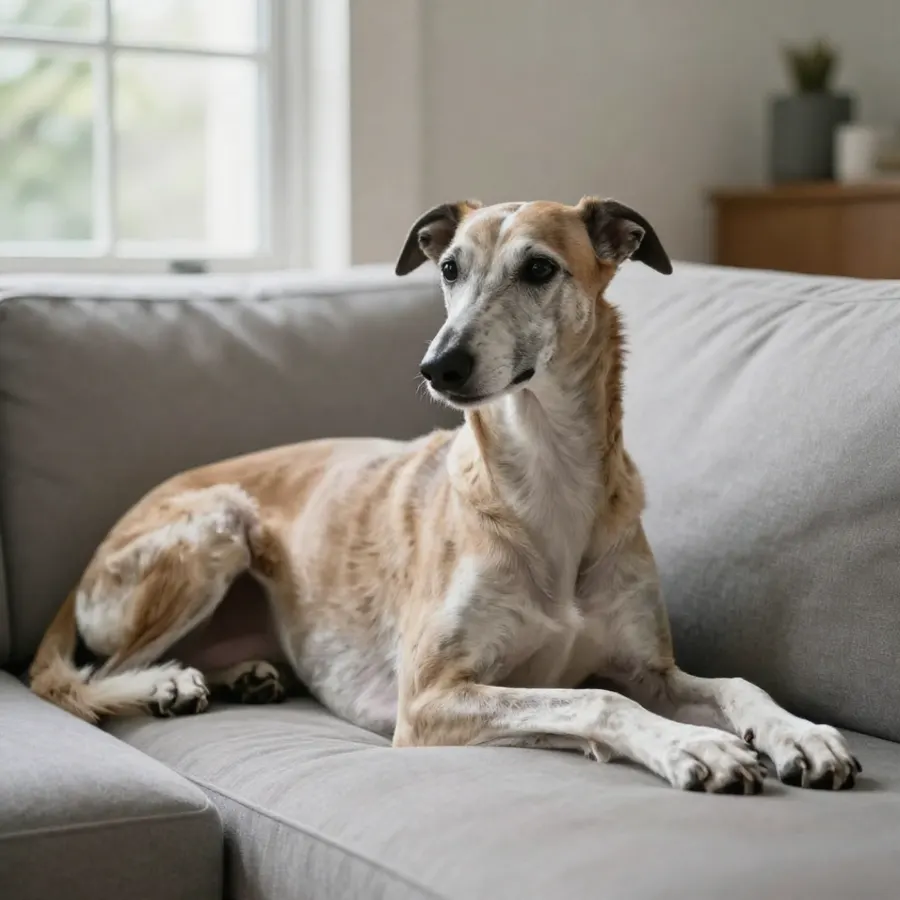
Yes — Greyhounds are widely regarded as gentle, affectionate and quiet dogs that suit family life well. Despite their racing image they are famously laid-back at home, often described as 45mph couch potatoes who love nothing more than a soft bed.
Mention a Greyhound and most people picture a lean athlete tearing round a racetrack. Spend a day with one at home and you will see a very different animal: a calm, affectionate, often comically lazy dog who would happily snooze on the sofa for sixteen hours given the chance. So are Greyhounds good family pets? For the right household, they are one of the easiest and most rewarding dogs you can own. Here is an honest look at the breed's temperament and the homes it suits.
The 45mph couch potato
The Greyhound's most famous trait is the gap between its reputation and its reality. Yes, they are the fastest dog breed and can reach remarkable speeds in a short sprint — but that athleticism comes in brief bursts. The rest of the time, Greyhounds are gentle, quiet and astonishingly laid-back. The nickname "45mph couch potato" is genuinely accurate: a typical adult Greyhound is happy with a couple of walks and then spends most of the day asleep. This makes them far less demanding than their athletic build suggests, and a good fit for owners who want a calm companion rather than a bouncy, full-on dog.
A gentle, affectionate temperament
Greyhounds are typically sweet-natured, sensitive and devoted to their people. They tend not to be barky or boisterous, and many are quite reserved and softly behaved indoors. They often bond closely with their family and enjoy quiet companionship — leaning against your legs, resting their head on your lap, or simply sharing the same room. Because they are sensitive souls, they respond best to calm, kind, reward-based handling rather than harsh corrections.
Are Greyhounds good with children?
Most Greyhounds are tolerant and gentle with children, and many retired racers settle beautifully into family homes. That said, they are large, and a sudden sprint or a wagging tail can knock a toddler over, so as with any big dog, interactions between Greyhounds and young children should always be supervised. Children should be taught to leave the dog alone when it is resting — Greyhounds love their sleep and a startled dog woken suddenly can react. Teach respect on both sides and the relationship usually flourishes. A comfortable, defined space such as a generous dog bed the dog can retreat to helps enormously.
The chase instinct and small pets
The one big caveat with the breed is that Greyhounds are sighthounds bred to chase. Some have a very strong prey drive and cannot safely live with cats, rabbits or other small animals, while others are gentle and can be cat-trainable. This varies hugely by individual, which is why reputable rescues assess each dog and tell you whether it is cat-workable or not. If you have small pets, be honest about it when you adopt and follow the charity's guidance — our guide to adopting a retired racing Greyhound covers this in detail.
Easy to care for day to day
Beyond temperament, Greyhounds are practical pets. Their short, fine coat needs minimal grooming, they are usually clean and quiet in the house, and they need surprisingly little exercise — see our guide on how much exercise a Greyhound needs. The main things to plan for are their sensitivity to cold (many need a warm coat in winter) and their thin skin, both covered in our health and care guide.
Do Greyhounds suit flats and quieter homes?
Because they are so calm and sleep so much, Greyhounds can adapt well to flats and smaller homes, provided they get their daily walks and a safe place to stretch out. They are not a breed that needs acres of garden — what they need is comfort, company and a soft bed. Their quiet nature also tends to suit neighbours.
Who do Greyhounds suit?
- Owners who want a calm, gentle, low-energy companion rather than a high-drive working dog.
- Families with sensible, supervised children who understand letting a sleeping dog lie.
- People who can provide warmth and comfort — a coat for winter walks and a soft, draught-free bed.
- Homes without small pets, or those willing to follow rescue advice on cat-workable dogs.
- First-time and experienced owners alike — their easy temperament makes them very manageable.
They are less ideal for homes wanting a jogging or endurance companion, or households unwilling to manage the chase instinct around small animals.
The honest verdict
For the right home, Greyhounds make wonderful family pets: gentle, quiet, affectionate and refreshingly low-maintenance. Give them warmth, a soft bed, sensible exercise and careful management around small animals, and you will be rewarded with one of the most loving and easy-going companions in the dog world. Many come from the thousands of retired racers needing homes each year, making a Greyhound a feel-good choice as well as a delightful one.
*This is general guidance. Every dog is an individual, so take a rescue's assessment seriously and ask your vet about your particular situation.*
Sources
- The Kennel Club — Greyhound breed information and temperament (thekennelclub.org.uk).
- Blue Cross — Greyhounds as pets and choosing a dog (bluecross.org.uk).
- RSPCA — living with sighthounds and rehoming (rspca.org.uk).
- PDSA — dog behaviour and family suitability (pdsa.org.uk).
Common questions
Are Greyhounds good family pets?
Yes — Greyhounds are widely regarded as gentle, affectionate and quiet dogs that suit family life well. Despite their racing image they are famously laid-back at home, often described as 45mph couch potatoes who love nothing more than a soft bed. Most are calm and tolerant, though their size and a strong chase instinct mean introductions to very young children and small pets should be careful and supervised. With sensible handling they make loyal, easy-going companions.
Are Greyhounds good with children?
Most Greyhounds are tolerant and gentle with children, and many retired racers settle well into family homes. They are large dogs, though, so a sudden sprint or wagging tail can knock a small child over, and all interactions should be supervised. Greyhounds love their sleep, so children must be taught never to disturb a resting dog. With respect on both sides and a quiet space the dog can retreat to, the relationship usually works beautifully.
Are Greyhounds good with cats and small animals?
It varies greatly by individual. Greyhounds are sighthounds bred to chase, so some have a very strong prey drive and cannot safely live with cats or small pets, while others are gentle and can be cat-trainable. Reputable rescues assess each dog and will tell you whether it is cat-workable. Careful, gradual introductions, secure management and honest advice from the rehoming charity are essential before placing one in a multi-pet home.
About the author
Matt Garnett — founder, Giddy Pets
Matt started Giddy Pets to make getting pets the good stuff simpler and fairer. Everything in these guides comes from real life with pets and a lot of trial and error — it's practical guidance, not veterinary advice. If a guide gets something wrong, tell him directly.
Free tools & more guides
Read next
How Much Exercise Does a Greyhound Need?
Greyhounds need far less exercise than their athletic build suggests — why these sprinters are happy with short walks, and how to exercise one safely.

Adopting a Retired Racing Greyhound: What to Expect
What to expect when adopting a retired racing Greyhound in the UK — the kennel-to-home transition, muzzle culture, cats and recall, and how to help one settle.
Greyhound Health & Care
How to care for a Greyhound — thin skin and lacerations, sensitivity to cold and anaesthetic, bloat, dental care, easy grooming, and why they need coats.
How Long Do Greyhounds Live? Lifespan & Health
How long Greyhounds live, the breed's generally good health, the conditions to watch for such as bloat and cold sensitivity, and how to help yours age well.