
Pug Breathing Problems & Health: An Honest Guide
An honest, factual look at Pug breathing problems and the breed's wider health issues — BOAS, eyes, skin, overheating and spine — and how to reduce the risks.
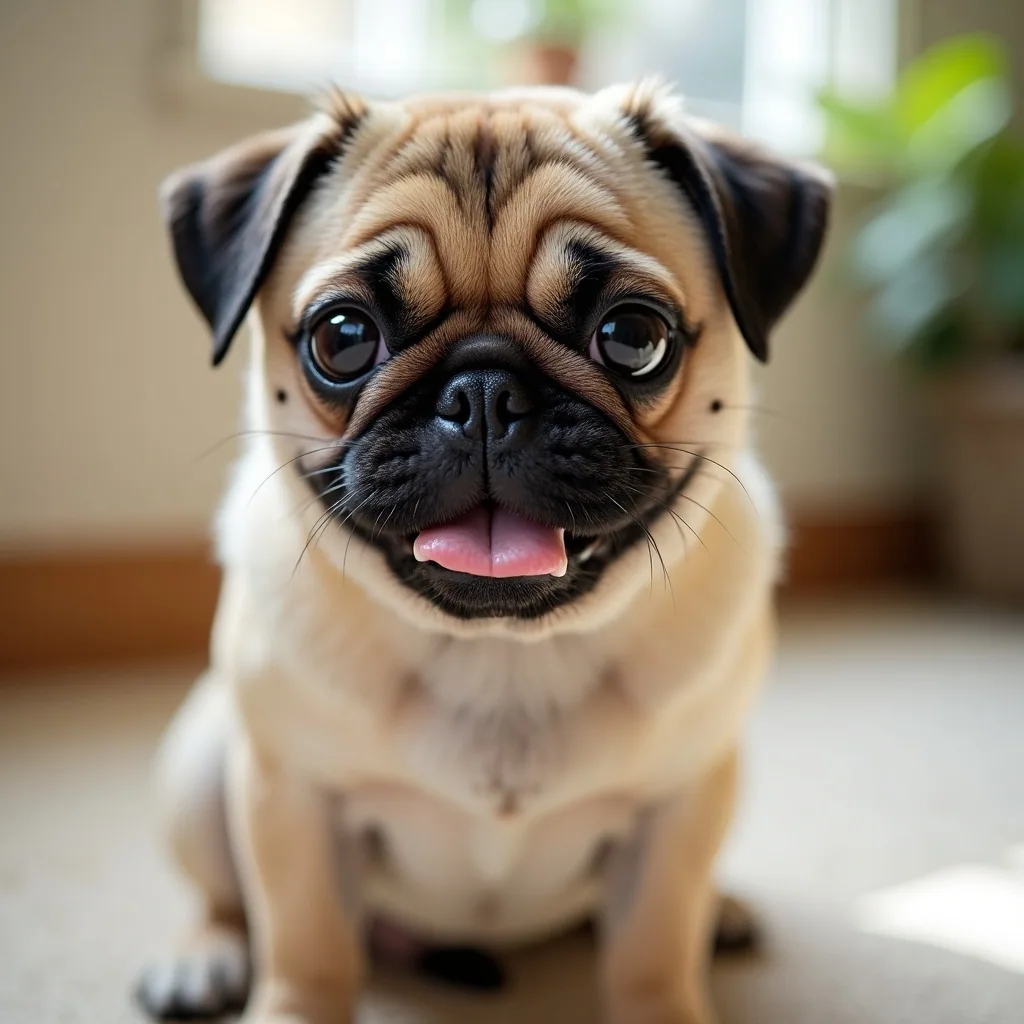
The quick answer
Yes, and this is the breed's most serious welfare issue. Because Pugs have a very short, flat skull, many are affected by Brachycephalic Obstructive Airway Syndrome (BOAS), a condition where narrowed nostrils, an overlong soft palate and other airway abnormalities make breathing difficult.
Pugs are loving, comical and hugely popular, but they are also one of the breeds about which vets and welfare charities have the greatest concerns. This guide is deliberately honest: if you love Pugs or are thinking of getting one, you deserve the full picture, not a sugar-coated one. Many of the breed's most serious problems are caused directly by how Pugs are bred to look, and understanding them is the first step to giving a Pug a healthier life.
Why Pugs have breathing problems
Pugs are brachycephalic, meaning they have been bred to have a very short, flat skull. The soft tissues of the nose and throat, however, are not reduced in the same proportion, so they are squashed into a much smaller space. The result, in many Pugs, is Brachycephalic Obstructive Airway Syndrome (BOAS) — a condition in which narrowed nostrils (stenotic nares), an overlong soft palate, a narrowed windpipe and other abnormalities physically obstruct the airway. Research from the Royal Veterinary College's VetCompass programme has found that Pugs are far more likely than other dogs to be diagnosed with BOAS and a long list of related conditions, and one widely reported study concluded that Pugs can no longer be considered a typical dog from a health perspective.
What BOAS looks like
The snoring, snorting and noisy breathing that some people find endearing are often signs of obstruction, not harmless quirks. Signs of BOAS include:
- Noisy or laboured breathing, even at rest.
- Loud snoring and snorting.
- Gagging, retching or bringing up froth, especially when excited.
- Struggling, tiring quickly or collapsing on exercise.
- Difficulty in warm weather and disturbed, restless sleep.
BOAS exists on a spectrum, from mild to severe, and can worsen with age or weight gain. It should never be dismissed as 'just what Pugs do'. Affected dogs can be assessed by a vet and, in many cases, helped with surgery to widen the nostrils and shorten the soft palate, alongside weight control and careful management.
Overheating: a life-threatening risk
Because panting is a dog's main way of cooling down, and BOAS makes panting far less effective, Pugs are at high risk of heatstroke. RVC research has shown brachycephalic breeds are significantly more likely to suffer heat-related illness, which can be fatal. Never leave a Pug in a warm car even for a moment, avoid exercise in the heat, walk in the cool parts of the day, and always provide shade and water. A cooling mat and indoor calm on hot days are sensible precautions, and you should learn the signs of heatstroke as an emergency.
Eye problems
Pugs' large, shallow-set eyes are vulnerable. The breed is prone to corneal ulcers and injuries, and to pigmentary keratitis, where brown pigment creeps across the cornea and can impair vision. Some Pugs cannot fully close their eyelids over their prominent eyes, which adds to the risk. Any squinting, redness, cloudiness, excessive tearing or pawing at the face needs prompt veterinary attention — eye problems can deteriorate within hours.
Skin-fold problems
The deep facial wrinkles, particularly the nose roll, trap moisture, food and debris and can develop sore, infected skin-fold dermatitis. Daily cleaning and thorough drying, covered in our grooming and care guide, are essential to prevent this.
Spine and other issues
The Pug's tightly curled tail is linked to a vertebral malformation called hemivertebrae, which in some dogs causes pain, weakness or neurological problems. Pugs are also prone to obesity (which makes every other problem worse), dental disease, and certain eye and neurological conditions. Keeping a Pug lean is one of the most powerful things an owner can do — our pet calorie calculator and a slow feeder can help.
How to reduce the risks
You cannot breed responsibly out of a Pug you already own, but you can manage their health well, and if you are still choosing a puppy you can make a big difference:
- Buy only from a responsible breeder who screens breeding dogs using the Kennel Club and University of Cambridge Respiratory Function Grading Scheme for BOAS and screens eyes.
- Favour more moderate features — visible nostrils, a hint of muzzle, open eyes — over the most extreme flat faces.
- Meet the parents, see them move and breathe, and walk away from anyone who treats laboured breathing as normal.
- Consider a rescue Pug from a reputable charity.
- Keep your Pug slim, cool and well cared for, and insure early.
Welfare organisations including the RSPCA, PDSA and the British Veterinary Association have all urged prospective owners to think carefully about flat-faced breeds and to prioritise health over looks. None of this means Pugs cannot be wonderful companions — but going in with open eyes, realistic expectations and a commitment to good veterinary care is the responsible way to love the breed. You can find local and emergency clinics through our vet finder.
*This is general guidance, not a substitute for advice from your vet. If your Pug shows any breathing, eye or skin problems, seek veterinary advice promptly.*
Sources
- RVC VetCompass — Pug and brachycephalic health research (rvc.ac.uk/vetcompass).
- University of Cambridge — BOAS research and Respiratory Function Grading Scheme (vet.cam.ac.uk).
- The Kennel Club — Respiratory Function Grading Scheme and Pug health (thekennelclub.org.uk).
- RSPCA — brachycephalic dog welfare (rspca.org.uk).
- PDSA — flat-faced dog health (pdsa.org.uk).
Common questions
Do Pugs have breathing problems?
Yes, and this is the breed's most serious welfare issue. Because Pugs have a very short, flat skull, many are affected by Brachycephalic Obstructive Airway Syndrome (BOAS), a condition where narrowed nostrils, an overlong soft palate and other airway abnormalities make breathing difficult. RVC VetCompass research found Pugs are far more likely than other dogs to suffer BOAS and several related conditions. Signs include noisy or laboured breathing, snorting, snoring, struggling in heat or after exercise, and disturbed sleep. It is not normal or 'just the breed' — it is a health problem that can need surgery, and it is the single biggest reason to buy only from breeders who screen for it.
Why do Pugs snore and snort so much?
The snoring, snorting and noisy breathing many people find endearing in Pugs is usually a sign of obstructed airways rather than a harmless quirk. Their flat-faced shape means the airway is compressed into a much shorter space, which is the basis of Brachycephalic Obstructive Airway Syndrome (BOAS). Some noise can occur in healthy individuals, but persistent loud breathing, snorting, snoring, gagging or struggling for breath should be assessed by a vet, as it can indicate a condition that affects welfare and may benefit from treatment or surgery. It should never be dismissed as 'just what Pugs do'.
Should I buy a Pug, given the health problems?
This is a genuinely important question and welfare organisations including the RSPCA, PDSA and the British Veterinary Association have raised serious concerns about flat-faced breeds. Pugs can make loving companions, but many suffer from breathing, eye and skin problems caused by how they are bred. If you do choose a Pug, you can reduce the risks by buying only from a responsible breeder who health-tests and breeds for more moderate features — for example using the Kennel Club and University of Cambridge Respiratory Function Grading Scheme for BOAS — meeting the parents, and avoiding the most extreme flat-faced appearance. Consider a rescue Pug too. Going in with open eyes, good insurance and a commitment to veterinary care is essential.
About the author
Matt Garnett — founder, Giddy Pets
Matt started Giddy Pets to make getting pets the good stuff simpler and fairer. Everything in these guides comes from real life with pets and a lot of trial and error — it's practical guidance, not veterinary advice. If a guide gets something wrong, tell him directly.
Free tools & more guides
Read next

How Long Do Pugs Live? Lifespan & Health
How long Pugs live, the health conditions that can shorten the breed's life, and the practical steps that help yours reach a healthy old age.
Pug Grooming & Care (Coat, Wrinkles & Eyes)
How to groom and care for a Pug — managing the shedding coat, cleaning the wrinkles, caring for those big eyes, plus nails, teeth, ears and weight.

How Much Does a Pug Cost? Buying & Lifetime Costs
What a Pug really costs — the purchase price of a health-screened puppy, the lifetime running costs, and why insurance matters so much for this breed.

Are Pugs Good Family Dogs?
What Pugs are really like to live with — their affectionate temperament, how they are with children and pets, and the health realities every family should weigh up.