
How Much Does a Savannah Cat Cost? Buying & Lifetime Costs
What a Savannah cat really costs — how generation drives the price, the substantial lifetime running costs, and why insurance and budgeting matter for this breed.
The quick answer
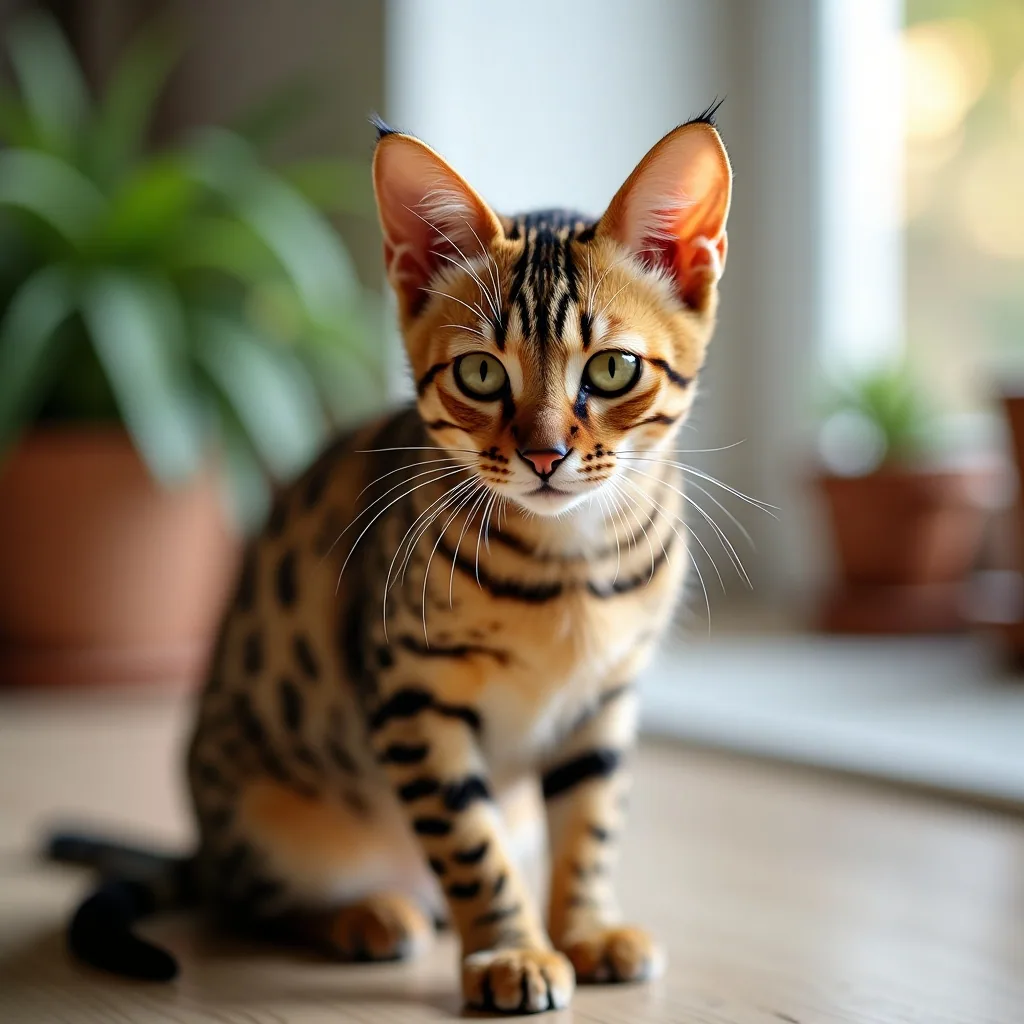
Savannahs are among the most expensive domestic cats. Prices vary enormously by generation, with later generations (F4, F5) typically costing from around a thousand pounds upwards, and early generations (F1, F2) costing several thousand pounds or more from a reputable breeder.
The Savannah is one of the most expensive domestic cats you can buy, and the price tag is only the start. Between the purchase cost, the running costs of a large and demanding cat, and the possible legal and housing costs for early generations, this is a breed that asks for a serious financial commitment. Here is an honest breakdown of what a Savannah cat costs to buy and to keep, with the strong caveat that you should always confirm current prices with breeders directly.
How much does a Savannah kitten cost?
Savannah prices are driven heavily by generation — the closer to the serval ancestor, the higher the price. As a broad guide for the UK:
- Later generations (F4, F5) typically cost from around a thousand pounds upwards, depending on the breeder, lines and quality.
- Early generations (F1, F2) are far more expensive, commonly running into several thousand pounds or more from a reputable breeder, reflecting the difficulty of breeding them and their closeness to the serval.
These figures vary widely and change over time, so treat them as orientation rather than fixed quotes and always check with breeders. Be very wary of cats advertised unusually cheaply: a suspiciously low price can signal no health testing, unclear or misrepresented generation, or poor early care — and with this breed, an unclear generation also carries legal risk.
Why generation affects price and obligations
The generation does not just change the purchase price; it can change your legal obligations. F1 and often F2 Savannahs require a Dangerous Wild Animals Act licence from your local council in the UK, which brings licence fees, inspections and the cost of appropriate, secure housing. Later generations (typically F4, F5) are usually kept as ordinary pets without a licence. This is a major reason most owners choose later generations — both the purchase price and the ongoing obligations are lower. We explain the licensing in full in our generations and UK law guide; always confirm the position with your own council.
The bigger cost: keeping a Savannah
The purchase price is dwarfed by the lifetime cost of keeping a large, active, demanding cat. Budget realistically for:
- Food. A big, energetic cat eats more than an average cat, so quality food is a significant ongoing bill. Our cat portion control and obesity guide and the pet calorie calculator help you feed the right amount.
- Enrichment and housing. Savannahs need serious kit — tall climbing structures, secure outdoor space such as a catio, and plenty of toys and puzzles. Browse our cat trees and scratchers and puzzle and enrichment ranges.
- Veterinary care. Vaccinations, parasite control, neutering, dental care and routine checks, plus any illness.
- Insurance. Well worth it for an expensive cat that may face breed-associated conditions (more below).
- Litter, trays, beds and sundries — and larger kit for a larger cat.
- Boarding or sitting when you are away, which can be harder to arrange for an unusual breed.
For early-generation cats, add licence fees and secure housing costs on top.
Why insurance matters
For a cat with a high purchase value and potential breed-associated health issues — such as hypertrophic cardiomyopathy (HCM) and pyruvate kinase deficiency (PK deficiency) — lifetime pet insurance is genuinely worthwhile. Taking out cover while your cat is young and healthy, before any condition is diagnosed and excluded as pre-existing, gives the broadest protection. You can get a rough idea with our pet insurance estimator and read the pet insurance guide for what to look for. Our care and health guide covers the conditions to discuss with your vet.
Avoiding scams and misrepresentation
The breed's high value attracts unscrupulous sellers, and with Savannahs there is an extra risk: a cat's generation can be misrepresented, which matters legally as well as financially. Protect yourself by insisting on clear documentation of the generation and parentage, asking to meet the kitten with its mother, checking health testing, and being suspicious of pressure to pay deposits quickly or prices that seem too good to be true. Confirm the legal position for the stated generation with your council before parting with any money.
The honest bottom line
A Savannah is a major financial commitment: a high purchase price that rises steeply for early generations, substantial lifetime running costs for a large and demanding cat, and — for F1 and F2 cats — potential licensing and housing costs on top. Budget honestly, insure early, choose an appropriate generation, and buy from a transparent, reputable breeder. For more, see our guides on temperament and size by generation.
*This is general guidance. Prices vary by breeder, generation and region and change over time, and insurance terms differ between providers. Always confirm current costs and the legal position yourself.*
Sources
- Governing Council of the Cat Fancy (GCCF) — buying a pedigree kitten and finding breeders (gccfcats.org).
- International Cat Care — choosing a cat and breed health (icatcare.org).
- GOV.UK — Dangerous Wild Animals Act 1976 licensing (gov.uk).
- PDSA — cost of owning a cat (pdsa.org.uk).
- Blue Cross — buying a kitten and avoiding scams (bluecross.org.uk).
Common questions
How much does a Savannah cat cost?
Savannahs are among the most expensive domestic cats. Prices vary enormously by generation, with later generations (F4, F5) typically costing from around a thousand pounds upwards, and early generations (F1, F2) costing several thousand pounds or more from a reputable breeder. On top of the purchase price you must budget for substantial lifetime costs: a large cat eats more, needs serious enrichment and secure space, and an early-generation cat may carry licensing and housing costs too. Always verify prices and details with breeders directly.
Why are early-generation Savannahs so much more expensive?
Early generations (F1, F2) are closer to the African serval, which makes them harder to breed and more sought after, pushing prices into several thousand pounds or more. They are also larger and more demanding, and in the UK F1 and often F2 cats require a Dangerous Wild Animals Act licence with associated fees, inspections and secure housing costs. Later generations (F4, F5) are cheaper to buy and generally kept as ordinary pets without a licence, which is why most owners choose them.
Is pet insurance worth it for a Savannah?
Yes. A Savannah is a high-value cat that may face breed-associated conditions such as hypertrophic cardiomyopathy (HCM) and pyruvate kinase deficiency (PK deficiency), so a lifetime policy taken out while the cat is young and healthy gives the broadest cover before any condition can be excluded as pre-existing. Veterinary investigation and ongoing treatment can be expensive, and good insurance makes serious illness far more affordable to manage. Compare policies carefully and check what each one covers.
About the author
Matt Garnett — founder, Giddy Pets
Matt started Giddy Pets to make getting pets the good stuff simpler and fairer. Everything in these guides comes from real life with pets and a lot of trial and error — it's practical guidance, not veterinary advice. If a guide gets something wrong, tell him directly.
Free tools & more guides
Read next
Savannah Cat Generations (F1–F5) & UK Law
What F1 to F5 means in Savannah cats, how generation affects size and temperament, and the UK Dangerous Wild Animals Act licensing you must check with your council.

Are Savannah Cats Good Pets? The Honest Picture
An honest look at the Savannah — a serval-hybrid cat that is striking, intelligent and demanding, the legal points to check, and the homes it really suits.
Savannah Cat Care & Health
How to care for a Savannah — meeting their huge enrichment and space needs, the diet debate, and breed-associated health points like HCM, PK deficiency and anaesthesia.

How Big Do Savannah Cats Get? Size by Generation
How big Savannah cats get and why generation matters so much — early F1 and F2 cats versus more domestic F4 and F5 cats, build, and feeding a large, active breed.