
How Big Do Savannah Cats Get? Size by Generation
How big Savannah cats get and why generation matters so much — early F1 and F2 cats versus more domestic F4 and F5 cats, build, and feeding a large, active breed.
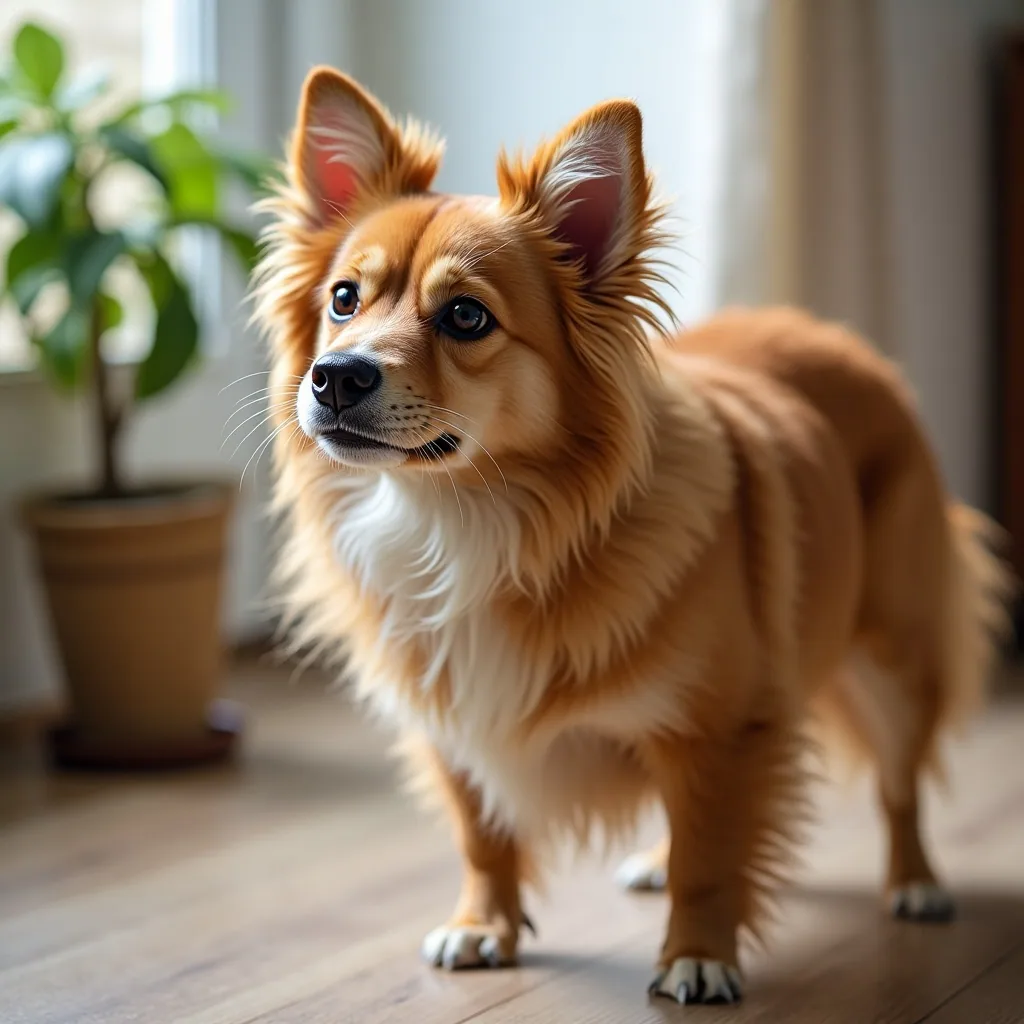
The quick answer
It depends heavily on generation. Early-generation Savannahs (F1, F2) are the largest and tallest, with their serval ancestry showing in long legs and a lean, athletic build, and they can be considerably bigger than an average cat. Later generations (F4, F5) are closer to a normal large domestic cat in size, though often still tall and leggy with the breed's distinctive look.
Savannahs are famous for being tall, leggy and striking, and their size is one of the breed's biggest talking points. But there is no single answer to "how big do Savannah cats get?" — it depends heavily on the generation, because the breed descends from the African serval, a medium-sized wild cat. Here is an honest look at Savannah size, why it varies so much, and how to feed and care for a large, athletic cat.
Why generation drives size
The Savannah is a cross between a domestic cat and the serval, and the "F" generation number tells you how far removed a cat is from that wild ancestor (we explain this fully in our generations and UK law guide). Because the serval is considerably larger and leggier than a domestic cat, the closer a Savannah is to the serval, the bigger and taller it tends to be:
- F1 and F2 — the earliest generations, closest to the serval, are the largest and tallest, with long legs, a lean athletic build and the most wild-influenced look.
- F3 — intermediate, often still notably tall and leggy.
- F4 and F5 — more domestic in size, much closer to a large, lively house cat, though many keep the breed's elegant tall, slender outline.
This is why you cannot quote one weight for "a Savannah" — an early-generation cat and a later-generation cat can be very different animals.
Build, not just weight
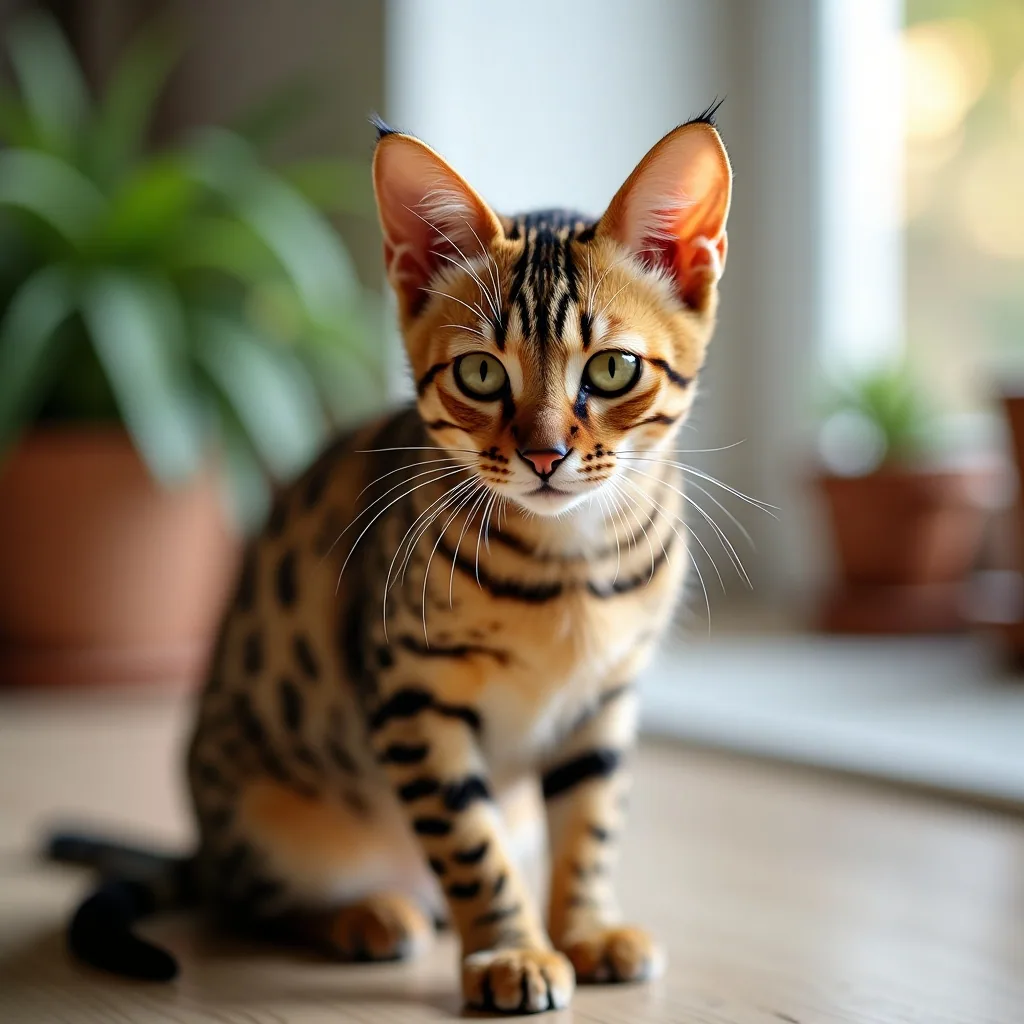
Much of the Savannah's impressive appearance comes from proportions rather than sheer mass. They are characteristically tall, long-legged and slender, with a long neck, large upright ears and a spotted coat, which makes them look bigger and more exotic than a stockier cat of similar weight. So when people describe a Savannah as huge, they often mean tall and leggy and striking, rather than heavy. Specific weights vary widely between individuals, lines and generations, so be cautious about any single headline figure — and ask the breeder about the size of the parents, which is your best guide to how a kitten may turn out.
Be sceptical of extreme claims
As with other large or unusual breeds, the internet exaggerates. Photos are often taken at flattering angles, with the cat stretched out to look as enormous as possible, and the most dramatic examples are early-generation outliers rather than the norm. A healthy Savannah of any generation should be lean, athletic and in proportion, not pushed to be as big as possible. If a seller is marketing kittens primarily on the promise of giant size, treat that as a warning sign rather than a selling point — responsible breeding prioritises health, temperament and legal clarity over size.
They grow into athletic adults
Savannahs are active, agile and powerful, and they need that build put to good use. A growing Savannah should be fed for steady, healthy development, not bulked up. Judge condition by body shape rather than the scales — you should be able to feel the ribs easily and see a waist from above. Our cat portion control and obesity guide and the pet calorie calculator help you get portions right as your cat matures, and a slow feeder can help an enthusiastic eater pace themselves.
Big, athletic cat — practical needs
A tall, powerful, jumping cat needs kit to match. Look for:
- A sturdy, tall cat tree or scratcher rated for an active climber — see our cat trees and scratchers.
- A roomy litter tray with space to turn around — browse litter trays and scoops.
- Plenty of enrichment for a high-drive cat, such as puzzle feeders and interactive toys from our puzzle and enrichment range.
Scaling the basics to the cat keeps a Savannah comfortable, protects your furniture, and channels that athleticism into healthy activity rather than mischief.
The bottom line
There is no one-size figure for a Savannah: early generations (F1, F2) are the largest and most serval-like, tall and leggy and athletic, while later generations (F4, F5) are closer to a large domestic cat. Much of the wow factor is build and proportion rather than weight, and extreme online claims should be taken with a pinch of salt. Ask about the parents, feed for lean health, and provide the space and enrichment an athletic cat needs. For more, see our guides on whether Savannahs make good pets and care and health.
*This is general guidance. Sizes vary widely by individual and generation — if you are unsure whether your cat is the right weight, ask your vet to body-condition score them.*
Sources
- International Cat Care — breed profiles and the African serval (icatcare.org).
- Governing Council of the Cat Fancy (GCCF) — breed information (gccfcats.org).
- PDSA — healthy weight and feeding for cats (pdsa.org.uk).
- Blue Cross — cat care and nutrition (bluecross.org.uk).
Common questions
How big do Savannah cats get?
It depends heavily on generation. Early-generation Savannahs (F1, F2) are the largest and tallest, with their serval ancestry showing in long legs and a lean, athletic build, and they can be considerably bigger than an average cat. Later generations (F4, F5) are closer to a normal large domestic cat in size, though often still tall and leggy with the breed's distinctive look. Specific weights vary widely between individuals and lines, so treat any single figure with caution and ask the breeder about the parents.
Why is there no single weight for a Savannah cat?
Because the breed is a spectrum. Savannahs descend from the African serval, and the generation number shows how close a cat is to that wild ancestor — F1 and F2 cats are larger and more serval-like, while F4 and F5 cats are closer to a large domestic cat. Size also varies between individuals and breeding lines, and much of the breed's impressive look comes from being tall and leggy rather than heavy. The best guide to a kitten's likely adult size is the size of its parents.
Are Savannah cats really as huge as photos suggest?
Some early-generation cats are genuinely large and very tall, but the most dramatic photos are exaggerated. Pictures are often taken at flattering angles with the cat stretched out to look as big as possible, and the biggest examples are early-generation outliers, not the norm. Much of the wow factor is the breed's tall, leggy, slender build rather than sheer mass. A healthy Savannah of any generation should be lean, athletic and in proportion, not pushed to be as big as possible.
About the author
Matt Garnett — founder, Giddy Pets
Matt started Giddy Pets to make getting pets the good stuff simpler and fairer. Everything in these guides comes from real life with pets and a lot of trial and error — it's practical guidance, not veterinary advice. If a guide gets something wrong, tell him directly.
Free tools & more guides
Read next
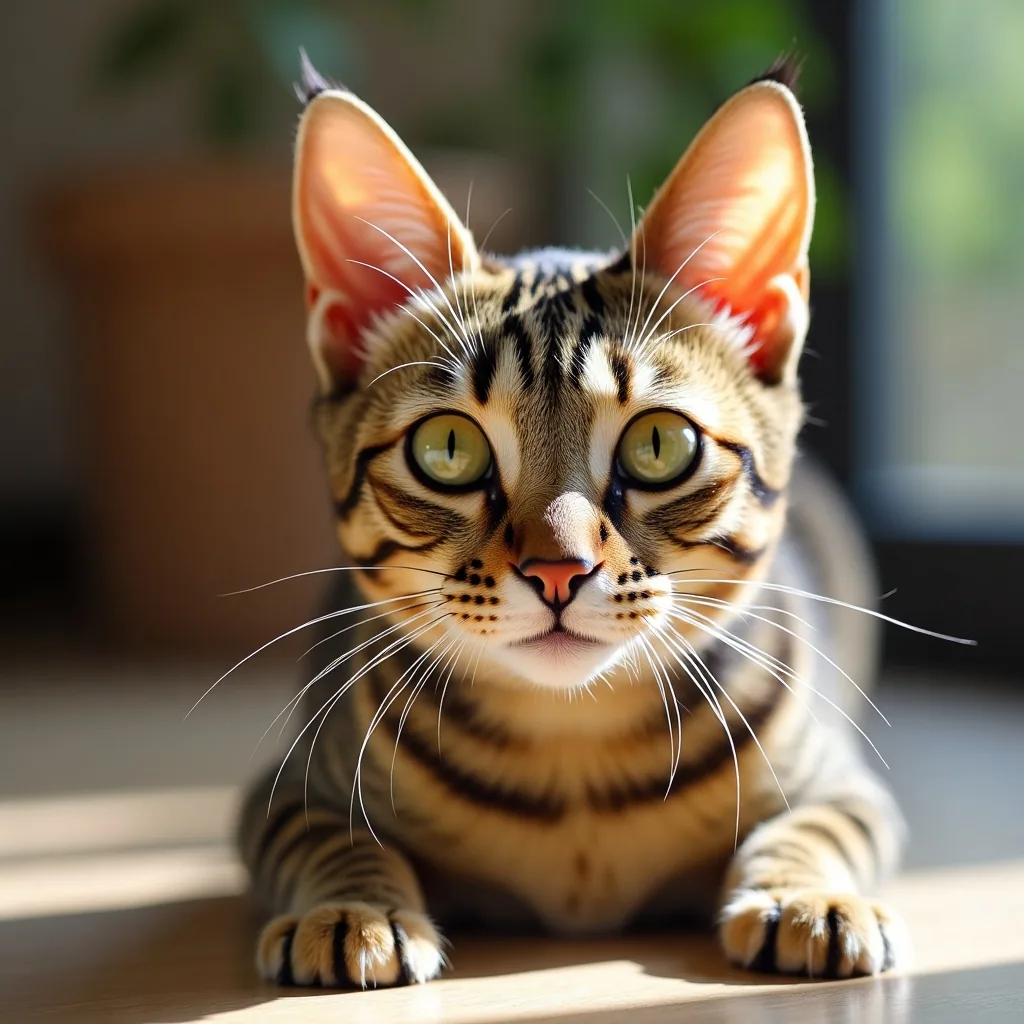
Savannah Cat Generations (F1–F5) & UK Law
What F1 to F5 means in Savannah cats, how generation affects size and temperament, and the UK Dangerous Wild Animals Act licensing you must check with your council.
Are Savannah Cats Good Pets? The Honest Picture
An honest look at the Savannah — a serval-hybrid cat that is striking, intelligent and demanding, the legal points to check, and the homes it really suits.
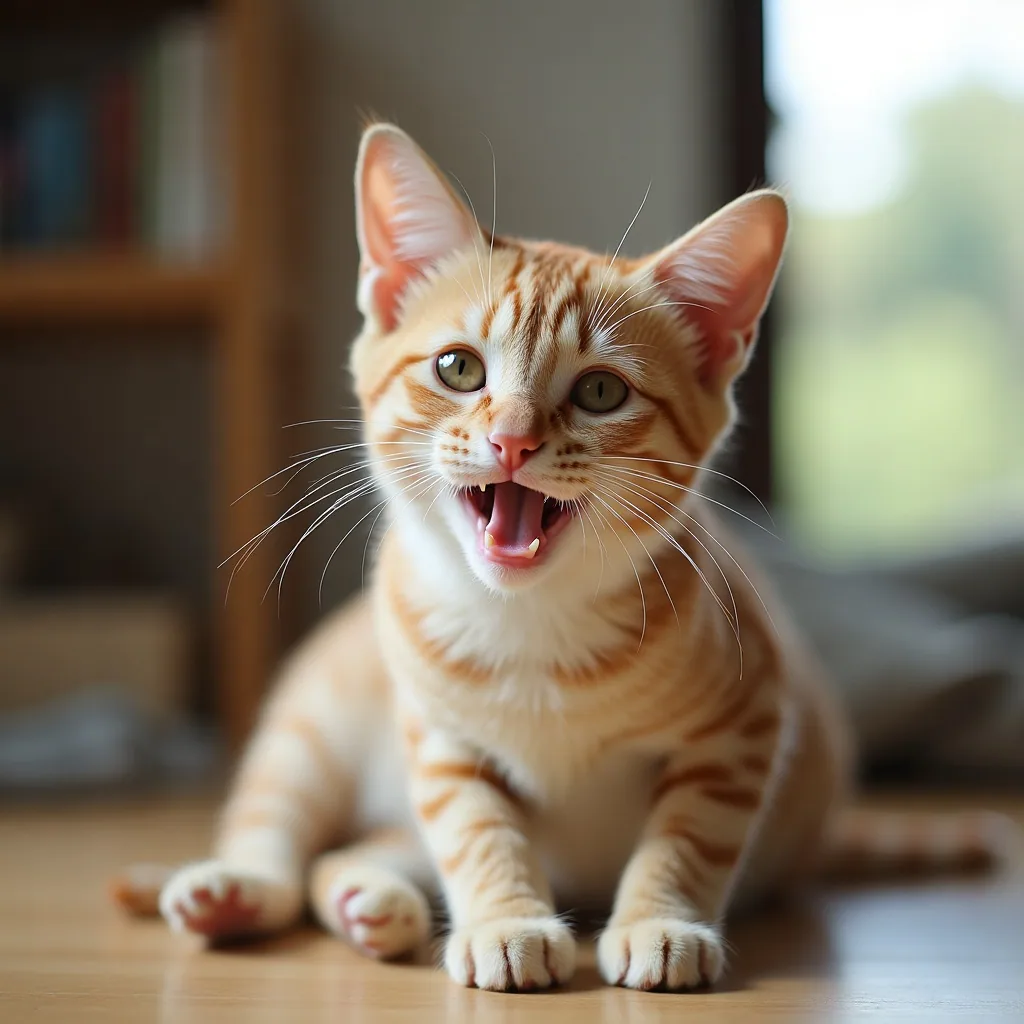
Savannah Cat Care & Health
How to care for a Savannah — meeting their huge enrichment and space needs, the diet debate, and breed-associated health points like HCM, PK deficiency and anaesthesia.
How Much Does a Savannah Cat Cost? Buying & Lifetime Costs
What a Savannah cat really costs — how generation drives the price, the substantial lifetime running costs, and why insurance and budgeting matter for this breed.