
Are Savannah Cats Good Pets? The Honest Picture
An honest look at the Savannah — a serval-hybrid cat that is striking, intelligent and demanding, the legal points to check, and the homes it really suits.

The quick answer
For the right, experienced home they can be, but they are not a starter cat. The Savannah is a domestic cat crossed with the African serval, so it is large, extremely active, intelligent and demanding, needing vast amounts of space, enrichment and time.
The Savannah is one of the most eye-catching cats you can keep: tall, leggy, spotted and athletic, the result of crossing a domestic cat with the African serval, a medium-sized wild cat. They have a devoted following, and for the right owner they can be remarkable companions. But the honest answer to "are Savannah cats good pets?" is: only for the right, well-prepared home — and never as an impulse or a first cat. Here is a realistic picture of what living with one involves.
A hybrid, not an ordinary moggy
Because the Savannah descends from a wild serval, it is helpful to think of the breed as a spectrum. Early-generation cats (F1, F2) are closest to their wild ancestor — bigger, more demanding, and in the UK potentially subject to licensing (more on that below). Later generations (F4, F5 and beyond) are far more domestic in size and temperament and are the ones most people keep as pets. Whichever you meet, this is not a cat that behaves like a typical lap cat, and it is important to set your expectations accordingly.
Temperament: bright, busy and bonded
Savannahs are typically highly intelligent, energetic and curious. Many are strongly bonded to their people and can be dog-like — following you around, learning tricks, playing fetch and even walking on a harness with patient training. They are often described as confident and adventurous, and they tend to stay playful well into adulthood. That intelligence is a double-edged sword: a Savannah that is bored or under-stimulated will find its own entertainment, which can mean opening cupboards, climbing curtains, knocking things over and getting into places you would rather it did not.
The demanding reality
This is the part prospective owners must take seriously. Savannahs need a great deal of space, enrichment and time. They are athletic jumpers and climbers who need height, room to run, and constant mental stimulation. Without it they can become frustrated, destructive or stressed. Realistically that means tall climbing structures, secure outdoor access such as a catio, daily interactive play, puzzle feeders, and a household that is genuinely engaged with them. A small flat with little stimulation, or a home where the cat is left alone all day, is simply not suitable. For most people, this is the single biggest reason a Savannah may not be the right choice — it is one of the most demanding domestic cats to keep well. Browse our cat trees and scratchers and puzzle and enrichment ranges to get a sense of the kit involved.
The legal note you cannot skip
In the UK, early-generation Savannahs are controlled under the Dangerous Wild Animals Act 1976. In practice, F1 cats — and often F2, depending on their serval ancestry — require a licence from your local council, with conditions on how the animal is housed and cared for. Later generations (typically F4, F5 onwards) are generally kept as ordinary pets without a licence. Crucially, the exact generation cut-off and how strictly it is enforced can vary between councils, so you must check directly with your own local authority and confirm the precise generation of any kitten with the breeder before committing. We explain this in detail in our generations and UK law guide. Please do not take on an F1 or F2 cat casually — these are large, powerful animals with real legal and welfare obligations.
Good with children and other pets?
Many later-generation Savannahs can live happily in family homes and alongside other pets when raised well and introduced carefully. Their energy and size mean interactions with young children and smaller animals should always be supervised, and every cat is an individual. Calm, gradual introductions and respect for the cat's space go a long way. As with any cat, teach children to handle them gently and give the cat places to retreat to.
Who does a Savannah suit?
- Experienced, confident owners who understand active, intelligent cats.
- Homes with space, height to climb, and ideally secure outdoor access.
- People who are around and willing to commit serious daily time to play and enrichment.
- Owners who have checked the law with their council and chosen an appropriate generation (see our generations and law guide).
- Those who have budgeted for a high purchase price and substantial lifetime costs (see our cost guide).
They are a poor fit for first-time cat owners, busy households that are out all day, small homes with little stimulation, or anyone wanting a calm, low-maintenance cat.
The honest verdict
For a knowledgeable, committed owner with the right space and time, a later-generation Savannah can be a spectacular, rewarding companion. For most households, though, the demands are considerable and an early-generation cat is a serious legal and welfare undertaking. Go in with your eyes open, check the law, meet the cats, and be honest about whether your life genuinely suits one. For more, see our guides on size by generation and care and health.
*This is general guidance, not legal advice or a substitute for your vet. Always confirm the legal position with your local council and discuss your situation with a vet.*
Sources
- International Cat Care — breed information and cat welfare (icatcare.org).
- Governing Council of the Cat Fancy (GCCF) — breed recognition and cat care (gccfcats.org).
- GOV.UK — Dangerous Wild Animals Act 1976 and licensing (gov.uk).
- Blue Cross — choosing and caring for a cat (bluecross.org.uk).
- PDSA — cat behaviour and welfare needs (pdsa.org.uk).
Common questions
Are Savannah cats good pets?
For the right, experienced home they can be, but they are not a starter cat. The Savannah is a domestic cat crossed with the African serval, so it is large, extremely active, intelligent and demanding, needing vast amounts of space, enrichment and time. Later-generation Savannahs (typically F4, F5 and beyond) are kept as ordinary pets, while early generations can be a serious legal and welfare commitment. They suit confident, knowledgeable owners with the time and resources to meet their needs — not households wanting an easy-going lap cat.
Do Savannah cats need a lot of space and exercise?
Yes — a great deal. Savannahs are exceptionally active, athletic and intelligent, and they become frustrated, destructive or stressed without enough to do. They need climbing height, room to run and leap, secure outdoor space such as a catio, interactive play and puzzle enrichment, and plenty of human engagement. A small flat with little stimulation is wholly unsuitable. This is one of the most demanding domestic cats to keep, and meeting those needs is a serious daily commitment, not an optional extra.
Should I get an early or later-generation Savannah?
For almost everyone, a later-generation cat (F4, F5 or beyond) is the sensible choice. They are more domestic in size and temperament, are generally kept without a Dangerous Wild Animals Act licence, and are far more manageable as family pets, while still offering the breed's striking looks and lively character. Early generations (F1, F2) are larger, more demanding, much more expensive, and may require licensing and specialist housing. Only highly experienced keepers should consider them — and only after checking the law with their council.
About the author
Matt Garnett — founder, Giddy Pets
Matt started Giddy Pets to make getting pets the good stuff simpler and fairer. Everything in these guides comes from real life with pets and a lot of trial and error — it's practical guidance, not veterinary advice. If a guide gets something wrong, tell him directly.
Free tools & more guides
Read next
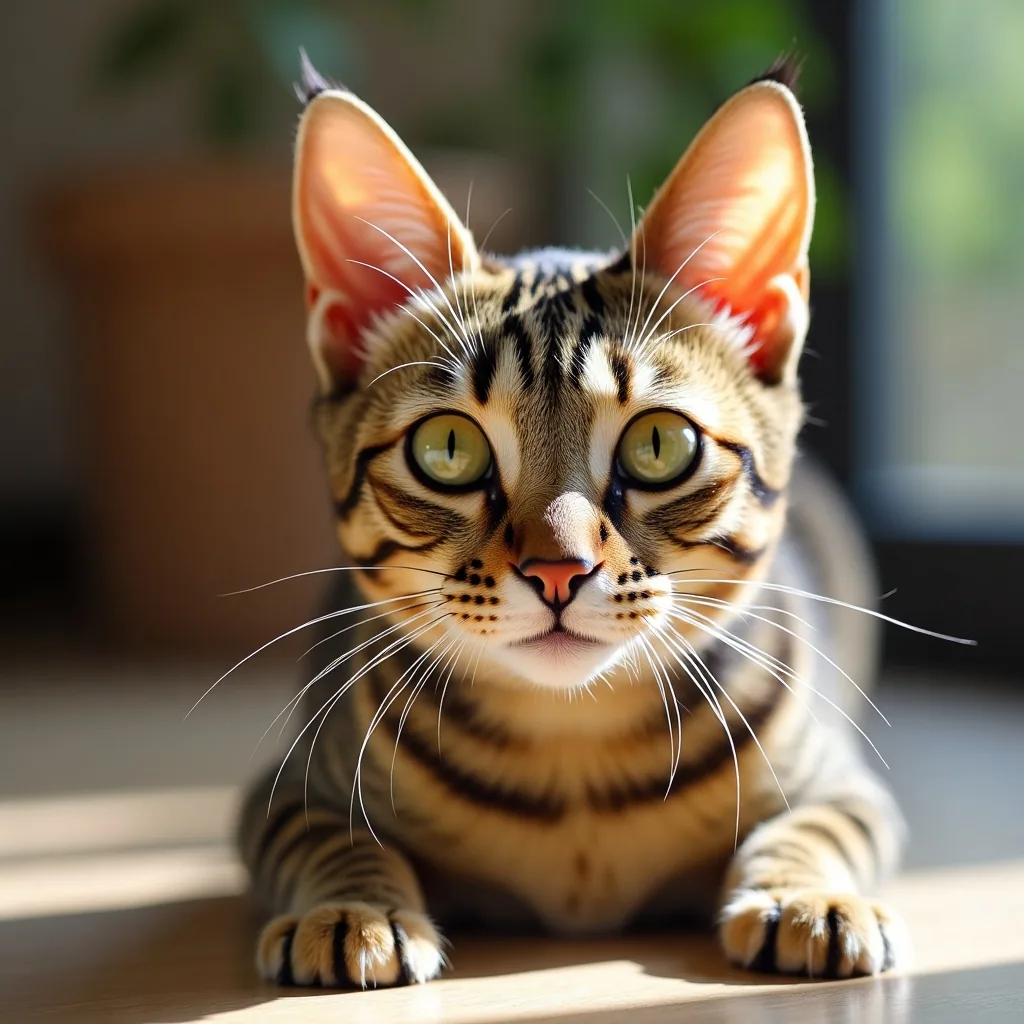
Savannah Cat Generations (F1–F5) & UK Law
What F1 to F5 means in Savannah cats, how generation affects size and temperament, and the UK Dangerous Wild Animals Act licensing you must check with your council.
How Big Do Savannah Cats Get? Size by Generation
How big Savannah cats get and why generation matters so much — early F1 and F2 cats versus more domestic F4 and F5 cats, build, and feeding a large, active breed.
Savannah Cat Care & Health
How to care for a Savannah — meeting their huge enrichment and space needs, the diet debate, and breed-associated health points like HCM, PK deficiency and anaesthesia.
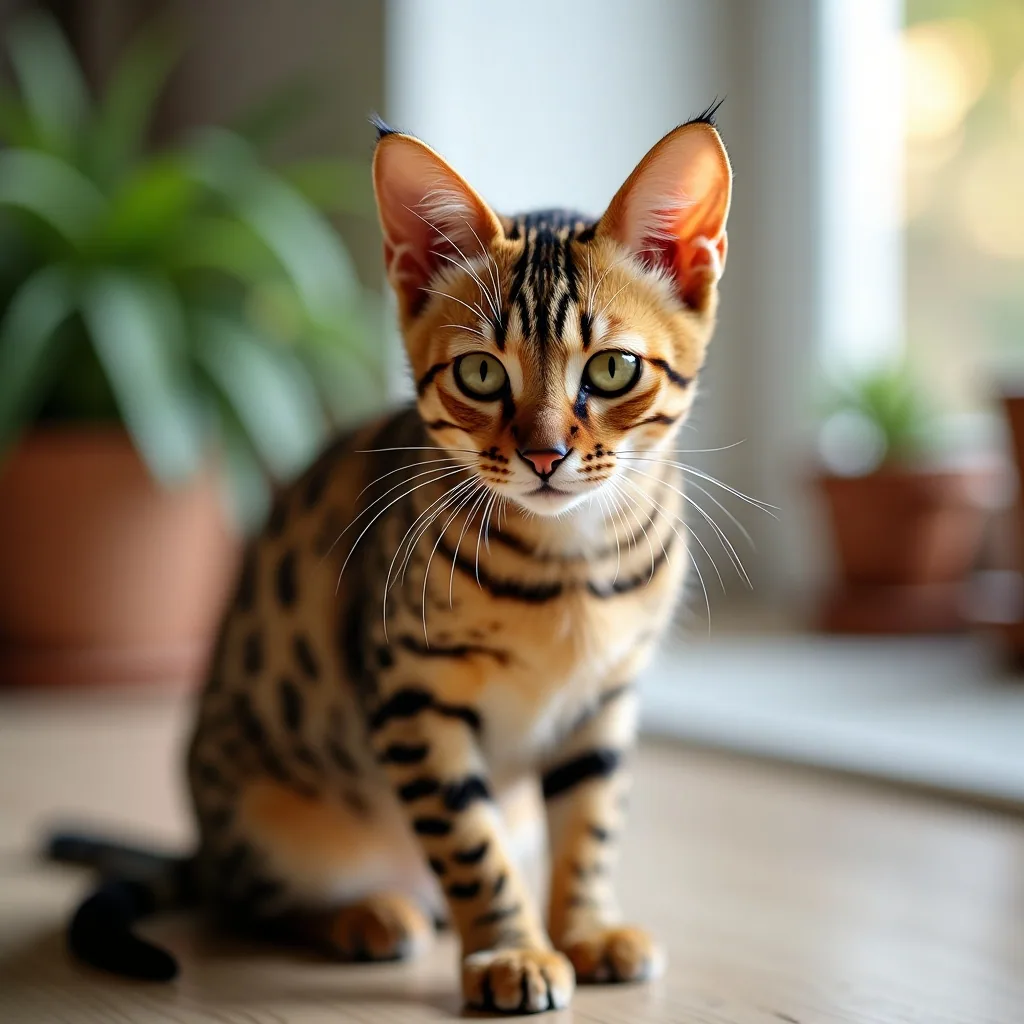
How Much Does a Savannah Cat Cost? Buying & Lifetime Costs
What a Savannah cat really costs — how generation drives the price, the substantial lifetime running costs, and why insurance and budgeting matter for this breed.