
Savannah Cat Generations (F1–F5) & UK Law
What F1 to F5 means in Savannah cats, how generation affects size and temperament, and the UK Dangerous Wild Animals Act licensing you must check with your council.
The quick answer
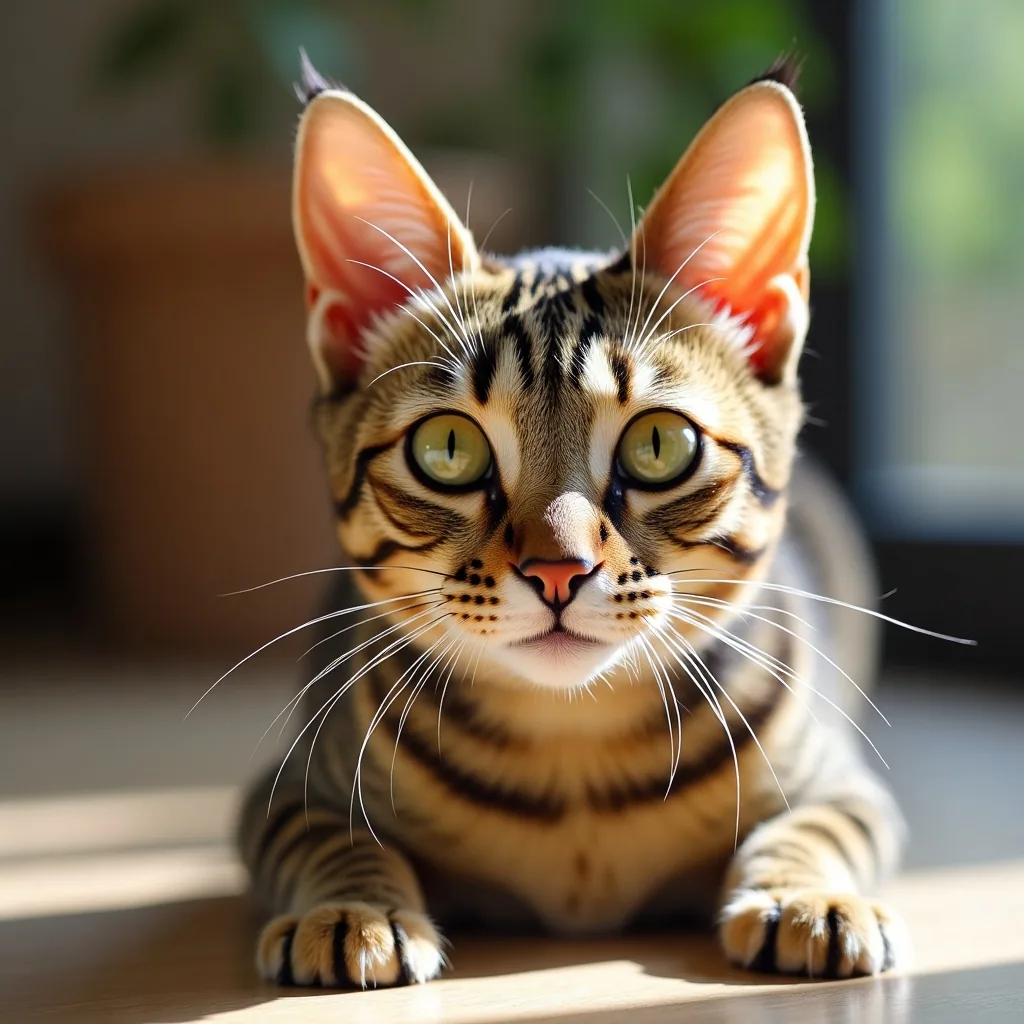
The F-number describes how many generations a cat is removed from its serval ancestor. An F1 has a serval parent, an F2 has a serval grandparent, an F3 a serval great-grandparent, and so on through F4 and F5.
If you are researching Savannah cats, you will quickly run into terms like F1, F2, F3, F4 and F5. These generation labels matter enormously: they affect a cat's size, temperament, price and — crucially in the UK — whether it can be kept as an ordinary pet or requires a licence. Getting this right is not optional, because early-generation Savannahs are controlled under wild-animal law. Here is a clear, honest explanation, with a strong steer to verify the details with your own local council.
What the F-number actually means
The Savannah is a cross between a domestic cat and the African serval, a medium-sized wild cat. The "F" stands for filial generation, and the number tells you how many generations a cat is removed from that serval ancestor:
- F1 — has a serval parent (one parent is a pure serval). Closest to the wild cat.
- F2 — has a serval grandparent.
- F3 — has a serval great-grandparent.
- F4 — a further generation removed again.
- F5 — and so on, increasingly domestic.
The lower the number, the closer the cat is to the serval — generally larger, more athletic and more demanding. As the generations progress, cats become more domestic in size, behaviour and appearance, though many keep the breed's striking spotted coat and tall, leggy look.
How generation affects size and temperament
Early-generation cats (F1, F2) tend to be the biggest and most wild-influenced: tall, powerful, intensely active and needing specialist understanding and housing. They are not suited to inexperienced owners. By the time you reach F4 and F5, Savannahs are much closer to a large, lively domestic cat — still energetic, intelligent and striking, but far more manageable as household pets. This is why the later generations are the ones most people keep, and the ones usually recommended for family homes. We cover the size differences in detail in our size by generation guide.
UK law: the Dangerous Wild Animals Act 1976
This is the part you absolutely must understand before buying. In the UK, certain hybrid cats are controlled under the Dangerous Wild Animals Act 1976 (DWAA), which is administered by local councils. In practice:
- F1 Savannahs — and, depending on their serval ancestry, often F2 — generally require a DWAA licence from your local council. A licence comes with conditions covering how the animal is housed, secured and cared for, plus inspections and fees.
- Later generations (typically F4, F5 and beyond) are usually kept as normal pets without a licence.
- F3 can sit in a grey area depending on the cat's specific ancestry and how the law is interpreted locally.
Crucially, the exact generation cut-off and how the law is enforced can vary between councils, and interpretations change over time. That means the only reliable way to know where a particular cat stands is to contact your own local council directly and ask, and to confirm the precise generation (and the parentage behind it) with the breeder in writing. Never simply assume a kitten is licence-free.
Why this matters so much
Keeping a licensable animal without the required DWAA licence is a legal offence and a welfare risk. Early-generation Savannahs are large, powerful, high-drive cats that need appropriate, secure housing — this is not a trivial undertaking. Taking one on without understanding the legal position can lead to enforcement action and, worse, a cat whose needs cannot be properly met. This is why we urge prospective owners to do the legal homework first, and why, for the vast majority of homes, a later-generation cat is the sensible and responsible choice. Our honest pets guide explains the broader commitment.
Microchipping and the law for all cats
Whatever generation you choose, remember that microchipping is now a legal requirement for pet cats in England, with cats needing to be chipped and the details kept up to date. This applies to Savannahs like any other cat, and it is sensible practice across the UK. Keep your contact details current with the microchip database so your cat can always be traced back to you.
Buying responsibly
When approaching a breeder, ask clearly:
- Exactly which generation the kitten is, and the serval ancestry behind it.
- Whether that generation requires a DWAA licence in your area — and check this yourself with your council.
- What health testing the parents have had (see our care and health guide).
- To meet the kitten with its mother and see how they are reared.
A responsible breeder will be transparent about generation and law and will want to know the cat is going to a suitable home.
The bottom line
Generation is everything with Savannahs. F1 and F2 cats are wild-influenced and usually need a Dangerous Wild Animals Act licence; F4 and F5 cats are far more domestic and generally kept as ordinary pets. Because the cut-off and enforcement vary, always confirm the generation with the breeder and the legal position with your local council before you commit.
*This is general guidance, not legal advice. The Dangerous Wild Animals Act 1976 is enforced locally and interpretations can vary — always confirm your specific situation with your local council.*
Sources
- GOV.UK — Dangerous Wild Animals Act 1976 and the list of animals covered (gov.uk).
- GOV.UK — cat microchipping rules in England (gov.uk).
- International Cat Care — hybrid cats and welfare (icatcare.org).
- Governing Council of the Cat Fancy (GCCF) — breed policy and cat welfare (gccfcats.org).
- Blue Cross — responsible cat ownership (bluecross.org.uk).
Common questions
What do F1 to F5 mean in Savannah cats?
The F-number describes how many generations a cat is removed from its serval ancestor. An F1 has a serval parent, an F2 has a serval grandparent, an F3 a serval great-grandparent, and so on through F4 and F5. The lower the number, the closer to the wild serval — generally larger, more demanding and more likely to fall under Dangerous Wild Animals Act licensing. Higher generations (F4, F5+) are more domestic in size and behaviour and are the ones usually kept as ordinary pets.
Do you need a licence to own a Savannah cat in the UK?
It depends on the generation. Under the Dangerous Wild Animals Act 1976, early-generation Savannahs — F1, and in practice often F2 depending on their serval ancestry — require a licence from your local council. Later generations (typically F4, F5 onwards) are generally kept as normal pets without a licence. The exact cut-off and how it is enforced can vary, so you must check directly with your own local council before buying any Savannah, and ask the breeder exactly which generation a kitten is.
Are Savannah cats legal in the UK?
Yes, Savannahs can legally be kept in the UK, but early generations are controlled. Under the Dangerous Wild Animals Act 1976, F1 (and often F2) Savannahs require a licence from the local council, with conditions on housing and welfare; later generations are kept as ordinary pets. The rules and how strictly they are applied can vary between councils, so the only reliable way to know where a particular cat stands is to contact your own local council and confirm the generation with the breeder.
About the author
Matt Garnett — founder, Giddy Pets
Matt started Giddy Pets to make getting pets the good stuff simpler and fairer. Everything in these guides comes from real life with pets and a lot of trial and error — it's practical guidance, not veterinary advice. If a guide gets something wrong, tell him directly.
Free tools & more guides
Read next

Are Savannah Cats Good Pets? The Honest Picture
An honest look at the Savannah — a serval-hybrid cat that is striking, intelligent and demanding, the legal points to check, and the homes it really suits.
How Big Do Savannah Cats Get? Size by Generation
How big Savannah cats get and why generation matters so much — early F1 and F2 cats versus more domestic F4 and F5 cats, build, and feeding a large, active breed.
How Much Does a Savannah Cat Cost? Buying & Lifetime Costs
What a Savannah cat really costs — how generation drives the price, the substantial lifetime running costs, and why insurance and budgeting matter for this breed.
Savannah Cat Care & Health
How to care for a Savannah — meeting their huge enrichment and space needs, the diet debate, and breed-associated health points like HCM, PK deficiency and anaesthesia.