Cat Not Eating? Why It Happens and What to Do
Why your cat might be off their food, why it matters more than you'd think, simple ways to tempt them, and when to call the vet.

The quick answer
Common reasons include feeling unwell, dental pain, stress or change, nausea, or simply not liking a new food. Because going off food can quickly make cats seriously ill, it's worth a vet check if it lasts beyond a day or so.
If you're wondering "why is my cat not eating?", you're right to take it seriously. A cat going off its food is one of the clearest signs that something isn't right — and because cats can become unwell quickly when they stop eating, it's not something to leave for long. This is general guidance, not a substitute for veterinary advice — if you're worried, contact your vet.
Why won't my cat eat?
There are many possible reasons, from minor to serious:
- Feeling unwell — almost any illness can dull appetite, from cat flu and a blocked nose to kidney disease and tummy upsets
- Dental pain — sore teeth or gums can make eating hurt; you might notice drooling too
- Stress or change — a new home, new pet, building work or a change of routine
- Fussiness or food changes — a new flavour, stale food, or a bowl in a busy spot
- Nausea — often alongside vomiting
Why it matters more in cats
Cats are unusual here, and it's worth understanding why. If a cat — especially an overweight one — stops eating for more than a day or two, their body starts mobilising fat for energy, which can overwhelm the liver and cause a serious condition called hepatic lipidosis, or fatty liver disease. This can become life-threatening, and it's exactly the sort of problem you want to head off early rather than treat once established.
That's why a cat refusing food is genuinely more urgent than a dog doing the same, and why the old advice to "wait and see if they're hungry tomorrow" doesn't apply to cats in the same way. If your cat is skipping meals, it pays to act sooner rather than later.
Tempting your cat to eat
If your cat is otherwise bright, you can try gently encouraging them:
- Warm the food slightly to release the smell — cats eat with their nose first
- Offer a strong-smelling favourite like fish or a little plain cooked chicken; check it's safe with our can my pet eat this checker
- Try hand-feeding or a clean, shallow bowl in a quiet spot away from other pets
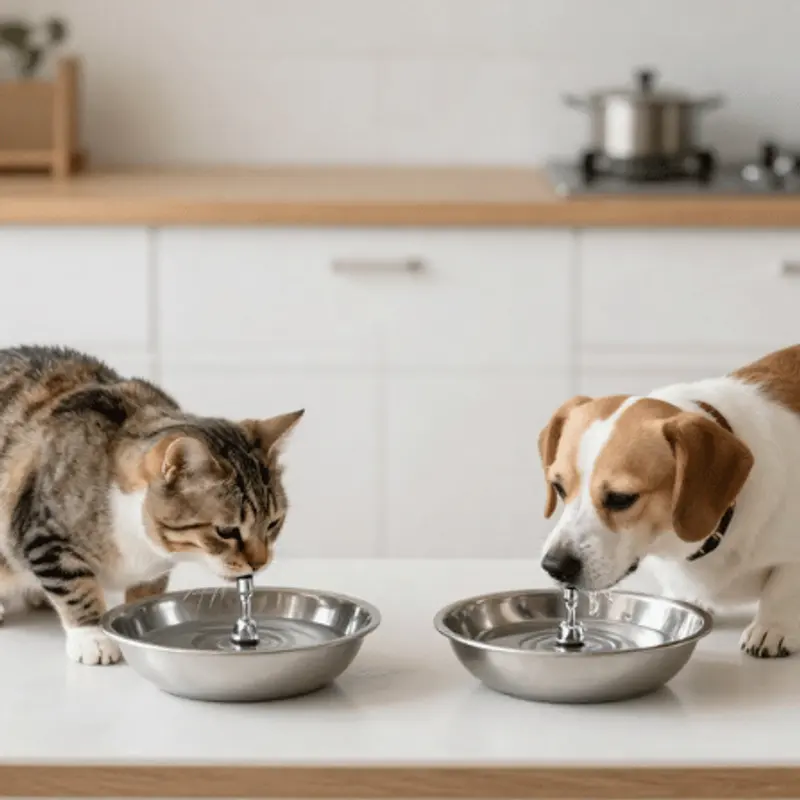
- Make sure water is fresh and available — see cat hydration
- Reduce stress; our indoor cat enrichment guide has calming ideas
Don't suddenly switch foods or starve a cat to "make" them eat — with cats this can backfire badly given the liver risk above. Never offer human leftovers without checking they're safe, as many everyday foods (onion, garlic, chocolate and more) are toxic to cats. Small, frequent offerings of something appetising usually work better than leaving down a big bowl they walk away from. You'll find quiet feeding bowls and water fountains in the shop.
It's also worth thinking about the setting. Cats can be surprisingly fussy about where they eat: a bowl next to a noisy appliance, too close to the litter tray, or in a spot where another pet looms over them can be enough to put a sensitive cat off. Whisker fatigue from deep, narrow bowls bothers some cats too — a wide, shallow dish can help. If your cat has simply gone quiet about a food they used to love, these small environmental tweaks are worth trying alongside everything else.
When to see a vet
Contact your vet if your cat:
- Hasn't eaten at all for 24 hours (sooner for a kitten, or much sooner if they seem unwell)
- Is also vomiting, lethargic, hiding, or losing weight (cat losing weight)
- Shows signs of pain, drooling, or dental trouble
- Has any other red-flag sign, such as straining to wee or laboured breathing (urgent)
A vet can find the underlying cause and prevent a poorly cat from becoming seriously ill — and because appetite loss is such a common early warning sign, getting in early often means a simpler problem and a quicker recovery. Trust your instincts here: you know your cat's normal eating habits better than anyone, and a clear change from that baseline is worth taking seriously even if you can't put your finger on why. You can find a vet near you, and our pet insurance guide explains how cover helps with diagnosis and treatment.
Sources
- International Cat Care — Cat advice: https://icatcare.org/advice/
- PDSA — Cat not eating: https://www.pdsa.org.uk/pet-help-and-advice/pet-health-hub
- Cats Protection — Cat health: https://www.cats.org.uk/help-and-advice/health
Common questions
Why is my cat not eating?
Common reasons include feeling unwell, dental pain, stress or change, nausea, or simply not liking a new food. Because going off food can quickly make cats seriously ill, it's worth a vet check if it lasts beyond a day or so.
How long can a cat safely go without eating?
Not long — a cat that stops eating for more than a day or two (especially an overweight one) risks a serious liver condition. Contact your vet if your cat hasn't eaten in 24 hours, and sooner for kittens or cats that seem unwell.
How can I get my cat to eat?
Warming the food to boost its smell, offering a strong-smelling favourite, hand-feeding, and providing a quiet, calm feeding spot can all help. Don't starve a cat to force the issue, and check any new food is safe first.
My cat is eating less but seems fine — should I worry?
Keep a close eye and note any other changes. A short, mild dip in a bright, well cat may pass, but a lasting drop in appetite, or one alongside hiding, vomiting or weight loss, deserves a vet visit.
About the author
Matt Garnett — founder, Giddy Pets
Matt started Giddy Pets to make getting pets the good stuff simpler and fairer. Everything in these guides comes from real life with pets and a lot of trial and error — it's practical guidance, not veterinary advice. If a guide gets something wrong, tell him directly.
Advice & planning
Free tools & more guides
Practical calculators and trusted guides relevant to this product.
Read next
Why Is My Cat Being Sick? Vomiting Causes and What to Do
The common reasons cats vomit, how to care for a sicky cat at home, and the red flags that mean you should ring your vet.
Cat Losing Weight: Why It Happens and When to Worry
Why a cat might lose weight even while eating, the conditions it can signal, and when unexplained weight loss means a vet visit.
Why Is My Cat Drooling? Causes and When to See a Vet
The reasons cats drool, from happy purring to dental pain, and how to tell harmless dribbling from a sign that needs a vet.