Cat Kidney Disease: Early Signs and How to Help
What kidney disease in cats means, the early signs to watch for, how it's managed, and when to get your cat checked by a vet.
The quick answer
Chronic kidney disease can't be cured, but it can be managed well — often for a long time — with a kidney-friendly diet, good hydration and medication tailored by your vet. Acute kidney injury sometimes recovers if treated very quickly.
Kidney disease is one of the most common conditions in older cats, and hearing the words can be frightening. But with early detection and the right management, many cats live happily for a long time after diagnosis. Knowing the early signs gives you the best chance of catching it sooner rather than later. This is general guidance, not a substitute for veterinary advice — if you're worried, contact your vet.
What is kidney disease in cats?
The kidneys filter waste from the blood, balance water and salts, and help control blood pressure. In chronic kidney disease (CKD), they gradually lose function over months or years — most often in middle-aged and senior cats. Less commonly, acute kidney injury comes on suddenly, often from poisoning (lilies and antifreeze are notorious), infection or a blockage, and is an emergency.
What causes it?
Chronic kidney disease often has no single identifiable cause and is partly a result of ageing, though dental disease, high blood pressure and certain infections can play a role. By the time signs appear, a significant amount of kidney function has often already been lost — which sounds alarming, but the remaining function can be supported very effectively. Acute kidney injury has clearer triggers such as toxins (lilies and antifreeze especially), severe dehydration or a urinary blockage. Because the early stages of chronic disease are silent, regular senior vet check-ups, which often include a quick blood and urine screen, are so valuable for catching it early.
Signs to watch for
Early signs are easy to miss. The classic combination is drinking and weeing more than usual, often with gradual weight loss. Watch for:
- Increased thirst and larger or more frequent wet patches in the tray
- Gradual weight loss and a poorer coat
- Reduced appetite or going off food
- Vomiting and lethargy
- Bad breath and, in advanced cases, mouth ulcers or drooling
If you've noticed your cat's water bowl emptying faster, our cat hydration guide explains normal drinking and why changes matter. A useful habit is to note roughly how often you're topping up the bowl — a clear increase is one of the earliest and most reliable warning signs.
How is it diagnosed and managed?
Vets diagnose kidney disease with blood and urine tests, and often blood pressure checks, which together build a picture of how well the kidneys are working and what stage the disease is at. There's no cure for chronic kidney disease, but it can be managed well, and many cats go on to enjoy a good quality of life for a long time.
Management usually centres on a prescription kidney-friendly diet, keeping your cat well hydrated, controlling blood pressure, and sometimes medication — all directed by your vet, who will tailor everything to your individual cat and adjust it as things change. Regular re-checks let the vet fine-tune treatment. Never change diet or give supplements without veterinary advice, as the wrong approach can do more harm than good.
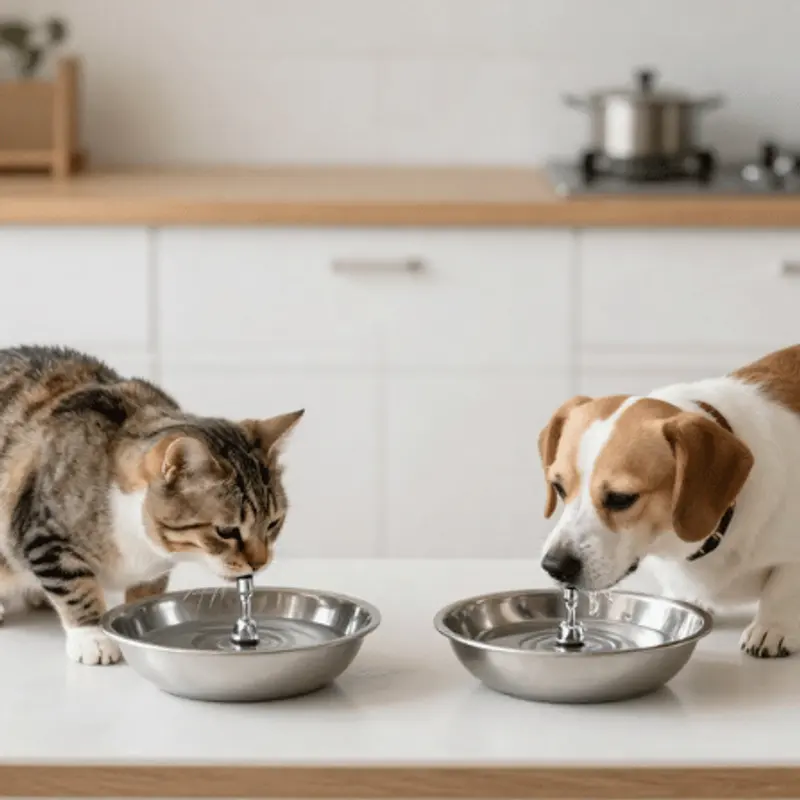
Encouraging water intake helps: water fountains, wet food and multiple bowls can all make a difference, and you'll find fountains and bowls in the shop. Use the pet medicine calendar to keep any prescribed medication and check-ups on track.
Home care
Day-to-day, your role is mainly about supporting hydration and sticking to the plan. Keep fresh water in several places around the home, as cats often prefer to drink away from where they eat. Feed exactly the diet your vet recommends, and introduce any new kidney diet gradually so a fussy cat doesn't simply refuse it — appetite can be delicate in kidney patients, so patience pays off.
Keep meal-times calm and routine, and weigh your cat regularly so you spot changes early. Reducing stress helps too — see indoor cat enrichment for ideas on keeping a senior cat content and active without overdoing it. Many owners find that small daily habits, like a favourite warm spot and a predictable routine, make a real difference to how well an older cat copes. Keep a simple note of appetite, drinking, weight and energy between vet visits, as these everyday observations are genuinely useful to your vet.
When to see a vet
Book a check-up if your cat is drinking or weeing more, losing weight, or off their food. Seek urgent help if your cat:
- Stops eating or drinking, or vomits repeatedly
- Becomes weak, wobbly or collapses
- May have eaten a lily or antifreeze (a true emergency)
- Was previously stable and suddenly deteriorates
Ongoing vet care can be a real cost over a cat's life — our pet emergency cost calculator and pet insurance guide can help you plan, and you can find a vet nearby.
Sources
- International Cat Care — Chronic kidney disease: https://icatcare.org/advice/
- PDSA — Cat health advice: https://www.pdsa.org.uk/pet-help-and-advice/pet-health-hub
- Blue Cross — Cat advice: https://www.bluecross.org.uk/advice/cat
Sources
Common questions
Can kidney disease in cats be cured?
Chronic kidney disease can't be cured, but it can be managed well — often for a long time — with a kidney-friendly diet, good hydration and medication tailored by your vet. Acute kidney injury sometimes recovers if treated very quickly.
What are the first signs of kidney disease in cats?
The classic early signs are drinking and weeing more than usual, often with gradual weight loss, a poorer coat and reduced appetite. They're subtle, so any change in thirst or weight in an older cat is worth a vet check.
How long can a cat live with kidney disease?
It varies hugely depending on how early it's caught and how well it's managed. Many cats live comfortably for months to years after diagnosis. Your vet can give a realistic picture based on your cat's stage and test results.
Why are lilies dangerous for cats?
Lilies are highly toxic to cats and can cause sudden, severe kidney failure — even small amounts of pollen or water from the vase. If your cat may have contacted any part of a lily, treat it as an emergency and ring your vet immediately.
About the author
Matt Garnett — founder, Giddy Pets
Matt started Giddy Pets to make getting pets the good stuff simpler and fairer. Everything in these guides comes from real life with pets and a lot of trial and error — it's practical guidance, not veterinary advice. If a guide gets something wrong, tell him directly.
Advice & planning
Free tools & more guides
Practical calculators and trusted guides relevant to this product.
Read next
Cat Losing Weight: Why It Happens and When to Worry
Why a cat might lose weight even while eating, the conditions it can signal, and when unexplained weight loss means a vet visit.
Why Is My Cat Being Sick? Vomiting Causes and What to Do
The common reasons cats vomit, how to care for a sicky cat at home, and the red flags that mean you should ring your vet.
Cat Not Eating? Why It Happens and What to Do
Why your cat might be off their food, why it matters more than you'd think, simple ways to tempt them, and when to call the vet.