
Are Border Collies Good Family Dogs?
Border Collies can be wonderful family dogs — for the right family. An honest look at who they suit, the herding instinct around children, and why an active home is essential.
The quick answer
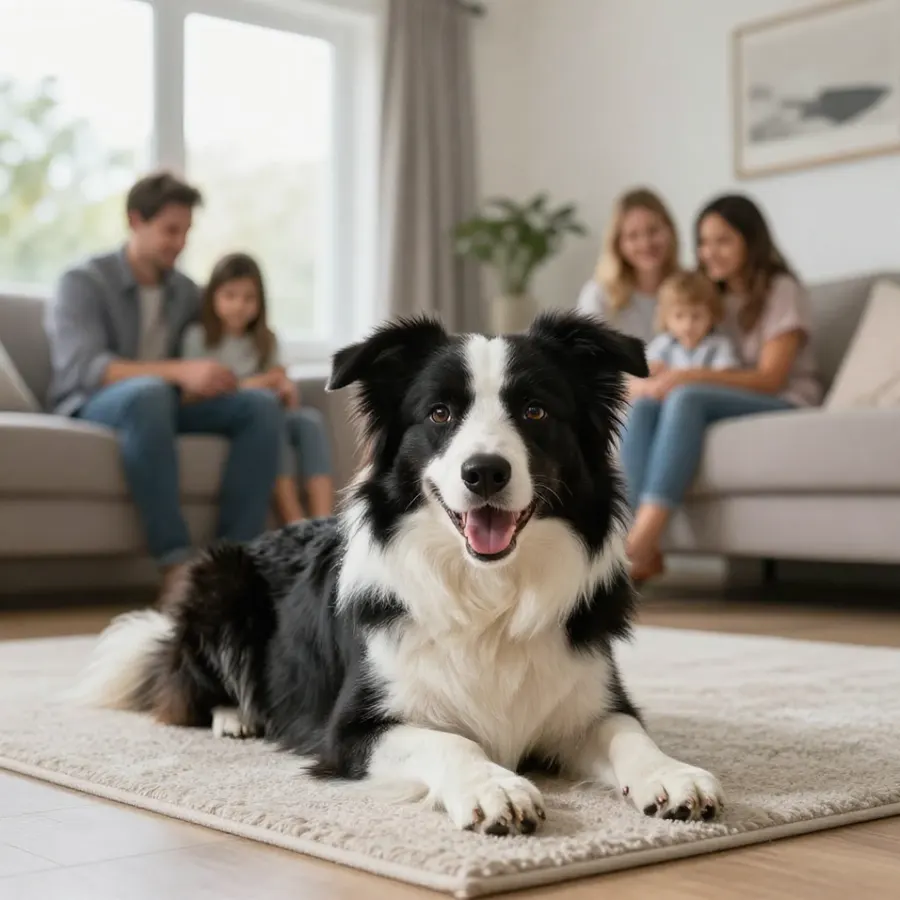
They can be excellent in the right family — an active, committed household that can meet their exercise and mental needs and enjoys training. They're loyal, clever and bond closely.
Border Collies are clever, loyal, devoted and endlessly capable — so it's no surprise families fall for them. But "good family dog" depends entirely on the family. Get the match right and a Collie is a brilliant, bonded companion who'll join in everything you do. Get it wrong and you'll have an under-stimulated, frustrated dog and an exhausted household. Here's an honest look at whether a Border Collie suits family life.
The short answer
Border Collies can be excellent family dogs for active, committed households that can meet their considerable exercise and mental needs and genuinely enjoy training and doing things with their dog. They are not a good fit for sedentary families, homes where everyone is out all day, or anyone wanting a low-effort pet. The breed itself is rarely the problem; the mismatch between the dog's needs and the family's lifestyle usually is.
What makes them great with the right family
- Devotion and bonding. Collies form deep attachments and love being part of the action — they thrive on involvement in family life.
- Intelligence and trainability. They're the most trainable breed, which makes them wonderful for families who enjoy teaching tricks, doing dog sports, or getting the kids involved in (supervised) training.
- Energy that matches an outdoorsy family. If your weekends are walks, hikes, the park and the beach, a Collie is in heaven.
- Gentleness and sensitivity once their needs are met — a well-exercised, well-trained Collie is typically a calm, affectionate housemate.
The herding instinct around children
This is the most important caveat for families, especially with young children. Border Collies are hardwired to herd, and many will instinctively try to chase and "round up" fast, noisy, unpredictable things — and running, shrieking children fit that description perfectly. That can mean circling, chasing, or nipping at heels. It is instinct, not aggression, but it can frighten or knock over a small child, so it needs taking seriously.
It can be managed well:
- Supervise all interactions between the dog and young children, every time.
- Teach children not to run and squeal around the dog, and to give it space.
- Give the instinct an outlet through training, dog sports and appropriate games (see our guide to training a Border Collie).
- Provide a safe retreat — a bed or crate where the dog can go to be left alone.
For these reasons, Collies generally suit families with older, calmer, dog-savvy children better than households with toddlers, though plenty live happily with young children in homes that supervise and manage well. Early, positive exposure helps enormously; our puppy socialisation checklist is a good starting point.
The exercise and stimulation reality
No family should take on a Border Collie without being clear-eyed about the time commitment. An adult Collie needs a minimum of around two hours of exercise a day, plus serious daily mental stimulation — and that's on top of family life, work and the school run. Our full guide to how much exercise a Border Collie needs sets out exactly what that involves.
When those needs aren't met, the breed's brilliance turns into problems: destructiveness, barking, pacing and obsessive behaviours like spinning or shadow-chasing. This is the single most common reason Collies end up in rescue, and it's almost always preventable. If your honest weekly schedule can't reliably absorb that, a Collie isn't the right family dog for you — and that's far kinder than taking one on and falling short.
Who a Border Collie really suits
- Active, outdoorsy families who walk, run, hike or do dog sports together.
- Families home enough to provide company, training and brain-work daily — Collies don't cope well left alone all day.
- Households with older or dog-savvy children, or younger children with committed adult supervision.
- People who enjoy training and want a dog to *do things* with, not just live alongside.
Who they don't suit: families out at work all day, sedentary households, first-time owners who underestimate the commitment, or anyone wanting a calm, low-input pet.
Settling a Collie into family life
Give a new Collie structure from day one — a predictable routine of exercise, training and rest, a quiet space of their own, and clear, consistent rules everyone follows. Build up time alone gradually, keep early experiences with children positive and supervised, and channel that energy into shared activities. Do that, and a Border Collie can be one of the most rewarding family dogs you could choose.
*This is general guidance, not a substitute for advice from your vet or an accredited behaviourist, who can assess your individual dog and circumstances.*
Sources
- UK Kennel Club — Border Collie breed characteristics and suitability (thekennelclub.org.uk).
- PDSA — choosing a dog and family dog suitability (pdsa.org.uk).
- Blue Cross — dogs and children, and working-breed behaviour (bluecross.org.uk).
Common questions
Are Border Collies good family dogs?
They can be excellent in the right family — an active, committed household that can meet their exercise and mental needs and enjoys training. They're loyal, clever and bond closely. The caveats: their herding instinct can lead to chasing or nipping at running children, and they need a lot of input, so they suit families with older, active children and plenty of time more than busy homes wanting a low-effort pet.
Are Border Collies good with young children?
They can be, but it needs care. The herding instinct means some Collies chase or nip at running, shrieking children — instinct rather than aggression, but it can knock over or frighten a small child. They generally suit older, calmer children better, though many live happily with toddlers in homes that always supervise, teach children to give the dog space, and provide the dog a safe retreat.
Can Border Collies live in a house with no garden?
It's possible but demanding. A garden helps, but it's no substitute for exercise — what a Border Collie truly needs is around two hours of varied activity a day plus serious mental stimulation, wherever you live. A committed owner near good walking and running space can do it, but a Collie in a small home with little exercise and no outlet will quickly become frustrated and unhappy.
About the author
Matt Garnett — founder, Giddy Pets
Matt started Giddy Pets to make getting pets the good stuff simpler and fairer. Everything in these guides comes from real life with pets and a lot of trial and error — it's practical guidance, not veterinary advice. If a guide gets something wrong, tell him directly.
Free tools & more guides
Read next
How Much Exercise Does a Border Collie Need?
Border Collies need far more than a couple of walks — real physical exertion plus mental work every day. Exactly what that looks like, and whether the breed suits you.

How to Train a Border Collie
The Border Collie is the most trainable breed there is — but that brain cuts both ways. How to channel the intelligence, handle the herding instinct, and bring out the best in your Collie.
How Long Do Border Collies Live? Lifespan & Health
How long Border Collies live, the inherited conditions to know about, and how to help yours enjoy a long, sound, active old age.

Border Collie Shedding & Grooming
Border Collies shed year-round and blow their coat twice a year. The rough and smooth coats explained, a simple brushing routine, the right tools, and why you should never shave one.