





Keeping children safe around dogs
How to supervise, read warning signs, and teach children safe habits around dogs to prevent bites at home
The quick answer
UK welfare charities advise never leaving young children alone with a dog, even a trusted family pet, regardless of age. Older children (roughly nine and up) can generally be trusted with more independence, but should still be checked on regularly and reminded of the household rules, especially when a new dog joins the family.
Most dogs and children build wonderful relationships, and the vast majority of visits, playtimes and cuddles on the sofa pass without incident. But children are, by a clear margin, the group most likely to be bitten by a dog, and most of those bites come from a dog the child already knows well, often the family pet. That statistic is not meant to alarm you. It is meant to explain why the advice below is so consistent, and so worth taking seriously, even if your dog has never so much as growled.
The good news is that dog bites involving children are very largely preventable. Dogs give plenty of warning before they bite, and children can be taught, from a very young age, how to behave around dogs in a way that keeps everyone comfortable. This guide brings together supervision advice, body language, house rules and age-specific guidance from UK veterinary and welfare charities, so you can build safe habits into everyday family life rather than treating it as a one-off conversation.
None of this is about assuming your dog is dangerous. It is about recognising that dogs are animals with their own limits, and that children, especially under-fives, cannot reliably read or respect those limits without an adult's help.
Why children are the highest-risk group
Research consistently shows that young children are more likely to be bitten by a dog than any other age group, and that the dog involved is usually a known, familiar animal rather than a stranger's. NHS hospital data backs this up: England sees several thousand hospital admissions for dog bites and strikes every year, and children under 10 have the highest admission rate of any paediatric age group. Bites to the head and neck in under-fives are noted as the most clinically severe injuries in this group, largely because of a young child's height relative to a dog's mouth.
This isn't because family dogs are especially aggressive. It's because young children move unpredictably, make sudden loud noises, hug and grab rather than stroke, and are physically close to a dog's face far more often than an adult would be. A dog that would simply move away from an adult may feel it has nowhere to go when a toddler corners it on a sofa or in a hallway.
The three-step supervision rule
Veterinary and welfare charities are unanimous on one point: never leave a young child alone in a room with a dog, even a dog you trust completely, and even for "just a minute" while you answer the door or check the oven. Dogs Trust recommends thinking of supervision in three stages:
- Stay close — near enough to notice subtle signs of discomfort from your dog, or risky behaviour from your child, before either escalates.
- Step in — intervene as soon as you spot a problem, by calmly redirecting your child, creating space, or ending the interaction.
- Separate — when you can't give full attention (cooking dinner, getting ready for school, visitors at the door), use a stair gate, playpen, or a different room so dog and child aren't sharing space unsupervised.
This last point trips up a lot of families. It's tempting to assume a well-behaved dog is "fine" to be left with a sleeping baby in a bouncer or a toddler absorbed in a cartoon. Charities are explicit that this is exactly the situation to avoid, because it's precisely when nobody is watching that accidents happen.
Reading your dog's body language
Growling and snapping are a dog's last resort, not their first warning. Long before that point, most dogs give quieter signals that they're uncomfortable, and learning to spot these early is one of the most useful skills a parent can build. According to Dogs Trust and the RSPCA, look out for:
- Turning the head away or leaning back
- Lip licking, yawning when not tired, or excessive panting
- Ears pinned back, or the whites of the eyes showing
- A tucked or lowered tail
- Trying to move away, hide, or make themselves smaller
- Freezing, going very still, or stiffening up
Any one of these is a request for space, not naughtiness. If you see it, calmly create distance between your dog and child rather than waiting to see what happens next. Over time, learning your own dog's individual "tells" (some dogs have a particular sigh, or a specific spot they retreat to) makes this much easier to catch early.
Most of us notice the obvious signs a dog is uncomfortable, like growling or biting — but these are a dog's last resort, not their first.
Teaching children how to behave around dogs
Young children need explicit, repeated teaching about how to interact with dogs; it doesn't come naturally, and "be gentle" on its own isn't specific enough for a three-year-old to act on. A useful way to frame it for children is:
- Affection — teach strokes on the back or chest instead of hugs, kisses, or picking the dog up. Hugging can make a dog feel trapped, even if it tolerates it.
- Busy — dogs need to be left alone completely when eating, chewing a toy or bone, sleeping, or being unwell. No exceptions, no "just checking."
- Choice — let the dog choose to come over, and let them leave when they want to, without being followed, picked up, or cornered.
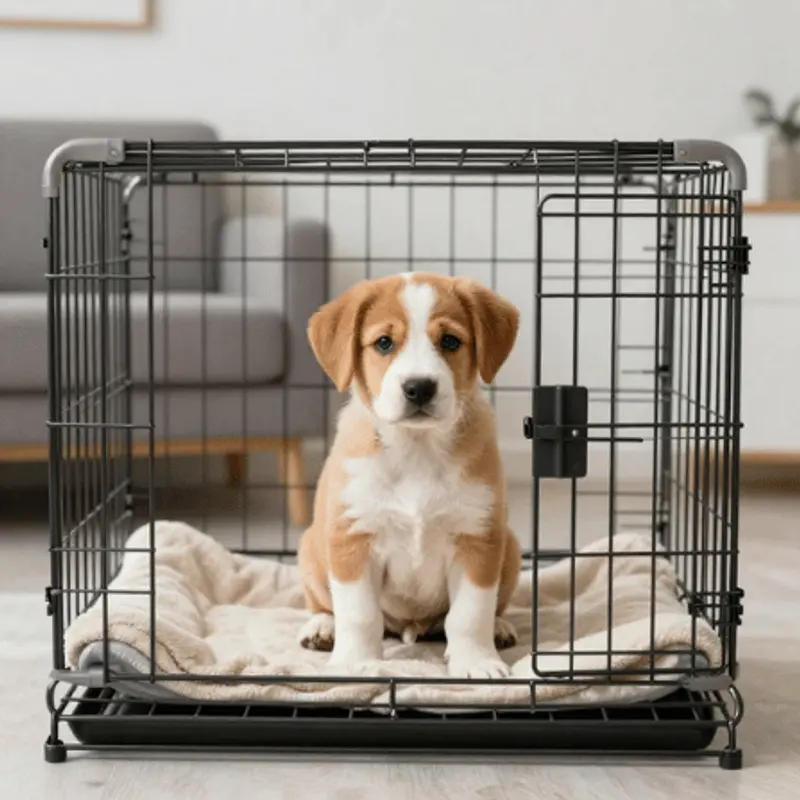
Alongside this, PDSA and the RSPCA both recommend clear household rules: no climbing on the dog, no pulling ears, tail or fur, no taking toys or food away, no screaming or running directly at the dog, and no disturbing a dog that has gone somewhere quiet. It helps to give your dog a consistent safe space of their own, a bed, crate, or room, that children understand is completely off-limits, so the dog always has somewhere to retreat to.
Positive, calm activities work well too: teaching a trick together, a gentle grooming session, or a short supervised walk all build a good relationship without the physical closeness that can go wrong.
Rules for approaching dogs outside the home
The same caution needs to extend beyond your own dog. Children should be taught never to approach a dog they don't know, whether that's in the park, at a friend's house, or a dog tied up outside a shop, without asking the owner first, and then waiting to see if the dog approaches them, rather than reaching towards its face.
If your child does get permission to say hello, encourage a gentle stroke on the dog's back or shoulders rather than reaching over its head, which many dogs find intimidating. Avoid direct, prolonged eye contact, which some dogs read as a challenge.
If an unfamiliar dog approaches uninvited and seems unsure or agitated, the standard advice from UK charities is to stand still, keep arms low and close to the body, avoid staring at the dog, and stay quiet rather than shouting or running, since running can trigger a chase response. If a child is knocked down, they should be taught to curl into a ball, cover their face and neck with their arms, and stay still and quiet until help arrives.
Everyday situations that need extra care
Certain moments carry more risk than people expect, precisely because they don't feel like "dog time":
- The front door. Excitement, strangers, and a dash for freedom can combine badly. Keep your dog away from the door when visitors or deliveries arrive, and don't let young children answer the door alone if the dog has access to the hallway.
- Mealtimes. For both the dog's food and the child's. Toddlers dropping food, reaching into a dog bowl, or a dog nosing at a high chair are common flashpoints.
- New babies. Introduce the smell and sound of a new baby gradually before they arrive, and never leave a dog alone in a room with a baby in a bouncer, moses basket, or on the floor, however placid the dog has always been.
- Visiting children. A dog used to your own children may not have the same tolerance for boisterous friends or cousins who don't know the household rules. Brief visiting children (and their parents) on the same boundaries before they arrive.
- Illness or injury in the dog. A dog in pain, recovering from surgery, or feeling under the weather may be far less tolerant than usual, even if it's normally placid. This is a good moment to increase supervision and reduce handling.
Common mistakes well-meaning parents make
A few patterns come up again and again in charity guidance:
- Assuming a "good" dog is exempt from the rules. Most bites to children come from a familiar, previously reliable family dog, not an unpredictable one. Temperament reduces risk; it doesn't remove it.
- Reading calm as consent. A dog that tolerates being hugged, sat on, or cornered isn't necessarily enjoying it. Tolerance and enjoyment aren't the same thing, and tolerance can run out.
- Waiting for growling before acting. By the time a dog growls, it has usually already tried several quieter signals. Treat the subtle signs as seriously as the obvious ones.
- Leaving the room "just for a second." Most incidents charities are called about happen in exactly these short, unsupervised windows, not during long stretches of unattended time.
- Punishing the dog after a warning growl. Growling is communication, not misbehaviour. Punishing it can teach a dog to skip the warning next time, which is far more dangerous.
Building safe habits as your child grows
The right approach shifts as children get older. Babies and toddlers under about five need constant, hands-on supervision and physical barriers when you can't give full attention; they simply can't yet be taught to read a dog's warning signs, so the responsibility sits entirely with the adults in the room.
From roughly five to eight, children can start learning the basics, gentle strokes, respecting "busy" times, asking before approaching unfamiliar dogs, but still need close supervision, since impulse control is still developing. Practise scenarios calmly at home: what to do if a dog looks worried, what "give the dog space" looks like in practice, and how to greet a new dog politely.
Older children, from around nine upwards, can generally be trusted with more independence, but should still be reminded regularly rather than assumed to remember a conversation from months ago. Revisiting the rules whenever a new dog joins the family, a puppy is introduced, or the household routine changes (a new baby, a house move, a period of building work) helps keep everyone's guard up during the moments that carry the most risk.
If a bite or a scare happens
If a dog bites or snaps at a child, separate them calmly rather than shouting, which can escalate the situation further. Check the child for injury and seek medical attention for any broken skin, since dog bites carry a real infection risk and may need treatment or a tetanus check. Avoid punishing the dog after the event, since punishment doesn't address why the bite happened and can make a dog more unpredictable, more fearful, or more likely to skip warning signs next time.
Once everyone is safe, it's worth thinking honestly about what led up to the incident: was the dog cornered, disturbed while eating or sleeping, in pain, or showing signs that were missed beforehand? Speaking to your vet and, where needed, an accredited clinical animal behaviourist can help you understand what happened and put a plan in place, rather than assuming the only options are to "get rid of" the dog or hope it doesn't happen again.
When to see your vet
A sudden change in a previously tolerant dog's behaviour around children, increased snapping, growling, stiffening, or avoidance, is worth a vet visit rather than just extra training. Pain, illness, reduced hearing or vision, and conditions like arthritis can all lower a dog's tolerance for handling and noise, and ruling these out is an important first step before assuming the issue is purely behavioural. Your vet can also refer you to a qualified, accredited behaviourist if needed. If you're ever worried about your dog's behaviour around children, don't wait for an incident to ask for help.
*This is general guidance, not a substitute for advice from your vet, who can assess your individual pet.*
Sources
- Dogs Trust — dogs and children, living happily together (dogstrust.org.uk).
- RSPCA — children and dogs, how they can live together (rspca.org.uk).
- PDSA — children and dogs, how to keep them happy and safe (pdsa.org.uk).
- Royal College of Surgeons of England — "Be dog safe" press release on dog bite hospital admissions (rcseng.ac.uk).
Common questions
What age can children be left alone with a dog?
UK welfare charities advise never leaving young children alone with a dog, even a trusted family pet, regardless of age. Older children (roughly nine and up) can generally be trusted with more independence, but should still be checked on regularly and reminded of the household rules, especially when a new dog joins the family.
What are the first signs a dog is uncomfortable around a child?
Look for the dog turning its head away, lip licking, yawning when not tired, ears pinned back, a tucked tail, or trying to move away. These subtle signals come well before growling or snapping, which are a last resort, so acting on the early signs is the best way to prevent a bite.
Why do most dog bites to children come from the family dog?
Research shows children are far more likely to be bitten by a dog they know well than a stranger’s dog, largely because young children are physically close to dogs more often, and may hug, grab, or corner them in ways that feel threatening, even to a normally tolerant dog.
Should I punish my dog if it growls at my child?
No. Growling is a warning, not misbehaviour, and punishing it can teach a dog to skip that warning next time, which is more dangerous. Instead, calmly separate the dog and child, work out what triggered it, and speak to your vet or an accredited behaviourist if it keeps happening.
How do I introduce a new baby to the family dog safely?
Gradually get your dog used to the sounds and smells of a baby before it arrives, and never leave your dog alone in a room with the baby, even in a bouncer or moses basket, however calm your dog has always been. Increase supervision rather than relaxing it once the baby is mobile.
About the author
Matt Garnett — founder, Giddy Pets
Matt started Giddy Pets to make getting pets the good stuff simpler and fairer. Everything in these guides comes from real life with pets and a lot of trial and error — it's practical guidance, not veterinary advice. If a guide gets something wrong, tell him directly.
Advice & planning
Free tools & more guides
Practical calculators and trusted guides relevant to this product.
Read next
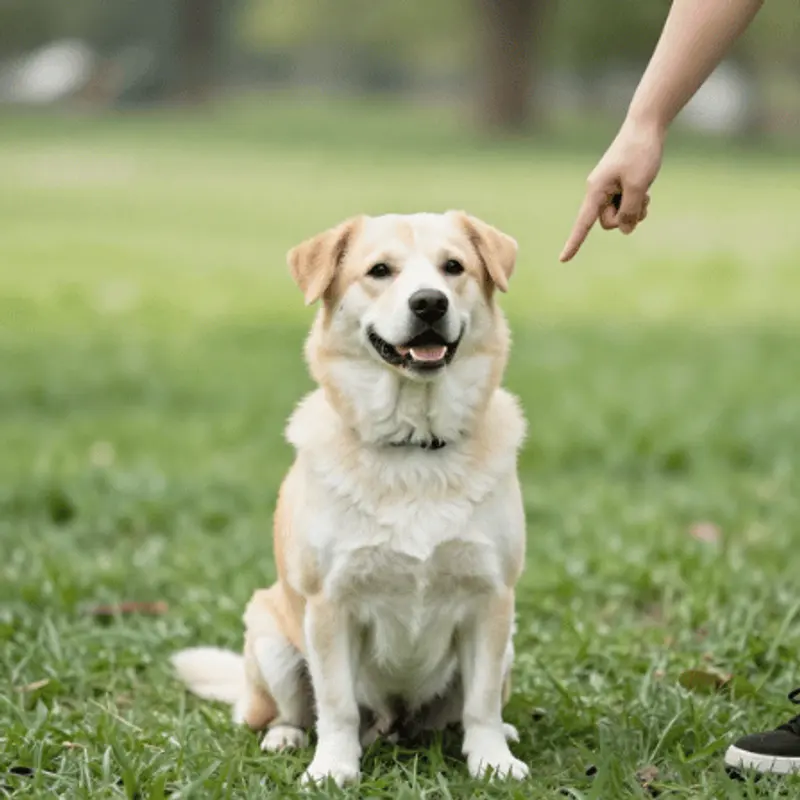
Dog and child safety: tips for families with dogs
Practical rules, warning signs and everyday routines that help dogs and children live safely and happily under one roof

Coping with the loss of a cat
Compassionate, practical guidance on grieving a cat, supporting children and other pets, and where to find real help
How to Introduce Two Dogs Safely